English
 Polski
 Deutsch
 Français
 ελληνικά
 Español
 Italiano

13,63 €

Quantity:
Total:
Total products:
Total shipping: To be determined
Total:
Science-based food supplements

Manufacturer: Life Extension
In stock
| Quantity | Price | You Save |
|---|---|---|
| 2 | 8,63 € | Up to 0,72 € |
| 4 | 8,45 € | Up to 2,16 € |
By buying this product you can collect up to 8 loyalty points. Your cart will total 8 points that can be converted during next order into a voucher of 0,40 €.

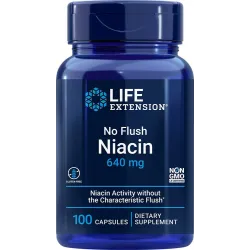
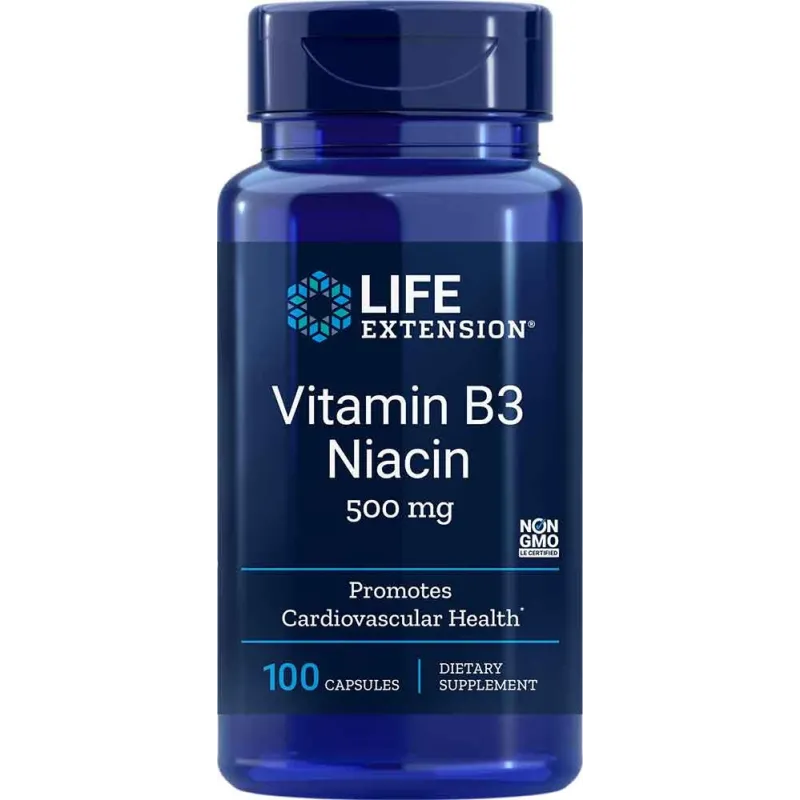
Vitamin B3 Niacin
500 mg, 100 capsules
Item Catalog Number: 00372
 Many B vitamins are used in the body individually or in combination with enzymes to help release energy from carbohydrates, fat, and protein. Vitamin B coenzymes are crucial to the metabolic pathways that generate the energy needed by every cell in the body. Because they are codependent in their metabolic activities, a deficiency of one B vitamin can affect optimal functioning of organ systems throughout the body.1
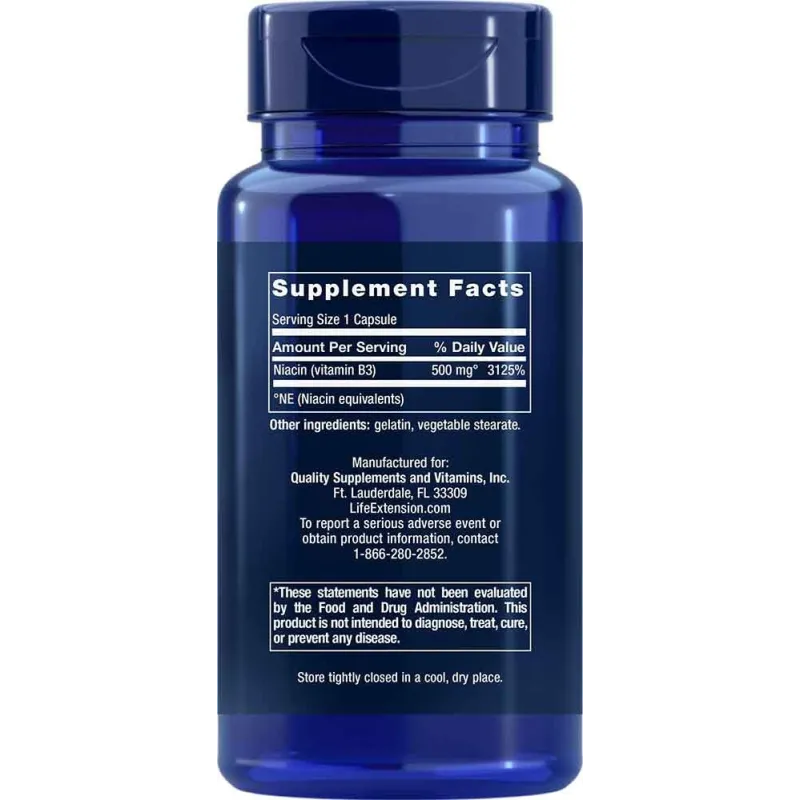
Serving Size 1 capsule
| Amount Per Serving | |
|---|---|
| Niacin (vitamin B3) | 500 mg |
| Other ingredients: gelatin, vegetable stearate. | |
Non-GMO
Dosage and Use
Take one (1) capsule daily with meals, or as recommended by a healthcare practitioner.
Caution
Temporary flushing, itching, rash or gastric disturbances may occur. Liver function testing is recommended when niacin is taken in excess of 500 mg daily. Those with gout or liver diseases should avoid taking high doses of niacin.
Warnings
KEEP OUT OF REACH OF CHILDREN
DO NOT EXCEED RECOMMENDED DOSE
Do not purchase if outer seal is broken or damaged.
When using nutritional supplements, please consult with your physician if you are undergoing treatment for a medical condition or if you are pregnant or lactating.
13,63 €
60,29 €
12,83 €
24,96 €
Niacin (500mg) is one of most effective natural compounds for improving lipid profiles. It reduces LDL cholesterol by 10-25%, decreases triglycerides by 20-50%, lowers Lp(a) (dangerous lipoprotein particle) by 20-40%, and increases HDL cholesterol by 15-35%—changes rivaling or exceeding some statin medications. The mechanism involves inhibiting hepatic VLDL production and enhancing HDL particle synthesis. Studies show niacin reduces cardiovascular events by 15-30% when combined with statins and 10-20% as monotherapy in statin-intolerant individuals. It also improves endothelial function by 20-35% and reduces arterial inflammation by 25-40%.
Niacin flush is harmless vasodilation causing temporary warmth, redness, and tingling in 70-90% of users, typically lasting 20-45 minutes. It's caused by prostaglandin release and indicates niacin is working. To minimize: start with 100-250mg and increase gradually over weeks; take with food (reduces intensity by 30-50%); take aspirin 30 minutes before (325mg reduces flush by 40-70%); or use slow-release formulations (though these may stress liver more). Tolerance develops—flush intensity decreases 50-80% after 2-4 weeks regular use. Never skip doses as tolerance is lost quickly.
Niacin is the precursor to NAD+ (nicotinamide adenine dinucleotide), essential for cellular energy production, DNA repair, and sirtuins (longevity proteins). NAD+ levels decline 50% or more with aging. High-dose niacin (500-1000mg) can increase NAD+ by 30-60%, supporting mitochondrial function, improving energy by 20-40%, and activating sirtuins by 25-50%. This supports healthy aging, cellular repair, and metabolic function.
Niacin is safe at 500mg daily for most people. Higher doses (1000-3000mg) can elevate liver enzymes in 5-15% of users—monitor ALT/AST every 3-6 months at high doses. Niacin can modestly raise blood glucose (5-10% increase) and uric acid (worsen gout in 3-8%)—diabetics and gout patients should monitor. Avoid niacin with active liver disease or peptic ulcers. Reduce or stop if persistent flushing, nausea, or liver enzyme elevations occur. Immediate-release niacin is safer long-term than extended-release despite more flushing.
Start with 100-250mg daily for 1 week to develop tolerance. Increase by 250-500mg weekly until reaching target dose (500-1500mg daily for most, up to 3000mg under medical supervision). Take with food to reduce flush. Divide larger doses (take 500mg 2-3 times daily rather than 1500mg once). Monitor lipid panels every 6-12 weeks initially, then every 3-6 months. Effects manifest within 2-4 weeks: triglycerides drop first, then LDL and HDL changes over 4-12 weeks. Combine with heart-healthy diet and exercise for 30-50% greater benefits than niacin alone.
Results: Clinical trials show niacin (1000-2000mg daily) reduces LDL by 10-25%, triglycerides by 20-50%, Lp(a) by 20-40%, and increases HDL by 15-35%.
Citation: Guyton JR. "Niacin in cardiovascular prevention." Journal of Cardiovascular Pharmacology and Therapeutics. 2011;16(3-4):258-264.
Results: Studies demonstrate niacin reduces cardiovascular events by 15-30% when added to statins and 10-20% as monotherapy.
Citation: Canner PL, et al. "Fifteen year mortality in Coronary Drug Project patients." Journal of the American College of Cardiology. 1986;8(6):1245-1255.
Results: Research shows niacin increases NAD+ by 30-60%, improves cellular energy by 20-40%, and activates longevity pathways.
Citation: Bogan KL, et al. "Nicotinic acid, nicotinamide, and nicotinamide riboside: a molecular evaluation of NAD+ precursor vitamins." Annual Review of Nutrition. 2008;28:115-130.
Results: Clinical data confirm niacin flush is harmless, occurring in 70-90% but decreasing 50-80% after 2-4 weeks tolerance development.
Citation: Maccubbin D, et al. "Flushing profile of extended-release niacin." American Journal of Cardiology. 2009;104(1):74-81.