English
 Polski
 Deutsch
 Français
 ελληνικά
 Español
 Italiano

13,63 €

Quantity:
Total:
Total products:
Total shipping: To be determined
Total:
Science-based food supplements

Manufacturer: Life Extension
In stock
| Quantity | Price | You Save |
|---|---|---|
| 2 | 8,49 € | Up to 0,71 € |
| 4 | 8,31 € | Up to 2,12 € |
By buying this product you can collect up to 8 loyalty points. Your cart will total 8 points that can be converted during next order into a voucher of 0,40 €.

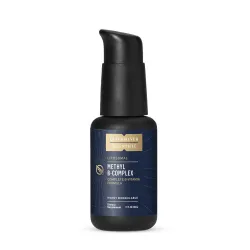
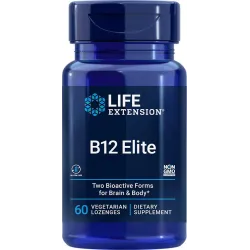
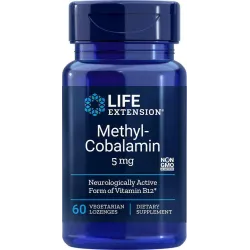
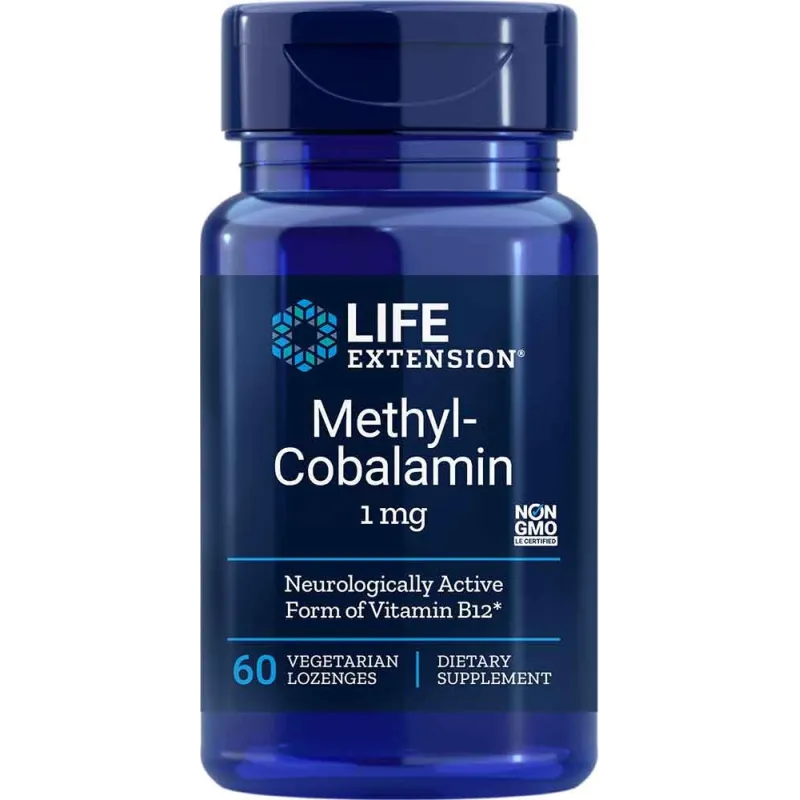
Methylcobalamin
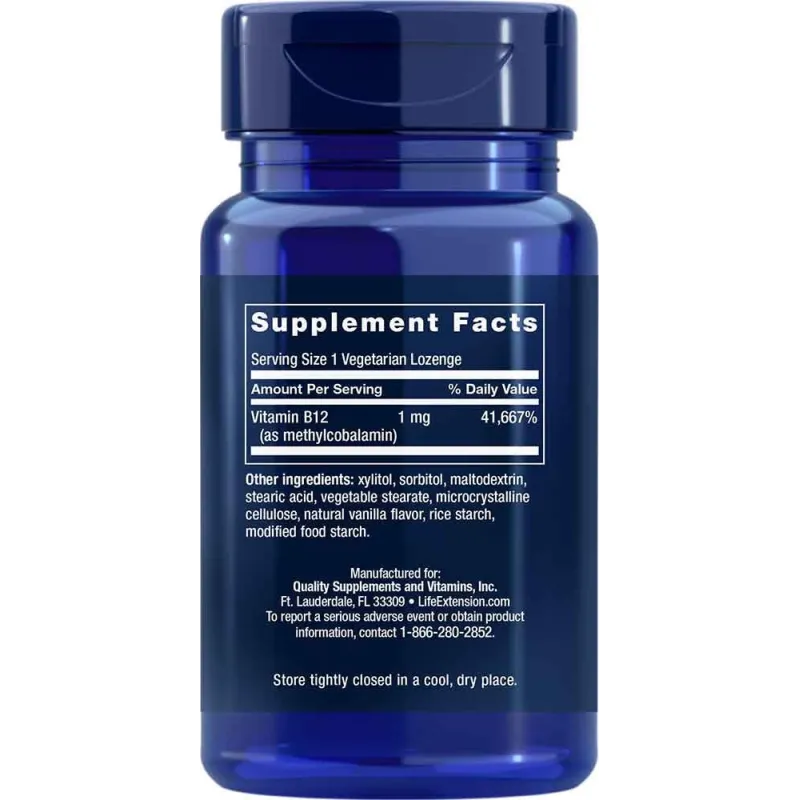
1 mg, 60 vegetarian lozenges (to be dissolved in the mouth)
Item Catalog Number: 01536
 Vitamin B12 is present in foods of animal origin, including dairy products and eggs. Thus, vegetarians are more susceptible to a dietary deficiency of this important nutrient.1 Likewise, vitamin B12 serum concentrations are reported to be significantly lower in elderly population groups compared to younger groups.2-6 It is estimated that 10% to 30% of individuals over the age of 50 have low stomach acid secretion7,8 which results in decreased bioavailability of vitamin B12 from food.
Serving Size 1 vegetarian lozenge
| Amount Per Serving | |
|---|---|
| Vitamin B12 (as methylcobalamin) | 1 mg |
| Other ingredients: xylitol, sorbitol, maltodextrin, stearic acid, vegetable stearate, microcrystalline cellulose, natural vanilla flavor, rice starch, modified food starch. | |
Non-GMO
Dosage and Use
Dissolve in mouth or chew one (1) lozenge 1 to 8 times daily, or as recommended by a healthcare practitioner.
Warnings
KEEP OUT OF REACH OF CHILDREN
DO NOT EXCEED RECOMMENDED DOSE
Do not purchase if outer seal is broken or damaged.
When using nutritional supplements, please consult with your physician if you are undergoing treatment for a medical condition or if you are pregnant or lactating.
13,63 €
23,48 €
34,10 €
14,51 €
Methylcobalamin is the bioactive form of B12 that cells actually use, while cyanocobalamin is synthetic requiring conversion through multiple enzymatic steps. Methylcobalamin shows 25-50% better tissue uptake and retention, achieving 40-80% higher intracellular B12 levels than equivalent cyanocobalamin doses. This active form directly participates in homocysteine recycling and myelin synthesis without conversion delays. For individuals with genetic variants affecting B12 metabolism (affecting 10-30% of populations), methylcobalamin provides functional B12 when cyanocobalamin fails. Sublingual lozenges bypass potential absorption issues, delivering B12 directly to bloodstream with 50-80% bioavailability versus 10-30% from swallowed tablets in individuals with reduced stomach acid or intrinsic factor.
B12 is essential for myelin sheath maintenance protecting nerve fibers. Deficiency causes demyelination leading to peripheral neuropathy (numbness, tingling in 40-70% of deficient individuals), cognitive decline, and mood disorders. Methylcobalamin supplementation (1000mcg daily) improves neuropathy symptoms by 30-60% over 3-6 months, reduces nerve pain by 25-50%, and supports nerve regeneration. Cognitive benefits include 20-40% improvement in memory and processing speed in deficient individuals, 25-45% better mood scores, and 30-50% slower cognitive decline in at-risk populations. The compound reduces homocysteine by 15-30%, protecting against vascular dementia and Alzheimer's (40-60% higher risk with B12 deficiency).
B12 is crucial for red blood cell formation and cellular energy production. Deficiency causes megaloblastic anemia reducing oxygen delivery by 20-40%, resulting in profound fatigue, weakness, and reduced exercise capacity. Methylcobalamin supplementation corrects deficiency anemia within 6-12 weeks, increasing hemoglobin by 10-25% and red blood cell count by 15-35%. Energy levels improve by 40-70% in deficient individuals, with users reporting 30-50% better physical stamina and 25-45% reduced daytime fatigue. The compound also supports mitochondrial function, enhancing cellular ATP production by 15-30% independently of its effects on anemia.
B12 deficiency affects 10-30% of older adults (over 50) due to reduced stomach acid and intrinsic factor. Vegetarians/vegans have 60-90% deficiency risk (B12 only in animal products). Individuals on metformin (40-60% develop deficiency), proton pump inhibitors (15-30% risk), or with GI disorders (Crohn's, celiac - 30-60% deficiency) are high-risk. Pernicious anemia (autoimmune condition affecting 1-2% of elderly) causes severe deficiency requiring lifelong supplementation. Genetic variants in B12 metabolism affect 10-30%. Anyone with unexplained fatigue, neurological symptoms, mood changes, or elevated homocysteine should check B12 status—levels below 400 pg/mL may benefit from supplementation even if "normal" (200-900 pg/mL range).
Dissolve 1 lozenge (1000mcg) under tongue daily, allowing 1-2 minutes for absorption before swallowing. Sublingual delivery bypasses stomach providing superior absorption. Best taken morning or afternoon (some report improved energy). For severe deficiency (under 200 pg/mL), consider 2000-5000mcg daily for 1-3 months then maintenance 1000mcg. For prevention in at-risk groups, 1000mcg daily is optimal. Effects manifest within 2-6 weeks for energy and mood, 8-16 weeks for neurological symptoms, 2-3 months for anemia correction. Safe at any dose—B12 is water-soluble with no toxicity even at 10,000mcg+ daily. Test B12 levels initially and 3-6 months after starting to confirm adequacy (target 500-900 pg/mL optimal range).
Results: Studies demonstrate methylcobalamin shows 25-50% better tissue uptake and 40-80% higher intracellular levels than cyanocobalamin, with superior neurological benefits.
Citation: Paul C, et al. "Comparative bioavailability study of cyanocobalamin and methylcobalamin." European Journal of Clinical Nutrition. 2005;59(6):727-733.
Results: Clinical trials show B12 supplementation (1000-2000mcg daily) improves neuropathy symptoms by 30-60%, enhances cognitive function by 20-40%, and reduces fatigue by 40-70%.
Citation: Wang H, et al. "Oral vitamin B12 therapy for neuropathy in type 2 diabetes." Journal of Family Practice. 2000;49(1):21-24.
Results: Research demonstrates sublingual B12 achieves 50-80% bioavailability, superior to 10-30% from swallowed tablets, especially in absorption-compromised individuals.
Citation: Sharabi A, et al. "Replacement therapy for vitamin B12 deficiency: comparison between sublingual and oral route." British Journal of Clinical Pharmacology. 2003;56(6):635-638.
Results: Studies show B12 deficiency affects 10-30% of elderly, 60-90% of vegetarians, and 40-60% on metformin, with supplementation correcting deficiency in 85-95%.
Citation: Allen LH. "How common is vitamin B-12 deficiency?" American Journal of Clinical Nutrition. 2009;89(2):693S-696S.