English
 Polski
 Deutsch
 Français
 ελληνικά
 Español
 Italiano
23,48 €

Quantity:
Total:
Total products:
Total shipping: To be determined
Total:
Science-based food supplements

Manufacturer: Life Extension
In stock
| Quantity | Price | You Save |
|---|---|---|
| 2 | 38,64 € | Up to 3,22 € |
| 4 | 37,84 € | Up to 9,66 € |
By buying this product you can collect up to 40 loyalty points. Your cart will total 40 points that can be converted during next order into a voucher of 2,00 €.

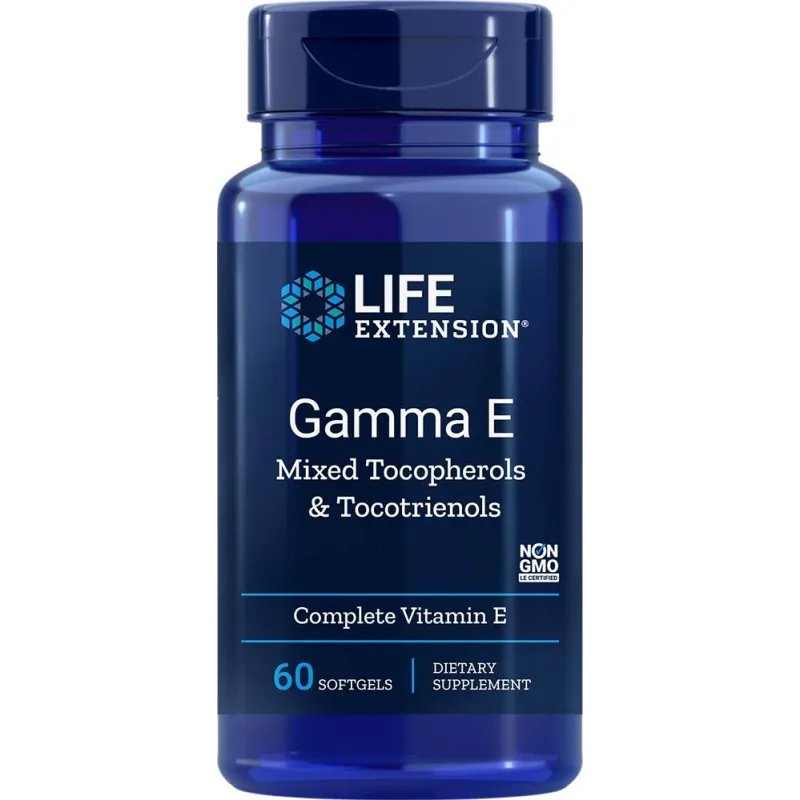
Gamma E Mixed Tocopherols & Tocotrienols
Item Catalog Number: 02070EU
60 softgels

Vitamin E is a family of eight related, lipid-soluble, antioxidant compounds widely present in plants. The tocopherol and tocotrienol subfamilies are each composed of alpha, beta, gamma and delta fractions that have different biological activity.
Vitamin E compounds are some of the most researched and most important nutrients to include in your daily regimen.
Benefits at a Glance:
Studies have shown that the gamma-tocopherol form of vitamin E is especially important for those seeking optimal health benefits. But the combination of alpha- and gamma-tocopherol supplementation appears to be superior to either tocopherol alone on biomarkers of oxidative stress and other whole-body health factors.
The tocopherol and tocotrienol subfamilies of vitamin E are each composed of alpha, beta, gamma and delta fractions that have complementary biological activity.1-3 Different ratios of these compounds are found in different parts of a plant. For example, the green parts of a plant contain mostly alpha tocopherol, while the bran and seed germ contain mostly tocotrienols.4
Evidence suggests that gamma tocopherol is one of the most critically important forms of vitamin E for those seeking optimal health benefits. But studies show the combination of alpha- and gamma-tocopherol supplementation appears to be superior to either tocopherol alone on biomarkers of oxidative stress and other whole-body health factors.5
Most commercial vitamin E supplements contain little, if any, gamma tocopherol. They instead rely on alpha tocopherol as the primary ingredient. However, it’s the gamma tocopherol (not the alpha form) that quenches peroxynitrite, the free radical that plays a major role in the development of age-related decline.6
Tocotrienols have shown superior action in maintaining arterial health.7,8 In 2010, a team of Asian scientists demonstrated that this class of nutrients, which are difficult to obtain in sufficient quantities through dietary sources alone, may provide superior support in maintaining triglyceride levels already within a healthy range in aging individuals.9
Research has shown that tocotrienols display neuroprotective properties and, in particular, alpha-tocotrienol has been shown to be a potent neuroprotective form of vitamin E.10,11
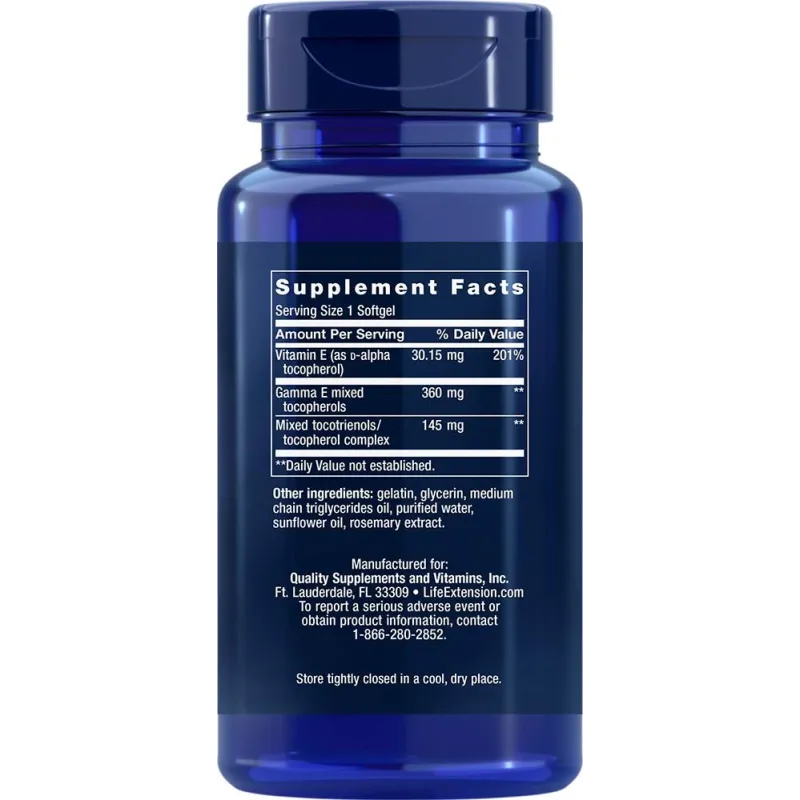
Serving Size 1 softgel
| Amount Per Serving | |
|---|---|
| Vitamin E (from D-alpha-tocopherol and 360 mg mixed tocopherols) | 44,8 mg |
| Palm fruit extract with tocotrienols | 145 mg |
| Ingredients: Mixed tocopherols (vitamin E), dry extract of palm fruit (Elaeis guineensis Jacq.), gelatin (bovine), humectant (glycerol), medium chain triglycerides oil, purified water, D-alpha-tocopherol (vitamin E), antioxidant (extracts of rosemary) | |
NON GMO
Dosage and Use
Take one (1) softgel once daily with food.
Caution
If you are taking anticoagulant or antiplatelet medications, or have a bleeding disorder, consult your healthcare provider before taking this product.
Caution
KEEP OUT OF REACH OF CHILDREN
DO NOT EXCEED RECOMMENDED DOSE
Do not purchase if outer seal is broken or damaged.
When using nutritional supplements, please consult with your physician if you are undergoing treatment for a medical condition or if you are pregnant or lactating.
23,48 €
38,89 €
12,83 €
27,26 €
Most standard vitamin E supplements contain only alpha-tocopherol, typically in synthetic form (dl-alpha-tocopherol). While alpha-tocopherol has antioxidant activity, it represents just one of eight naturally occurring forms of vitamin E. In nature, vitamin E exists as a family of compounds: four tocopherols (alpha, beta, gamma, delta) and four tocotrienols (alpha, beta, gamma, delta), each with unique biological activities.
Gamma-tocopherol, which this formula emphasizes, has distinct benefits not provided by alpha-tocopherol alone. Research shows gamma-tocopherol is particularly effective at trapping reactive nitrogen species (like peroxynitrite) that alpha-tocopherol doesn't neutralize well. Gamma-tocopherol also has unique anti-inflammatory properties, helping to reduce production of inflammatory mediators.
Tocotrienols, which have an unsaturated side chain unlike tocopherols, possess potent antioxidant activity and unique biological effects. Studies suggest tocotrienols may be 40-60 times more potent as antioxidants than alpha-tocopherol in certain systems. They also support cardiovascular health, healthy cholesterol metabolism, and neuroprotection through mechanisms distinct from tocopherols.
The problem with high-dose alpha-tocopherol supplements is they can actually reduce levels of other vitamin E forms, particularly gamma-tocopherol. The different forms compete for absorption and tissue uptake, so flooding your system with only alpha-tocopherol depletes the others. This formula provides all eight forms in balanced proportions, mimicking the vitamin E profile found in a nutrient-rich diet.
Tocotrienols have generated significant research interest due to their unique properties. Unlike tocopherols which accumulate mainly in cell membranes, tocotrienols are more easily distributed through lipid-rich tissues including the brain, making them particularly relevant for neuroprotection.
Cardiovascular benefits of tocotrienols are well-documented. Research shows tocotrienols support healthy cholesterol metabolism, with studies indicating they can help maintain cholesterol levels already in the normal range. The mechanism involves influencing HMG-CoA reductase, the same enzyme targeted by statin drugs, but through a different pathway and without depleting CoQ10.
Neuroprotection is an exciting area of tocotrienol research. Animal studies have found that tocotrienols protect brain cells from various insults including oxidative stress and reduced blood flow. The ability of tocotrienols to efficiently penetrate brain tissue makes them promising for supporting cognitive health, though human research in this area is still emerging.
Skin health may benefit from tocotrienols' potent antioxidant activity. Some research suggests topical and oral tocotrienols help protect skin from UV damage and support skin health from the inside out. The superior antioxidant activity of tocotrienols makes them particularly effective at neutralizing the oxidative stress caused by sun exposure.
The recommended dietary allowance (RDA) for vitamin E is 15mg (22.4 IU) of alpha-tocopherol daily for adults. However, this recommendation was established when vitamin E was understood only as alpha-tocopherol, before the unique benefits of gamma-tocopherol and tocotrienols were recognized. Modern understanding suggests we need a balanced intake of all vitamin E forms, not just alpha-tocopherol.
Getting adequate vitamin E from diet alone is challenging. Rich sources include nuts (especially almonds and hazelnuts), seeds (sunflower seeds are excellent), plant oils (wheat germ oil has the highest content), and green leafy vegetables. However, you'd need to consume large quantities daily to reach therapeutic levels, and most dietary vitamin E is gamma-tocopherol rather than the alpha form typically used in RDA calculations.
The tolerable upper intake level for supplemental vitamin E is 1,000mg (1,500 IU) of alpha-tocopherol daily. This limit was established primarily due to potential blood-thinning effects at very high doses. The mixed tocopherol/tocotrienol approach in this formula distributes vitamin E activity across multiple forms rather than providing massive doses of alpha-tocopherol alone, offering a safety margin.
Research suggests that gamma-tocopherol and tocotrienols don't carry the same concerns as high-dose alpha-tocopherol supplements. In fact, including gamma-tocopherol may mitigate potential issues with alpha-tocopherol by maintaining balanced vitamin E status rather than creating deficiencies of other forms.
Vitamin E is fat-soluble, meaning it requires dietary fat for optimal absorption. Taking Gamma E Mixed Tocopherols & Tocotrienols with a meal containing some fat significantly enhances absorption compared to taking it on an empty stomach. Even a small amount of fat (like that in a handful of nuts, a tablespoon of olive oil in a salad, or avocado) is sufficient.
Consistency in timing helps maintain stable blood levels of vitamin E. Many people prefer taking it with their largest meal of the day, often dinner, which typically contains the most dietary fat. Others take it with breakfast if that meal includes fat sources. Choose a time that you'll remember and maintain consistently.
Certain nutrients work synergistically with vitamin E. Vitamin C helps regenerate vitamin E after it neutralizes free radicals, extending vitamin E's antioxidant effectiveness. Selenium is another synergistic nutrient, working with vitamin E to support antioxidant enzyme systems. If you're taking a comprehensive multivitamin or antioxidant formula, these complementary relationships are often already optimized.
For maximum benefit, don't take vitamin E at the exact same time as high-dose iron supplements or iron-fortified foods, as iron can potentially oxidize vitamin E. Spacing them by a few hours avoids this interaction while still allowing both nutrients to be absorbed effectively over the course of the day.
Vitamin E's mild blood-thinning effect is the primary precaution to consider. At supplemental doses, vitamin E inhibits platelet aggregation slightly, which could theoretically increase bleeding risk, especially when combined with blood-thinning medications (warfarin, aspirin, clopidogrel) or other supplements with blood-thinning properties (fish oil, ginkgo, garlic).
If you're on anticoagulant medications, inform your doctor about vitamin E supplementation. They may want to monitor your clotting time (INR) more frequently when starting vitamin E. In most cases, the doses in typical supplements don't cause problems, but medical supervision ensures safety, especially with higher doses.
People scheduled for surgery should discontinue vitamin E supplementation 2 weeks prior to reduce any potential bleeding risk during and after the procedure. Inform your surgeon about all supplements you've been taking so they can provide appropriate guidance.
Those with vitamin K deficiency or taking vitamin K antagonists should use vitamin E cautiously, as vitamin E could potentially enhance vitamin K antagonist effects. Again, medical supervision helps navigate these interactions safely.
Pregnant women should consult their healthcare provider before taking vitamin E supplements beyond what's in their prenatal vitamin. While vitamin E is essential for pregnancy, optimal doses during pregnancy are best determined by your obstetrician.
Results: Research demonstrates tocotrienols provide 40-60 times greater antioxidant activity than alpha-tocopherol in certain biological systems.
Citation: Free Radic Biol Med. 1995.
Results: Tocotrienols support healthy cholesterol metabolism and endothelial function through HMG-CoA reductase modulation.
Citation: Atherosclerosis. Multiple studies.
Results: Gamma-tocopherol reduces production of inflammatory mediators more effectively than alpha-tocopherol alone.
Citation: Proc Natl Acad Sci USA. 2000.
Results: Tocotrienols penetrate brain tissue efficiently and protect neurons from oxidative stress and ischemic damage in animal models.
Citation: J Neurochem. 2006.