English
 Polski
 Deutsch
 Français
 ελληνικά
 Español
 Italiano
10,16 €

Quantity:
Total:
Total products:
Total shipping: To be determined
Total:
Science-based food supplements

Manufacturer: Life Extension
In stock
| Quantity | Price | You Save |
|---|---|---|
| 2 | 12,51 € | Up to 1,04 € |
| 4 | 12,25 € | Up to 3,13 € |
By buying this product you can collect up to 13 loyalty points. Your cart will total 13 points that can be converted during next order into a voucher of 0,65 €.

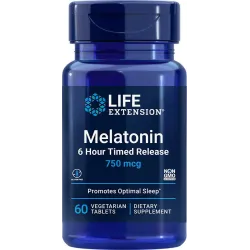
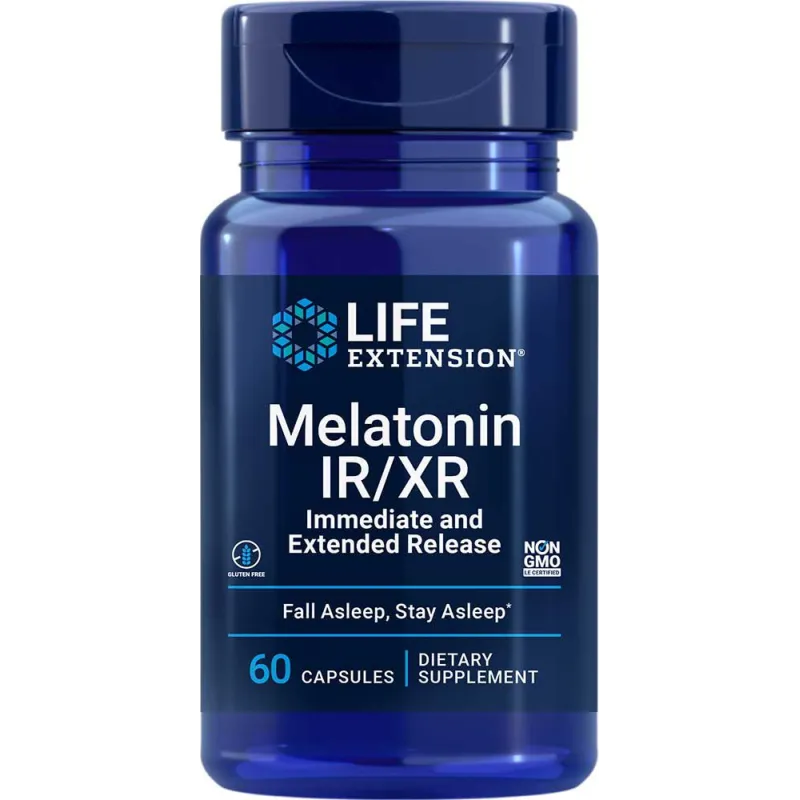
Melatonin IR/XR
60 capsules
Item Catalog Number: 02201

An estimated 50 to 70 million American adults have difficulty sleeping.1 Melatonin, known as the “sleep hormone,” is made naturally by your body primarily at night and is necessary to keep our day/night rhythm in tune, but those who have trouble sleeping may not be producing enough of it at the right time.2,3,4 Melatonin IR/XR helps you fall asleep and stay asleep all night long. It combines immediate-release and extended-release melatonin for approximately seven hours of healthy sleep support.
Lack of quality, restful sleep can affect cognitive health, metabolic health and more.5,6,7 Poor sleep can mean that you have trouble falling asleep, but it can also mean that you wake up in the middle of the night and can’t get back to sleep. If that sounds familiar, try Melatonin IR/XR.
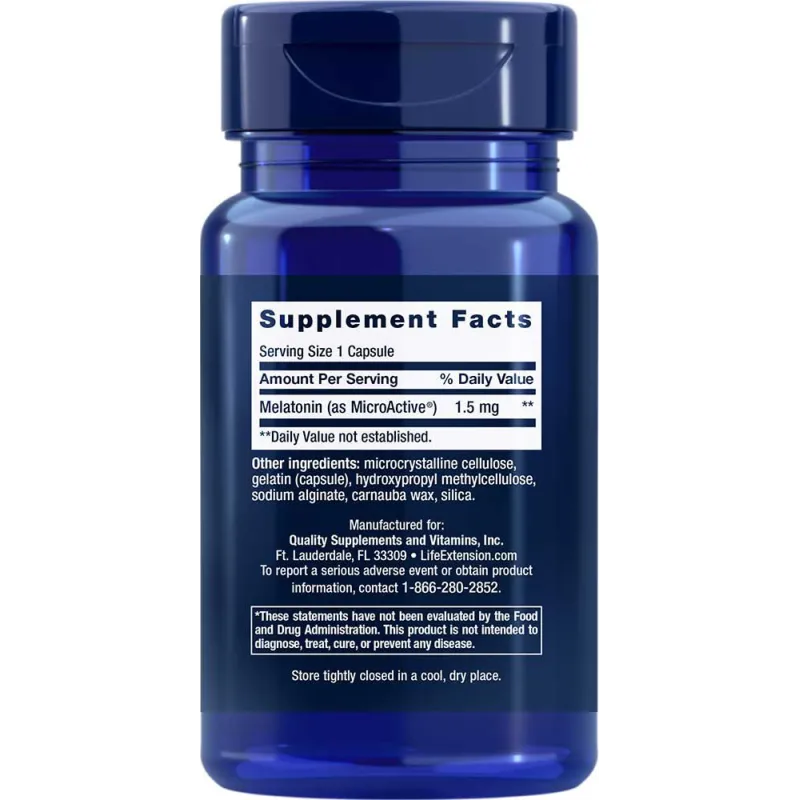
Each capsule of Melatonin IR/XR contains 1.5 mg of MicroActive® Melatonin, a unique blend of immediate- and extended-release melatonin. Taken about 30 minutes before bed, Melatonin IR/XR helps you fall asleep quickly and stay asleep all night long. Just one Melatonin IR/XR capsule provides approximately seven hours of uninterrupted sleep support, so you sleep throughout the night.
Results from an analysis of 15 clinical studies show that standard melatonin helps fall asleep faster and sleep longer and promotes sleep quality compared with a placebo.8 In one study, subjects took a 0.1 mg, 0.3 mg, or 3 mg melatonin capsule or a placebo 30 minutes before bedtime for three days. All three melatonin doses promoted restful sleep.9 In a recent randomized placebo-controlled trial, subjects who took 0.5 mg fast-release melatonin at night for four consecutive weeks fell asleep faster and experienced healthy, restful sleep compared with a placebo.10
A study found that 2 mg of a controlled-release melatonin formulation taken two hours before bed promoted healthy sleep, compared with a placebo, and also shortened the length of time subjects spent awake after initially falling asleep.11 And in another randomized placebo-controlled study, subjects reported improvement in sleep quality after taking 2 mg of an extended-release formulation before bedtime.12
For those who sometimes have difficulty sleeping and have tried other melatonin supplements to no avail, now there’s a new formulation from Life Extension. Get the quality, restful and uninterrupted sleep your body needs.
Serving Size 1 capsule
| Amount Per Serving | |
|---|---|
| Melatonin (as MicroActive®) | 1,5 mg |
|
Other ingredients: microcrystalline cellulose, gelatin (capsule), hydroxypropyl methylcellulose, sodium alginate, carnuba wax, silica. |
|
Non-GMO
MicroActive® Melatonin is a registered trademark of Bioactives LLC.
Take one (1) capsule 30 to 60 minutes before bedtime, or as recommended by a healthcare practitioner. Melatonin is naturally secreted from the pineal gland at night, and should be taken at night for optimal results.
Caution
Do not consume alcohol, drive or operate machinery after taking this product.
Melatonin is often called the "sleep hormone" because it's naturally produced by your pineal gland primarily at night to help regulate your sleep-wake cycle. An estimated 50-70 million American adults struggle with sleep difficulties, and melatonin supplementation has become one of the most popular approaches to supporting healthy sleep patterns. This particular formulation uses MicroActive® Melatonin technology, which provides both immediate and extended release. The immediate-release component (IR) helps you fall asleep faster, while the extended-release portion (XR) helps you stay asleep throughout the night by providing a steady release of melatonin over several hours. This dual-action approach mimics your body's natural melatonin production pattern more closely than standard immediate-release formulations. Traditional melatonin supplements release all their melatonin at once, which can help with sleep onset but may not provide support throughout the entire night. The MicroActive technology addresses this by encapsulating melatonin in a specialized matrix that allows for controlled release. This is particularly beneficial for people who not only have trouble falling asleep but also experience middle-of-the-night awakenings that disrupt sleep continuity. The 1.5 mg dose is carefully chosen based on clinical research. While some products contain 3mg, 5mg, or even 10mg of melatonin, research suggests that lower doses (0.3-2mg) may be more effective for supporting healthy sleep patterns without causing next-day grogginess. Higher doses don't necessarily work better and may actually disrupt your body's natural melatonin production over time. Quality and purity are critical with melatonin supplements. Studies have found that some commercial melatonin products contain significantly more or less melatonin than their labels claim, and some have been contaminated with serotonin or other compounds. This formulation undergoes rigorous third-party testing to ensure you're getting exactly 1.5mg of pure melatonin per capsule, with no contaminants or unwanted additives that could affect safety or efficacy.
Melatonin works primarily by interacting with specific melatonin receptors (MT1 and MT2) in your brain and throughout your body. When melatonin binds to MT1 receptors in the suprachiasmatic nucleus (your brain's master clock), it helps signal to your body that it's time to sleep. The MT2 receptors help regulate the timing of your circadian rhythm, essentially helping to keep your internal clock synchronized with the day-night cycle. The immediate-release component of this formulation starts working within 30-45 minutes of taking it. As melatonin levels rise in your bloodstream, you'll typically begin to feel drowsy and ready for sleep. This is your body's natural response to increasing melatonin levels, which normally occurs as darkness falls in the evening. The IR portion delivers about 60% of the total melatonin dose quickly to help initiate sleep. What makes the IR/XR combination unique is the extended-release portion. While the immediate-release melatonin helps initiate sleep, the microencapsulated melatonin continues to release gradually over 6-8 hours. This sustained release helps maintain optimal melatonin levels throughout your sleep period, supporting sleep continuity and reducing the likelihood of middle-of-the-night awakenings that leave you tossing and turning. Beyond just sleep onset, melatonin influences multiple physiological processes. It acts as a powerful antioxidant, particularly in the brain, where it helps protect neurons from oxidative damage during sleep. Melatonin also helps regulate body temperature, which naturally drops during sleep, and it influences the production of other hormones that affect sleep quality including cortisol and growth hormone. The timing of melatonin supplementation matters significantly for optimal results. Taking it 30-60 minutes before your desired bedtime allows the immediate-release component to reach effective blood levels right when you want to fall asleep. Taking it too early may make you drowsy before you're ready for bed, while taking it too late may delay its sleep-promoting effects until after you wanted to be asleep.
Clinical research on melatonin for sleep support is extensive, with hundreds of published studies examining its effects across diverse populations. A comprehensive meta-analysis of 19 studies involving over 1,700 participants found that melatonin supplementation reduced sleep onset latency (time to fall asleep) by an average of 7 minutes and increased total sleep time by 8 minutes compared to placebo. While these numbers might seem modest, for people struggling with chronic insomnia, even a few minutes can make a meaningful difference in sleep quality and daytime functioning. Research specifically on extended-release melatonin formulations has shown additional benefits for sleep maintenance. One landmark study found that controlled-release melatonin significantly improved sleep quality scores and reduced the number of nighttime awakenings by 35% compared to placebo, with effects becoming more pronounced over 3 weeks of consistent use. Participants also reported improved morning alertness and daytime functioning. The 1.5mg dose used in this formulation aligns with research suggesting that lower doses may be more effective than higher ones for sleep support. A dose-response study found that melatonin doses between 0.3-2mg were sufficient to raise melatonin blood levels to the physiological range that occurs naturally during sleep, while higher doses (5-10mg) produced supraphysiological levels that didn't translate to better sleep outcomes and sometimes caused next-day drowsiness. Studies on melatonin's safety profile have been particularly reassuring for those concerned about long-term use. Long-term studies spanning up to 2 years have found melatonin to be well-tolerated with minimal side effects. The most commonly reported side effects are mild and include headache, dizziness, or next-day drowsiness, typically occurring in less than 10% of users and often diminishing with continued use as the body adjusts. Research also shows that melatonin doesn't cause the dependence or withdrawal symptoms associated with prescription sleep medications like benzodiazepines or Z-drugs. When people discontinue melatonin use, their sleep doesn't worsen below baseline levels, and their body's natural melatonin production returns to normal. This makes melatonin a safer option for those seeking occasional or regular sleep support without the risks of dependency.
For optimal results, take one capsule 30-60 minutes before your desired bedtime. This timing allows the immediate-release component to reach effective blood levels right when you want to fall asleep. Taking it with a small snack is fine, though it's not necessary - melatonin absorption isn't significantly affected by food, though fatty meals might slightly delay absorption. Consistency in timing is important for maximizing melatonin's benefits. Try to take it at the same time each night, as this helps reinforce your circadian rhythm and train your body to expect sleep at a consistent hour. This is particularly important if you're using melatonin to help shift your sleep schedule (for example, if you're a night owl trying to become an early riser or adjusting to a new time zone). Create an optimal sleep environment to work synergistically with the melatonin. Dim your lights 1-2 hours before bedtime, as bright light suppresses your body's natural melatonin production and can counteract the effects of supplementation. Avoid screens (phones, tablets, computers, TV) for at least 30 minutes before bed, or use blue-light blocking glasses if you must use devices, since blue light wavelengths are particularly effective at suppressing melatonin. Keep your bedroom cool, dark, and quiet. Melatonin helps lower your core body temperature as part of the sleep initiation process, so a cool room temperature (65-68°F or 18-20°C) supports this natural temperature drop and enhances melatonin's effectiveness. Use blackout curtains or an eye mask to eliminate light exposure, which can interfere with melatonin's effects even while you sleep. Consider using white noise or earplugs if environmental sounds disrupt your rest. Most people find that melatonin works best when used intermittently rather than every single night indefinitely. Some sleep experts recommend using it for 2-4 weeks to help establish a healthy sleep pattern, then taking breaks to allow your body's natural melatonin production to function optimally. However, long-term nightly use has been studied and found to be safe for those who need ongoing support, and there's no evidence that the body becomes tolerant to melatonin's sleep-promoting effects.
Melatonin IR/XR is most beneficial for adults experiencing occasional sleeplessness, difficulty falling asleep, or trouble staying asleep throughout the night. It's particularly helpful for people whose sleep difficulties are related to circadian rhythm disruptions - for example, shift workers whose schedules force them to sleep during the day, frequent travelers dealing with jet lag across multiple time zones, or individuals whose sleep schedules have become misaligned with their desired wake times. People who are naturally "night owls" with delayed sleep phase syndrome often benefit significantly from melatonin supplementation. These individuals have a circadian rhythm that runs later than the conventional sleep schedule, making them alert late at night but groggy in the morning. Taking melatonin in the early evening (3-5 hours before desired bedtime) can help gradually shift their circadian rhythm earlier over time, making it easier to fall asleep at a more conventional hour. This approach requires consistent use for 2-4 weeks to see full benefits. Older adults may find melatonin particularly helpful, as natural melatonin production declines significantly with age. Research shows that melatonin levels can drop by 50% or more in people over 60 compared to younger adults, which may contribute to the sleep difficulties that are so common in older populations. Supplementation can help restore melatonin to more youthful levels and improve sleep quality without the risks associated with prescription sleep medications. However, certain groups should exercise caution or avoid melatonin without medical supervision. Pregnant and breastfeeding women should consult their healthcare provider before using melatonin, as there's limited safety data for these populations and melatonin crosses the placenta and enters breast milk. People with autoimmune disorders should also discuss melatonin use with their doctor, as melatonin can affect immune function and might theoretically influence disease activity. Those taking certain medications should be aware of potential interactions. Melatonin can interact with blood thinners (warfarin), diabetes medications (by affecting blood sugar), immunosuppressants, and birth control pills. It may also enhance the sedative effects of other medications or supplements that cause drowsiness. Children and teenagers should only use melatonin under pediatric guidance, as the long-term effects on the developing endocrine system aren't fully understood.
Results: Analysis of 19 controlled studies with 1,700+ participants showed melatonin reduced sleep onset latency by 7 minutes and increased total sleep time by 8 minutes compared to placebo. Effects were consistent across age groups and more pronounced in individuals with primary sleep disorders.
Citation: Ferracioli-Oda E, et al. Meta-analysis: melatonin for the treatment of primary sleep disorders. PLoS One. 2013.
Results: Controlled-release melatonin significantly improved sleep quality scores and reduced nighttime awakenings by 35% compared to placebo over 3 weeks. Participants reported improved daytime alertness and no next-day sedation.
Citation: Lemoine P, et al. Prolonged-release melatonin improves sleep quality and morning alertness in insomnia patients aged 55 years and older. J Sleep Res. 2007.
Results: Low-dose melatonin (0.3-2mg) achieved physiological blood levels comparable to natural nighttime production, while higher doses (5-10mg) produced supraphysiological levels without additional sleep benefits. Lower doses showed better tolerability.
Citation: Zhdanova IV, et al. Sleep-inducing effects of low doses of melatonin ingested in the evening. Clin Pharmacol Ther. 1995.
Results: Two-year study of continuous melatonin use found no serious adverse events, with mild side effects (headache, dizziness) occurring in less than 10% of participants. No evidence of tolerance, dependence, or withdrawal symptoms.
Citation: Wade AG, et al. Efficacy of prolonged release melatonin in insomnia patients aged 55-80 years. Curr Med Res Opin. 2007.