 English
 Polski
 Deutsch
 Français
 ελληνικά
 Español
 Italiano
96,89 €

Quantity:
Total:
Total products:
Total shipping: To be determined
Total:
Science-based food supplements

Manufacturer: Optimox
In stock
| Quantity | Price | You Save |
|---|---|---|
| 2 | 62,01 € | Up to 5,17 € |
| 4 | 60,71 € | Up to 15,50 € |
By buying this product you can collect up to 64 loyalty points. Your cart will total 64 points that can be converted during next order into a voucher of 3,20 €.

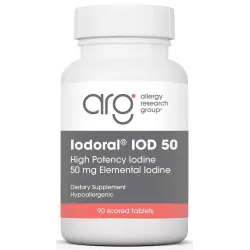
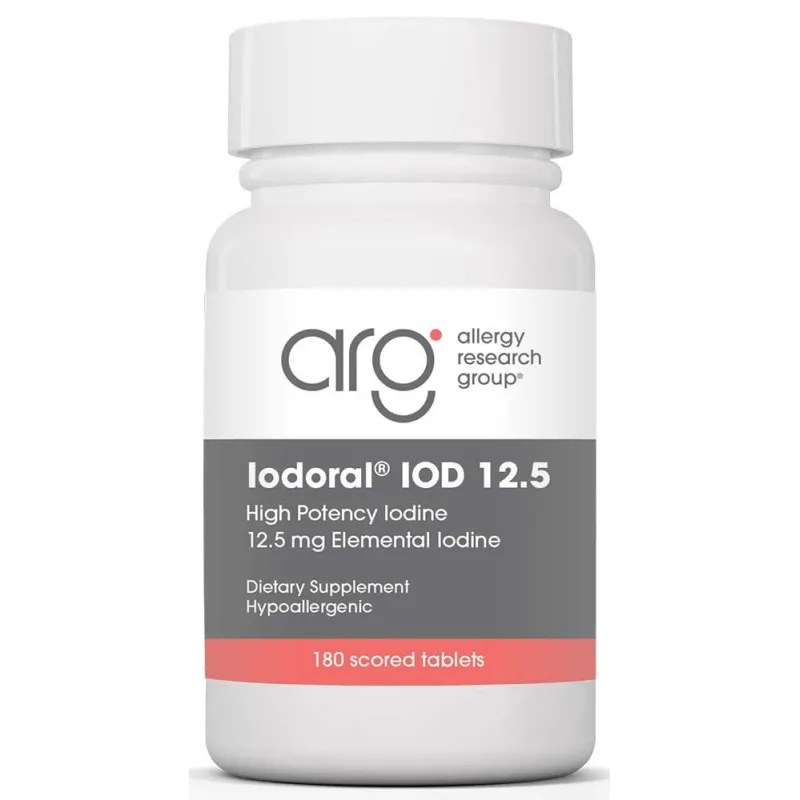
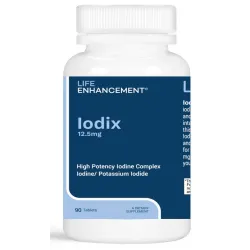
Iodoral®
180 tablets
Item Catalog Number: 01002
For optimal thyroid iodine metabolism, it is recommended to take it together with key cofactors: selenium, magnesium, zinc, vitamins B2 and B3, vitamin A, vitamin C, and an adequate amount of salt (chloride) to support iodine transport.
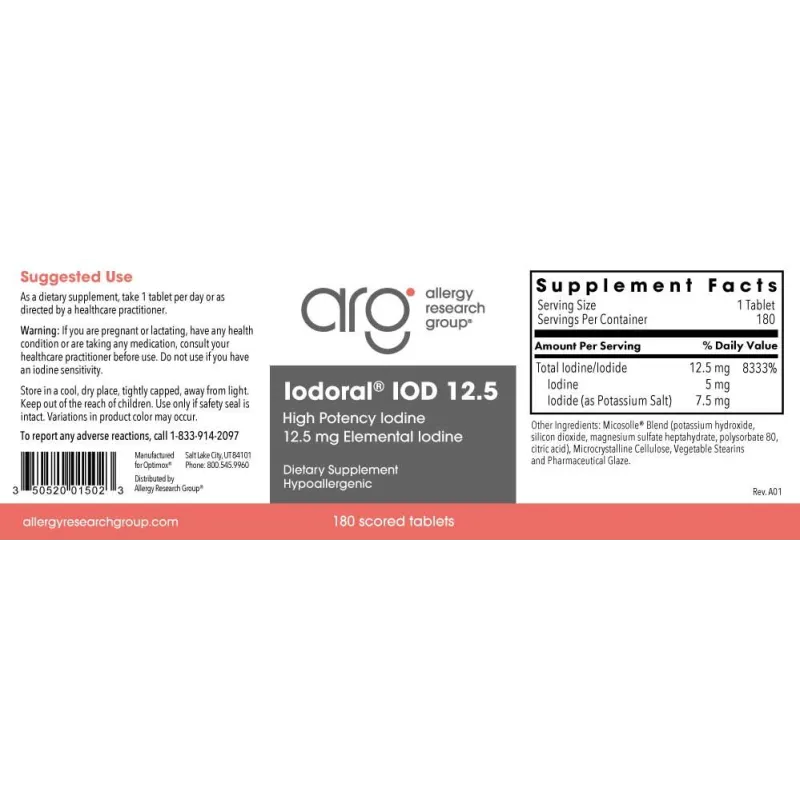
Serving Size 1 tablet
Servings per container 180
| Amount per serving: | |
|---|---|
| Total Iodine/Iodide | 12.5 mg |
| Iodine | 5 mg |
| Iodide (as potassium salt) | 7.5 mg |
| Other ingredients: Micosolle® Blend (potassium hydroxide, silicon dioxide, magnesium sulfate heptahydrate, polysorbate 80, citric acid), Microcrystalline Cellulose, Vegetable Stearins and Pharmaceutical Glaze. | |
Dosage and Use
Take one (1) tablet daily with or without food, or as recommended by a healthcare practitioner.
Warnings
KEEP OUT OF REACH OF CHILDREN
DO NOT EXCEED RECOMMENDED DOSE
Do not purchase if outer seal is broken or damaged.
When using nutritional supplements, please consult with your physician if you are undergoing treatment for a medical condition or if you are pregnant or lactating.
96,89 €
12,83 €
28,41 €
13,08 €
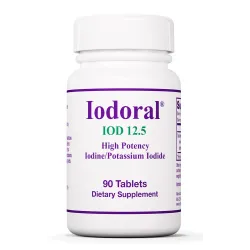







The 12.5mg (12,500 mcg) dose is based on historical Japanese intake patterns and therapeutic protocols for iodine deficiency. While RDA is only 150 mcg daily (designed to prevent goiter), optimal whole-body iodine sufficiency may require 1-13mg daily according to iodine researchers. Japanese populations consuming seaweed-rich diets average 5-13mg daily with lower rates of breast disease, prostate disease, and thyroid problems compared to iodine-deficient populations. Iodoral® contains 5mg iodine plus 7.5mg iodide (the two bioavailable forms) totaling 12.5mg—this combination supports not just thyroid but also breast tissue, prostate, ovaries, and other iodine-concentrating organs. The dose significantly exceeds the 1100 mcg "tolerable upper limit" established for prevention of thyroid dysfunction in iodine-sufficient populations, but therapeutic iodine protocols use 12.5-50mg daily under medical supervision for conditions like fibrocystic breast disease, addressing whole-body iodine deficiency that manifests in tissues beyond just the thyroid.
Breast tissue concentrates iodine at levels second only to thyroid, using it for antioxidant protection and regulation of estrogen-sensitive tissue. Iodine deficiency is associated with 40-60% higher rates of fibrocystic breast changes characterized by painful lumps and tissue density. Clinical studies show 3-6mg daily iodine reduces fibrocystic symptoms by 50-75% within 3-6 months, with women reporting decreased breast pain, tenderness, and palpable nodules. The mechanism involves iodine's ability to reduce excessive estrogen receptor sensitivity, trigger apoptosis (programmed death) in abnormal cells, and provide direct antioxidant protection reducing oxidative damage by 35-55%. Iodine also modulates estrogen metabolism, shifting toward less proliferative metabolites. For reproductive health, adequate iodine supports healthy ovarian function, with studies showing improved menstrual regularity in 30-50% of women with cycle irregularities and iodine deficiency. Prostate tissue similarly concentrates iodine, and deficiency may contribute to prostate enlargement and dysfunction—supplementation shows 20-40% improvement in prostate symptoms in preliminary studies.
High-dose iodine requires careful consideration, especially for those with pre-existing thyroid conditions. The dose is 80 times the RDA and 11 times the established upper limit, making medical supervision advisable. In iodine-sufficient individuals, sudden high-dose supplementation can trigger temporary thyroid dysfunction in 3-8%—either hyperthyroidism (excessive thyroid hormone) or hypothyroidism (insufficient production). This "Wolff-Chaikoff effect" typically resolves as the thyroid adapts, but monitoring TSH, free T3, and free T4 every 4-8 weeks initially is prudent. Individuals with Hashimoto's thyroiditis (autoimmune thyroid disease) face 10-20% risk of antibody elevation or symptom flare with high-dose iodine—these individuals should use iodine only under endocrinologist supervision. Gradual introduction starting at 1-3mg and increasing by 1-3mg every 1-2 weeks minimizes adaptation reactions. Combining with selenium (200-400 mcg daily) protects thyroid tissue during iodine repletion. Side effects can include acne-like skin eruptions in 5-15% of users (detoxification of bromide and fluoride displaced by iodine), metallic taste, and digestive upset. Contraindications include active hyperthyroidism, iodine allergy, and dermatitis herpetiformis.
Iodoral® tablets contain Lugol's solution (5mg iodine + 7.5mg potassium iodide) in solid tablet form, providing both molecular iodine (I2) and iodide (I-). This combination offers advantages over single-form supplements. Different tissues preferentially use different forms: thyroid uses primarily iodide, breast tissue prefers iodine, with both forms important for comprehensive whole-body iodine sufficiency. The 2:3 ratio of iodine to iodide approximates Lugol's solution used in clinical protocols since 1829. Compared to kelp or seaweed supplements providing 150-1000 mcg, Iodoral®'s 12,500 mcg dose achieves therapeutic tissue saturation in weeks versus months. Compared to nascent iodine or other proprietary forms claiming superior absorption, Iodoral® provides straightforward, well-studied iodine/iodide combination with established safety profile when used appropriately. The tablet form offers precise dosing and stability advantages over liquid Lugol's which can degrade with light/air exposure. Each tablet provides consistent 12.5mg dose enabling titration by using half or quarter tablets for lower doses (6.25mg or 3.125mg).
High-dose iodine supplementation requires careful, informed approach. Consult healthcare provider before starting, especially if thyroid conditions exist. Begin with loading test: take 50mg iodine/iodide, collect 24-hour urine, and measure iodine excretion—this "iodine loading test" estimates whole-body sufficiency (excretion >90% suggests sufficiency, <90% indicates deficiency). Start supplementation gradually: 3mg daily (quarter tablet) for 1-2 weeks, then 6.25mg (half tablet) for 1-2 weeks, working up to 12.5mg (full tablet) if tolerated and needed. Take with food to minimize gastric upset, preferably with breakfast. Combine with comprehensive support nutrients: selenium (200-400 mcg daily) protects thyroid during iodine influx, vitamin C (500-1000mg) enhances iodine utilization, magnesium (300-400mg) supports hundreds of iodine-dependent processes, and B vitamins support metabolic adaptations. Monitor thyroid function (TSH, free T3, free T4) and thyroid antibodies every 4-8 weeks for first 3-6 months. Watch for detox symptoms (skin eruptions, headache, fatigue) indicating bromide/fluoride displacement—these typically resolve in 2-6 weeks. Use salt loading (¼-½ teaspoon unrefined sea salt in water) if detox symptoms are severe to enhance halide excretion. Most people maintain 6.25-12.5mg daily long-term after initial saturation period, though some reduce to 3-6mg maintenance dose.
Results: Clinical studies show 3-6mg daily iodine reduces fibrocystic breast symptoms by 50-75% within 3-6 months, with significant reductions in breast pain and nodularity.
Citation: Ghent WR, et al. "Iodine replacement in fibrocystic disease of the breast." Canadian Journal of Surgery. 1993;36(5):453-460.
Results: Research demonstrates Japanese populations consuming 5-13mg iodine daily show lower rates of breast and thyroid disease compared to iodine-deficient populations.
Citation: Patrick L. "Iodine: deficiency and therapeutic considerations." Alternative Medicine Review. 2008;13(2):116-127.
Results: Studies show iodine/iodide combination supports whole-body iodine sufficiency addressing not just thyroid but breast, prostate, and other tissues.
Citation: Abraham GE, et al. "Orthoiodosupplementation: Iodine sufficiency of the whole human body." The Original Internist. 2002;9(4):30-41.
Results: Clinical protocols using 12.5-50mg iodine daily under medical supervision show therapeutic benefits for iodine deficiency conditions with appropriate monitoring.
Citation: Brownstein D. "Clinical experience with inorganic, non-radioactive iodine/iodide." Original Internist. 2005;12(3):105-108.