
 English
 Polski
 Deutsch
 Français
 ελληνικά
 Español
 Italiano
Using Niacin to Improve Cardiovascular Health
 Patient: I recently had a cholesterol profile blood test and learned that I may be at risk of heart disease because my levels of beneficial HDL (high-density lipoprotein) are too low. I read that niacin could help increase my HDL, but my doctor said niacin is dangerous. Whom should I believe?
Doctor: Your doctor would be right—if we were still living in 1985. Since then, however, we have learned how to use niacin (vitamin B3) safely and effectively. Unfortunately, many physicians have not yet caught up, or are still trapped by the idea that cholesterol-lowering statin drugs are the only way to decrease cardiovascular disease risk. I have personally prescribed niacin for thousands of patients as part of our program to reverse coronary disease. In fact, niacin is the closest thing we have available to a perfect treatment that corrects most of the causes of coronary heart disease.
Niacin, also known as “nicotinic acid,” is found in red meat, chicken, turkey, beans, and grains. It is a required nutrient and a member of the B vitamin family. Have you ever taken a B-complex vitamin pill that triggered a strange burning sensation of the skin? If so, that was the niacin you experienced. Niacin plays a crucial role in energy production, gene expression, and hormone synthesis. Humans cannot exist without it.
The recommended dietary allowance (RDA) of niacin to prevent pellagra (a disease caused by vitamin B3 deficiency and characterized by diarrhea, dermatitis, dementia, and possible death) is 16 mg a day for males and 14 mg for females. Pellagra induced by niacin deficiency was widespread in the United States during the nineteenth century, but is now long forgotten and rarely seen.
When taken at doses greater than the RDA, niacin confers an array of health benefits. Niacin: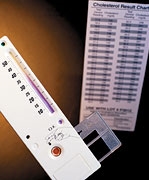
- Increases high-density lipoprotein (HDL) by 20-35%. No other available over-the-counter treatments, and very few drugs, are as effective.
- Decreases small low-density lipoprotein (small LDL) particles. Small LDL is an important yet underappreciated cause of heart disease. Niacin is the most effective agent known for correcting this abnormal pattern.
- Decreases triglycerides by 30%. Niacin is especially effective when taken with fish oil (at doses of 4000 mg a day, providing 1200 mg of EPA/DHA).
- Decreases very low-density lipoprotein (VLDL) particles.
- Decreases lipoprotein(a), or Lp(a). No other treatment approaches the power of niacin to reduce the genetically determined pattern of high Lp(a), which is among the most serious risk factors for heart disease.
- Decreases low-density lipoprotein (LDL), usually by 20-40 mg/dL, or 5-25%.
Niacin blocks the release of fatty acids from fat cells. Fewer fatty acids are passed through to the liver, resulting in fewer VLDL particles. Less VLDL leads to less small LDL and higher HDL.1 Niacin also improves endothelial function and nitric oxide synthase activity.
Niacin’s benefits are not limited to its influence on blood markers of cardiovascular disease risk. It also reduces heart attack risk dramatically. The Coronary Drug Project was the first to establish that niacin is a powerful agent in lowering heart attack risk. When more than 1,000 heart attack survivors were given 3000 mg of (immediate-release/crystalline) niacin daily for six years, the incidence of recurrent non-fatal heart attacks was reduced by 27%, and the number of strokes was reduced by 26%.2
- Immediate-release/crystalline niacin is available as a nutritional supplement and is inexpensive and effective. The niacin in each table is released immediately and usually provokes a “hot flush,” a warm, itchy feeling of the skin. For this reason, starting at small doses, such as 250 mg, can be helpful. The dose can be increased gradually (by 250 mg every four weeks) to achieve the desired amount. Doses greater than 500 mg per day should be used only under medical supervision. Some people take their niacin in small doses, three or four times daily, to spread out the dose. This could be unsafe, and I recommend that patients never take immediate-release niacin more than twice a day.
- Extended-release niacin is a time-release preparation, but does not act as slowly as slow-release niacin. This makes it safer than the slow-release preparations that can cause liver side effects. Extended-release niacin also provokes fewer hot flushes than immediate-release niacin. An example is Slo-Niacin®, which is sold over the counter. Niaspan® is an extended-release niacin preparation sold as a prescription drug.
 By contrast, slow-release niacin preparations reduce the hot-flush effect by releasing niacin over an extended period of 12 hours or longer. Most of these preparations are unsafe and I do not recommend them. “No-flush” niacin preparations, such as inositol hexaniacinate and nicotinamide, are widely sold as niacin alternatives that do not cause hot flushes. In my experience, however, they simply do not work. In other words, no flush, no effect.
The correct dose of niacin depends on what abnormality you and your doctor are trying to correct. To raise HDL and correct small LDL, a dose of 750-1000 mg a day usually provides full benefit. Increasing this dose to 1500 mg a day may provide slightly greater benefit. To reduce LDL or Lp(a), higher doses (from 1000 mg up to 4000-5000 mg per day) are often used, with higher doses providing greater effects. However, doses this high should be taken only with a physician’s supervision. Keep in mind that it may take three months or longer to realize the full lipid-optimizing benefits of niacin.
As previously noted, the one common though generally harmless side effect of taking niacin use is hot flushes. Some people find them bothersome enough that they want to flush the niacin down the toilet!
The flush, which feels like blushing when one is embarrassed, is usually accompanied by a prickly sensation over the face, neck, and chest. Some women say it feels like the hot flashes of menopause. These flushes are usually short-lived, lasting no more than 20 minutes. Tolerance to this effect occurs with continued niacin use, usually after a few weeks or months. You may experience flushing at the start of your niacin program as well as when you increase your dose. In rare cases, a more marked flushing reaction may occur, resembling a rash or hives. If this occurs, speak to your doctor about whether you should continue using niacin.
You can employ several strategies to greatly minimize or even eliminate niacin-induced hot flushes:
- Drink plenty of water. This is very important and especially helpful when you experience a hot flush: drink two 8- to 12-ounce glasses of water immediately, and the hot flush will almost always disappear within a few minutes. If you need to drink water to block hot flushes but find yourself getting up several times a night to urinate, take your niacin with dinner or breakfast. If you are restricting your fluid intake because of kidney disease, heart disease, water retention, or diuretic use, talk with your doctor before increasing your water intake
- Take niacin after consuming a small handful of nuts, such as 5-10 raw almonds, walnuts, or pecans. This will slow niacin’s absorption in the body. You may want to skip this if you are limiting your calorie intake in order to lose weight. While some people recommend taking niacin with a low-fat snack, I discourage this approach, as low-fat snacks like crackers contribute to increased levels of dangerous small LDL.
- Take niacin with an aspirin. When you start niacin and whenever you increase the dose, taking an adult (325-mg) uncoated aspirin tablet can block the niacin flush. After a few weeks or months, when flushing dissipates, changing to a low-dose (81-mg) enteric-coated aspirin can minimize stomach upset and the long-term risk of stomach ulcers and bleeding. Always discuss aspirin use with your doctor, and only use aspirin on a long-term basis with your doctor’s recommendation.
- Avoid alcohol and spicy foods when taking niacin. This strategy is not crucial for everyone, as only some people are sensitive to this phenomenon. You can consume alcohol and spicy foods apart from your use of niacin—for example, having a glass of wine at 7 p.m. and then taking niacin at 9 p.m. Only a few people will have more flushing due to the combination.
 Niacin may raise blood sugar by about 4-5 mg/dL at the beginning of therapy. This increase usually dissipates over a few months, and is rarely clinically important. However, increases in blood sugar may be greater if you already have high blood sugar or diabetes. For this reason, niacin should be taken under medical supervision, with gradual increases in dosage, if you have high blood sugar. Having diabetes or pre-diabetes is not necessarily a contraindication to niacin use. In fact, people with these conditions are most likely to benefit from niacin, since diabetes and pre-diabetes are strongly associated with small LDL, low HDL, increased triglycerides, and other abnormalities that are corrected by niacin.4 (Individuals with extremely high triglyceride levels of greater than 1000 mg/dL may require a combination of therapies to achieve effective lipid level control.) Type I (childhood-onset) diabetes, however, is often a contraindication to niacin use, as blood sugar is significantly elevated in this condition.
Niacin therapy should be initiated in patients with low HDL levels (less than 40 mg/dL for men and less than 50 mg/dL for women), particularly if other risk factors are present. Niacin is among the most effective agents known for correcting the multiple causes of heart and vascular disease, and has been shown to greatly diminish the risk of heart attack. Niacin is very safe and easy to use, if used properly. In my experience, over 95% of people who follow these guidelines are able to take niacin with only minimal hot flushes. Potentially serious side effects are almost never seen.
People with liver disease, unexplained elevation of liver enzymes, active peptic ulcer disease, or a history of abnormal bleeding should consult their physician before beginning niacin treatment. Those with a past history of liver disease, jaundice, peptic ulcer disease, gastritis, or alcoholism should exercise caution with niacin. Gout may flare up when niacin is used, so talk to your doctor if you have a history of gout.
Material used with permission of Life Extension. All rights reserved.
1. Carlson LA. Nicotinic acid: the broad-spectrum lipid drug. A 50th anniversary review. J Intern Med. 2005 Aug;258(2):94–114.
2. Canner PL, Berge KG, Wenger NK, et al. Fifteen year mortality in Coronary Drug Project patients: long-term benefit with niacin. J Am Coll Cardiol. 1986 Dec; 8(6):1245-55.
3. Brown BG, Zhao XQ, Chait A, et al. Simvastatin and niacin, antioxidant vitamins, or the combination for the prevention of coronary disease. N Engl J Med. 2001 Nov 29;345(22):1583–92.
4. McKenney J. New perspectives on the use of niacin in the treatment of lipid disorders. Arch Intern Med. 2004 Apr 12;164(7):697–705.
Related products
-
Vitamin B3 Niacin
Price: 8,99 €Vital metabolic pathway & cellular energy support Is crucial to energy... -
No Flush Niacin
Price: 18,99 €True niacin activity without the characteristic niacin flush Special form...
Related posts
-
 Is Conventional Pomegranate Extract Enough?
An abundance of clinical data has established pomegranate as a broad-spectrum, multi-modal defense against the...
Is Conventional Pomegranate Extract Enough?
An abundance of clinical data has established pomegranate as a broad-spectrum, multi-modal defense against the... -
Lipoic Acid Reverses Mitochondrial Decay
It is estimated that 85% of the oxygen contained in every breath you take is consumed by the mitochondria within each...
-
Vitamin C and Dihydroquercetin
Every day, our bodies are under continual assault by damaging agents known as free radicals. Generally, both internal...
-
How Resveratrol Combats Leading Causes of Death
In 1997, the first scientific paper on resveratrol was published showing that this polyphenol could prevent cancer in...
-
Cukrzyca opis choroby Część 2
Cukrzycy typu 1 potrzebują dożywotniej insulinoterapii, choć suplementy wymienione w niniejszym rozdziale mogą pomóc...