
 English
 Polski
 Deutsch
 Français
 ελληνικά
 Español
 Italiano
Why Should I Take Multivitamins Every Day?
 Fruits, vegetables, and other foods can be an excellent source of vitamins. But there’s a catch: Vitamins easily break down in the presence of heat, air, or oxygen. This means they can be inactivated during cooking, storage, or exposure to the air.
That’s one reason that supplemental intake of a full array of vitamins is so important for overall health.
What does a multivitamin do for you?
You might be wondering, “What will a multivitamin even do for me, anyway?” Great question! Let’s talk about three top multivitamin benefits.
1. Very generally, multivitamins pick up where nutrition leaves off
Getting everything you need from diet alone can be challenging enough as it is. Complicating matters: food quality isn’t what it used to be. One reason for this is soil degradation. When the soil suffers, the crops suffer—and that’s why most of the fruits and vegetables on the market today aren’t exactly bursting with the same levels of nutritional goodness that you’d find in the fruits and vegetables of decades past.
 While we don’t have a time machine to take us back to the days of richer, healthier soil, the good news is that today’s multivitamins can help keep us well-nourished.
2. A good multi can support brain health and function
Research suggests that multivitamins might support brain health as we age. This includes not just how well you think, but your overall mood and wellbeing.
This makes perfect sense, considering that there is a strong connection between what you eat and how you feel. What you fuel your body with matters. And if this fuel isn’t enough, a multivitamin can bridge the gap.
3. Multivitamins can help keep your eyes healthy
Research is ongoing but thus far suggests that a multivitamin can help keep your eyes healthy as you age. That’s because a high quality multivitamin should be formulated with lutein and zeaxanthin, two nutrients that support normal vision.
So, do multivitamins work?
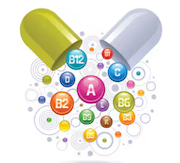 The short answer is: yes. As you know, what you put in your body is important, and supplements are no different. Here are a few things to consider before selecting a multivitamin:
- In what amounts do the individual ingredients exist? Is it enough? Too much?
- How are the ingredients sourced? Is the brand transparent with its production process? You should be able to get a Certificate of Analysis for any vitamin or supplement.
- Does it have additive products like sweeteners or preservatives? Is it non-GMO and gluten-free?
Remember that not all multivitamins are created equal. Therefore, doing your due diligence — and also learning how to read nutrition labels like a pro — is going to work in your favor.
Dangers of Deficiencies
 Vitamins and minerals are cofactors for enzymes throughout the body. These enzymes are required to repair DNA, prevent oxidative damage, maintain cardiovascular health, and perform many functions essential for a healthy and long life.6,7
Up to 70% of Americans are deficient in one or more vital nutrient. Inadequate intake of these essential nutrients may increase the risk of age-related disease and premature aging.6
For example, the continuous creation of cellular DNA and RNA requires certain B vitamins that function as critical coenzymes.8
Higher Dosages
Many multivitamins contain the minimal dosage necessary to prevent diseases like scurvy and osteomalacia.
Larger amounts of some nutrients are often needed to promote healthy longevity.
Inadequate dosages can be especially problematic for older adults who have more difficulty absorbing nutrients.5
An increasing number of Americans are switching to multinutrient formulas that provide vitamins, minerals, and plant extracts in higher dosages and more bioavailable forms.
The Best Forms of Nutrients
 Folate is a B-vitamin vital cofactor for many enzymatic reactions, including those that detoxify homocysteine, a risk factor for vascular disease.9,10
Before folate can perform, it must be converted to its active form, L-methylfolate (5-MTHF).
Older individuals are challenged to convert dietary or supplemental folate into biologically active 5-MTHF. This helps explain why homocysteine levels often surge upwards in the elderly.11,12
A multivitamin should include folate in its bioavailable form, 5-MTHF. This means it is already active and can be easily absorbed and used by tissues immediately.
A superior multivitamin should also include beneficial nutrients not generally found in widely available formulas, such as:
- The mineral boron,
- The antioxidant alpha-lipoic acid,
- Plant extracts, such as the carotenoid lycopene, and
- Mixed tocopherols (natural forms of vitamin E that each provide different benefits).
Key Nutrients
 Here are just a few of the nutrients that adults should look for in a multivitamin.
Zinc
Zinc supplementation supports a healthy immune system, as well as healthy inflammatory and free-radical defenses.13,14
Vitamin C
This vitamin stimulates the production and function of immune cells.15,16 Vitamin C is also vital for the formation of collagen, the connective tissue found throughout healthy arterial walls, skin, bones, and teeth.15,17
Selenium
This mineral supports healthy inflammatory and immune responses and promotes cardiovascular, thyroid, and brain health.18-21 In fact, the thyroid gland is the organ with the highest amount of selenium per gram of tissue. 19 Selenium comes in different forms: high-selenium yeast, Se-methyl L-selenocysteine, and sodium selenite. Each has distinct beneficial properties.
Vitamin D
 Vitamin D promotes immune function, as well as healthy cell division, cognitive function, and bone health.22-24 Minimum dosages to achieve what some consider "sufficient" potency are 2,000 IU daily taken with a meal that contains some fat. Many people today take an additional 1,000-5,000 IU of vitamin D3 daily to achieve optimal blood levels.
Vitamin A
This vitamin promotes healthy vision, formation of thyroid hormones, healthy skin and mucous membranes, the growth of bone, teeth, and soft tissues, and immune functions. Vitamin A is best obtained from two separate sources: the fatty acid retinyl acetate and the pigment beta-carotene.25,26
Quercetin
The flavonol quercetin inhibits the release of pro-inflammatory substances.27,28 It also promotes cellular health and function and may support the cardio-vascular system by preserving the health and function of cells lining the insides of blood vessels.29
B Vitamins
The B vitamins help break down nutrients the body's cells need to carry out their daily functions.30 These vitamins work together, which is why a superior multi-vitamin should contain readily metabolized forms of riboflavin, vitamin B12, vitamin B6, folate, and others.
Molybdenum
This mineral is required for several enzyme activities, including those that detoxify alcohol and metabolize sulfur.31 Most multivitamins don't contain sufficient potencies of molybdenum.
Mixed Vitamin E Tocopherols
 The four forms of vitamin E tocopherols—alpha, beta, delta, and gamma—work together to optimize health. For example, combining alpha and gamma tocopherols is better for reducing chronic inflammation and oxidative stress than taking either alone.32 All four should be taken daily. These tocopherols are only available in formulas that utilize natural vitamin E, which is more expensive than synthetic vitamin E used in many commercial formulas.
Alpha-Lipoic Acid
This natural compound helps regenerate the free-radical scavenging properties of vitamin C and glutathione so they can fight against damaging free radicals.33-35 Most multivitamins contain no alpha-lipoic acid.
A scientifically designed multinutrient formula includes vitamins, minerals and plant extracts in the dosages and forms meant to help optimize their benefits to health and longevity.
This list isn’t exhaustive but should give you a good idea of where to start.
The best multivitamin for women vs. men
 Because multivitamins help fill in common nutritional gaps, many (if not most) can be taken by both men and women.
But, that doesn’t mean men and women don’t have health needs specific to their gender—and that supplement needs will vary. For example, some supplements for women take breast health into consideration; you can also buy stand-alone supplements that address menopause and support healthy estrogen levels.
On the other hand, men’s supplements include ingredients that are good for prostate health, and, similarly, there are testosterone supporting supplements that can be taken alongside a multivitamin.
When should I take my multivitamin?
 When it comes to when you take your multivitamin, how much you consume, and what you might combine it with (like food), the directions on the label offer all the answers.
That being said, the timing can have an impact. Consider that multivitamins usually contain both water- and fat-soluble vitamins. If you consume them with food, any fat that you eat will help with absorption. Drinking water (or something water-based) will also help. However, the fat-soluble vitamins will be absorbed better.
If you take your multivitamin on an empty stomach, your body will have a harder time absorbing the fat-soluble vitamins.
FAQs about multivitamins
Here are some of the more common questions (and a few not-so-common) we get about multivitamins—and the answers from Life Extension's very own Director of Education, Michael A. Smith, M.D.
What happens to your body when you start taking vitamins?
While everyone’s experience is unique, due to the benefits that the individual nutrients offer, you might experience (among other things):
- Healthy energy production
- A healthy stress response
- Alertness and clarity
- Healthy hair, skin and nails
- Healthy muscle recovery in between gym sessions
What is the most important vitamin for your body?
 This is a tough question because there really is no single answer. Your body needs a number of vitamins and minerals in order to do its job.
That being said, there are certain nutrients that your body cannot make on its own. These are called essential nutrients. For example,it cannot make the letter vitamins — like vitamin A and C. Therefore, you need to get them through food or supplementation.
Iodine and magnesium are also notoriously difficult to get enough of through food alone. You’ll likely find these in your multivitamin.
Should I take a multivitamin while intermittent fasting?
You certainly can, but you’ll want to consider the length of your fast. Intermittent fasting can impact how your body absorbs certain nutrients. Your best bet will likely be to take your multivitamin with food. But if you’re not sure, it’s always a good idea to speak with a medical professional.
Does a multivitamin make you gain weight?
 Long story short, no. Taking a multivitamin, in and of itself, will not make you gain weight. It won’t have any direct impact on your weight at all.
But, taking a multivitamin and thus, giving your body what it needs, can have an effect on how well your metabolism works. Vitamins can also play a role in supporting your body’s hunger hormones, like insulin, leptin and cortisol, thereby impacting your hunger cues.
However, note that when it comes to your weight, a big-picture approach is a must. Look at your lifestyle choices, nutrition and physical activity in tandem. That will help you better understand your weight.
Ready to take the next step towards better health? Life Extension offers multivitamins in both one-a-day and two-a-day capsules and tablets.
Summary
 American diets generally provide insufficient vitamins and minerals to support healthy longevity.
Most adults could benefit from a good multivitamin. Widely advertised commercial formulas omit critical nutrients, may provide insufficient dosages, and do not use optimal forms of some nutrients.
Readers of this publication have long gained access to a blend of vitamins, minerals, and plant extracts that delivers the broadest array of health-promoting nutrients in their optimal dosages and forms.
Material used with permission of Life Extension. All rights reserved.
- https://www.lifeextension.com/wellness/vitamins/why-multivitamins-every-day
- https://www.lifeextension.com/magazine/2022/6/multivitamin-formula
- Brazier, Yvette. "What are vitamins, and how do they work?" Medical News Today, December 2020, https://www.medicalnewstoday.com/articles/195878#what_are_vitamins
- Kyung Lee, Hye et al. “Effects of Multivitamin Supplements on Cognitive Function, Serum Homocysteine Level, and Depression of Korean Older Adults With Mild Cognitive Impairment in Care Facilities.” J Nurs Scholarsh., May 2016, https://pubmed.ncbi.nlm.nih.gov/26878196/
- Macpherson, Helen et al. “Neurocognitive effects of multivitamin supplementation on the steady state visually evoked potential (SSVEP) measure of brain activity in elderly women.” Physiol Behav., October 2012, https://pubmed.ncbi.nlm.nih.gov/22939764/
- Mayo Clinic Staff. “Vitamin A.” Mayo Clinic, November 2020, https://www.mayoclinic.org/drugs-supplements-vitamin-a/art-20365945
- Mayo Clinic Staff. “Folate (folic acid).” Mayo Clinic, February 2021, https://www.mayoclinic.org/drugs-supplements-folate/art-20364625
- Sathyanarayana, Rao, T.S. et al. “Understanding nutrition, depression and mental illnesses.” Indian J Psychiatry, April 2008, https://www.ncbi.nlm.nih.gov/labs/pmc/articles/PMC2738337/
- Silver, W. L. et al. “The role of soil in the contribution of food and feed.” Philos Trans R Soc Lond B Bil Sci., September 2021, https://www.ncbi.nlm.nih.gov/labs/pmc/articles/PMC8349637/
- Zhao, Li-Quan et al. “The effect of multivitamin/mineral supplements on age-related cataracts: a systematic review and meta-analysis.” Nutrients, February 2014, https://pubmed.ncbi.nlm.nih.gov/24590236/
- “Biotin.” National Institutes of Health, https://ods.od.nih.gov/factsheets/Biotin-HealthProfessional/
- “Magnesium.” National Institutes of Health, https://ods.od.nih.gov/factsheets/Magnesium-HealthProfessional/
- “The Best Time to Take Vitamins.” Cleveland Clinic, April 2021, https://health.clevelandclinic.org/the-best-time-to-take-vitamins/
- “The Connection Between Diet And Mental Health.” The Center for Treatment of Anxiety and Mood Disorders, April 2020, https://centerforanxietydisorders.com/diet-and-mental-health/
- “Vitamin C.” National Institutes of Health, https://ods.od.nih.gov/factsheets/VitaminC-HealthProfessional/
- “Vitamin D Deficiency.” Cleveland Clinic, October 2019, https://my.clevelandclinic.org/health/articles/15050-vitamin-d--vitamin-d-deficiency
- “Vitamins and Minerals for Older Adults.” National Institute on Aging, https://www.nia.nih.gov/health/vitamins-and-minerals-older-adults
Related products
-
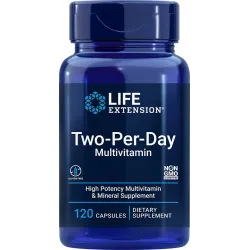
Two-Per-Day Capsules
Price: 28,41 €Super-potent multivitamin & mineral supplement Has the highest nutritional... -
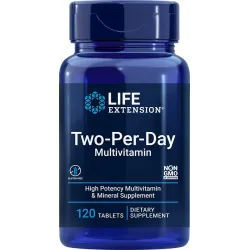
Two-Per-Day Tablets, 120 tablets
Price: 27,30 €Super-potent multivitamin & mineral supplement Has the highest nutritional... -
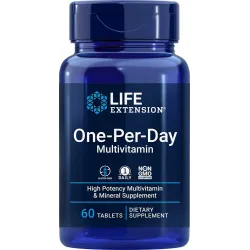
One-Per-Day Tablets
Price: 27,26 €Once-daily multivitamin & mineral supplement Has the highest nutritional... -
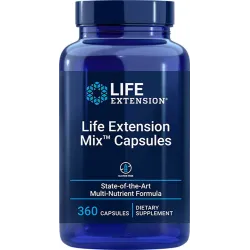
Life Extension Mix™ Capsules
Price: 68,89 €State-of-the-art multi-nutrient formula Provides a full spectrum of...