
 English
 Polski
 Deutsch
 Français
 ελληνικά
 Español
 Italiano
Why Take Nattokinase Supplements
 Life moves fast, but sometimes we are more sedentary than we would like. Between office jobs, traveling and just plain exhaustion after a long day, it can be difficult to find the motivation to get in that needed physical activity. Unfortunately, this throws a wrench not just into our weight management strategies, but also our heart health maintenance.
It's not just a lack of exercise that can get in the way of a healthy heart. Dietary choices matter, and it can be hard to eat all the foods and nutrients we need to stay healthy. Also, some of those healthy foods are not exactly American crowd-pleasers. One example? The sticky and stringy Japanese dish natto. Even if you happen to be a big fan of natto, it isn't exactly easy to find on most menus, including at your local Japanese restaurant (which is more likely to serve sushi and hibachi).
But that doesn't mean we can't get the health benefits of natto through other means. A nattokinase supplement helps us get the best of natto and encourages cardiovascular health.
What is nattokinase?
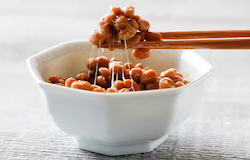 You may have heard that fermented foods—such as yogurt, sauerkraut, kefir, and kimchi, among others—can provide an array of health benefits. Most of these are attributed to the beneficial microbes, sometimes called probiotics, that are responsible for fermenting these foods and colonizing in your gut to support a healthy microbiome. But some of the health benefits of these fermented foods come from compounds they produce during fermentation, such as nattokinase.
Nattokinase is an enzyme made by the bacteria Bacillus subtilis during natto production. Natto, a preparation of fermented soybeans, is made by adding Bacillus subtilis to cooked soybeans. This mixture is then fermented, typically for 12-24 hours, to create the gooey and slippery food that is traditional to Japanese culture. Other foods made from fermented soybeans include miso, tempeh and soy sauce.
While natto is chock-full of minerals and vitamins, particularly vitamin K2 (natto is one of the richest sources!), many of its health benefits are attributed to nattokinase. Nattokinase has been clinically studied for its ability to support already-healthy blood pressure and heart health.
Science fact: Despite its name, nattokinase is not actually a kinase enzyme. In fact, it is commonly mispronounced as such! (The "kinase" in nattokinase is pronounced "kuh-nays" vs. "kai-nays"). It is a fibrinolytic enzyme, meaning that it recognizes and degrades a protein in the blood called fibrin, which plays a role in the body's natural process of blood clotting. Nattokinase also helps support a protease (tissue plasminogen activator) that leads to even more fibrin breakdown. Ultimately, the effect of nattokinase is supporting your cardiovascular health!
What are the benefits of nattokinase?
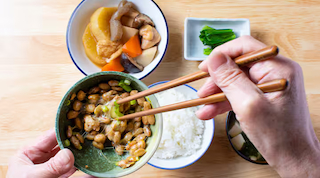 Heart-healthy nattokinase is part of the Japanese diet, which has long been associated with healthy aging. This way of eating incorporates nutrient-dense foods like seaweed, natto and fish, and lends itself to healthier methods of cooking like steaming, boiling and stewing. The result is a well-balanced diet focused on nutrition that incorporates fewer processed foods and less saturated fat and sugar—some of the main culprits when it comes to heart health.
Natto may be particularly beneficial to cardiac function. Studies suggest that nattokinase supports the body's natural clotting process, encourages blood flow and promotes already-healthy blood pressure, all of which are cornerstones of cardiovascular health. One randomized controlled trial found that taking 100 mg (or 2,000 FU) of nattokinase daily for eight weeks was shown to support healthy blood pressure. The proof really is in the pudding—or in this case, the natto!
If you've never heard of natto or wouldn't know where to find it, you're certainly not alone. While you'll find many Japanese diet foods borrowed in international and American cuisines, natto is not particularly popular outside of Japan; you won't find it on many U.S. restaurant menus or grocery shelves. Fortunately, a dietary supplement can offer us the benefits of nattokinase even if natto is not a routine part of our diet.
What is the best way to take nattokinase?
 The best way to get consistent intake of this powerful enzyme is a high-quality nattokinase supplement. Nattokinase can be extracted, purified, and packaged into a dietary supplement, which provides a convenient way to get its blood pressure support and heart-healthy effects.
You might be asking, "Why not just eat natto?" While we can simply eat natto to obtain nattokinase, natto is often described as an acquired taste, and it can be difficult for some to eat. Plus, you would need to commit to eating it daily. Dosage is another issue. You would need to eat about 50 grams of natto to get the amount of nattokinase found in one capsule.
Pro tip: Nattokinase makes a great pairing with French maritime pine bark extract. Clinical studies have shown that French maritime pine bark extract, sometimes called Pycnogenol, helps support healthy blood flow. Taken together, these two make a complete cardiovascular couple.
When designing your heart health routine, don't forget to include foods that help support your body's nitric oxide production. Nitric oxide is another superstar in supporting blood flow and a healthy cardiovascular system.
Can I take nattokinase every day?
 Absolutely! One of the most important ways to ensure you get the benefits of nattokinase, and other supplements, is to be consistent. By taking it every day, you can provide your body with a constant intake to give the ingredient time to build up and take effect in your body. Some clinical studies that examined the effects of nattokinase were done over eight weeks, with participants taking it daily.
Another benefit of purified extracts, such as nattokinase, is that they don't contain other active ingredients (unless they are designed to). This can be a bonus for someone who might be watching their intake of other vitamins and minerals. Let's take vitamin K as an example—although this is present in high amounts in natto, a nattokinase extract does not contain vitamin K. So, someone can supplement with nattokinase without worrying about affecting their vitamin K intake.
As a cardinal rule of supplements, always be sure to follow the directions on the product label. The dosage and directions are determined by what was used in clinical studies to help us get those important health benefits. Also, don't forget to speak with your doctor before adding any new supplements to your routine.
When is the best time to take nattokinase supplements?
The best time to take nattokinase is the time that works for you because, again, consistency is key. Some people prefer to take it in the morning; others prefer the afternoon or night. It is best to do whatever works with your schedule and helps you take it every day. A good idea is to take it whenever you take your other supplements, so you don't forget any of them.
If you're looking to support healthy blood pressure and overall cardiovascular health, nattokinase is a great pick. Combine it with balanced nutrition,regular exercise and a healthy lifestyle to become the best version of you!
Material used with permission of Life Extension. All rights reserved.
- Belcaro G. "A Clinical Comparison of Pycnogenol, Antistax, and Stocking in Chronic Venous Insufficiency." Int J Angiol. December 2015. https://pubmed.ncbi.nlm.nih.gov/26648668/
- Belcaro G, et al. "Postpartum Varicose Veins: Supplementation with Pycnogenol or Elastic Compression-A 12-Month Follow-Up." Int J Angiol. March 2017. https://pubmed.ncbi.nlm.nih.gov/28255210/
- Bodke H, Jogdand S. "Role of Probiotics in Human Health." Cureus. November 2022. https://pubmed.ncbi.nlm.nih.gov/36514580/
- Kim JY, et al. "Effects of nattokinase on blood pressure: a randomized, controlled trial." Hypertens Res. August 2008. https://pubmed.ncbi.nlm.nih.gov/18971533/
- Simoes EJ, et al. "The Role of Healthy Diet and Lifestyle in Centenarians." Nutrients. October 2023. https://pubmed.ncbi.nlm.nih.gov/37836577/
- Wang C, et al. "Natto: A medicinal and edible food with health function." Chin Herb Med. May 2023. https://pubmed.ncbi.nlm.nih.gov/37538862/
- "What is Nattokinase?" Japan NattoKinase Association. http://j-nattokinase.org/en/jnka_nattou_01.html
Related products
-
VenoFlow™
Old price: 49,89 € Price: 42,41 € Discount: -15% Save up: -7,48 €Supports healthy extremity circulation Powerful dual-action formula for... -
Nattokinase 100 mg NSK-SD®
Price: 31,40 €Comprehensive atherosclerotic and thrombotic prevention Supports...
Related posts
-
 Is Conventional Pomegranate Extract Enough?
An abundance of clinical data has established pomegranate as a broad-spectrum, multi-modal defense against the...
Is Conventional Pomegranate Extract Enough?
An abundance of clinical data has established pomegranate as a broad-spectrum, multi-modal defense against the... -
Lipoic Acid Reverses Mitochondrial Decay
It is estimated that 85% of the oxygen contained in every breath you take is consumed by the mitochondria within each...
-
Vitamin C and Dihydroquercetin
Every day, our bodies are under continual assault by damaging agents known as free radicals. Generally, both internal...
-
How Resveratrol Combats Leading Causes of Death
In 1997, the first scientific paper on resveratrol was published showing that this polyphenol could prevent cancer in...
-
Cukrzyca opis choroby Część 2
Cukrzycy typu 1 potrzebują dożywotniej insulinoterapii, choć suplementy wymienione w niniejszym rozdziale mogą pomóc...