
 English
 Polski
 Deutsch
 Français
 ελληνικά
 Español
 Italiano
Magnesium-L-threonate - Novel Magnesium Compound Reverses Neurodegeneration
 Aged people are in the midst of an escalating Alzheimer's epidemic.1,2 It is now the sixth leading cause of death in the United States.3
The horrific progression of Alzheimer's disease from dementia to personal extinction afflicts between 24-30 million people worldwide.4,5 Americans account for approximately one-fifth of those cases, which are expected to triple by 2050.3,6
While there is no cure for Alzheimer's, there is new hope thanks to the work of a team of researchers at Massachusetts Institute of Technology (MIT.)7
These scientists have identified several correctable factors involved in Alzheimer's onset—and a novel nutritional intervention that may effectively target them.
In this article, you will learn of the vital role that magnesium plays in protecting the aging brain's structure and function and why conventional supplements don't deliver enough magnesium into the brain.
Researchers have found that a new highly absorbable form of magnesium called magnesium-L-threonate concentrates more efficiently in the brain, rebuilds ruptured synapses, and restores the degraded neuronal connections observed in Alzheimer's disease and other forms of memory loss.
In experimental models, magnesium-L-threonate induced improvements of 18% for short-term memory and 100% for long-term memory.8
Magnesium Deficiency: An Overlooked Cause of Neurologic Decay
Half of all aging individuals in the developed world are magnesium deficient, a nutritional deficit that worsens over time.
Confirmatory data show that Americans are no exception.9,10 For instance, American women consume just 68% of the recommended daily intake of magnesium.11
Magnesium has long been known as a key nutrient for optimal brain function. More recently, scientists have found it specifically promotes learning and memory as a result of its beneficial effect on synaptic plasticity and density.7,8,12
Magnesium works with calcium to modulate "ion channels" that open in response to nerve impulses, which in turn trigger neurotransmitter release. The most important of those channels is controlled by a complex called the NMDA receptor.13,14 NMDA receptors play an important role in promoting neural plasticity and synaptic density, the structural underpinnings of memory.15-17
Magnesium deficiency can cause symptoms ranging from apathy and psychosis to memory impairment.13,18 Insufficient magnesium slows brain recovery following injury from trauma19 and in laboratory studies accelerates cellular aging.20
Ominously, magnesium deficiency may produce no overt symptoms in its initial stages.21
Part of the problem is that it is difficult for the body to maintain sufficiently high concentrations of magnesium in the brain.8
For this reason, researchers have long sought ways that higher magnesium brain concentrations might be achieved and sustained.
Magnesium-L-threonate - A Breakthrough Form of Magnesium
 Scientists have been challenged to find a way to raise magnesium levels in the brain.8 Even intravenous infusions cause only a modest elevation of magnesium levels in the central nervous system.22
An innovative team of researchers from the Massachusetts Institute of Technology (MIT) recently found a way to surmount this obstacle. They formulated a new magnesium compound called magnesium-L-threonate or MgT that in lab tests allows for oral administration while maximizing magnesium "loading" into the brain.7,8
Based on prior research, they meticulously documented that increased levels of magnesium in the brain promote synaptic density and plasticity in the hippocampus.14 Up until now, however, no widely available forms of magnesium met the criteria needed for rapid absorption and efficient transfer into the central nervous system.8
By contrast, MgT yielded compelling results.
MgT oral supplements increased magnesium levels in spinal fluid, an index of measurement in brain magnesium by about 15%, while none of the other magnesium compounds tested produced significant elevations.8 While a 15% increase may not sound like a lot, it induced a profound effect on neurological function.
To evaluate the effects of MgT on memory, the researchers tested it against currently available magnesium compounds. They used a simple assessment of learning and memory called the Novel Object Recognition Test or NORT. A high NORT score means that the animal is good at recognizing and identifying new objects, a skill that is critical in aging humans as well.8 NORT is a good test of function in the hippocampus, which is rich in the NMDA receptors so closely controlled by magnesium.23
The researchers put aged animals through the NORT test, supplementing them with MgT or one of the commercially available magnesium compounds. Only MgT significantly enhanced both short- and long-term memory, boosting scores by 15% for short-term memory and 54% for long-term memory compared to magnesium citrate.8
Better Function of Memory-Forming Synaptic Connections
Given the effect of MgT in increasing synaptic density and plasticity in experimental animals (rats), the research team asked the obvious next question, "Do those changes lead to an increase in the number of neurotransmitter release sites, and, subsequently, to enhanced signal transmission?"8 That, after all, is the hallmark of learning and memory.
Using high-tech microscopic measuring devices, the team demonstrated that the magnesium elevation in brain tissue observed in MgT supplementation increases the number of functioning neurotransmitter release sites.8 This effect could be likened to increasing the number of soldiers on the battlefield: when the call to action comes, a much larger force is prepared to perform.
The final question to be addressed in this series of studies was whether the increased density of synaptic connections directly correlated with the observed improvements in memory created by MgT supplementation.
The researchers systematically plotted out the time-course of the increase in synaptic density following MgT supplementation, and found that it directly paralleled the improvements in memory.8 They also found that when MgT supplementation was stopped, the density of synaptic connections dropped back to baseline, further confirming the correlation. They found that MgT supplementation boosted all of the animals' performance, not just average performance.
Improvement in Spatial Short-Term Memory
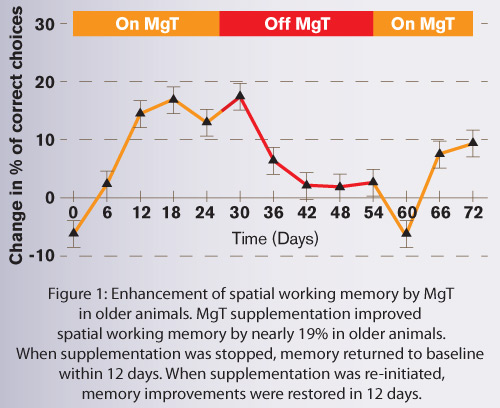
Spatial working memory is an essential memory function, helping you remember where things are and where you are in relation to the world over the short term. It is working memory that enables you to find your car keys as you head out the door or return to the correct page in the magazine you were reading a few minutes ago.
The MIT researchers tested spatial working memory in experimental animals. Without treatment, both young and old animals forgot the correct choice about 30% of the time. After 24 days of MgT supplementation, however, both young and old animals had improved this measurement of memory performance by more than 17%.8
Even more impressive, by 30 days of supplementation, the older animals' performance became equal to that of their younger counterparts. Since the older animals were more forgetful at baseline than the younger animals that meant that the older animals had a larger percentage memory improvement (nearly 19%) than the younger animals' more modest 13%.8
When MgT supplementation was suspended, the memory-enhancing effects persisted in younger animals, but in older animals spatial working memory performance declined dramatically, returning to baseline within 12 days.8 When MgT supplementation to the older animals was resumed, however, their memory performance was restored in 12 days.
In other words, magnesium-L-threonate improved memory in both old and young animals, but had a substantially greater effect on aged individuals—the very ones most in need of memory enhancements.
- Levels of Alzheimer's disease and associated memory loss among aging Americans are reaching epidemic levels.
- The neurodegenerative processes involved in memory loss results from deterioration of connectivity between brain cells but are not a "natural function" of aging.
- Low magnesium status can accelerate brain cell aging and memory loss.
- Standard magnesium offers limited protection to brain cells.
- Magnesium-L-threonate is a new form of magnesium that dramatically boosts levels of magnesium in the brain.
- Boosting brain magnesium with magnesium-L-threonate enhances synaptic density and plasticity, the structural basis of learning and memory.
- In numerous experimental models, supplementation with magnesium-L- threonate has been shown to enhance memory and cognitive performance in multiple tests.
Enhanced Spatial Long-Term Memory
Long-term spatial memory is crucial for older individuals. It's how you remember where you live or how to get to the grocery store. Loss of spatial long-term memory is one of the main reasons that older people with dementia get lost running even simple errands.
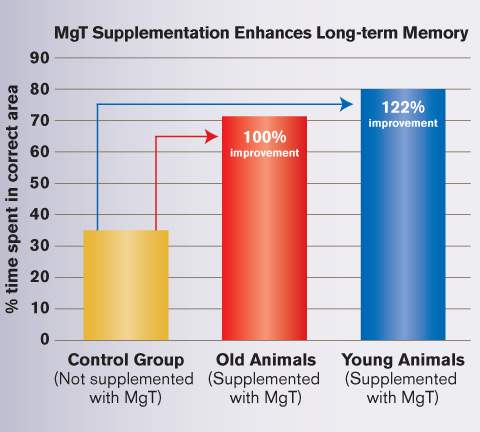
To test spatial long-term memory in MgT-supplemented animals, the researchers used a maze that required the animal to swim and find a submerged platform on which to rest. Again, both old and young animals supplemented with magnesium-L-threonate learned significantly faster than untreated animals during the training sessions.8
One hour after the training period, the researchers removed the submerged platform, causing the animals to have to search for its last location. Both young and old supplemented and unsupplemented animals remembered where the platform had been over the short term and were searching for it in the correct quadrant of the maze.
But after 24 hours, a remarkable difference was observed. Untreated animals, both young and old, completely forgot where the platform had been hidden, randomly searching in all quadrants of the maze. Supplemented animals, on the other hand, continued to search in the correct part of the maze more than twice as long as they looked in incorrect areas.8 That translated into improvements in spatial long-term memory of 122% in younger supplemented animals, and nearly 100% in older supplemented animals.
In short, MgT supplementation doubled the accuracy of long-term spatial memory in older animals, and more than doubled it in younger animals.
Better Recall
One critical memory function is the ability to bring up an important memory based on only partial information, a function called pattern completion.8 You use pattern completion memory to find your way around a familiar neighborhood after dark or following a heavy snowstorm. In both cases, some familiar cues are gone, but a healthy brain will fill in the missing details by completing a recognizable pattern.
As decsribed on the previous page, when researchers removed some of the external visual cues from the water maze, younger animals had no particular difficulty finding their way to the hidden platform during the first 24-hour period. Older animals, on the other hand, demonstrated substantial impairment when familiar cues were missing, spending more than twice as much time searching for the missing platform. When given MgT for 30 days, however, older animals performed as well as the younger ones, quickly finding the platform even when many of the external cues were unavailable.8
In human terms, this kind of improvement could mean the difference between a routine trip to the grocery store at dusk versus getting lost in the dark.
Having successfully demonstrated that magnesium-L-threonate (MgT) improves multiple forms of learning and memory in living animals, the research team sought to explore the cellular and molecular basis of that improvement. They wanted to understand in a detailed fashion just what changes the MgT was producing in the brains of older animals that helped them form stronger, more stable memories.
What they determined was compelling.
Increased Brain Cell Signaling
The first step was to determine the effects of MgT supplementation on signaling between brain cells mediated by what are known as NMDA receptors. These receptors operate through varying concentrations of calcium and magnesium in brain tissue, making them a logical point of observation.
The first finding was that MgT treatment in animals resulted in stronger signaling at essential brain cell synapses.8 This increase in signaling was accomplished by a 60% increase in production of new NMDA receptors and by increases of up to 92% in related proteins that play essential supporting roles in brain signal transmission.8
Higher Memory- Forming Synaptic Plasticity and Density
Synaptic plasticity, or the ability to rapidly change the number and strength of brain cell synapses, is critical to the brain's ability to form, retain, and retrieve memories. The research team compared synaptic plasticity in the brains of MgT-supplemented animals versus controls.8
They found that production of a very special subunit of the NMDA receptor, one closely associated with synaptic plasticity, was selectively enhanced by MgT supplementation.8 This molecular change is known to cause potent long-term increases in synaptic strength, and hence a greater capacity for information storage and memory.8,24-26
The result of these increases in NMDA receptor numbers was a 52% enhancement in long-term potentiation,8 which is the cellular equivalent of memory formation in the brain tissues of MgT-supplemented animals.27,28
Memory depends not only on synaptic plasticity, but also on the healthy physical structure of synapses between brain cells. Unfortunately, synaptic connections in the memory-rich hippocampus region of the brain decline with aging, which directly correlates with memory loss.8,29,30,31
One of the most vital structures to be found at brain cell synapses is the synaptic bouton, from the French word for button. When an electrical impulse reaches a pre-synaptic bouton, and ample calcium and magnesium are present, neurotransmitters are released to transmit the impulse to the next neuron in line. The greater the number and density of synaptic boutons, the stronger the electrochemical signal that the synapse can produce, and the more sustained the memory that is created.32
When the researchers examined the brains of control and MgT-supplemented animals under a high-power microscope, they readily detected much greater densities of synaptic bouton proteins in tissues from the supplemented animals. Those proteins are essential for neurotransmitter release in the several regions of the hippocampus vital for memory formation and retrieval.8 Remarkably, the density of the synaptic boutons was closely correlated with the memory performance of each individual animal on the novel object recognition test.
Every memory you have, even those you've lost, produces physical changes in your brain. Memories form and are stored in multiple brain regions, but the most active and essential area is the hippocampus, a small, sea horse-shaped structure deep in the center of your brain.
Hippocampal memory enables you to recognize and distinguish between old friends and new acquaintances, or to find your way around a well-known floor plan. It is also used to comprehend and navigate new experiences based on old ones.
This puts the hippocampus squarely at the center of your ability to assimilate new information and integrate it with what you already know. As you learn and experience new events, cells in your memory centers tighten and enhance their neuronal connections, known as synapses.35
The ability of brain cells to quickly form new synapses and remove old ones is referred to as neurologic plasticity. Large numbers of synapses, and a high density of specialized synaptic structures called boutons, promote rapid retrieval and processing of the information stored by connected cells.36 In essence, neuronal plasticity is the physical equivalent of learning, while synaptic density is roughly the equivalent of memory.
Young brains exhibit high levels of neurologic plasticity that produce large numbers of interconnected synapses. That's why young people learn quickly and have strong memories.
With aging, however, the numbers of synapses, and the ability to rapidly form new ones, steadily declines.37 And that's just in "normal" aging.29 People with Alzheimer's disease, or its precursor, mild cognitive impairment (MCI) experience more rapid loss of both plasticity and synaptic number.30,38-40 And that's when memories begin to fade, or worse, to be lost entirely.
Since time immemorial, people have suspected that specific nutrients can positively affect cognitive functions such as learning and memory.41 It's now known that many nutrients can actually modify aging brain function, in part by increasing formation of brain synapses.42
Magnesium has been established as having a positive impact on both neural plasticity and synaptic density.7,8,12
Near-Term Research
The MIT team is rapidly putting in place two human studies of MgT on memory function, with results expected in the near future. Meanwhile, they have recently discovered several new roles for MgT in managing memory, in this case unwanted memories of the kind associated with post-traumatic stress disorder (PTSD).
Fear memories are expressed in response to objects or events previously linked with a potential danger. Over time, fearful reactions can dissipate when the triggering event is experienced in a safe environment.
Animal studies reveal that MgT enhances this process, so that events which previously caused an emotional response no longer trigger fear.33,34 MgT helps the pre-frontal region of the brain block the return of old fear memories.33,34
Research reveals that MgT works by enhancing neural plasticity in the hippocampus and prefrontal cortex.34 These findings led the researchers to recommend that elevating brain magnesium with MgT be used to dampen traumatic memories and treat PTSD, anxiety, and depression.33,34
Summary
Levels of Alzheimer's disease and associated memory loss among aging Americans are reaching epidemic levels.
The neurodegenerative processes involved in memory loss result from deterioration of connectivity between brain cells but are not a natural function of aging. Memory loss is now known to be associated with loss of synaptic density and plasticity in the brain. Low magnesium levels may contribute to such losses.
Magnesium-L-threonate (MgT), a new magnesium compound, boosts brain magnesium levels better than standard supplements. Studies reveal that MgT produces dramatic increases in synaptic density and plasticity, resulting in similar improvements in memory function itself.
Material used with permission of Life Extension. All rights reserved.
1. Alzheimer’s Association. 2008 Alzheimer’s disease facts and figures. Alzheimers Dement. 2008 Mar;4(2):110-33.
2. Hudson AP, Balin BJ, Crutcher K, Robinson S. New thinking on the etiology and pathogenesis of late-onset Alzheimer’s disease. Int J Alzheimers Dis. 2011;2011:848395.
3. Available at: http://www.alz.org/downloads/Facts_Figures_2011.pdf. Accessed September 28, 2011.
4. Ballard C, Gauthier S, Corbett A, Brayne C, Aarsland D, Jones E. Alzheimer’s disease. Lancet. 2011 Mar 19;377(9770):1019-31.
5. Holtzman DM, Morris JC, Goate AM. Alzheimer’s disease: the challenge of the second century. Sci Transl Med. 2011 Apr 6;3(77):77sr1.
6. Available at: http://report.nih.gov/NIHfactsheets/ViewFactSheet.aspx?csid=107. Accessed September 28, 2011.
7. Available at: http://www.mit.edu/press/2010/magnesium-supplement.html. Accessed September 28, 2011.
8. Slutsky I, Abumaria N, Wu LJ, et al. Enhancement of learning and memory by elevating brain magnesium. Neuron. 2010 Jan 28;65(2):165-77.
9. Barbagallo M, Belvedere M, Dominguez LJ. Magnesium homeostasis and aging. Magnes Res. 2009 Dec;22(4):235-46.
10. Barbagallo M, Dominguez LJ. Magnesium and aging. Curr Pharm Des. 2010;16(7):832-9.
11. Rude RK, Singer FR, Gruber HE. Skeletal and hormonal effects of magnesium deficiency. J Am Coll Nutr. 2009 Apr;28(2):131-41.
12. Bush AI. Kalzium ist nicht alles. Neuron. 2010 Jan 28;65(2):143-4.
13. Bardgett ME, Schultheis PJ, McGill DL, Richmond RE, Wagge JR. Magnesium deficiency impairs fear conditioning in mice. Brain Res. 2005 Mar 15;1038(1):100-6.
14. Slutsky I, Sadeghpour S, Li B, Liu G. Enhancement of synaptic plasticity through chronically reduced Ca2+ flux during uncorrelated activity. Neuron. 2004 Dec 2;44(5):835-49.
15. Malenka RC, Nicoll RA. NMDA-receptor-dependent synaptic plasticity: multiple forms and mechanisms. Trends Neurosci. 1993 Dec;16(12):521-7.
16. MacDonald JF, Jackson MF, Beazely MA. Hippocampal long-term synaptic plasticity and signal amplification of NMDA receptors. Crit Rev Neurobiol. 2006;18(1-2):71-84.
17. Kalantzis G, Shouval HZ. Structural plasticity can produce metaplasticity. PLoS One. 2009 Nov 30;4(11):e8062.
18. Rasmussen HH, Mortensen PB, Jensen IW. Depression and magnesium deficiency. Int J Psychiatry Med. 1989;19(1):57-63.
19. Hoane MR, Gilbert DR, Barbre AB, Harrison SA. Magnesium dietary manipulation and recovery of function following controlled cortical damage in the rat. Magnes Res. 2008 Mar;21(1):29-37.
20. Killilea DW, Ames BN. Magnesium deficiency accelerates cellular senescence in cultured human fibroblasts. Proc Natl Acad Sci U S A. 2008 Apr 15;105(15):5768-73.
21. Assadi F. Hypomagnesemia: an evidence-based approach to clinical cases. Iran J Kidney Dis. 2010 Jan;4(1):13-9.
22. McKee JA, Brewer RP, Macy GE, et al. Analysis of the brain bioavailability of peripherally administered magnesium sulfate: A study in humans with acute brain injury undergoing prolonged induced hypermagnesemia. Crit Care Med. 2005 Mar;33(3):661-6.
23. Win-Shwe TT, Fujimaki H. Acute administration of toluene affects memory retention in novel object recognition test and memory function-related gene expression in mice. J Appl Toxicol. 2011 May 24.
24. Bi GQ, Poo MM. Synaptic modifications in cultured hippocampal neurons: dependence on spike timing, synaptic strength, and postsynaptic cell type. J Neurosci. 1998 Dec 15;18(24):10464-72.
25. Martin SJ, Grimwood PD, Morris RG. Synaptic plasticity and memory: an evaluation of the hypothesis. Annu Rev Neurosci. 2000;23:649-711.
26. Tang YP, Shimizu E, Dube GR, et al. Genetic enhancement of learning and memory in mice. Nature. 1999 Sep 2;401(6748):63-9.
27. Bliss TV, Collingridge GL. A synaptic model of memory: long-term potentiation in the hippocampus. Nature. 1993 Jan 7;361(6407): 31-9.
28. Cooke SF, Bliss TV. Plasticity in the human central nervous system. Brain. 2006 Jul;129(Pt 7):1659-73.
29. Wilson IA, Gallagher M, Eichenbaum H, Tanila H. Neurocognitive aging: prior memories hinder new hippocampal encoding. Trends Neurosci. 2006 Dec;29(12):662-70.
30. Burke SN, Barnes CA. Neural plasticity in the ageing brain. Nat Rev Neurosci. 2006 Jan;7(1):30-40.
31. Smith TD, Adams MM, Gallagher M, Morrison JH, Rapp PR. Circuit-specific alterations in hippocampal synaptophysin immunoreactivity predict spatial learning impairment in aged rats. J Neurosci. 2000 Sep 1;20(17):6587-93.
32. Duguid IC, Smart TG. Presynaptic NMDA receptors. In: Van Dongen AM, ed. Biology of the NMDA Receptor. Boca Raton, FL: CRC Press; 2009.
33. Abumaria N, Yin B, Zhang L, Zhao L, Liu G. Enhancement of cognitive control of emotions by elevated brain magnesium leads to anti-depressants like effect. Poster presentation #549. Society for Neuroscience 2009 Meeting. October 20, 2009. Chicago, IL.
34. Abumaria N, Yin B, Zhang L, et al. Effects of elevation of brain magnesium on fear conditioning, fear extinction, and synaptic plasticity in the infralimbic prefrontal cortex and lateral amygdala. J Neurosci. 2011 Oct 19;31(42):14871-81.
35. Brown TH, Chapman PF, Kairiss EW, Keenan CL. Long-term synaptic potentiation. Science. 1988 Nov 4;242(4879):724-8.
36. Ostroff LE, Cain CK, Jindal N, Dar N, Ledoux JE. Stability of presynaptic vesicle pools and changes in synapse morphology in the amygdala following fear learning in adult rats. J Comp Neurol. 2011 Jun 14.
37. Bertoni-Freddari C, Fattoretti P, Paoloni R, Caselli U, Galeazzi L, Meier-Ruge W. Synaptic structural dynamics and aging. Gerontology. 1996;42(3):170-80.
38. Pereira C, Agostinho P, Moreira PI, Cardoso SM, Oliveira CR. Alzheimer’s disease-associated neurotoxic mechanisms and neuroprotective strategies. Curr Drug Targets CNS Neurol Disord. 2005 Aug;4(4):383-403.
39. Scheff SW, Price DA, Schmitt FA, Mufson EJ. Hippocampal synaptic loss in early Alzheimer’s disease and mild cognitive impairment. Neurobiol Aging. 2006 Oct;27(10):1372-84.
40. Arendt T. Synaptic degeneration in Alzheimer’s disease. Acta Neuropathol. 2009 Jul;118(1):167-79.
41. Gomez-Pinilla F. Brain foods: the effects of nutrients on brain function. Nat Rev Neurosci. 2008 Jul;9(7):568-78.
42. Wurtman RJ, Cansev M, Sakamoto T, Ulus I. Nutritional modifiers of aging brain function: use of uridine and other phosphatide precursors to increase formation of brain synapses. Nutr Rev. 2010 Dec;68 Suppl 2:S88-101.
What is Magnesium L-Threonate?
Magnesium L-Threonate (MgT) is a new form that increases brain magnesium levels much better than standard supplements. Studies have revealed that MgT induces a significant increase in both synaptic density and plasticity, which improves memory. It is the only form of magnesium that crosses the blood-brain barrier.
What could be the consequences of a magnesium deficiency in the brain?
It has long been known that magnesium serves as the main nutrient for an optimally functioning brain. Scientists recently discovered that, due to its beneficial effects on plasticity and synaptic density, it is particularly conducive to learning and memory. Magnesium deficiency can cause symptoms ranging from apathy and psychosis to memory impairment. What's more, it slows down the regeneration of the brain after a psychological trauma and - as laboratory studies have shown - it accelerates cell aging. What is particularly worrying is that a magnesium deficiency in the early stages may not produce any obvious symptoms.
Related product
-
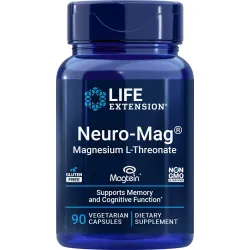
Neuro-Mag® Magnesium L-Threonate
Price: 38,89 €Enhances memory and cognitive function Supports healthy memory and...
Related posts
-
 Feed Your Brain!
Millions of people around the world are adhering to low-fat, low-cholesterol diets in an effort to reduce the impact...
Feed Your Brain!
Millions of people around the world are adhering to low-fat, low-cholesterol diets in an effort to reduce the impact... -
Lipoic Acid Reverses Mitochondrial Decay
It is estimated that 85% of the oxygen contained in every breath you take is consumed by the mitochondria within each...
-
Vitamin C and Dihydroquercetin
Every day, our bodies are under continual assault by damaging agents known as free radicals. Generally, both internal...
-
How Resveratrol Combats Leading Causes of Death
In 1997, the first scientific paper on resveratrol was published showing that this polyphenol could prevent cancer in...
-
Discovering Coffee's Unique Health Benefits
Every morning, many of us sip our coffee with no real thought given to the beans behind the brew. But coffee beans...