
 English
 Polski
 Deutsch
 Français
 ελληνικά
 Español
 Italiano
Vitamin K2. Protecting Bone and Arterial Health with Vitamin K2
 Millions of people take calcium supplements to maintain healthy bone. Yet few patients or physicians realize that optimizing bone integrity involves more than taking a single mineral supplement. A critical additional component for bone and cardiovascular health is vitamin K2.
Recent research has revealed that, without vitamin K2, calcium regulation is disrupted. In fact, low levels of vitamin K2 are associated with an increased risk of heart disease and atherosclerosis.1 Astute doctors have long known that people with a lack of calcium in their bones are more likely to possess an excess of calcium in their arteries, and vice versa. The resulting lack of calcium in bone leads to osteoporosis, while the deposition of calcium in the arterial wall leads to coronary heart disease and other manifestations of cardiovascular, renal, and neurodegenerative disease.
Although vitamin K has been around for decades, dietary recommendations have been overshadowed by the nominal amount required for healthy blood clotting—and have ignored the optimal amounts of vitamin K needed to maintain healthy bones and arteries. In this article, we’ll explore how vitamin K2 regulates calcium as well as the recent evidence supporting this unique vitamin in preventing heart disease and osteoporosis as well as certain types of cancer.
Vitamin K2—Essential for Healthy Arteries and Bones
 Osteoporosis and heart disease—they seem as unconnected as two conditions can possibly be. On the surface, they do share a few common features. Both conditions develop with age. It’s rare for someone to have either condition at age 30, but both are common in the sixth or seventh decade of life. Both conditions don’t develop overnight, but require many years to emerge. Just as osteoporosis requires decades to develop, coronary atherosclerosis also accumulates bit by bit over decades, starting in a person’s 20s (or earlier) and building gradually until a heart attack or other catastrophe occurs.
But the resemblance appears to stop there—that is, until we dig beneath the surface. As long ago as the 19th century, scientists knew that an unknown material lining diseased arteries resembled a bone-like structure. For the next 100 years, however, this finding was dismissed as a curiosity, an inevitable accompaniment of aging, and evidence of “wear and tear,” just like arthritis.
Dr. Linda Demer and her team at the University of California, Los Angeles, were among the first to unravel this curious connection by successfully identifying a protein in human atherosclerotic tissue, which was previously believed to reside only in bone tissue. This protein, called bone morphogenetic protein-2, plays an important role in bone formation.2 Since then, several other key regulators of bone formation have been identified in atherosclerotic plaque tissue, such as matrix GLA-protein and osteopontin, suggesting that common factors might influence both arterial and bone health.3
Another curious observation increased the momentum to find a link between bone and arterial diseases. People who had osteoporosis, or a lack of calcium in their bones, were more likely to possess an excess of calcium (bone) in arteries and vice versa. In fact, what had often been simply assumed to be calcium deposits or calcified plaque was actually fully formed bone tissue. Vascular calcification should therefore be more properly designated as vascular ossification—bone formation within blood vessels. Likewise, many “risk factors” for coronary atherosclerosis were also prevalent in osteoporosis: aging, diabetes, sedentary lifestyle, smoking, and high cholesterol.3 Scientists questioned why there was such a tight link between excess calcium in one organ (bones) and deficient calcium in another (arteries). And why, in some apparently healthy people, are the two present simultaneously to such extremes?
Initially, some proposed that there may be an abnormal transfer of calcium from bones to arteries. This did not hold up to scrutiny, however, since each system proved to be under its own regulation.
Although certain prescription drugs, such as raloxifene (Evista®) and alendronate (Fosamax®), addressed the problem of osteoporosis, no solution emerged to address both bone and arterial health, that is, until now. Current research is highlighting the importance of nutritional solutions to control the link between arterial and bone diseases by addressing calcium metabolism in the body—in particular, the role played by vitamin K2.
 In nature, vitamin K is found in two forms: vitamin K1 (phylloquinone) in leafy, green vegetables, and vitamin K2 (menaquinone) in organ meats, egg yolks, and dairy products.
Vitamin K is required by the human liver to manufacture blood-clotting proteins (factors II, VII, IX, X; and proteins S and C). This is the basis for administering the vitamin K-blocking drug, warfarin (Coumadin®) to people who have blood clots or are at risk for blood clot formation, since clot formation is effectively suppressed by the drug.
Determination of the human need for vitamin K was therefore based on the amount necessary to maintain a normal balance between blood clotting and thinning. Blood shouldn’t be excessively “thinned” and prone to abnormal bleeding, nor excessively “thick” and prone to clotting in the wrong place.
Beyond its role in blood clotting, recent research has revealed that vitamin K also plays a vital role in maintaining healthy bones and arteries by keeping calcium in the bones and out of the arteries.
Unfortunately, the recommended dietary intake of vitamin K required for blood clot regulation is much lower than that required for optimal bone and arterial health.
Osteoporosis and Vitamin K2 Intervention—the Evidence
 Since it was first discovered in 1929, vitamin K has been best been known for its crucial role in the blood-clotting process. Since that time, scientists have uncovered compelling evidence that vitamin K plays an equally important role in bone health.
The majority of vitamin K research to date has focused on vitamin K1, the dominant dietary form of vitamin K that occurs in green, leafy vegetables. Yet it appears that vitamin K2, which occurs in organ meats, egg yolks, and dairy products, is a more important inducer of bone mineralization in human osteoblasts (bone-building cells) than vitamin K1.4
The Japanese long ago recognized the power of vitamin K2 to maintain or restore bone health. In certain regions of Japan, a staple dish called natto or fermented soybean, frequently eaten several times a week, is uniquely rich in vitamin K2. Recent scientific examination has pinpointed vitamin K2, and in particular vitamin K2 as menaquinone-7 (MK-7), as the active ingredient in this popular eastern Japanese dish, as having a supportive effect on bone quality during osteoporosis treatment.5
People living in the Japanese regions where this dish is eaten have several-fold greater blood levels of vitamin K2 (MK-7), accompanied by less osteoporosis and bone fractures.6
These findings are supported by clinical trials, in which vitamin K2 has been shown to successfully reduce the incidence of bone fractures. A two-year Japanese study found that vitamin K2 (MK-4) reduced the incidence of vertebral (spine) fractures by 52% in 120 patients with osteoporosis, compared with patients who did not receive this nutrient.7 The high dose used in this trial—as with most studies examining vitamin K2’s effect on bone density—was 45 mg/day, a prescription dose used in Japan to treat osteoporosis that is unavailable in the US. As you will read later, lower doses of K2 found in dietary supplements appear to also provide significant benefits.
Vitamin K2 has also proven to be as effective as prescription drugs in reducing the incidence of bone fractures. In one Japanese study in post-menopausal women that compared the effect of K2 (MK-4) with the drug etidronate (Didronel®) on the incidence of vertebral (spine) fracture, women taking K2 at a dose of 45 mg per day experienced a fracture rate of 8.0% compared with 8.7% for those taking the drug therapy. Furthermore, women taking both MK-4 and the drug experienced a 3.8% fracture rate—a dramatic combined effect. In comparison, in a placebo group who received neither K2 nor drug therapy, nearly 21% of women experienced bone fractures.8
Experimental animal models of osteoporosis have also revealed that MK-4 improves bone architecture, increases bone mass and mechanical strength, stimulates mineralization (deposition of calcium), and enhances collagen architecture—a cross-linking of fibrous tissue that yields tough but supple bone that is more resistant to fracture.9
On the other hand, osteoporosis—the excessive loss of bone mineral density—results in fractures and leads to devastating events common in those over 65 years, even with minor injuries like a fall. Unfortunately, the drug industry focuses on prescribing drugs late in life when the risk for fracture is high. Strategies that involve nutritional supplements are different. Firstly, they lack the high cost and side effects of prescription drugs. Secondly, they can potentially be started at an earlier age and taken over 20, 30, or more years in order to yield possibly greater benefit than drug therapy started at the age of 60 to bail out a process that has developed over decades. Although there are no clinical trials for such an extended period, this is an area worthy of future investigation.
Case History: Heart Disease Linked with Osteoporosis
 Fit and trim at age 67, Walter had no reason to believe that he had any hidden health conditions.
He’d had annual physicals for the past seven years, passing them all. According to his doctor, his cholesterol numbers had been fine for years. But Walter’s brother-in-law, a physician whose own brush with heart disease prompted him to warn everyone else in the family about the possibility, suggested that he undergo a computed tomography heart scan. Walter’s heart scan score was 3,367, a high score that signaled a dangerous content of calcified atherosclerotic plaque in his coronary arteries linked to a high risk for heart attack. In fact, Walter’s score put him in the 99th percentile, meaning that his calcium score was in the worst 1% of all men in his age group (and carried an annual risk for heart attack of 25% without preventive efforts).
At about the same time, Walter enrolled for a screening service that came to his church offering ultrasound screening for abdominal aneurysm, carotid disease, and osteoporosis. While Walter proved to have no aneurysm or carotid issues, he did show the bone density of someone 20 years older, revealing an advanced state of osteoporosis.
While seemingly unrelated, Walter’s arterial calcification and osteoporosis were likely connected through the common mechanism of inadequate levels of vitamin K.
-
While calcium is essential for good health, aberrant calcium metabolism can lead to disorders such as osteoporosis and cardiovascular disease. Vitamin K2 is emerging as a key factor in regulating calcium in the body.
- Insufficient vitamin K2 leads to decreased bone mineral density, a key factor in osteoporosis, and an excess of calcium in the arterial wall, which increases the risk of heart disease.
- In Japan, vitamin K2 has been shown to substantially improve osteoporosis when given either as a high-dose prescription agent or in the staple Japanese dish called natto, which is particularly rich in K2.
- Studies have also shown that even modest amounts of vitamin K2 fight heart disease by controlling calcium-regulating proteins in vascular tissue, which keeps calcium out of the arteries and prevents the formation of dangerous calcified plaques.
- Vitamin K2 occurs in much smaller quantities in the diet than vitamin K1. Most of us, therefore, get little of these K2-rich foods.
-
Current dietary guidelines for vitamin K focus on how much is needed to regulate blood clotting and have largely ignored the much higher amount needed to maintain healthy bones and arteries.
Vitamin K2 Protects Against Coronary Heart Disease
 Normal deposition of calcium occurs in two organs: bone and teeth. Abnormal deposition of calcium in the body occurs in three places: the inner lining of the arteries (the intima) where atherosclerotic plaque accrues; the muscle layer of arteries (“medial calcification”); and heart valves. Vitamin K2 appears to be the form of vitamin K that contributes to controlling all of these phenomena.
However, calcium has historically been viewed as a passive marker, certainly not an active participant in heart disease. Some maintained that calcium was nothing more than a remnant of prior “rupture,” a scar from dangerous inflammatory activity of soft plaque. They even argued that calcium was, in fact, a reflection of increased plaque stability, as the “hard” material was not itself prone to rupture. Thus, they believed that calcium played no active role in contributing to atherosclerotic plaque.
Those arguments have now been dashed by new observations. A definitive connection between vitamin K2 levels and heart disease, in terms of a large-scale, well-controlled clinical trial, was first described in 2004 in the Rotterdam Heart Study—a Dutch trial that tracked 4,800 participants for seven years.1 The study revealed that participants who ingested the greatest quantities of vitamin K2 in their diet experienced a 57% reduction in death from heart disease than people who ingested the least. The same relationship did not hold for vitamin K1. Unfortunately, in this study MK-4 and MK-7 intake and levels were not separately analyzed but were grouped together, along with other MK categories such as MK-8 and MK-9.
Higher intakes of vitamin K2 also corresponded to less calcium deposition in the aorta (an indirect measure of atherosclerosis), whereas participants who ingested less K2 were more likely to show moderate or severe calcification. The lowest risk of heart attack and aortic calcification was seen in participants who included more than 32.7 mcg a day of vitamin K2 in their diet.1
The size and quality of the Rotterdam Heart Study gave credibility to the powerful association between vitamin K2 dietary intake and heart disease and suggests that vitamin K2 may confer cardiovascular benefits by inhibiting arterial calcification.
Physicians and scientists are now intensely interested in monitoring and halting the accumulation of coronary calcium, since they know that it comprises a significant portion of atherosclerotic plaque volume.
It appears therefore that the accumulation of calcium signals actively growing atherosclerotic plaque and that vitamin K deficiency may set the stage for this pathogenic process.
Vitamin K2 Encompasses a Group of Important Substances Known as Menaquinones
The menaquinones make up about 10% of vitamin K consumption and can also be synthesized in the gut by healthy microflora. There are several different forms of menaquinone. Menaquinones are short-listed using the notation MK-n, where the ‘n’ specifies the number of prenyl side chains. MK-4 is available in high doses by prescription. MK-8 and MK-9 are found in fermented food products like cheese. Soy natto is a rich source of the highly bioavailable form of K2 known as MK-7.
MK-4, also known as menatetrenone, is distinct from other menaquinones because it is not a major constituent of MK-n produced by gut microflora.
Does Vitamin K2 Prevent Cancer?
 Exciting preliminary evidence is emerging that vitamin K2 may suppress cancer.
In a serendipitous study, initially conducted to explore whether vitamin K2 provided protection against bone loss, investigators noticed that this nutrient dramatically reduced the risk of liver cancer.
In this small Japanese study of 40 women who had liver cirrhosis from viral infections, there was a marked difference in the incidence of liver cancer, with only 2 of 21 developing cancer in the MK-4 group compared with 9 of 19 in a control group.15 The chart on this page shows the significant protective effect against primary liver cancer conferred by vitamin K2 in this study.
Similarly, a pilot study in 61 people recovering from surgical removal of hepatocellular carcinoma (liver cancer) showed that 45 mg/day of MK-4 (the dose used in Japan to treat osteoporosis) enhanced cancer-free survival by a wide margin.16
In the laboratory, vitamin K2 demonstrates inhibitory effects against myeloma and lymphoma, suggesting possible applications for individuals fighting these hematologic cancers.17
Perhaps this is just the tip of the iceberg with vitamin K2’s fascinating effects on cancer. As most of the observations are just getting underway and some have arisen by chance observations, this is an area worth watching. Perhaps even more exciting for our purposes is discovering whether vitamin K2 prevents cancer if taken over a long period.
Cumulative Incidence of Hepatocellular Carcinoma Diagnosed in Women Treated with Vitamin K2
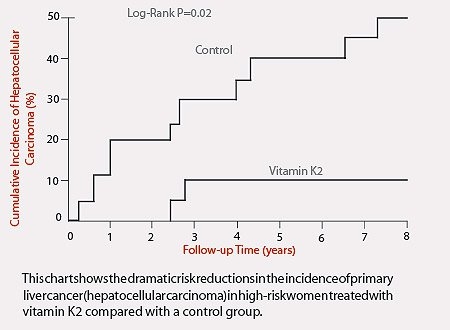
This chart shows the dramatic risk reductions in the incidence of primary liver cancer (hepatocellular carcinoma) in high-risk women treated with vitamin K2 compared with a control group.
Obtaining Optimal Amounts of Vitamin K2
 Vitamin K1 occurs naturally in green leafy vegetables, whereas vitamin K2 is found in relatively few foods. Organ meats, egg yolks, and the Japanese condiment natto, are sources of vitamin K2, of which natto is by far the richest source. Unfortunately, natto is an acquired taste and a dish that the average American may be unwilling to try. Vitamin K2 is also found in modest quantities in traditionally fermented
cheeses, in particular, Swiss Emmental and Norwegian Jarlsberg.18 Of total vitamin K dietary intake, only about 10% is the K2 form.
Vitamin K deficiency can also result from impaired absorption, in addition to not getting enough in the diet. It can also be caused by prolonged use of anti-biotics, since bacteria that normally reside in the colon (and are obliterated by antibiotic use) are responsible for producing approximately half of the vitamin K needed every day.
Unfortunately, the present recommended dietary intake of vitamin K, 90 mcg/day for women and 120 mcg/day for men, may be inadequate to maintain optimal heart and bone health.4,9,19
Although vitamin K1 is rapidly cleared from the blood, K2 lingers in the blood for an extended period when taken orally and can rise to much greater levels than seen with K1. Vitamin K2 appears to be safe, with no side effects identified even at high doses. In Japan, K2 substantially improves bone density and prevents osteoporotic fractures, given either as a high-dose prescription agent (45 mg/day) or in the Japanese dish natto.7,20 Together, these findings suggest that vitamin K2 may be the preferred form of vitamin K for supplemental use.
What dose of vitamin K2 is best? Scientists are still debating this question. Supplements generally contain between 50 mcg and 1,000 mcg of vitamin K2. Even the low end of the supplement dose of 50 mcg a day may help to support healthy bone density and protect the arterial wall from calcification. Life Extension has long recommended about 1,000 mcg a day of vitamin K2, along with 9,000 mcg vitamin K1 for most people.
Calcium-Regulating Proteins
 The possible role of vitamin K2 in preventing coronary plaque development has emerged from observations of its effects on several bone proteins, whose main function is to keep calcium where it belongs in the body.
Osteocalcin is a calcium-regulating protein that is controlled by vitamin K2. When vitamin K is present, osteocalcin normally undergoes a process called carboxylation, which binds osteocalcin to the mineral portion of bone. However, in vitamin K2 deficiency, osteocalcin cannot perform this function, resulting in unrestrained calcium resorption (removal) from bone tissue that leads to osteoporosis.
The opposite situation seems to occur in the arteries. Calcium is deposited because another protein called matrix GLA-protein, which is a calcification inhibitor and is also K2-controlled, cannot undergo the process of carboxylation in a vitamin K-deficient state. Because only carboxylated matrix GLA-protein inhibits calcification, undercarboxylated matrix GLA-protein has been found to occur in unusually high concentration at the edge of calcified and atherosclerotic plaques, suggesting it plays an active role in depositing calcium in plaque.4 Impairment of the function of osteocalcin and matrix GLA-protein due to incomplete carboxylation results in an increased risk for developing osteoporosis and vascular calcification, respectively.
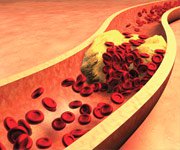
People with more advanced atherosclerotic plaque have reduced levels of carboxylated matrix GLA-protein, a vitamin K-dependent protein.10
- In animal studies, mice genetically bred to lack a protein that uses vitamin K2 develop unrestrained calcium deposition in the arteries (aorta and coronary) so powerful that they die within a few weeks of birth.11
- A similar mutation in the human gene that controls vitamin K production doubles the likelihood of atherosclerotic diseases like coronary disease, stroke, and aortic disease.12
- Furthermore, pregnant women taking the potent blood-thinning agent and vitamin K blocker, warfarin (Coumadin®), give birth to babies with severe abnormalities of bone structure.13
-
Likewise, people who take Coumadin® suffer more osteoporotic fractures.14 They also show substantially more abnormal calcium deposition in other areas, such as heart valves—twice as much as non-Coumadin® takers.13
Safety Caution
If you take Coumadin® (warfarin), use of vitamin K should be discussed with your doctor before you begin supplementation, as changes in blood thinning (prothrombin time or INR [international normalized ratio]—measures of how quickly blood clots) will occur. Note, however, there are data to suggest that modest supplementation of vitamin K1 and perhaps K2 adds to long-term stability of blood coagulation.21
Conclusion
The vitamin K2 experience requires further exploration to establish the scope of this exciting and underappreciated nutrient. Given the compelling science behind vitamin K2, enormously powerful benefits of supplementation may soon be realized for both good bone and arterial health.
Material used with permission of Life Extension. All rights reserved.
1. Geleijnse JM, Vermeer C, Grobbee DE, et al. Dietary intake of menaquinone is associated with a reduced risk of coronary heart disease: the Rotterdam Study. J Nutr. 2004 Nov;134(11):3100-5.
2. Bostrom K, Watson KE, Horn S, et al. Bone morphogenetic protein expression in human atherosclerotic lesions. J Clin Invest. 1993 Apr;91(4):1800-9.
3. Abedin M, Tintut Y, Demer LL. Vascular calcification: mechanisms and clinical ramifications. Arterioscler Thromb Vasc Biol. 2004 Jul;24(7):1161-70.
4. Schurgers LJ, Dissel PE, Spronk HM, et al. Role of vitamin K and vitamin K-dependent proteins in vascular calcification. Z Kardiol. 2001;90 Suppl 3:57-63.
5. Iwamoto J, Takeda T, Sato Y. Menatetrenone (vitamin K2) and bone quality in the treatment of postmenopausal osteoporosis. Nutr Rev. 2006 Dec;64(12):509-17.
6. Kaneki M, Hodges SJ, Hosoi T, et al. Japanese fermented soybean food as the major determinant of the large geographic difference in circulating levels of vitamin K2: possible implications for hip-fracture risk. Nutrition. 2001 Apr;17(4):315-21.
7. Shiraki M, Shiraki Y, Aoki C, Miura M. Vitamin K2 (menatetrenone) effectively prevents fractures and sustains lumbar bone mineral density in osteoporosis. J Bone Miner Res. 2000 Mar;15(3):515-21.
8. Iwamoto J, Takeda T, Ichimura S. Combined treatment with vitamin K2 and bisphosphonate in postmenopausal women with osteoporosis. Yonsei Med J. 2003 Oct 30;44(5):751-6.
9. Iwamoto J, Takeda T, Sato Y. Effects of vitamin K2 on osteoporosis. Curr Pharm Des. 2004;10(21):2557-76.
10. Schurgers LJ, Teunissen KJ, Knapen MH, et al. Novel conformation-specific antibodies against matrix gamma-carboxyglutamic acid (Gla) protein: undercarboxylated matrix Gla protein as marker for vascular calcification. Arterioscler Thromb Vasc Biol. 2005 Aug;25(8):1629-33.
11. Luo G, Ducy P, McKee MD, et al. Spontaneous calcification of arteries and cartilage in mice lacking matrix GLA protein. Nature. 1997 Mar 6;386(6620):78-81.
12. Wang Y, Zhang W, Zhang Y, et al. VKORC1 haplotypes are associated with arterial vascular diseases (stroke, coronary heart disease, and aortic dissection). Circulation. 2006 Mar 28;113(12):1615-21.
13. Gage BF, Birman-Deych E, Radford MJ, Nilasena DS, Binder EF. Risk of osteoporotic fracture in elderly patients taking warfarin: results from the National Registry of Atrial Fibrillation 2. Arch Intern Med. 2006 Jan 23;166(2):241-6.
14. Schurgers LJ, Aebert H, Vermeer C, Bultmann B, Janzen J. Oral anticoagulant treatment: friend or foe in cardiovascular disease? Blood. 2004 Nov 15;104(10):3231-2.
15. Habu D, Shiomi S, Tamori A, et al. Role of vitamin K2 in the development of hepatocellular carcinoma in women with viral cirrhosis of the liver. JAMA. 2004 Jul 21;292(3):358-61.
16. Mizuta T, Ozaki I, Eguchi Y, et al. The effect of menatetrenone, a vitamin K2 analog, on disease recurrence and survival in patients with hepatocellular carcinoma after curative treatment: a pilot study. Cancer. 2006 Feb 15;106(4):867-72.
17. Tsujioka T, Miura Y, Otsuki T, et al. The mechanisms of vitamin K2-induced apoptosis of myeloma cells. Haematologica. 2006 May;91(5):613-9.
18. Hojo K, Watanabe R, Mori T, Taketomo N. Quantitative measurement of tetrahydromenaquinone-9 in cheese fermented by propionibacteria. J Dairy Sci. 2007 Sep;90(9):4078-83.
19. Shoji S. Vitamin K and vascular calcification. Clin Calcium. 2002 Aug;12(8):1123-8.
20. Katsuyama H, Ideguchi S, Fukunaga M, et al. Promotion of bone formation by fermented soybean (natto) intake in premenopausal women. J Nutr Sci Vitaminol (Tokyo). 2004 Apr;50(2):114-20.
21. Sconce E, Avery P, Wynne H, Kamali F. Vitamin K supplementation can improve stability of anticoagulation for patients with unexplained variability in response to warfarin. Blood. 2007 Mar 15;109(6):2419-23.
Related products
-
-
Bone Restore Calcium Supplement with Vitamin K2
Price: 22,25 €Highly absorbable nutrients for greater bone density Highly absorbable... -
Low-Dose Vitamin K2 (MK-7)
Price: 19,65 €Helps maintain bone density Plays a critical role in maintaining healthy... -
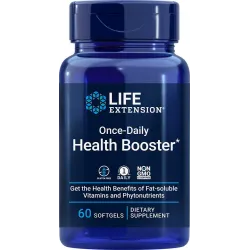
Once-Daily Health Booster
Price: 52,56 €Multi-nutrient formula with eye support Helps defend against oxidative... -
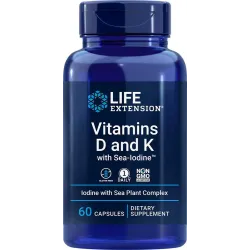
Vitamins D and K with Sea-Iodine™
Price: 18,86 €Helps maintain bone density & promotes vascular health Supplementation... -
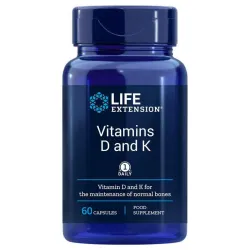
Vitamins D and K
Price: 18,47 €Supports healthy bones & cardiovascular health Supplementation with... -
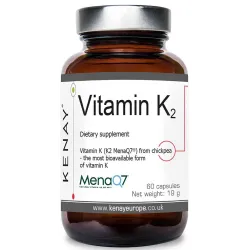
Vitamin K2 MenaQ7 from chickpeas
Price: 15,25 €Supports Bone and Cardiovascular Health Supports bone health...
Related posts
-
 Is Conventional Pomegranate Extract Enough?
An abundance of clinical data has established pomegranate as a broad-spectrum, multi-modal defense against the...
Is Conventional Pomegranate Extract Enough?
An abundance of clinical data has established pomegranate as a broad-spectrum, multi-modal defense against the... -
Lipoic Acid Reverses Mitochondrial Decay
It is estimated that 85% of the oxygen contained in every breath you take is consumed by the mitochondria within each...
-
Vitamin C and Dihydroquercetin
Every day, our bodies are under continual assault by damaging agents known as free radicals. Generally, both internal...
-
How Resveratrol Combats Leading Causes of Death
In 1997, the first scientific paper on resveratrol was published showing that this polyphenol could prevent cancer in...
-
Autoimmune Diseases part 1
Autoimmune diseases are characterized by the body's immune responses being directed against its own tissues, causing...