
 English
 Polski
 Deutsch
 Français
 ελληνικά
 Español
 Italiano
Reduce the Risk of Breast Cancer
Breast cancer is the most common malignancy affecting women and the leading cause of cancer deaths in women worldwide.1
Many risk factors increase the likelihood of developing breast cancer.
Modifiable factors that increase risk include poor diet, sedentary lifestyle, and obesity.2
Conversely, ingestion of healthy foods and beverages have shown protective benefits.3-10
Making the right lifestyle changes can reduce women's risk of developing breast cancer.11,12
Non-Modifiable Risks
 Roughly one of every three new cancers diagnosed annually in women is breast cancer.13
Some forms are easily treatable. But more advanced and aggressive types can be deadly. The five-year survival rate of metastatic breast cancer is about 30%.14
Some risk factors for developing breast cancer, like female sex and older age, can't be changed. Some other non-modifiable risk factors include:1
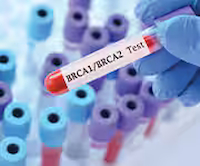
- Genetics: Women with inherited mutations of the BRCA1 or BRCA2 genes are at increased risk for breast cancer. In women who have a first-degree relative diagnosed with breast cancer this risk is doubled.15
- Race/ethnicity. The risk of developing breast cancer is highest among white non-Hispanic women, while the rate of mortality from breast cancer is higher in African American women.1
Risk Factors You Can Change
Modifiable risk factors can be altered, decreasing the risk of developing breast cancer. They include the following.16,17
Drinking and Smoking
Excessive alcohol intake is linked to breast cancer risk.1 Alcohol may induce greater estrogen imbalances in women, exposing breast tissue to more of the hormone's stimulatory effects that encourage tumor growth.18,19
 While cigarettes are known for causing lung cancer, toxic chemicals in smoke can also contribute to breast cancer. Active smoking, especially in postmenopausal women, is associated with a 16% higher risk of developing breast cancer.20 In addition to this, even in non-smokers, passive smoking significantly adds to the risk of breast cancer.1,20
Sedentary Lifestyle
There is growing evidence that the amount of physical activity has a significant association with breast cancer risk.11,20,21
In post-menopausal women, those with a higher level of regular exercise have a significantly lower risk of developing breast cancer.22 One large observational study showed that the most active women had a 25% reduction in the risk of breast cancer compared to women who had the least physical activity.23
Another observational study showed a 15% reduction in breast cancer risk in women with a level of physical activity equivalent to brisk walking for one hour per day, compared to women whose activity was equal to less than one hour of walking per week.24
 An observational study evaluated the association between physical activity in high-risk women before and after diagnosis and survival outcomes. It found that women who were physically active before and after diagnosis had a 41% reduced risk of cancer recurrence and a 49% reduced risk of cancer death.25
Being Overweight
The risk of developing breast cancer is significantly higher in those who are overweight or obese. Overweight women also tend to develop more aggressive forms of breast cancer and have greater rates of mortality and tumor recurrence.1
Poor Diet
Consuming excessive amounts of highly processed foods, fats, red meat, and refined sugars is linked to greater breast cancer risk.
A healthy diet high in vegetables, fruits, legumes, whole grains, and lean protein is associated with lower risk.1
One study found that for each 10% increase in highly processed foods in the diet, there is an 11% increase in risk of developing breast cancer.26
What You Need to Know: Prevent Deadly Breast Cancer
 Breast cancer is the most common cancer affecting women and is the leading cause of cancer death in women worldwide.
- Ways to decrease risk for breast cancer include quitting smoking, losing weight, improving diet, curbing alcohol consumption, and increasing exercise.
- Certain nutrients may also reduce risk for breast cancer, including vitamin D, sulforaphane from cruciferous vegetables, selenium, green tea, and other plants.
Protective Nutrients
Some foods, beverages and nutrients are associated with protective roles against breast cancer. Increasing their intake may reduce risk and improve outcomes in women already diagnosed with cancer.
Green Tea
 Catechins, health-promoting polyphenols that can be found in tea leaves, demonstrate anticancer activity. A meta-analysis showed a reduction of 27% in recurrence of breast cancer among those who drank more than three cups of green tea a day compared to non-drinkers.27
Green tea polyphenols such as epigallocatechin gallate (EGCG) have been shown to reduce breast density in younger women after 12 months of green tea extract supplementation.28
This is important because dense breast tissue is an independent risk factor of breast cancer incidence and make early detection with standard mammography more difficult.29
In a study including about 500 women with the aggressive triple negative form of breast cancer, follow-up information on tea consumption was gathered at 18, 36 and 60 months after diagnosis.
Women who consumed tea during five years after diagnosis had 46% reduced risk of combined recurrence and breast cancer mortality, and 43% lower overall mortality risk, as compared to non-tea drinkers.30
Two meta-analyses of clinical studies have shown 14%- 18% reduced risk of breast cancer in women who consumed higher amounts of tea as compared to those consuming the lowest.31,32
Flavonoids
Flavonoids are plant-derived compounds with numerous health benefits, including anti-inflammatory and anticancer activity.4,7,33-38
In addition to green tea catechins, apigenin,38 fisetin,35 and quercetin6 have all demonstrated cancer-fighting activity in preclinical models.
Selenium
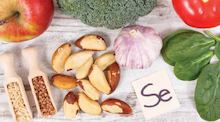 The mineral selenium has been studied for decades for its potential to help prevent or manage cancer.
A meta-analysis of 18 observational studies including thousands of women found that those with higher body levels of selenium have a lower risk of developing breast cancer.39
In women with breast cancer, those in the highest quartile of dietary intake of selenium had a 31% reduced risk of death from the disease as compared to the lowest quartile.40
In another study, 82% of women in the highest quartile of serum levels of selenium had a five-year survival rate, while only 68% of women in the lowest quartile reached a five-year survival. The risk of mortality for patients in the lowest quartile of serum selenium was 2.5 times greater than those in all other quartiles.41
Cruciferous Compounds
Intake of cruciferous vegetables, including broccoli, kale, cabbage, and brussels sprouts, is associated with a lower risk of breast cancer.8,10
These foods provide nutrients that have demonstrated potent anticancer activity in preclinical studies, including sulforaphane,8 I3C (indole-3-carbinol),5,10 and DIM (3,3'-diindolylmethane).5,10
The concentration of sulforaphane found in broccoli sprouts is up to 100 times higher than mature plants. The compounds in different parts of broccoli cells mix together to release sulforaphane for assimilation into the bloodstream.42
Vitamin D
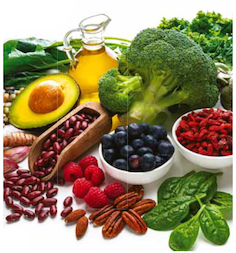 Several studies show that maintaining higher vitamin D levels protects against developing breast cancer and improves survival in women with cancer.43-46
In one analysis, women with vitamin D levels of 60 ng/mL or more had an 82% lower risk of breast cancer than women with low vitamin D levels.44
High blood levels of vitamin D in breast cancer patients are associated with a 42% lower risk of mortality as compared to lower blood levels.43
A meta-analysis found that every 4 ng/mL increase in vitamin D blood levels decreased the risk of breast cancer death by 6%.47 This implies that boosting 25-hydroxyvitamin D blood levels from 30 ng/mL to 50 ng/mL might decrease risk of death by around 30%.
Other Nutrients
Curcumin from turmeric and resveratrol from red grapes and other plants successfully block breast cancer development and spread in animal and cell models.9,48
Preclinical studies have also found that curcumin can make breast cancer cells more sensitive to chemotherapy drugs.9,49
Carotenoids, pigments found in many fruits and vegetables, have anti-cancer activity.50 They include lycopene, astaxanthin, lutein, and zeaxanthin.
One study that followed over 32,000 women for more than 20 years found that higher blood levels of carotenoids were associated with up to a 28% lower risk of breast cancer. In women who did develop cancer, those with the highest carotenoid levels were less likely to suffer recurrence or death.51
Maintaining adequate levels of these nutrients and making other lifestyle changes may help reduce the risk of breast cancer.
Summary
Avoiding smoking, reducing alcohol intake, improving diet, losing weight, and increasing exercise can significantly reduce breast cancer risk.
Ensuring adequate intake of vitamin D, cruciferous vegetables, selenium, and other nutrients may also help reduce risk, according to published biomedical studies.
Material used with permission of Life Extension. All rights reserved.
- Lukasiewicz S, Czeczelewski M, Forma A, et al. Breast Cancer-Epidemiology, Risk Factors, Classification, Prognostic Markers, and Current Treatment Strategies-An Updated Review. Cancers (Basel). 2021 Aug 25;13(17).
- Available at: https://www.nationalbreastcancer.org/breast-cancer-risk-factors/. Accessed May 22, 2024.
- Mokbel K, Mokbel K. Chemoprevention of Breast Cancer With Vitamins and Micronutrients: A Concise Review. In Vivo. 2019 Jul-Aug;33(4):983-97.
- Patel D, Shukla S, Gupta S. Apigenin and cancer chemoprevention: progress, potential and promise (review). Int J Oncol. 2007 Jan;30(1):233-45.
- Biersack B. 3,3'-Diindolylmethane and its derivatives: nature-inspired strategies tackling drug resistant tumors by regulation of signal transduction, transcription factors and microRNAs. Cancer Drug Resist. 2020;3(4):867-78.
- Hashemzaei M, Delarami Far A, Yari A, et al. Anticancer and apoptosis‑inducing effects of quercetin in vitro and in vivo. Oncol Rep. 2017 Aug;38(2):819-28.
- Takemura H, Sakakibara H, Yamazaki S, Shimoi K. Breast cancer and flavonoids - a role in prevention. Curr Pharm Des. 2013;19(34):6125-32.
- Kuran D, Pogorzelska A, Wiktorska K. Breast Cancer Prevention-Is there a Future for Sulforaphane and Its Analogs? Nutrients. 2020 May 27;12(6).
- Wang Y, Yu J, Cui R, et al. Curcumin in Treating Breast Cancer: A Review. J Lab Autom. 2016 Dec;21(6):723-31.
- Liu X, Lv K. Cruciferous vegetables intake is inversely associated with risk of breast cancer: a meta-analysis. Breast. 2013 Jun;22(3):309-13.
- Timmins IR, Jones ME, O'Brien KM, et al. International Pooled Analysis of Leisure-Time Physical Activity and Premenopausal Breast Cancer in Women From 19 Cohorts. J Clin Oncol. 2024 Mar 10;42(8):927-39.
- Hamer J, Warner E. Lifestyle modifications for patients with breast cancer to improve prognosis and optimize overall health. CMAJ. 2017 Feb 21;189(7):E268-E74.
- Available at: https://www.cancer.org/cancer/types/breast-cancer/about/how-common-is-breast-cancer.html. Accessed May 22, 2024.
- Available at: https://www.cancer.org/cancer/types/breast-cancer/understanding-a-breast-cancer-diagnosis/breast-cancer-survival-rates.html. Accessed May 2024, 2024.
- Available at: https://www.cancerresearchuk.org/about-cancer/breast-cancer/risks-causes/family-history-and-inherited-genes. Accessed May 22, 2024.
- Cohen SY, Stoll CR, Anandarajah A, et al. Modifiable risk factors in women at high risk of breast cancer: a systematic review. Breast Cancer Res. 2023 Apr 24;25(1):45.
- Maas P, Barrdahl M, Joshi AD, et al. Breast Cancer Risk From Modifiable and Nonmodifiable Risk Factors Among White Women in the United States. JAMA Oncol. 2016 Oct 1;2(10):1295-302.
- Available at: https://www.cancerresearchuk.org/about-cancer/causes-of-cancer/alcohol-and-cancer/how-does-alcohol-cause-cancer. Accessed May 28, 2024.
- Available at: https://www.cancer.org/cancer/risk-prevention/diet-physical-activity/alcohol-use-and-cancer.html. Accessed May 2024, 2024.
- Momenimovahed Z, Salehiniya H. Epidemiological characteristics of and risk factors for breast cancer in the world. Breast Cancer (Dove Med Press). 2019;11:151-64.
- Lee J, Lee J, Lee DW, et al. Sedentary work and breast cancer risk: A systematic review and meta-analysis. J Occup Health. 2021 Jan;63(1):e12239.
- Available at: https://www.cancer.org/cancer/types/breast-cancer/risk-and-prevention/lifestyle-related-breast-cancer-risk-factors.html. Accessed May 22, 2024.
- Hildebrand JS, Gapstur SM, Campbell PT, et al. Recreational physical activity and leisure-time sitting in relation to postmenopausal breast cancer risk. Cancer Epidemiol Biomarkers Prev. 2013 Oct;22(10):1906-12.
- Eliassen AH, Hankinson SE, Rosner B, et al. Physical activity and risk of breast cancer among postmenopausal women. Arch Intern Med. 2010 Oct 25;170(19):1758-64.
- Cannioto RA, Hutson A, Dighe S, et al. Physical Activity Before, During, and After Chemotherapy for High-Risk Breast Cancer: Relationships With Survival. J Natl Cancer Inst. 2021 Jan 4;113(1):54-63.
- Fiolet T, Srour B, Sellem L, et al. Consumption of ultra-processed foods and cancer risk: results from NutriNet-Sante prospective cohort. BMJ. 2018 Feb 14;360:k322.
- Li MJ, Yin YC, Wang J, Jiang YF. Green tea compounds in breast cancer prevention and treatment. World J Clin Oncol. 2014 Aug 10;5(3):520-8.
- Samavat H, Ursin G, Emory TH, et al. A Randomized Controlled Trial of Green Tea Extract Supplementation and Mammographic Density in Postmenopausal Women at Increased Risk of Breast Cancer. Cancer Prev Res (Phila). 2017 Dec;10(12):710-8.
- Mann RM, Athanasiou A, Baltzer PAT, et al. Breast cancer screening in women with extremely dense breasts recommendations of the European Society of Breast Imaging (EUSOBI). Eur Radiol. 2022 Jun;32(6):4036-45.
- Bao PP, Zhao GM, Shu XO, et al. Modifiable Lifestyle Factors and Triple-negative Breast Cancer Survival: A Population-based Prospective Study. Epidemiology. 2015 Nov;26(6):909-16.
- Wang Y, Zhao Y, Chong F, et al. A dose-response meta-analysis of green tea consumption and breast cancer risk. Int J Food Sci Nutr. 2020 Sep;71(6):656-67
Related products
-
Mega Green Tea Extract (decaffeinated)
Price: 28,92 €One capsule provides more polyphenols than seven cups of green tea... -
Super Selenium Complex
Price: 12,83 €Supports cellular health with 3 forms of selenium Combines three unique... -
Vitamin D3 3000 IU
Price: 12,46 €Broad-spectrum health benefits Vitamin D helps regulate the body’s calcium... -
Super Bio-Curcumin® Turmeric Extract
Price: 32,66 €Curcumin is good for your brain, heart, and immune system Offers...
Related posts
-
 Is Conventional Pomegranate Extract Enough?
An abundance of clinical data has established pomegranate as a broad-spectrum, multi-modal defense against the...
Is Conventional Pomegranate Extract Enough?
An abundance of clinical data has established pomegranate as a broad-spectrum, multi-modal defense against the... -
Lipoic Acid Reverses Mitochondrial Decay
It is estimated that 85% of the oxygen contained in every breath you take is consumed by the mitochondria within each...
-
Vitamin C and Dihydroquercetin
Every day, our bodies are under continual assault by damaging agents known as free radicals. Generally, both internal...
-
How Resveratrol Combats Leading Causes of Death
In 1997, the first scientific paper on resveratrol was published showing that this polyphenol could prevent cancer in...
-
Autoimmune Diseases part 1
Autoimmune diseases are characterized by the body's immune responses being directed against its own tissues, causing...