
 English
 Polski
 Deutsch
 Français
 ελληνικά
 Español
 Italiano
How To Restore Your Cellular Energy with D-ribose
 Energy is our most precious resource. With age, both our physical and cellular energy levels decline.1 Not only do we feel tired, but our cells become fatigued and fail to optimally function.
Additionally, our heart muscle weakens and does not contract as fully, often leading to congestive heart failure.2 D-ribose can help replenish the metabolic energy needed by all our cells, including those in major organs such as our heart and brain.3-5 The result? Increased vitality, along with improved cardiac and neurological function.
Ribose serves a number of other key processes in the body. Long chains of d-ribose are strung together to form ribonucleic acid or RNA, the DNA-like structures essential to copying our genes and translating them into functioning proteins.6 D-ribose provides antioxidant protection for body tissues.7 Even the immune system needs d-ribose to power its response to infection.8
In this article, you'll learn how d-ribose supplementation can assure that vital body processes aren't starved of essential energy molecules.
Broad Cardiovascular Support
 Cardiovascular disease has multiple and interlinked causes.9 That's why no single drug or therapy can ever fully prevent or repair, cardiovascular damage.
It's also the reason that, generally, heart patients are on multiple medications—to deal with the complexity of their disease.
Supplemental d-ribose is an excellent candidate as a cardioprotectant, because it serves multiple targets. It provides defense against heart disease along the entire continuum of events that can lead to cardiac catastrophe.
D-ribose powerfully protects heart tissue against ischemia-reperfusion injury. This is the serious damage that occurs in the minutes to hours following a heart attack or stroke, when oxygen-starved (ischemic) tissue is suddenly flooded with oxygen-rich blood as circulation is restored (reperfusion).10 The sudden availability of oxygen in already-damaged tissue sets off a deadly chain of events, culminating in release of free oxygen radicals and harmful inflammatory responses.
But if high levels of ribose are made available before and immediately after the reperfusion occurs, most of those dangerous changes can be prevented, largely through ribose's actions on inflammatory blood cells.11 This effect is so potent that some forward-looking anesthesiologists and surgeons have suggested using IV infusions of ribose during surgical procedures in which ischemia-reperfusion injury is common.12
 Ischemia, however, is not always an acute event with immediate consequences. Much more commonly, low-level ischemia occurs on a continuing basis in people with advancing coronary artery disease, gradually producing symptoms such as angina (chest pain) with exertion. As ischemia worsens, the pain can occur even while the patient is at rest.
Each episode of angina represents steady depletion of cellular energy levels, with loss of the energy molecule, ATP from heart muscle cells.13,14 This uses up the heart's normal supply of d-ribose. Under these circumstances, d-ribose becomes a conditionally essential nutrient.15
Continued long enough, this cellular energy starvation is a major contributor to congestive heart failure (CHF), in which heart muscle can't "squeeze" hard enough to move blood efficiently.16 The result is that fluid accumulates in tissues throughout the body as a result of poor cardiac "squeeze" (technically called contractility). The end result is progressive exercise intolerance, increasing difficulty breathing, and fluid retention. In the extreme, congestive heart failure can result in the deadly accumulation of fluid in the lungs—known as pulmonary edema—that is the ultimate cause of death for many victims of heart disease.
Many people with congestive heart failure find themselves on multiple medications aimed at reducing fluid accumulation or chemically increasing the heart's contractility. While these drugs can have some success, none are curative, and most have substantial side effects that can limit their utility.
Fortunately, congestive heart failure can be partially reversed, more readily if it is detected and treated early.
Potent Cardioprotectant
 Increasingly, scientists are investigating the ischemia-energy relationship that links the severity of heart muscle damage to the supply of energy-mediating nutrients such as d-ribose.17-19
A noted cardiologist and author Stephen T. Sinatra, MD, who has written extensively on the cardiac benefits of d-ribose, recently stated, "Many physicians are not trained to look at heart disease in terms of cellular biochemistry…."19 But the growing interest in this field over the past decade opens the door to safer and much more effective therapy with cardiac energy preparations based on d-ribose, providing metabolic support for ailing heart muscle.13
The benefits of d-ribose began to interest researchers in the early 1990s. Those early studies were mainly focused on d-ribose as an aid in radiology techniques such as thallium scanning, which indicate areas of ischemia in the heart. Researchers found that by infusing d-ribose intravenously during the scan, they could see many more areas of heart muscle—because much more blood was permeating those tissues!6,20
Too often, individuals with coronary disease have limited mobility or are unable to engage in moderate exercise due to such limitations as lack of energy. German researchers found that they could use d-ribose to increase exercise tolerance in people with severe coronary artery disease and chronic ischemia.10 They gave patients an oral dose of 60 grams daily in four divided doses for just 3 days to achieve gains in endurance.
More recently, a different German group showed that d-ribose could improve heart function, as seen on echocardiograms, while also improving quality of life in patients with congestive heart failure.21
Through the recovery of ATP energy molecules and an increase in the heart muscle's energy levels, d-ribose improves heart muscle contractility—the "squeeze" needed to pump blood efficiently to the lungs and the body in general.22,23
When d-ribose was given intravenously to patients who have suffered one or more heart attacks, scientists found that the d-ribose increased the number of heart segments with good contractility, a visible marker of improved function.24
D-ribose's replenishment of heart muscle energy levels has additional benefits, as was shown in a recent study of patients with advanced congestive heart failure and extreme exercise intolerance.25 Researchers gave these patients d-ribose at 15 grams a day in three doses. The patients all had impressive improvement in their ability to breathe and ventilate their lungs, and a 44% improvement in their heart failure classification! These changes were significant, because they meant that this group of severely impaired patients could move about more freely and with increased comfort.
Neuroprotection
 D-ribose has unique protective effects specific to brain cells.
In a recent study, cardiologists revealed that d-ribose not only improves heart function and blood flow—but also has a profound impact on brain tissue during the period of low blood pressure that can follow a heart attack.23 D-ribose reduced expression of a protein that triggers cell death in brain cells deprived of blood flow. This can also be a life-saving defense in the case of a stroke.23
The neuroprotective effect of d-ribose has major implications, because heart attacks and strokes contribute enormously to the age-related cognitive decline that is so prevalent today.
The neuroprotective benefits of ribose may spring partly from the antioxidant effects it provides throughout the body.7,26 But it is ribose's remarkable ability to restore energy-depleted tissues back to near-normal that is generating enthusiasm among scientists.
Supplementation with d-ribose increases the available amounts of ATP in brain tissue, just as it does in heart muscle.27 This is important, because the brain uses an enormous proportion of our total energy resources.
What You Need to Know: D-RIBOSE: INCREASING CELLULAR ENERGY
 Cellular energy management is of increasing interest to physicians caring for patients with cardiovascular disease and many other age-related conditions. Reduction in cells' ability to use available energy exposes tissues to increased risk of damage by oxidants and inflammatory reactions, and reduces organs' efficiency.
- D-ribose is central to energy metabolism, forming the backbone of the vital ATP molecule that cells use to transfer energy. Cellular damage by oxidants, inflammation, and ischemia/reperfusion injury causes loss of ATP and increased vulnerability to disease.
- Supplementing with d-ribose restores cellular ATP to normal levels, providing powerful protective benefit in cardiovascular disease, even following a heart attack, congestive heart failure, or stroke.
- Supplemental d-ribose also holds promise for management of kidney disease, and even frustrating conditions such as fibromyalgia and restless leg syndrome.
- New discoveries about d-ribose make it one of today's hottest topics in the context of how we understand the relationship of energy management and chronic illness.
Fibromyalgia
 Fibromyalgia (FM) and chronic fatigue syndrome are conditions that often occur together and are believed to have a similar underlying cause.28
There's accumulating evidence that defective production of ATP is the culprit.28-30 These findings make d-ribose a natural candidate as a therapy for those suffering from fibromyalgia and chronic fatigue syndrome. A published case study showed that a woman with fibromyalgia experienced a decrease in symptoms following supplementation with d-ribose.31 The patient had been unresponsive to prior medications, and her physicians based their decision on the known energy-enhancing capabilities of d-ribose.
A larger study soon followed enlisting 41 patients with fibromyalgia or chronic fatigue syndrome.28 Subjects took 5 grams of d-ribose three times daily until they reached a total of 280 grams.
There was significant improvement in all five categories on a standard score: energy, sleep, mental clarity, pain intensity, and well-being.28 On average, patients reported a 45% increase in energy levels.
While fibromyalgia and chronic fatigue syndrome remain complicated and perplexing to scientists, these findings offer real hope for a solution.
Restless Leg Syndrome
 Restless leg syndrome (RLS) is a common disorder that affects as many as 15% of the US population, and it is severe enough to warrant medical treatment in more than a third of those people.32,33
The condition involves an uncontrollable urge to move the legs, accompanied by uncomfortable sensations, and it is usually worse at night.33 Only a few medications offer even partial relief of restless leg syndrome, and many make the condition worse—leaving sufferers without much recourse.32,33
Disordered energy metabolism has been suggested as one possible cause of restless leg syndrome. Low levels of adenosine, the d-ribose-containing central molecule in ATP, have been reported in those suffering from restless leg syndrome.34
Based on that observation, one study has been carried out in which daytime symptoms were eliminated, and nighttime symptoms significantly reduced, on daily doses of 15 grams of d-ribose, taken as one 5-gram dose with breakfast, lunch, and dinner.26
It's clearly too early to claim that d-ribose cures the condition, but these encouraging findings—coupled with complete absence of side effects—warrant further investigation.
What You need to know: UNGROUNDED FEAR: CAN D-RIBOSE CAUSE GLYCATION REACTIONS?
 It is now generally accepted that d-ribose supplementation provides many health benefits, particularly in the area of cellular energy management.
Several recent publications, however, have raised the question of whether d-ribose—because it is a sugar—could possibly contribute to development of harmful advanced glycation endproducts.40-43
The truth seems to be straightforward: Like any sugar, ribose can indeed cause protein glycation, with resulting damage to tissues.42 And when ribose is administered experimentally at the same high dose as glucose, ribose quickly causes the protein cross-linking that is the outcome of glycation.40
But those studies used artificially high doses and concentrations of ribose, levels never found in humans—even after high-dose supplementation.
For example, in a human study of d-ribose supplementation at doses of 20 and 53 grams over a 4-hour period, peak serum ribose levels rose to only 4.8 mg/dL and 81.7 mg/dL, respectively.44
But doses used in the glycation experiments were significantly higher, up to 30 times higher than achievable in human blood!42,43
And in an experiment showing that d-ribose induced glycation and impaired spatial cognition in mice, the ribose concentrations used were equivalent to blood levels of 150 to 750 mg/dL, clearly vastly higher than have been used in human studies.43,44
Researchers seeking to show that ribose-induced glycation could enhance cartilage damage in an animal model of osteoarthritis showed conclusively that even direct injection of ribose into the joint was incapable of triggering sufficient glycation to cause injury!45,46
The doses for d-ribose studies reported in this article—15 to 60 grams per day in divided doses—are incapable of causing serum ribose concentrations high enough to get anywhere near the risk of excessive glycation reported in the lab studies.44
Also, most human studies recommended splitting the total amount into three daily doses; this approach provides even greater assurance that serum d-ribose remains well within safe levels.
Kidney Protection
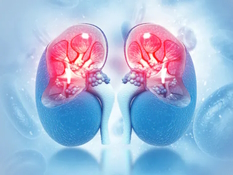 Like the brain and heart, the human kidney receives a a high proportion of the body's total blood flow—which makes it equally vulnerable to damage by ischemia-reperfusion mechanisms, the loss and restoration of blood flow.
These kidney injuries can occur as the result of trauma or during any major surgery, sometimes worsened by chronic conditions such as cardiovascular disease and diabetes.35-37
Growing evidence suggests that an immune activation and inflammatory response following this kind of kidney injury creates the bulk of the damage, especially in those with diabetes.12,38 Adenosine, which is partly made from d-ribose, is an important regulator of kidney function, and is especially vital during times of injury.39 These observations—coupled with what we know about d-ribose as antioxidant and anti-inflammatory—have aroused considerable interest among kidney researchers.
Japanese scientists have led the way in investigating d-ribose as a kidney protector. They have found that in rats subjected to renal ischemia-reperfusion—similar to what can occur during major surgery—d-ribose significantly reduced the release of inflammatory cytokines.12 Kidney function and appearance following the injury was improved substantially.
They also showed that d-ribose reduces activation of neutrophils, the ubiquitous white blood cells that are the first to arrive at the scene of an injury but that also release toxic chemicals and oxygen radicals that can cause additional harm.11
Clearly researchers are only beginning to realize the substantial potential of d-ribose for kidney health.
Summary
 D-ribose is an essential component in our bodies' cellular energy management systems. Additionally, it provides antioxidant, anti-inflammatory, and gene regulatory capabilities. Together these characteristics make it of compelling interest to forward-thinking clinicians and patients.
Supplemental d-ribose demonstrates cardioprotection—even late in the disease process when heart attacks have already occurred, and when heart failure is developing. D-ribose helps ailing heart muscle maximize its effort, and improves blood flow to oxygen-starved cardiac tissue.
D-ribose supplements are only just being explored for similar benefits in brain and kidney tissues, but recent studies offer great hope in those areas. Even perplexing conditions such as fibromyalgia and restless leg syndrome seem to be yielding to the energy-related benefits of d-ribose.
Material used with permission of Life Extension. All rights reserved.
- Miyoshi N, Oubrahim H, Chock PB, Stadtman ER. Age-dependent cell death and the role of ATP in hydrogen peroxide-induced apoptosis and necrosis. Proc Natl Acad Sci USA. 2006 Feb 7;103(6):1727-31. Epub 2006 Jan 27.
- Kohlhaas M, Maack C. Interplay of defective excitation-contraction coupling, energy starvation, and oxidative stress in heart failure. Trends Cardiovasc Med. 2011 Apr;21(3):69-73.
- Available at: http://naturalmedicinejournal.net/pdf/nmj_feb10_np.pdf. Accessed July 23, 2012.
- Barsotti C, Ipata PL. Pathways for alpha-D-ribose utilization for nucleobase salvage and 5-fluorouracil activation in rat brain. Biochem Pharmacol. 2002 Jan 15;63(2):117-22.
- Omran H, McCarter D, St Cyr J, Luderitz B. D-ribose aids congestive heart failure patients. Exp Clin Cardiol. 2004 Summer;9(2):117-8.
- Perlmutter NS, Wilson RA, Angello DA, Palac RT, Lin J, Brown BG. Ribose facilitates thallium-201 redistribution in patients with coronary artery disease. J Nucl Med. 1991 Feb;32(2):193-200.
- Seifert JG, Subudhi AW, Fu MX, et al. The role of ribose on oxidative stress during hypoxic exercise: a pilot study. J Med Food. 2009 Jun;12(3):690-3.
- Freeman ML, Mertens-Talcott SU, St Cyr J, Percival SS. Ribose enhances retinoic acid-induced differentiation of HL-60 cells. Nutr Res. 2008 Nov;28(11):775-82.
- Ferrari R, Pepi P, Ferrari F, Nesta F, Benigno M, Visioli O. Metabolic derangement in ischemic heart disease and its therapeutic control. Am J Cardiol. 1998 Sep 3;82(5A):2K-13K.
- Ferrari R, Pepi P, Ferrari F, Nesta F, Benigno M, Visioli O. Metabolic derangement in ischemic heart disease and its therapeutic control. Am J Cardiol. 1998 Sep 3;82(5A):2K-13K.
- Sato H, Ueki M, Asaga T, Chujo K, Maekawa N. D-ribose attenuates ischemia/reperfusion-induced renal injury by reducing neutrophil activation in rats. Tohoku J Exp Med. 2009 May;218(1):35-40.
- Nishiyama J, Ueki M, Asaga T, Chujo K, Maekawa N. Protective action of D-ribose against renal injury caused by ischemia and reperfusion in rats with transient hyperglycemia. Tohoku J Exp Med. 2009 Nov;219(3):215-22.
- Pauly DF, Pepine CJ. D-Ribose as a supplement for cardiac energy metabolism. J Cardiovasc Pharmacol Ther. 2000 Oct;5(4):249-58.
- Pliml W, von Arnim T, Stablein A, Hofmann H, Zimmer HG, Erdmann E. Effects of ribose on exercise-induced ischaemia in stable coronary artery disease. Lancet. 1992 Aug 29;340(8818): 507-10.
- Kendler BS. Supplemental conditionally essential nutrients in cardiovascular disease therapy. J Cardiovasc Nurs. 2006 Jan-Feb;21(1):9-16.
- Sinatra ST. Metabolic cardiology: an integrative strategy in the treatment of congestive heart failure. Altern Ther Health Med. 2009 May-Jun;15(3):44-52.
- Lopaschuk GD. Treating ischemic heart disease by pharmacologically improving cardiac energy metabolism. Presse Med. 1998 Dec 12;27(39):2100-4.
- Pauly DF, Johnson C, St Cyr JA. The benefits of ribose in cardiovascular disease. Med Hypotheses. 2003 Feb;60(2):149-51.
- Sinatra ST. Metabolic cardiology: the missing link in cardiovascular disease. Altern Ther Health Med. 2009 Mar-Apr;15(2):48-50.
- Hegewald MG, Palac RT, Angello DA, Perlmutter NS, Wilson RA. Ribose infusion accelerates thallium redistribution with early imaging compared with late 24-hour imaging without ribose. J Am Coll Cardiol. 1991 Dec;18(7):1671-81.
- Omran H, Illien S, MacCarter D, St Cyr J, Luderitz B. D-Ribose improves diastolic function and quality of life in congestive heart failure patients: a prospective feasibility study. Eur J Heart Fail. 2003 Oct;5(5):615-9.
- Omran H, McCarter D, St Cyr J, Luderitz B. D-ribose aids congestive heart failure patients. Exp Clin Cardiol. 2004 Summer;9(2):117-8.
- Schneider HJ, Rossner S, Pfeiffer D, Hagendorff A. D-ribose improves cardiac contractility and hemodynamics, and reduces expression of c-fos in the hippocampus during sustained slow ventricular tachycardia in rats. Int J Cardiol. 2008 Mar 28;125(1):49-56.
- Sawada SG, Lewis S, Kovacs R, et al. Evaluation of the anti-ischemic effects of D-ribose during dobutamine stress echocardiography: a pilot study. Cardiovasc Ultrasound. 2009;7:5.
- MacCarter D, Vijay N, Washam M, Shecterle L, Sierminski H, St Cyr JA. D-ribose aids advanced ischemic heart failure patients. Int J Cardiol. 2009 Sep 11;137(1):79-80.
- Chigrinskiy EA, Conway VD. Protective effect of D-ribose against inhibition of rats testes function at excessive exercise. Journal of Stress Physiology & Biochemistr. 2011;7(3):242-9.
- Barsotti C, Ipata PL. Pathways for alpha-D-ribose utilization for nucleobase salvage and 5-fluorouracil activation in rat brain. Biochem Pharmacol. 2002 Jan 15;63(2):117-22.
- Teitelbaum JE, Johnson C, St Cyr J. The use of D-ribose in chronic fatigue syndrome and fibromyalgia: a pilot study. J Altern Complement Med. 2006 Nov;12(9):857-62.
- Eisinger J, Plantamura A, Ayavou T. Glycolysis abnormalities in fibromyalgia. J Am Coll Nutr. 1994 Apr;13(2):144-8.
- Le Goff P. Is fibromyalgia a muscle disorder? Joint Bone Spine. 2006 May;73(3):239-42.
- Gebhart B, Jorgenson JA. Benefit of ribose in a patient with fibromyalgia. Pharmacotherapy. 2004 Nov;24(11):1646-8.
- Martin CM. The mysteries of restless legs syndrome. Consult Pharm. 2007 Nov;22(11):907-24.
- Bayard M, Avonda T, Wadzinski J. Restless legs syndrome. Am Fam Physician. 2008 Jul 15;78(2):235-40.
- Guieu R, Sampieri F, Pouget J, Guy B, Rochat H. Adenosine in painful legs and moving toes syndrome. Clin Neuropharmacol. 1994 Oct;17(5):460-9.
- Laisalmi-Kokki M, Pesonen E, Kokki H, et al. Potentially detrimental effects of N-acetylcysteine on renal function in knee arthroplasty. Free Radic Res. 2009 Jul;43(7):691-6.
- Siems W, Quast S, Carluccio F, et al. Oxidative stress in chronic renal failure as a cardiovascular risk factor. Clin Nephrol. 2002 Jul;58 Suppl 1:S12-9.
- Yan SF, Ramasamy R, Schmidt AM. The receptor for advanced glycation endproducts (RAGE) and cardiovascular disease. Expert Rev Mol Med. 2009;11:e9.
- Jang HR, Ko GJ, Wasowska BA, Rabb H. The interaction between ischemia-reperfusion and immune responses in the kidney. J Mol Med. 2009 Sep;87(9):859-64.
- Vallon V, Osswald H. Adenosine receptors and the kidney. Handb Exp Pharmacol. 2009 (193):443-70.
- Mentink CJ, Hendriks M, Levels AA, Wolffenbuttel BH. Glucose-mediated cross-linking of collagen in rat tendon and skin. Clin Chim Acta. 2002 Jul;321(1-2):69-76.
- Kuo TY, Huang CL, Yang JM, et al. The role of ribosylated-BSA in regulating PC12 cell viability. Cell Biol Toxicol. 2012 Aug;28(4): 255-67.
- Wei Y, Han CS, Zhou J, Liu Y, Chen L, He RQ. d-ribose in glycation and protein aggregation. Biochim Biophys Acta. 2012 Apr;1820(4):488-94.
- Han C, Lu Y, Wei Y, Liu Y, He R. D-ribose induces cellular protein glycation and impairs mouse spatial cognition. PLoS One. 2011;6(9):e24623.
- Gross M, Zollner N. Serum levels of glucose, insulin, and C-peptide during long-term D-ribose administration in man. Klin Wochenschr. 1991 Jan 4;69(1):31-6.
- Vos PA, Degroot J, Barten-van Rijbroek AD, et al. Elevation of cartilage AGEs does not accelerate initiation of canine experimental osteoarthritis upon mild surgical damage. J Orthop Res. 2012 Mar 2.
- Willett TL, Kandel R, De Croos JN, Avery NC, Grynpas MD. Enhanced levels of non-enzymatic glycation and pentosidine crosslinking in spontaneous osteoarthritis progression. Osteoarthritis Cartilage. 2012 Jul;20(7):736-44.
Related product
-
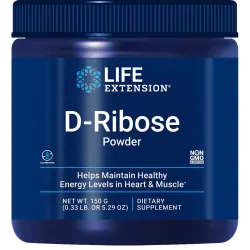
D-Ribose Powder
Price: 27,21 €Encourage cellular energy production and support both heart and muscle health...
Related posts
-
 Is Conventional Pomegranate Extract Enough?
An abundance of clinical data has established pomegranate as a broad-spectrum, multi-modal defense against the...
Is Conventional Pomegranate Extract Enough?
An abundance of clinical data has established pomegranate as a broad-spectrum, multi-modal defense against the... -
Lipoic Acid Reverses Mitochondrial Decay
It is estimated that 85% of the oxygen contained in every breath you take is consumed by the mitochondria within each...
-
Vitamin C and Dihydroquercetin
Every day, our bodies are under continual assault by damaging agents known as free radicals. Generally, both internal...
-
How Resveratrol Combats Leading Causes of Death
In 1997, the first scientific paper on resveratrol was published showing that this polyphenol could prevent cancer in...
-
Cukrzyca opis choroby Część 2
Cukrzycy typu 1 potrzebują dożywotniej insulinoterapii, choć suplementy wymienione w niniejszym rozdziale mogą pomóc...