
 English
 Polski
 Deutsch
 Français
 ελληνικά
 Español
 Italiano
The Use of Glutathione, Master Antioxidant in Clinical Settings
 Even if you are not doing a deep dive into detoxification protocols, there is a vast array of clinical settings in which glutathione may impact health conditions
Autism spectrum disorder (ASD)
.jpg) Increased oxidative stress and mitochondrial dysfunction may contribute to the development and clinical manifestation of autism.[v],[vi] Children on the autistic spectrum have been shown to have lower levels of glutathione, which may be caused by metabolic abnormalities and nutritional deficiencies, but also may further contribute to them.[vii] In addition to this, significantly lower levels of phospholipids have been reported in children with autism.[viii] Supplemental NAC and glutathione have been studied specifically in the setting of ASD, and have been shown to increase glutathione levels.[ix][x] Utilization of glutathione in a liposomal format also provides the essential phospholipids which may be deficient and are necessary for mitochondrial and cellular repair.
Increased oxidative stress and mitochondrial dysfunction may contribute to the development and clinical manifestation of autism.[v],[vi] Children on the autistic spectrum have been shown to have lower levels of glutathione, which may be caused by metabolic abnormalities and nutritional deficiencies, but also may further contribute to them.[vii] In addition to this, significantly lower levels of phospholipids have been reported in children with autism.[viii] Supplemental NAC and glutathione have been studied specifically in the setting of ASD, and have been shown to increase glutathione levels.[ix][x] Utilization of glutathione in a liposomal format also provides the essential phospholipids which may be deficient and are necessary for mitochondrial and cellular repair.Attention deficit and mood disorders
 Increased oxidative stress may contribute to attention deficit and mood disorders via numerous mechanisms.[xii] Therapies directed at supporting antioxidant levels such as NAC, vitamin C, and a pine back extract known as pycogenol have been studied in conditions of anxiety, depression, and/or attention deficit hyperactivity disorder (ADHD). [xiii][xiv][xv][xvi] With therapies such as these, improvements have been seen clinically, possibly associated with their impact on glutathione levels.[xvii]
Of course, this has thus become a topic of interest for those involved in development of pharmaceutical therapies, however substantial evidence exists for one to consider utilizing these nutritional substances, as well as glutathione, which already are readily available.
Autoimmune disease and immune balance
In settings of autoimmune disease, there is an increased level of oxidative stress associated with immune activation and related inflammation. With this, glutathione levels become depleted.[xviii] Glutathione is integral to the proper function of our immune system, especially for resistance to viruses.[xix][xx] Experimentally, a Th2 dominant (allergic state) is created with depletion of intracellular glutathione, and introduction of glutathione restores immune balance.[xxi] Given these relationships it is easy to see how supplemental glutathione may be supportive for balancing immune function, in addition to restoring levels which often are deficient in autoimmunity.
Mercury and cellular toxicity
 Glutathione is necessary for cellular detoxification. The process of Phase II detoxification involves the binding of toxins with substances such as glutathione to create larger, inactive, water soluble molecules.[xxii] Toxins such as mercury are linked to glutathione, transported out of the cell, into the bile, and out of the body via stool. Glutathione is thus necessary to both protect the cell’s delicate chemical machinery and to transport toxins out. Because glutathione is utilized for the removal and elimination of mercury and other toxins from the cell, it also can become depleted in settings of toxicity.[xxiii]
Material used with permission of Quicksilver Scientific®. All rights reserved.
[i]Devasagayam TP, et al. Free radicals and antioxidants in human health: current status and future prospects. J Assoc Physicians India. 2004 Oct;52:794-804.
[ii] Exner R, et al. Therapeutic potential of glutathione. Wiener Klinische Wochenschrift. 2000 Jul;112(14):610-6.
[iii] Rushworth GF, Megson IL. Existing and potential therapeutic uses for N-acetylcysteine: the need for conversion to intracellular glutathione for antioxidant benefits. Pharmacol Ther. 2014 Feb;141(2):150-9.
[iv]Zeevalk GD, Bernard LP, Guilford FT. Liposomal-glutathione provides maintenance of intracellular glutathione and neuroprotection in mesencephalic neuronal cells. Neurochem Res. 2010 Oct;35(10):1575-87.
James SJ, et al. Metabolic biomarkers of increased oxidative stress and impaired methylation capacity in children with autism. Am J Clin Nutr. 2004 Dec;80(6):1611-7.
[vi] Palmieri L, Persico AM. Mitochondrial dysfunction in autism spectrum disorders: cause or effect? Biochim Biophys Acta. 2010 Jun-Jul;1797(6-7):1130-7.
[vii] Omata Y, et al. Decreased zinc availability affects glutathione metabolism in neuronal cells and in the developing brain. Toxicol Sci. 2013 May;133(1):90-100.
[viii]El-Ansary AK, et al. Impaired plasma phospholipids and relative amounts of essential polyunsaturated fatty acids in autistic patients from Saudi Arabia. Lipids Health Dis. 2011 Apr 22;10:63.
[ix] Hardan AY, et al. A randomized controlled pilot trial of oral N-acetylcysteine in children with autism. Biol Psychiatry. 2012 Jun 1;71(11):956-61.
[x] Kern JK, et al. A clinical trial of glutathione supplementation in autism spectrum disorders. Med Sci Monit. 2011 Dec;17(12):CR677-82.
[xi] Ross MA. Could oxidative stress be a factor in neurodevelopmental disorders? Prostaglandins Leukot Essent Fatty Acids. 2000 Jul-Aug;63(1-2):61-3.
[xii]Moylan S, Berk M, Dean OM, et al. Oxidative andamp; nitrosative stress in depression: why so much stress? Neurosci Biobehav Rev. 2014;45:46-62.
[xiii] Dvořáková M, et al. The effect of polyphenolic extract from pine bark, Pycnogenol® on the level of glutathione in children suffering from attention deficit hyperactivity disorder (ADHD). Redox Report. 2006 Aug 1;11(4):163-72.
[xiv]Trebatická J, et al. Treatment of ADHD with French maritime pine bark extract, Pycnogenol®. Euro Child andamp; Adol Psych. 2006 Sep 1;15(6):329-35.
[xv] de Oliveira IJ, et al. Effects of Oral Vitamin C Supplementation on Anxiety in Students: A Double-Blind, Randomized, Placebo-Controlled Trial. Pak J Biol Sci. 2015 Jan;18(1):11-8.
[xvi] Amr M, et al. Efficacy of vitamin C as an adjunct to fluoxetine therapy in pediatric major depressive disorder: a randomized, double-blind, placebo-controlled pilot study. Nutr J. 2013 Mar;12(1):1.
[xvii] Berk M, et al. Glutathione: a novel treatment target in psychiatry. Trends Pharmacol Sci. 2008 Jul;29(7):346-51.
[xviii] Perricone C, et al. Glutathione: a key player in autoimmunity. Autoimmun Rev. 2009 Jul;8(8):697-701.
[xix] Palamara AT, et al. Evidence for antiviral activity of glutathione: in vitro inhibition of herpes simplex virus type 1 replication. Antiviral Res. 1995 Jun;27(3):237-53.
[xx]Cai J, et al. Inhibition of influenza infection by glutathione. Free Radic Biol Med. 2003 Apr 1;34(7):928-36
[xxi] Peterson JD, et al. Glutathione levels in antigen-presenting cells modulate Th1 versus Th2 response patterns. Proc Natl Acad Sci U S A. 1998 Mar 17;95(6):3071-6.
Zamek-Gliszczynski MJ, et al. Integration of hepatic drug transporters and phase II metabolizing enzymes: mechanisms of hepatic excretion of sulfate, glucuronide, and GSH metabolites. Eur J Pharm Sci. 2006 Apr;27(5):447-86.
[xxiii] Patrick L. Mercury toxicity and antioxidants: Part 1: role of glutathione and alpha-lipoic acid in the treatment of mercury toxicity. Altern Med Rev. 2002 Dec;7(6):456-71.
Related products
-

Glutathione, Cysteine & C
Price: 22,63 €Powerful intracellular antioxidant support Cysteine plays a role in phase... -
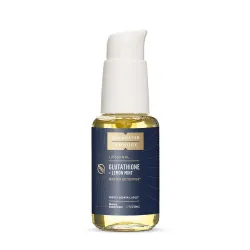
Liposomal Glutathione
Price: 44,56 €Glutathione is one of the body’s most powerful detoxifier. Very well...
Related posts
-
 Is Conventional Pomegranate Extract Enough?
An abundance of clinical data has established pomegranate as a broad-spectrum, multi-modal defense against the...
Is Conventional Pomegranate Extract Enough?
An abundance of clinical data has established pomegranate as a broad-spectrum, multi-modal defense against the... -
Lipoic Acid Reverses Mitochondrial Decay
It is estimated that 85% of the oxygen contained in every breath you take is consumed by the mitochondria within each...
-
Vitamin C and Dihydroquercetin
Every day, our bodies are under continual assault by damaging agents known as free radicals. Generally, both internal...
-
Green Tea
Scientific research on the health benefits of green tea is expanding exponentially, with more than 1,500 articles...
-
The Lancet Reports Extremely Positive Data on Green Tea
As medical researchers continue to uncover the health benefits of green tea, one might think that these discoveries...