
 English
 Polski
 Deutsch
 Français
 ελληνικά
 Español
 Italiano
Best Supplements for Men Over 40
Should men over 40 take vitamins and supplements?
 You probably already know the answer to this question. It's a resounding yes! In general, most people will need supplementation to protect their well-being.
For starters, especially with the standard American diet (not-so-ironic acronym: "SAD"), it's really hard to get all of the nutrients you need. Even if you're the healthiest eater in the world, you're likely still deficient in something. We can trace this all the way back to the soil that grows the ingredients that make the food we eat. It's not nearly as healthy and nutrient-dense as it was "back in the day." As a result, neither is our food.
(Not-so-fun fact: In 2020, Forbes wrote that 33% of the earth's soil was already degraded. Yikes.)
Then, you have to factor in that, plain and simple, your body's needs change and become more demanding over time. The food and physical activity that made you feel incredible at 30 might not do the job at 40—and that's okay! This is part of being human and getting older.
We're not trying to be an even bigger buzzkill, but we'd be remiss if we didn't at least mention the dreaded "male menopause." Typically starting in their late 40s, some men can start to experience changes to their mood, sex drive, body composition (less muscle mass and fat redistribution), energy levels, and even a drop-off in their ability to focus and sleep through the night.
So, you can probably see why self-care is so important to men's health—that means a nourishing, nutrient-dense diet, plenty of physical activity and supplements.
Benefits of taking supplements at 40
 Next, let's talk more specifically about how dietary supplements can help men stay healthy as they age.
-
A strong heart:
As we get older, it becomes particularly important to be proactive about heart health. Changes in the electrical system can change your heartbeat, and your blood flow and arterial thickness may not be the same as they were when you were younger. Certain supplements can support your heart's functioning and healthy blood pressure—so you can stay young at heart (literally!). -
Supporting prostate health:
The prostate—a walnut-sized gland—can increase in size as you age. When this happens, the prostate can then press up against the bladder and urethra (the tube through which urine exits the body). This may mean urinating isn't the same as it used to be—you might be going more often, or your patterns may change. Supporting prostate health with supplements that promote normal prostate size and urinary patterns can really save the day here (and the night…if waking up to urinate has been an issue)! -
Balanced hormonal health:
A man's total testosterone levels falls by about 1.6% each year. Bioavailable (meaning the testosterone that your body can actually use) levels fall by about 2% to 3% each year. This happens due to a decrease in both testicular and hypothalamic-pituitary function. Supplementation can help! Supplements that support healthy testosterone not only boost your current free testosterone levels but can actually encourage your body to produce and use more testosterone all on its own. -
A better sex life:
A drop-off in libido can make bedroom time less fun than it used to be—and sometimes even frustrating. This happens to both men and women with age, so it's nothing to be ashamed of. But certain supplements come in handy when it comes to your sex drive, performance and function. -
Stronger bones and muscles:
As men age, building and maintaining muscle mass may seem like more of an uphill battle. And the downsides of this are not just how you look in a bathing suit. Combine weaker muscles with age-related decline in bone health, and it's no wonder that more than 25% of people 65 years and up fall each year.
The 10 best supplements for men over 40
 Now that you know a little more about why men over 40 need supplementation and exactly how supplements can improve your overall health as you age, let's talk in more detail about the top supplements for men that you might want to consider taking!
1. Vitamin D—for whole-body health
We've spent some time talking about sexual function. But that's not the only thing to consider as you age. You now know that as we collect years, our bones become weaker, and our hearts might have a harder time doing their job. This is where vitamin D can really come in handy.
Vitamin D offers a number of benefits. It keeps your bones healthy, supports your heart health and blood vessels, helps to maintain already-healthy blood pressure, boosts cognitive function, and gives the immune system a little kick in the tush.
Our bodies produce more vitamin D when we spend time out in the sun. Unfortunately, Americans spend about 90% of their time indoors. It might be no surprise, then, that about 35% of American adults are deficient in vitamin D. Don't be one of them—supplement with vitamin D! Your immune system, skeletal frame, heart, and brain will thank you for it.
2. Multivitamin
 If you're looking for something more robust and all-encompassing, a multivitamin might be what you need. Look for one that contains vitamin A, vitamin C, vitamin D3, vitamin E, thiamine, riboflavin, vitamin B6, vitamin B12, biotin, magnesium, zinc, and boron at a minimum. Our twice-daily multivitamin is jam-packed with more than 25 vitamins, minerals, and extracts.
We want to stress that a multivitamin—or any supplement, for that matter—is not a replacement for a nutrient-dense diet with plenty of nourishing ingredients and foods. That said, a daily multivitamin can pick up the slack where nutrition falls short.
3. Vitamin B12—for your brain and more
Vitamin B12 is important for your brain health and cognition, red blood cell production, nerve health, DNA synthesis, and healthy homocysteine levels. So, you want to make sure you have enough.
If you're already eating enough animal-based or fortified foods, then your vitamin B12 levels might be okay. More specifically, fish, meat, poultry, eggs, and dairy products are a great source of vitamin B12. Otherwise, if you mostly eat a plant-based diet, you might want to think of supplementing—especially as you age, because age-related digestive challenges can inhibit absorption.
Keep in mind that there are a number of B vitamins. Thiamine (B1), riboflavin (B2), niacin (B3), and biotin (B7) are all examples of B vitamins. There are also B-complex multivitamins that carry a combination of them and offer benefits for brain, mood, energy, metabolism and more.
4. Sexual support supplements—for intimacy
Male Vascular Sexual Support is formulated with an extract of Kaempferia parviflora that may boost male sexual function and supports the male sexual response by encouraging blood flow. It does this by inhibiting an enzyme that negatively impacts male sexual function.
5. Saw palmetto—for your prostate
 Saw palmetto extract is beneficial to men's health because it contains the compound beta-sitosterol, which has been studied for its support of normal urinary function and overall prostate health.
6. Testosterone—for muscle mass, strength and more
As mentioned earlier, testosterone levels decline with age. This hormone plays a role not just in sexual function but also in bone mass, muscle mass, strength, and beyond. Supporting this hormone over time is vital for your overall health, and that's why testosterone-boosting supplements can be your ally.
By the way, we're talking about supplements that support the body's testosterone production and youthful free testosterone levels—for example, the botanical extracts from pomegranate, cacao and luteolin are known to do exactly that—not actual "testosterone" in a supplement.
7. Omega-3—for brain health and beyond
Research tells us that omega-3 fatty acids are potential key nutrients when it comes to keeping your brain sharp and your joints happy. Omega-3 fatty acids support heart health and help keep your triglyceride levels healthy. If you eat cold-water fish like salmon, trout and halibut multiple times per week, you might already be getting enough omega-3s in your diet. Otherwise, an omega-3 EPA/DHA fish oil is a good choice.
We know that aging isn't easy. Every year seems to bring some new "surprise." But with smart lifestyle choices and the right multivitamins and other supplements, you can feel good, look good, and be good today, tomorrow and for years to come.
8. Vitamin C—for skin, immune and heart health
 We often take vitamin C—also known as ascorbic acid—for immune support. However, it does more than this! In fact, vitamin C helps you at the cellular level. Yes, it helps to protect your cells and keep them healthy as you age! Vitamin C also plays a role in the health of your skin, blood vessels, cartilage, and bones—all things that can struggle as Father Time does his thing.
Don't settle for just any old supplement, because here's the problem: there's only so much vitamin C that your body can absorb and use at one time. Liposomal vitamin C combats this hurdle by staying in your system for up to 24 hours.
9. Protein powder—for muscle and bone strength
To really encourage bone and muscle health, consider using a protein powder if you're having a harder time getting what you need through food alone. Protein powder is an easier way to sneak in more of this important macronutrient. Try drinking a shake post-workout to enhance your muscle-building efforts.
10. Antioxidants—to fight free radicals
 Have you ever heard of free radicals? These are atoms, molecules or ions that can damage your cells, leading to aging. In fact, research has linked damage from free radicals to changes in your heart, immune and cognitive function, joint health and more—even your vision. Eating plenty of fruits, vegetables, nuts and legumes can help fight off these free radicals, because these foods contain lots of antioxidants.
Supplementing with antioxidants (vitamin C, mentioned previously, is a particularly powerful one) is an extra measure to help keep you strong, healthy, and protected from free radicals.
Material used with permission of Life Extension. All rights reserved.
- Boskey, A.L. and Coleman, R. "Aging and Bone." J Dent Res. December 2010. https://www.ncbi.nlm.nih.gov/pmc/articles/PMC2991386/
- Deng, W., et al. "Effect of omega-3 polyunsaturated fatty acids supplementation for patients with osteoarthritis: a meta-analysis." Journal of Orthopaedic Surgery and Research. May 2023. https://josr-online.biomedcentral.com/articles/10.1186/s13018-023-03855-w
- Ewing-Chow, D. "Earth's Rapidly Degrading Soil Is Bad News For Human Health." Forbes. June 2024. https://www.forbes.com/sites/daphneewingchow/2020/06/24/earths-rapidly-degrading-soil-is-bad-news-for-human-health/?sh=25c2ca697865
- Forman, H.J. and Zhang, H. "Targeting oxidative stress in disease: promise and limitations of antioxidant therapy." Nature. June 2021. https://www.nature.com/articles/s41573-021-00233-1
- Golan, R., et al. "Age-related testosterone decline is due to waning of both testicular and hypothalamic-pituitary function." Aging Male. June 2015. https://www.ncbi.nlm.nih.gov/pmc/articles/PMC4816459/
- Liao, J., et al. "The Effects of Fish Oil on Cardiovascular Diseases: Systematical Evaluation and Recent Advance." Front Cardiovasc Med. January 2022. https://www.ncbi.nlm.nih.gov/pmc/articles/PMC8767101/
- Stanworth, R.D. and Jones, T.H. "Testosterone for the aging male; current evidence and recommended practice." Clin Interv Aging. March 2008. https://www.ncbi.nlm.nih.gov/pmc/articles/PMC2544367
- "Falls and Fractures in Older Adults: Causes and Prevention." https://www.nia.nih.gov/health/falls-and-fractures-older-adults-causes-and-prevention
- "Heart Health and Aging." National Institute on Aging. https://www.nia.nih.gov/health/heart-health-and-aging
- "Indoor Air Quality." United States Environmental Protection Agency. https://www.epa.gov/report-environment/indoor-air-quality
- "The ‘male menopause.'" NHS. https://www.nhs.uk/conditions/male-menopause/
- "Omega-3 Fatty Acids: An Essential Contribution." Harvard School of Public Health. https://www.hsph.harvard.edu/nutritionsource/what-should-you-eat/fats-and-cholesterol/types-of-fat/omega-3-fats/
- "Understanding Prostate Changes: A Health Guide for Men." National Cancer Institute. https://www.cancer.gov/types/prostate/understanding-prostate-changes
- "Vitamin B12." National Institutes of Health. https://ods.od.nih.gov/factsheets/VitaminB12-HealthProfessional
- "Vitamin C." NHS. https://www.nhs.uk/conditions/vitamins-and-minerals/vitamin-c
- "Vitamin D Deficiency." Cleveland Clinic. https://my.clevelandclinic.org/health/diseases/15050-vitamin-d-vitamin-d-deficiency
Related products
-
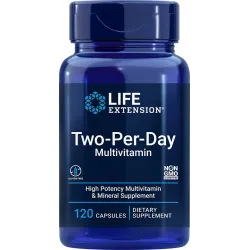
Two-Per-Day Capsules
Price: 28,41 €Super-potent multivitamin & mineral supplement Has the highest nutritional... -
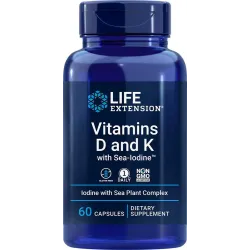
Vitamins D and K with Sea-Iodine™
Price: 18,86 €Helps maintain bone density & promotes vascular health Supplementation... -
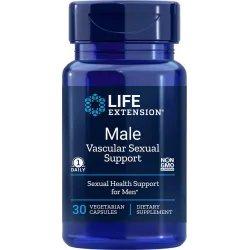
Male Vascular Sexual Support
Price: 23,11 €Promotes optimal male sexual health & function Promotes healthy male... -
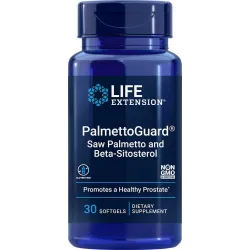
PalmettoGuard® Saw Palmetto and Beta-Sitosterol
Price: 14,51 €Supports healthy prostate function & hormone metabolism Supports men’s...
Related posts
-
 Is Conventional Pomegranate Extract Enough?
An abundance of clinical data has established pomegranate as a broad-spectrum, multi-modal defense against the...
Is Conventional Pomegranate Extract Enough?
An abundance of clinical data has established pomegranate as a broad-spectrum, multi-modal defense against the... -
Lipoic Acid Reverses Mitochondrial Decay
It is estimated that 85% of the oxygen contained in every breath you take is consumed by the mitochondria within each...
-
Vitamin C and Dihydroquercetin
Every day, our bodies are under continual assault by damaging agents known as free radicals. Generally, both internal...
-
Autoimmune Diseases part 1
Autoimmune diseases are characterized by the body's immune responses being directed against its own tissues, causing...
-
Autoimmune Diseases part 2
In a healthy body, circulating antibodies attack and destroy pathogenic invaders by means of humoral or cell-mediated...