
 English
 Polski
 Deutsch
 Français
 ελληνικά
 Español
 Italiano
Reduce Artery Blocking Lipid-Inflammation
 Arterial disease often initiates in youth and rapidly worsens with age.1
As blood flow is obstructed, people suffer diminished energy and cognition.
Progressive arterial blockage can manifest as coronary heart disease, ischemic stroke, and other bodily impairments.1
Factors that contribute to arterial occlusion include chronic inflammation, oxidative stress, and elevated lipids.1
Placebo-controlled human trials have found that a fruit extract can lower artery-damaging lipids, thus providing a non-drug approach to support cardiovascular health.2,3
How Occlusive Heart Disease Develops
Coronary artery disease develops as plaque builds up in blood vessels feeding the heart muscle.
As coronary blood flow diminishes, the heart becomes oxygen and nutrient deprived. The first sign of a problem can be angina pain and/or heart attack.4
Many factors initiate and worsen atherosclerosis. Prevention before severe coronary artery obstructions (or aortic stenosis) manifests is considered the most effective strategy.1
This includes lowering inflammatory markers and lipids like triglycerides apolipoprotein B, and LDL when elevated.
The Lipid Link
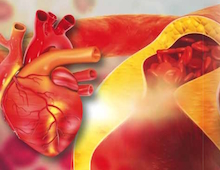 A contributor to cardiovascular diseases is a person’s lipid profile.
High blood levels of certain lipids (fats) promote atherosclerotic lesions. Over time, occlusive plaque reduces blood flow and boosts heart attack/stroke risk.
For example, elevated levels of oxidized low-density lipoproteins (ox-LDL), can damage endothelial cells that line arteries. Endothelial dysfunction is a key factor in the initiation and worsening of atherosclerosis.
High triglycerides increase oxidative stress and the production of pro-inflammatory biochemicals.5 Elevated triglycerides also induce artery-clogging blood clots by increasing production of certain clotting factors.6
Excess triglyceride levels are associated with small-dense LDL particles, very-low-density lipoproteins (VLDL), and other particles that promote atherosclerosis.7,8
Maintaining healthy lipid and inflammatory levels is a key factor in cardiovascular risk reduction.
Clinical Results
Animal studies found that amla fruit reduces LDL and triglycerides.9-12
To test these findings in people, scientists developed an amla fruit extract standardized to a 60% content of tannins.
This standardized tannin concentrate delivers an amla extract dose that has a long-lasting antioxidant effect.
In a 12-week clinical trial,3 volunteers with metabolic syndrome (a cluster of conditions that increase cardiovascular disease risk) were divided into three groups:
- One took a placebo twice daily,
- Another took 250 mg of amla extract twice daily, and
- A third group took 500 mg of amla extract twice daily.
Both of the amla doses were shown to be more effective than placebo at improving the measured outcomes. But the higher dose showed substantially greater reductions in cardiovascular disease risk factors.
In the group taking 500 mg twice daily of amla extract:3
- LDL cholesterol decreased 21.8%,
- Protective HDL increased 22.2%,
- Triglycerides decreased 19.2%,
- Endothelial function was restored to normal range (indicated by improvement in Reflective Index (a validated method to evaluate endothelial function) > 6%).
- The inflammatory marker CRP decreased 53.8%, and
- Levels of the body's antioxidant, glutathione, increased 53.2%.
Each of the above effects have been shown in other studies to reduce cardiovascular risks. There were no serious adverse effects.
 Cardiovascular disease is the leading cause of death in America.
- Amla fruit extract has been shown in studies to improve lipid levels and other factors that drive cardiovascular disease.
- In a clinical study, taking 500 mg of amla extract twice daily reduced LDL cholesterol by 21.8%, triglycerides by 19.2%, and total cholesterol by 11.1%. It also led to remarkable improvements in endothelial dysfunction, inflammation, and oxidative stress.
- The reduction in total cholesterol alone translates to a roughly 30% reduction in heart disease risk when assessed by conventional standards.
Vascular Risks and amla Fruit
 Elevated lipids are not the only cause of atherosclerosis. Other cardiovascular risk factors include:
- Endothelial dysfunction. When endothelial cells lining the walls of blood vessels lose normal function, it promotes atherosclerosis.13,14 Cell and human studies show that amla extract enhances production of nitric oxide, a compound that signals arterial walls to relax and maintain blood flow.2,3,15-17In a clinical trial of hypertensive patients on medication, amla extract has shown modest improvement in blood pressure in participants receiving amla extract as compared to placebo.25
- Oxidative Stress. Clinical and preclinical studies have demonstrated that amla reduces oxidative stress in three ways: It inhibits production of free radicals that damage blood vessels, neutralizes existing free radicals, and boosts production of natural cellular antioxidants such as glutathione.3,18-23,26
- Chronic Inflammation. Inflammation contributes to the formation of atherosclerotic plaque. The inflammatory marker C-reactive protein (CRP) is an independent predictor of coronary heart disease.3 In preclinical and clinical studies, amla has demonstrated anti-inflammatory properties.24,25
 People with a family history or with modestly elevated LDL and other atherogenic risk factors may wish to take amla extract to reduce dangerous lipid and inflammatory markers.
Those with high cholesterol who do require statins may consult their physician to discuss the option of adding 500 mg of amla extract twice daily.
If you currently take a prescribed lipid-lowering drug, do not stop taking it, and do not reduce its dosage, until you have consulted your physician.
The most effective way of measuring individual responses to amla or any lipid controlling compound is with follow-up blood testing.
Summary
 Multiple factors contribute to cardiovascular disease. Studies on animals and humans show that amla fruit extract broadly reduces these risk factors.
In a clinical study, taking 500 mg of amla extract twice daily significantly reduced endothelial dysfunction, inflammation, and oxidative stress, along with elevated triglycerides and LDL.
Improvement in protective HDL levels was also observed.
The most effective way of assessing individual responses to amla or any lipid controlling compound is with blood tests that include LDL, HDL, C-reactive protein, and other vascular risk markers.
Material used with permission of Life Extension. All rights reserved.
- Available at: https://www.uptodate.com/contents/overview-of-risk-factors-for-development-of-atherosclerosis-and-early-cardiovascular-disease-in-childhood . Accessed July 21, 2023.
- Usharani P, Sravanti IV. Study of CAPROS®250mg, CAPROS®500mg and placebo on endothelial dysfunction in metabolic syndrome. Natreon. 2012.
- Usharani P, Merugu PL, Nutalapati C. Evaluation of the effects of a standardized aqueous extract of Phyllanthus emblica fruits on endothelial dysfunction, oxidative stress, systemic inflammation and lipid profile in subjects with metabolic syndrome: a randomised, double blind, placebo controlled clinical study. BMC Complement Altern Med.2019May 6;19(1):97.
- Available at: https://www.cdc.gov/heartdisease/about.html . Accessed July 12, 2023.
- Higashi Y. Endothelial Function in Dyslipidemia: Roles of LDL-Cholesterol, HDL-Cholesterol and Triglycerides. Cells.2023May 1;12(9).
- Prasad K. Pathophysiology and Medical Treatment of Carotid Artery Stenosis. Int J Angiol.2015Sep;24(3):158-72.
- Boren J, Chapman MJ, Krauss RM, et al. Low-density lipoproteins cause atherosclerotic cardiovascular disease: pathophysiological, genetic, and therapeutic insights: a consensus statement from the European Atherosclerosis Society Consensus Panel. Eur Heart J.2020Jun 21;41(24):2313-30.
- Manochehri M, Moghadam AJ. Studying the Relation of Postprandial Triglyceride with Coronary Artery Disease (CAD). Med Arch.2016Jul 27;70(4):261-4.
- Kim HJ, Yokozawa T, Kim HY, et al. Influence of amla (Emblica officinalis Gaertn.) on hypercholesterolemia and lipid peroxidation in cholesterol-fed rats. J Nutr Sci Vitaminol (Tokyo).2005Dec;51(6):413-8.
- Yokozawa T, Kim HY, Kim HJ, et al. Amla (Emblica officinalis Gaertn.) prevents dyslipidaemia and oxidative stress in the ageing process. Br J Nutr.2007Jun;97(6):1187-95.
- Kim HY, Okubo T, Juneja LR, et al. The protective role of amla (Emblica officinalis Gaertn.) against fructose-induced metabolic syndrome in a rat model. Br J Nutr.2010Feb;103(4):502-12.
- Koshy SM, Bobby Z, Hariharan AP, et al. Amla (Emblica officinalis) extract is effective in preventing high fructose diet-induced insulin resistance and atherogenic dyslipidemic profile in ovariectomized female albino rats. Menopause.2012Oct;19(10):1146-55.
- Fancher IS, Levitan I. Membrane Cholesterol Interactions with Proteins in Hypercholesterolemia-Induced Endothelial Dysfunction. Curr Atheroscler Rep. 2023Jul 7.
- Xu Z, Chen Y, Wang Y, et al. Matrix stiffness, endothelial dysfunction and atherosclerosis. Mol Biol Rep.2023Jun 29.
- Bhatia J, Tabassum F, Sharma AK, et al. Emblica officinalis exerts antihypertensive effect in a rat model of DOCA-salt-induced hypertension: role of (p) eNOS, NO and oxidative stress. Cardiovasc Toxicol.2011Sep;11(3):272-9.
- Chatterjee A, Chatterjee S, Biswas A, et al. Gallic Acid Enriched Fraction of Phyllanthus emblica Potentiates Indomethacin-Induced Gastric Ulcer Healing via e-NOS-Dependent Pathway. Evid Based Complement Alternat Med. 2012;2012:487380.
- Chularojmontri L, Suwatronnakorn M, Wattanapitayakul SK. Phyllanthus emblica L. Enhances Human Umbilical Vein Endothelial Wound Healing and Sprouting. Evid Based Complement Alternat Med.2013;2013:720728.
- Golechha M, Bhatia J, Arya DS. Studies on effects of Emblica officinalis (Amla) on oxidative stress and cholinergic function in scopolamine induced amnesia in mice. J Environ Biol.2012Jan;33(1):95-100.
- Wongpradabchai S, Chularojmontri L, Phornchirasilp S, et al. Protective effect of Phyllanthus emblica fruit extract against hydrogen peroxide-induced endothelial cell death. J Med Assoc Thai.2013Jan;96 Suppl 1:S40-8.
- Khanom F, Kayahara H, Tadasa K. Superoxide-scavenging and prolyl endopeptidase inhibitory activities of Bangladeshi indigenous medicinal plants. Biosci Biotechnol Biochem.2000Apr;64(4):837-40.
- Sai Ram M, Neetu D, Yogesh B, et al. Cyto-protective and immunomodulating properties of Amla (Emblica officinalis) on lymphocytes: an in-vitro study. J Ethnopharmacol.2002Jun;81(1):5-10.
- Damodara Reddy V, Padmavathi P, Gopi S, et al. Protective Effect of Emblica officinalis Against Alcohol-Induced Hepatic Injury by Ameliorating Oxidative Stress in Rats. Indian J Clin Biochem.2010Oct;25(4):419-24.
- Shivananjappa MM, Joshi MK. Influence of Emblica officinalis aqueous extract on growth and antioxidant defense system of human hepatoma cell line (HepG2). Pharm Biol.2012Apr;50(4):497-505.
- Golechha M, Sarangal V, Ojha S, et al. Anti-Inflammatory Effect of Emblica officinalis in Rodent Models of Acute and Chronic Inflammation: Involvement of Possible Mechanisms. Int J Inflam.2014;2014:178408.
- Patel SS, Goyal RK. Prevention of diabetes-induced myocardial dysfunction in rats using the juice of the Emblica officinalis fruit. Exp Clin Cardiol. 2011Fall;16(3):87-91.
- Puppala M, Ponder J, Suryanarayana P, et al. The isolation and characterization of beta-glucogallin as a novel aldose reductase inhibitor from Emblica officinalis. PLoS One.2012;7(4):e31399.
- Suryanarayana P, Kumar PA, Saraswat M, et al. Inhibition of aldose reductase by tannoid principles of Emblica officinalis: implications for the prevention of sugar cataract. Mol Vis.2004Mar 12;10:148-54.
- Ananthakrishnan R, Li Q, Gomes T, et al. Aldose reductase pathway contributes to vulnerability of aging myocardium to ischemic injury. Exp Gerontol. 2011Sep;46(9):762-7.
- Ramasamy R, Goldberg IJ. Aldose reductase and cardiovascular diseases, creating human-like diabetic complications in an experimental model. Circ Res.2010May 14;106(9):1449-58.
- Tang WH, Martin KA, Hwa J. Aldose reductase, oxidative stress, and diabetic mellitus. Front Pharmacol.2012;3:87.
- Yokozawa T, Kim HY, Kim HJ, et al. Amla (Emblica officinalis Gaertn.) attenuates age-related renal dysfunction by oxidative stress. J Agric Food Chem. 2007Sep 19;55(19):7744-52.
Related product
-
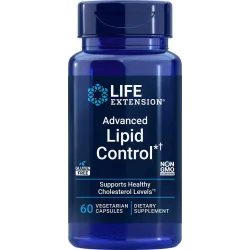
Advanced Lipid Control
Price: 29,01 €Cholesterol, Heart Health, Oxidative Stress Helps maintain healthy...
Related posts
-
 Is Conventional Pomegranate Extract Enough?
An abundance of clinical data has established pomegranate as a broad-spectrum, multi-modal defense against the...
Is Conventional Pomegranate Extract Enough?
An abundance of clinical data has established pomegranate as a broad-spectrum, multi-modal defense against the... -
Lipoic Acid Reverses Mitochondrial Decay
It is estimated that 85% of the oxygen contained in every breath you take is consumed by the mitochondria within each...
-
Vitamin C and Dihydroquercetin
Every day, our bodies are under continual assault by damaging agents known as free radicals. Generally, both internal...
-
How Resveratrol Combats Leading Causes of Death
In 1997, the first scientific paper on resveratrol was published showing that this polyphenol could prevent cancer in...
-
Cukrzyca opis choroby Część 2
Cukrzycy typu 1 potrzebują dożywotniej insulinoterapii, choć suplementy wymienione w niniejszym rozdziale mogą pomóc...