
 English
 Polski
 Deutsch
 Français
 ελληνικά
 Español
 Italiano
Forskolin Supplements: Do They Work?
Forskolin Supplements: Do They Work?
 Achieving your weight loss goal is no easy feat in a fast-paced and stress-filled world. But maintaining a healthy weight can impact everything from how well you sleep to your heart.
Fortunately, for most people, weight loss (and more importantly, fat loss) can be achieved through healthy diet and exercise. The key is to identify a personalized plan that works for you and to get support from experts, ranging from doctors to dietitians, and like-minded friends who can be your workout partners and accountability buddies.
One more "buddy" in your weight loss journey can be certain herbs, such as forskolin. You may not have heard of forskolin extract from the Coleus forskohlii plant, but its health benefits are something to take note of. If you want to keep your fat cells in check to maintain your metabolism and promote that body composition you've worked to achieve, forskolin supplements may help. As an added bonus, they also help support already-healthy blood pressure and more.
What is forskolin?
 Forskolin is a compound found in the Indian coleus (Coleus forskohlii) plant, a member of the mint family. Coleus forskohlii has been used in traditional Ayurvedic regimens for centuries to promote health and wellness. The Indian coleus plant, despite its eponymous name, is also found in Thailand, Nepal, and certain east African countries. Over time, forskolin extract from the root of Indian coleus was identified as the primary active compound. Although it is commonly used for weight management, it can also benefit whole-body health and energy.
Adding an extract containing 10 mg forskolin to your daily routine is an easy way to get the benefits of Indian coleus. Stick with a comprehensive approach of a healthy diet and exercise along with complementary nutrient intake to achieve your weight loss goals.
Scientific studies suggest that forskolin, sometimes called Coleus forskohlii extract, conveys a variety of whole-body health benefits. Some of these forskolin benefits include heart health, eye health, and supporting body composition.
-
 Weight management. Looking to slim down your waist and prepare for the summer or an upcoming tropical vacation? Weight management is one of the primary reasons people take a forskolin supplement, and this is no surprise. A review of 7 clinical studies identified that supplementation with forskolin extract from Coleus forskohlii significantly reduced body fat and improved weight management compared to placebo. On top of that, it was safe and well tolerated by participants. There's no wonder why some consider it to be a fat burner!
 -
Healthy blood pressure and blood flow. Your heart is an energetically demanding organ; thankfully, cardiovascular support is yet another benefit of many plant diterpenoids (forskolin is one of a number of diterpene compounds; these are metabolites found in plants). In a clinical study, forskolin was found to support healthy blood pressure. Preclinical studies suggest that this occurs through vasodilation, a process in which blood vessels relax to promote healthy blood flow.
-
 Eye support. Eyes are one of the primary ways we take in the world around us. If you're seeking a way to support your vision, look no further than forskolin; clinical studies have found that it can support eye health.
 -
Respiratory health. There's nothing like a breath of fresh air to help destress and give your mind a break. Luckily for us, forskolin also benefits respiratory health. In apreclinical study, forskolin helped inhibit inflammation to support healthy respiratory function.
-
Healthy cell division. Our skin is the first line of defense against foreign agents. Studies examining cells and animal models suggest that forskolin affects cellular pathways that help promote healthy cell division in skin and other tissues.
How does forskolin work in your body?
 Forskolin activates an enzyme known as adenylate cyclase, also referred to as adenylyl cyclase. Adenylyl cyclase generates a cellular messenger called cyclic adenosine monophosphate, or cyclic AMP; so, activating this enzyme can help increase cyclic AMP levels. Fortunately, it's easier to understand how forskolin works than it is to pronounce these words!
Cyclic AMP (cAMP) is an important signaling compound that plays a significant role in healthy cellular function and contributes to a variety of processes including fat-burning, cell division, and relaxation of blood vessels. Think of cyclic AMP as the conductor of an orchestra, whose job is to help dictate the flow and rhythm of the symphony that is our cellular metabolism. Increasing adenylate cyclase activity to support cyclic AMP levels helps our cells maintain their function as they perform these roles.
How to take forskolin supplements
As with any dietary supplement, follow the product label and aim for a dose of forskolin that is supported by scientific evidence. Forskolin should be taken on an empty stomach or as recommended by your healthcare provider.
The dosage of a supplement is just as important as how you should take it. Keep an eye on the forskolin content; a 10 mg dose is a good amount to help you benefit from the effects of a forskolin supplement.
Who should not take forskolin?
Forskolin and Coleus forskohlii have a long history of use and are typically well-tolerated; forskolin is unlikely to have adverse effects. However, it is important to speak with your healthcare provider before adding any supplement to your routine.
Forskolin alone can benefit whole-body health, especially when paired with a healthy lifestyle. But, to get even more bang for your buck, pair it with a supplement or herb that may help promote energy levels by supporting your body's metabolic processes:
 AMPK. AMPK is an enzyme involved in cellular metabolism that declines with age. An AMPK metabolic activator containing hesperidin helps keep this enzyme active, so it can tell your body to stop storing fat and start using it to create energy.
-
NAD+. NAD+ is a cellular coenzyme involved in the production of ATP, our cellular fuel. Pair NAD+ with resveratrol to support NAD+ levels and promote energy production, maintain whole-body health, and fight fatigue.
-
L-carnitine. Sometimes confused with L-carnosine, L-carnitine is an amino acid that helps support the optimal function of energy-producing mitochondria in cells. L-carnitine has also been found to support muscle mass in clinical studies.
-
Ginseng. Panax ginseng has been used to promote healthy energy levels for centuries. A daily dose of 200 mg of Ginseng extract can help support healthy energy production to give your body the fuel it needs.
If you aren't sure where to start, take a quick energy supplement quiz to determine what you can benefit from the most!
Do I need to diet and exercise if I take forskolin?
 Yes! Forskolin and other weight management supplements will enhance your efforts in the kitchen and the gym—not replace them. If you're looking to slim down, make sure to couple these nutrients with a healthy lifestyle. A few tried-and-true weight loss tips include:
-
Exercise regularly. Exercise, among its many other health benefits, is a great fat burner. Aim for at least 150 minutes of moderate-intensity aerobic exercise each week, or 75 minutes a week of vigorous-intensity aerobic exercise. Couple this with resistance training on two or more days a week for optimal results.
-
Eat healthily. A healthy diet is the cornerstone of any weight loss regimen. A healthy diet like the Mediterranean diet is a great way to support weight and fat loss while also promoting heart and brain health. Avoid unhealthy foods high in saturated fat and sugars, and make sure to control your portion sizes.
-
Drink water. The calories in sugary beverages quickly add up; replacing them with water is an easy way to reduce your caloric intake. Studies have also found that increasing daily water intake and drinking water before meals can help support weight loss.
It's also important to remember that maintaining a healthy lifestyle is paramount to reaching your weight loss goals—both short and long term.
Material used with permission of Life Extension. All rights reserved.
- Alasbahi, R.H., Melzig. M.F. "Forskolin and derivatives as tools for studying the role of cAMP." Pharmazie. Jan 2012. https://pubmed.ncbi.nlm.nih.gov/22393824/
- Bracamontes-Castelo, G., et al. "Effect of water consumption on weight loss: a systematic review." Nutr Hosp. Dec 2019. https://pubmed.ncbi.nlm.nih.gov/31657610/
- Dessauer, C.W., et al. "International union of basic and clinical pharmacology. CI. Structures and small molecule modulators of mammalian adenylyl cyclases." Pharmacol Rev. Apr 2017. https://pubmed.ncbi.nlm.nih.gov/28255005/
- Fielding, R., et al. "L-Carnitine supplementation in recovery after exercise." Nutrients. Mar 2018. https://www.ncbi.nlm.nih.gov/pmc/articles/PMC5872767/
- Kamohara, S. "An evidence-based review: Anti-obesity effects of Coleus forskohlii." Personalized Medicine Universe. July 2016. https://www.sciencedirect.com/science/article/abs/pii/S2186495016000055
- Kulbat-Warycha, K., et al. "Bioactive properties of extracts from plectranthus barbatus (Coleus forskohlii) roots received using various extraction methods." Molecules. Dec 2022. https://pubmed.ncbi.nlm.nih.gov/36558119/
- Lu, G., et al. "Recent advances in Panax ginseng C.A. Meyer as a herb for anti-fatigue: An effects and mechanisms review." Foods. May 2021. https://www.ncbi.nlm.nih.gov/pmc/articles/PMC8151278/
- Ma, C., et al. "Extracts of Coleus forskohlii relieves cough and asthma symptoms via modulating inflammation and the extracellular matrix." J Cell Biochem. June 2019. https://pubmed.ncbi.nlm.nih.gov/30520122/
- Ohara, T., et al. "Oral intake of a combination of glucosyl hesperidin and caffeine elicits an anti-obesity effect in healthy, moderately obese subjects: a randomized double-blind placebo-controlled trial." Nutr J. Jan 2016. https://pubmed.ncbi.nlm.nih.gov/26786000/
- Patra, C., et al. "Biochemistry, cAMP." StatPearls. July 2022. https://www.ncbi.nlm.nih.gov/books/NBK535431/
- Salehi, B., et al. "The therapeutic potential of the labdane diterpenoid forskolin." Applied Sciences. 2019; 9(19):4089. https://www.mdpi.com/2076-3417/9/19/4089
- Schlepper, M., et al. "Cardiovascular effects of forskolin and phosphodiesterase-III inhibitors." Inotropic Stimulation and Myocardial Energetics. https://link.springer.com/chapter/10.1007/978-3-662-07908-9_20
- Singh, A.P., et al. "Health benefits of resveratrol: Evidence from clinical studies." Med Res Rev. Sep 2019. https://pubmed.ncbi.nlm.nih.gov/30741437/
- Tirapelli, C.R., et al. "Diterpenes: a therapeutic promise for cardiovascular diseases." Recent Pat Cardiovasc Drug Discov. Jan 2008. https://pubmed.ncbi.nlm.nih.gov/18221123/
- Trammell, S., et al. "Nicotinamide riboside is uniquely and orally bioavailable in mice and humans." Nat Commun. 2016.https://www.nature.com/articles/ncomms12948
- "Coleus forskohlii." Monograph. Altern Med Rev. March 2006. https://pubmed.ncbi.nlm.nih.gov/16597194/
- "How much physical activity do adults need?" Centers for Disease Control and Prevention. https://www.cdc.gov/physicalactivity/basics/adults/index.htm
Related product
-
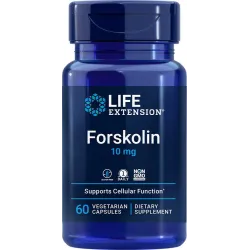
Forskolin 10 mg
Price: 15,56 €Promotes cellular energy & healthy cellular function Supports healthy...
Related posts
-
 Lipoic Acid Reverses Mitochondrial Decay
It is estimated that 85% of the oxygen contained in every breath you take is consumed by the mitochondria within each...
Lipoic Acid Reverses Mitochondrial Decay
It is estimated that 85% of the oxygen contained in every breath you take is consumed by the mitochondria within each... -
Vitamin C and Dihydroquercetin
Every day, our bodies are under continual assault by damaging agents known as free radicals. Generally, both internal...
-
How Resveratrol Combats Leading Causes of Death
In 1997, the first scientific paper on resveratrol was published showing that this polyphenol could prevent cancer in...
-
Green Tea
Scientific research on the health benefits of green tea is expanding exponentially, with more than 1,500 articles...
-
The Lancet Reports Extremely Positive Data on Green Tea
As medical researchers continue to uncover the health benefits of green tea, one might think that these discoveries...