
 English
 Polski
 Deutsch
 Français
 ελληνικά
 Español
 Italiano
Chlorophyllin Protects Against Environmental Toxins
Every day, we are surrounded by environmental toxins. Studies show they can contribute to diabetes, heart disease, and cancer through induction of mutations to our DNA.1-5
Fortunately, an inexpensive supplement—chlorophyllin—has been shown in multiple studies to detoxify these deadly chemicals, and protect DNA.
Proper use of chlorophyllin affords considerable defense against the natural and man-made toxins that permeate our food and environment.6-8
Environmental Toxins: An Unfortunate Fact Of Life
 In the last 70 years, more than 80,000 new chemicals have been synthesized, and every year, over 4 billion pounds of these chemicals, many known carcinogens, are released into the environment.9 Even more disturbing is that the vast majority of these chemicals have never been adequately tested by any government agency, including the EPA and FDA, in regards to their effects on human health.10
On a daily basis, nearly everyone is exposed to this barrage of compounds through industrial and manufacturing facilities, agricultural runoff that includes pesticides and herbicides laced in foods, and emissions from trucks, cars, and planes. Even our brave military men and women face exposure from a multitude of chemicals used on bases and facilities around the world.
A study from the Centers for Disease Control and Prevention (CDC) published in 2009 confirmed these findings by examining the burden of 212 industrial chemicals in the bodies of US citizens.11 In particular, the CDC report showed widespread exposure to commonly used industrial chemicals, including polybrominated diphenyl ethers (PBDEs) and bisphenol A (BPA), which is a chemical known for its toxic effects on reproduction.12 BPA is reported to be present in at least 90% of the US population. Perfluoroalkyl chemicals are present in 98% of people sampled.11-13 Perfluorooctanoic acid (PFOA), a type of perfluoroalkyl chemical, is best known for being part of the substance Teflon™ and is linked with multiple diseases, including ulcerative colitis,14 kidney disease,15 thyroid disease,16 and cancer.17
Chlorophyllin: Protection Against Toxins
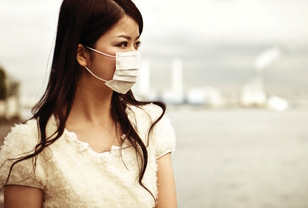 Chlorophyllin is a water-soluble derivative of the green plant substance chlorophyll.
In multiple studies, chlorophyllin exhibits powerful anticarcinogenic effects in regards to a variety of environmental toxins.6-8 The way chlorophyllin accomplishes this is by targeting a number of molecules and pathways involved in cancer development, such as protecting against mutations of the p53 tumor suppressor gene. Cell proliferation is partially controlled by the p53 gene, so protecting healthy expression of p53 is a critical factor that helps guard against cancerous changes.18
Chlorophyllin disables potent carcinogens such as polycyclic aromatic hydrocarbons and heterocyclic amines by forming complexes with these chemicals that limit the ability of these toxins to bind to normal cells to inflict malignant changes.19-20
Chlorophyllin binds to a number of other common carcinogens including dibenzanthracene, dibenzopyrene and benzophenanthrene and limits their ability to form DNA adducts, which are strands of DNA bonded to cancer-causing toxins. Formation of DNA adducts is an early step in the formation of cancer-causing DNA mutations. Chlorophyllin limits DNA adduct formation caused by a variety of known carcinogens.21-23
Chlorophyllin also functions as an antimutagenic agent against a number of prevalent chemicals in the environment such as PhlP (2-amino-1-methyl-6- phenylimidazo[4,5-b]pyridine), known to be involved in colon, prostate, pancreatic, and breast cancer.23-24
WHAT YOU NEED TO KNOW: Chlorophyllin Protects Against Environmental Toxins
 Chlorophyllin provides protection against environmental toxins.
- Chlorophyllin is a safe, inexpensive supplement derived from the plant substance chlorophyll. It helps stop the damage done to DNA by environmental chemicals and toxins that are present in nearly everyone.
- Laboratory studies have shown that chlorophyllin is able to bind to and remove cancer-causing toxins in the body.
- Chlorophyllin targets multiple molecules and pathways involved in cancer development brought about by environmental toxin exposure, including mutations in the p53 tumor suppressor gene so that these mutations do not occur and raise the risk of cancer.
- The ability of cancer-causing toxins to form DNA adducts is significantly decreased in the presence of chlorophyllin.
- Chlorophyllin has been shown in numerous studies to protect against multiple forms of cancer, including bladder, breast, pancreatic, and colon cancer.
- Aflatoxins, the cause of a significant number of liver and other cancers around the world, are significantly neutralized in the presence of chlorophyllin.
- Chlorophyllin is a potent free radical scavenger and has been shown in studies to protect mitochondria against oxidative damage.
- Chlorophyllin offers optimal protection against cancer-causing DNA and mitochondrial damage in a world contaminated with toxic chemicals.
Chlorophyllin Protects Against Multiple Cancers
 The ways in which chlorophyllin provides protection against cancer—and the number of cancers it’s effective against have been shown in multiple studies including:
Oral Cancer: A 2012 study in hamsters showed that chlorophyllin can both prevent and reverse genetic mutations linked to oral cancer caused by the chemical 7,12 dimethylbenzanthracene (DMBA).25 Scientists in this study conclusively showed that chlorophyllin modulated and even reversed changes to 104 genes that were deleteriously affected by DMBA.
Pancreatic Cancer: A study published in 2014 examined the effects of a number of dietary supplements on pancreatic cell lines, with the results showing that chlorophyllin has antiproliferative effects on pancreatic cells.26
Colon Cancer: In a study on human colon cancer cells, researchers showed that chlorophyllin-treated colon cancer cells had a statistically decreased expression of human ribonucleotide reductase (RR), an enzyme used by these cancer cells for DNA synthesis and repair. By inhibiting RR, chlorophyllin made these cancer cells less able to grow and more receptive to mainstream cancer chemotherapeutic agents.27
Bladder Cancer: In a 2014 study, researchers examined the combined effects of chlorophyllin with photodynamic therapy (PDT), a minimally invasive cancer treatment in which cancer cells take up a chemical or substance and are then exposed to a certain wavelength of light. In the presence of the photosensitizing substance, PDT generates a form of oxygen that kills the cancer cells. In this study the researchers, using a special form of chlorophyllin, showed that when combined with photodynamic therapy (PDT), it resulted in approximately 85% destruction of bladder cancer cells.28
Breast Cancer: Researchers at the University of Kentucky showed that when human breast cells were exposed to dibenzopyrene (DBP), a known carcinogen, dangerous and unstable DNA adducts were formed. However, in the presence of chlorophyllin a decrease of more than 65% in the number of DNA adducts was observed.29
Stomach Cancer: 2014 study examined the effects of chlorophyllin on stomach cancer in rats and more specifically, the effects on transforming growth factor (TGF) beta signaling, a pathway that plays a vital role in cancer formation.30 Chlorophyllin showed strong effects in stopping cancerous growth and metastasis, leading the authors of the study to conclude: “Dietary chlorophyllin that simultaneously abrogates TGF beta signaling pathway and the key hallmark events of cancer appears to be an ideal candidate for cancer chemoprevention.”
WHAT YOU NEED TO KNOW: AFLATOXIN: NATURE’S OWN DEADLY TOXIN
It’s not just industrial chemicals that increase the risk for cancer. There are also toxic compounds found in nature. Aflatoxin, a biochemical in the class of substances called mycotoxin, is produced by molds and is one of the most common and deadly carcinogens. While aflatoxin is associated with being a cause of liver cancer39-41 through the formation of carcinogenic by-products and its ability to cause DNA mutations, studies show that aflatoxin is also the cause of other cancers.42-44
An article in JAMA presented documentation that aflatoxin exposure is a risk for gallbladder cancer.42 In this case-control study conducted in Chile, researchers presented strong evidence that aflatoxin is linked to development of gallbladder cancer in primates, —a leading cause of cancer deaths in women in Chile—stating “ ...the associations between aflatoxin exposure and gallbladder cancer were statistically significant.” A more recent article published in 2015 in the journal Tumour Biology showed evidence that aflatoxin both potentially causes lung cancer,55 and stimulates lung cancer cell migration, or metastasis.43
Chlorophyllin Protects Against Liver Cancer
 Out of the 600,000 new cases of liver cancer diagnosed yearly around the world, conservative estimates are that up to 155,000 of them are caused by aflatoxin found in multiple improperly stored foods including peanuts, corn, pistachios, and rice.31
Fortunately, studies show that chlorophyllin has the potential to significantly reduce the risk of liver cancer induced by aflatoxin by binding to carcinogenic byproducts of aflatoxin metabolism and therefore, decreasing bioavailability of these cancer-causing chemicals.32-33
In a study in the journal Cancer Prevention Research, researchers showed that in volunteers, ingestion of 150 mg of chlorophyllin significantly decreased the absorption of aflatoxin B.32
An even more compelling study on the preventive power of chlorophyllin was done in Qidong, China, a province where the population is known to have a high exposure to aflatoxins which, therefore, puts them at high risk of liver cancer.33 In this randomized, double-blind, placebo-controlled study, 180 men and women were randomized to receive either 100 mg of chlorophyllin or a placebo three times daily over a four-month period.
The researchers showed that those men and women randomized to the chlorophyllin arm of the study had a 55% reduction in a biochemical marker of aflatoxin when compared to those people not taking chlorophyllin. This significant finding led the authors of this study to conclude “ ...interventions with chlorophyllin or supplementation of diets with foods rich in chlorophylls may represent practical means to prevent the development of hepatocellular carcinoma or other environmentally induced cancers.”
WHAT YOU NEED TO KNOW: ENVIRONMENTAL TOXINS AND THEIR DESTRUCTIVE EFFECTS ON MITOCHONDRIA
One way in which toxins may bring about the myriad of damage that they cause is through their destructive effects on mitochondria, microscopic organelles found in every human cell that convert oxygen and food into energy. There are multiple studies that provide evidence that environmental toxins are poisons to these life-giving organelles and can lead to multiple diseases including cancer,1-2 metabolic syndrome, insulin resistance,3-5 Alzheimer’s disease,45 Parkinson’s disease,46 chronic kidney disease,47 and cardiovascular disease.4
Environmental toxins damage mitochondria in multiple ways.48-51 Chlorophyllin helps neutralize these poisons.
Chlorophyllin Shields Mitochondria
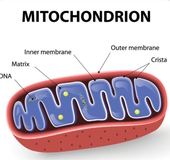 Another way that chlorophyllin provides protection against environmental toxins is via its free radical scavenging activities, both in general and specifically in mitochondria. In a study published in 2000, researchers looked at the protective effects of chlorophyllin on various organs and mitochondrial membranes in mice and rats.34 The authors of this study showed that not only did chlorophyllin protect mice brains, liver, and testes from oxidative damage, but it also proved to be a potent free radical scavenger in rat liver mitochondria, leading the researchers to conclude “ ...our studies showed that CHL [chlorophyllin] is a highly effective antioxidant, capable of protecting mitochondria against oxidative damage... ”
In another study using rat liver mitochondria, researchers showed that chlorophyllin provided significant protection against ionizing radiation, a potent generator of free radicals.35 Finally, with mitochondrial damage strongly implicated in the aging process,36-38 chlorophyllin may very well be useful in preventing chronic diseases and premature senescence.
WHAT YOU NEED TO KNOW: ENVIRONMENTAL TOXINS AND CANCER
Despite the claims put out by national organizations like the American Cancer Society, we are not winning the war on cancer. Far from it. A report was sent to President Obama in 2010 by the Presidents Cancer Panel. From September 2008 and January 2009, this Panel took testimony from 45 experts from academia, government, and industry regarding environmental toxins and cancer.52 In the panel’s conclusion, they stated “… the true burden of environmentally induced cancer has been grossly underestimated. With nearly 80,000 chemicals on the market in the United States, many of which are…understudied and largely unregulated, exposure to potential environmental carcinogens is widespread.” While research is on-going, recent studies on how environmental chemicals cause cancer include damaging changes to DNA and increasing cellular oxidative stress leading to unchecked free radical formation.53-54
Summary
 Life Extension® described the antimutagenic properties of chlorophyllin in the mid-1980s.
There was ample evidence decades ago that taking 100 mg of chlorophyllin with the heaviest meal of the day made sense because larger meals tend to contain more dietary mutagens.
A popular formula used by health-conscious people today provides 100 mg of chlorophyllin along with other nutrients that are best taken with a heavy meal. If you ingest more than one large meal daily or are exposed to excessive dietary or environmental toxins, you may consider taking 100 mg of chlorophyllin with each meal.
Material used with permission of Life Extension. All rights reserved.
- Fosslien E. Cancer morphogenesis: role of mitochondrial failure. Ann Clin Lab Sci. 2008 Autumn;38(4):307-29.
- Auger C, Alhasawi A, Contavadoo M, et al. Dysfunctional mitochondrial bioenergetics and the pathogenesis of hepatic disorders. Front Cell Dev Biol. 2015 Jun 25;3:40.
- Lim, S, Cho YM, Park KS, et al. Persistent organic pollutants, mitochondrial dysfunction, and metabolic syndrome. Ann N Y Acad Sci. 2010 Jul;1201:166-76.
- Jia G, Aroor AR, Martinez-Lemus LA, et al. Mitochondrial functional impairement in reponse to environmental toxins in the cardiorenal metabolic syndrome. Arch Toxicol. 2015 Feb;89(2):147-53.
- Lee HK. Mitrochondrial dysfunction and insulin resistance: the contribution of dioxin-like substances. Diabetes Metab J. 2011 Jun;35(3):207-15.
- Ferguson LR, Philpott M, Karunasinghe N. Dietary cancer and prevention using antimutagens. Toxicology. 2004 May 20;198(1-3):147-59.
- Williams DE. The rainbow trout liver cancer model: response to environmental chemicals and studies on promotion and chemoprevention. Comp Biochem Physiol C Toxicol Pharmacol. 2012 Jan;155(1):121-7.
- Nagini S, Palitti F, Natarajan AT. Chemopreventive potential of chlorophyllin: A review of the mechanisms of action and molecular targets. Nutr Cancer. 2015;67(2):203-11.
- Available at: http://www.mountsinai.org/patient-care/service-areas/children/areas-of-care/childrens-environmental-health-center/childrens-disease-and-the-environment/children-and-toxic-chemicals. Accessed September 11, 2015.
- Thornton JW, McCally M, Houlihan J. Biomonitoring of industrial pollutants: health and policy implications of the chemical body burden. Public Health Rep. 2002 Jul-Aug;117(4):315-23.rel="noopener noreferrer"
- Available at: http://www.cdc.gov/exposurereport. Accessed rel="noopener noreferrer" September 11, 2015.rel="noopener noreferrer"
- Available at: http://www.cdc.gov/biomonitoring/bisphenola_factsheet.html. Accessed September 11, 2015.
- Calafat AM, Wong LY, Kuklenyik Z, at al. Polyfluoroalkyl chemicals in the U.S. population: data from the National Health and Nutrition Examination Survey (NHANES) 2003-2004 and comparisons with NHANES 1999-2000. Environ Health Perspect. 2007 Nov;115(11):1596-602.
- Steenland K1, Zhao L, Winquist A, et al. Ulcerative colitis and perfluorooctanoic acid (PFOA) in a highly exposed population of community residents and workers in the mid-Ohio valley. Environ Health Perspect. 2013 Aug;121(8):900-5.
- Watkins DJ, Josson J, Elston B, et al. Exposure to perfluoroalkyl acids and markers of kidney function among children and adolescents living near a chemical plant. Environ Health Perspect. 2013 May;121(5):625-30.
- Lopez-Espinosa MJ, Mondal D, Armstrong B, et al. Thyroid function and perfluoroalkyl acids in children living near a chemical plant. Environ Health Perspect. 2012 Jul;120(7):1036-41.
- Barry V, Winquist A, Steenland K. Perfluorooctanoic acid (PFOA) exposures and incident cancers among adults living near a chemical plant. Environ Health Perspect. 2013 Nov-Dec;121(11-12):1313-8.
- Gouda EM, Elbehairy AM, Ghoneim MA. Antimutagenic efficacy of some natural compounds on cyclophosphamide-induced p53 alterations. Z Naturforsch C. 2008 Nov-Dec;63(11-12):857-63.
- Hayatsu H. Complex formation of heterocyclic amines with porphyrins: its use in detection and prevention. Princess Takamatsu Symp. 1995;23:172-80.
- John K, Keshava C, Richardson DL, et al. Immune Response Signatures of Benzo(α)pyrene Exposure in Normal Human Mammary Epithelial Cells in the Absence or Presence of Chlorophyllin. Cancer Genomics Proteomics. 2009 Jan-Feb;6(1):1-11.
- Lagerqvist A1, Håkansson D, Frank H, et al. Structural requirements for mutation formation from polycyclic aromatic hydrocarbon dihydrodiol epoxides in their interaction with food chemopreventive compounds. Food Chem Toxicol. 2011 Apr;49(4):879-86.
- John K, Divi RL, Keshava C, et al. CYP1A1 and CYP1B1 gene expression and DNA adduct formation in normal human mammary epithelial cells exposed to benzo[a]pyrene in the absence or presence of chlorophyllin. Cancer Lett. 2010 Jun 28;292(2):254-60.
- Mata JE, Yu Z, Gray JE, et al. Effects of chlorophyllin on transport of dibenzo(a, l)pyrene, 2-amino-1-methyl-6-phenylimidazo-[4,5-b]pyridine, and aflatoxin B(1) across Caco-2 cell monolayers. Toxicology. 2004 Mar 1;196(1-2):117-25.
- Hirose M, Nishikawa A, Shibutani M, et al. Chemoprevention of heterocyclic amine-induced mammary carcinogenesis in rats. Environ Mol Mutagen. 2002;39(2-3):271-8.
- Vidya Priyadarsini R, Kumar N, Khan I, et al. Gene expression signature of DMBA-induced hamster buccal pouch carcinomas: modulation by chlorophyllin and ellagic acid. PLoS One. 2012;7(4):e34628.
- Konickova R, Vankova K, Vanikova J, et al. Anti-cancer effects of blue-green alga Spirulina platensis, a natural source of bilirubin-like tetrapyrrolic compounds. Ann Hepatol. 2014 Mar-Apr;13(2):273-83.
- Chimploy K, Diaz GD, Li Q, et al. E2F4 and ribonucleotide reductase mediate S-phase arrest in colon cancer cells treated with chlorophyllin. International journal of cancer. Int J Cancer. 2009 Nov 1;125(9):2086-94.
- Lihuan D, Jingcun Z, Ning J, et al. Photodynamic therapy with the novel photosensitizer chlorophyllin f induces apoptosis and autophagy in human bladder cancer cells. Lasers Surg Med. 2014 Apr;46(4):319-34.
- Smith WA, Freeman JW, Gupta RC. Effect of chemopreventive agents on DNA adduction induced by the potent mammary carcinogen dibenzo[a,l]pyrene in the human breast cells MCF-7. Mutat Res. 2001 Sep 1;480-481:97-108.
- Thiyagarajan P, Kavitha K, Thautam A, et al. Dietary chlorophyllin abrogates TGFbeta signaling to modulate the hallmark capabilities of cancer in an animal model of forestomach carcinogenesis. Tumour Biol. 2014 Jul;35(7):6725-37.
- Liu Y, Wu F. Global burden of aflatoxin-induced hepatocellular carcinoma: a risk assessment. Environmental health perspectives. Environ Health Perspect. 2010 Jun;118(6):818-24.
- Jubert C, Mata J, Bench G, et al. Effects of chlorophyll and chlorophyllin on low-dose aflatoxin B(1) pharmacokinetics in human volunteers. Cancer Prev Res (Phila). 2009 Dec;2(12):1015-22.
- Egner PA, Wang JB, Zhu YR, et al. Chlorophyllin intervention reduces aflatoxin-DNA adducts in individuals at high risk for liver cancer. Proc Natl Acad Sci U S A. 2001 Dec 4;98(25):14601-6.
- Kamat JP, Boloor KK, Devasagayam TP. Chlorophyllin as an effective antioxidant against membrane damage in vitro and ex vivo. Biochim Biophys Acta. 2000 Sep 27;1487(2-3):113-27.
- Boloor KK, Kamat JP, Devasagayam TP. Chlorophyllin as a protector of mitochondrial membranes against gamma-radiation and photosensitization. Toxicology. 2000 Nov 30;155(1-3):63-71.
- Zapico SC, Ubelaker DH. Relationship Between Mitochondrial DNA Mutations and Aging. Estimation of Age-at-death. J Gerontol A Biol Sci Med Sci. 2015 Aug 18.
- Dai DF, Chiao YA, Marcinek DJ, Szeto HH, Rabinovitch PS. Mitochondrial oxidative stress in aging and healthspan. Longev Healthspan. 2014 May 1;3:6.
- Ross JM, Olson L, Coppotelli G. Mitochondrial and ubiquitin proteasome system dysfunction in ageing and disease: two sides of the same coin? Int J Mol Sci. 2015 Aug 17;16(8):19458-76.
- Smith RJ. Nutrition and metabolism in hepatocellular carcinoma. Hepatobiliary Surg Nutr. 2013 Apr;2(2):89-96.
- Kar P. Risk factors for hepatocellular carcinoma in India. J Clin Exp Hepatol. 2014 Aug;4(Suppl 3):S34-42.
- Nault JC. Pathogenesis of hepatocellular carcinoma according to aetiology. Best Pract Res Clin Gastroenterol. 2014 Oct;28(5):937-47.
- Nogueira L, Foerster C, Groopman J, et al. Association of aflatoxin with gallbladder cancer in Chile. JAMA. 2015 May 26;313(20):2075-7.
- Cui A, Hua H, Shao T, et al. Aflatoxin B1 induces Src phosphorylation and stimulates lung cancer cell migration. Tumour Biol. 2015 Aug;36(8):6507-13.
- Sieber SM, Correa P, Dalgard DW, Adamson RH. Induction of osteogenic sarcomas and tumors of the hepatobiliary system in nonhuman primates with aflatoxin B1. Cancer Res. 1979 Nov;39(11):4545-54.
- Moulton PV, Yang W. Air pollution, oxidative stress, and Alzheimer’s disease. J Environ Public Health. 2012;2012:472751.
- Pan-Montojo F, Reichmann H. Considerations on the role of environmental toxins in idiopathic Parkinson’s disease pathophysiology. Transl Neurodegener. 2014 May 9;3:10.
- Kim NH, Hyun YY, Lee KB. Environmental heavy metal exposure and chronic kidney disease in the general population. J Korean Med Sci. 2015 Mar;30(3):272-7.
- Ames BN, Shigenaga MK, Hagen TM. Oxidants, antioxidants, and the degenerative diseases of aging. Proc Natl Acad Sci U S A. 1993 Sep 1;90(17):7915-22.
- Barja G. Free radicals and aging. Trends Neurosci. 2004 Oct;27(10):595-600.
- Junqueira VB, Barros SB, Chan SS, et al. Aging and oxidative stress. Mol Aspects Med. 2004 Feb-Apr;25(1-2):5-16.
- Ashok BT, Ali R. The aging paradox: free radical theory of aging. Exp rel="noopener noreferrer" Gerontol. 1999 rel="noopener noreferrer" Jun;34(3):293-303.
- Available at: http://deainfo.nci.nih.gov/advisory/pcp/annualreports/pcp08-09rpt/pcp_report_08-09_508.pdf. Accessed September 14, 2015.
- Erkekoglu P, Kocer-Gumusel B. Genotoxicity of phthalates. Toxicol Mech Methods. 2014 Dec;24(9):616-26.
- Kuppusamy SP, Kaiser JP, Wesselkamper SC. Epigenetic Regulation in Environmental Chemical Carcinogenesis and its Applicability in Human Health Risk Assessment. Int J Toxicol. 2015 Aug 12.
- Van Vleet TR, Watterson TL, Klein PJ, et al. Aflatoxin B1 alters the expression of p53 in cytochrome P450-expressing human lung cells. Toxicol Sci . 2006 Feb;89(2):399-407.
Related product
-
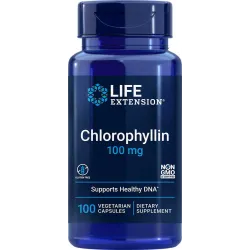
Chlorophyllin
Price: 24,60 €Potent antioxidant & DNA health support Supports mitochondrial health...
Related posts
-
 Is Conventional Pomegranate Extract Enough?
An abundance of clinical data has established pomegranate as a broad-spectrum, multi-modal defense against the...
Is Conventional Pomegranate Extract Enough?
An abundance of clinical data has established pomegranate as a broad-spectrum, multi-modal defense against the... -
Lipoic Acid Reverses Mitochondrial Decay
It is estimated that 85% of the oxygen contained in every breath you take is consumed by the mitochondria within each...
-
Vitamin C and Dihydroquercetin
Every day, our bodies are under continual assault by damaging agents known as free radicals. Generally, both internal...
-
Green Tea
Scientific research on the health benefits of green tea is expanding exponentially, with more than 1,500 articles...
-
The Lancet Reports Extremely Positive Data on Green Tea
As medical researchers continue to uncover the health benefits of green tea, one might think that these discoveries...