
 English
 Polski
 Deutsch
 Français
 ελληνικά
 Español
 Italiano
Coffee. National Institutes Of Health Discovers Protective Effects Of Coffee
 An exciting new study published in the New England Journal of Medicine suggests that coffee drinking may add years to your life span.1
Evidence is rapidly accumulating about the ability of coffee to reduce vascular disease, slash cancer risk, preserve cognition, and mitigate diabetes/obesity.2
Rich in polyphenols, coffee contains over 1,000 different natural compounds3 that favorably interact within cells.4 Coffee has the proven ability to turn on genes that promote youthful cellular functions.4,5
One coffee compound in particular, chlorogenic acid provides a multitude of these benefits, including impeding after-meal glucose surges that can contribute to obesity and diabetes.6-11
Researchers have found a way to naturally "super charge" coffee and dramatically increase its healthy polyphenol content.12 This means people can obtain more of coffee's unique beneficial compounds while drinking less coffee. For those who can't drink coffee, standardized chlorogenic acid capsules are becoming enormously popular.
Before describing the longevity finding published in the New England Journal of Medicine, we first want to conjecture why coffee drinking still has negative health connotations.
One factor may be early memories of people drinking coffee who simultaneously smoked cigarettes. Smokers are often ravenous coffee drinkers.
Other unhealthy images are those suffering hangovers who use coffee to restore functionality, those suffering sleep deprivation who drink coffee to stay awake, and the hefty "cream and sugar" so many people add to their coffee. These images are hard to delete from our memory banks.
A more current negative health picture is the high-calorie coffee "milkshakes" that contribute to today's obesity epidemic. Certain religions admonish against tobacco, alcohol, and coffee, which implies that coffee drinkers are in the same poor-health category as nicotine addicts and alcoholics. Those who are able to abstain from alcohol addiction often switch to coffee. Finally, some people are sensitive to caffeine and are unable to drink coffee, or suffer heartburn in response to coffee consumption.
If one can dispel these negative images, then coffee drinking may rise to the conscious level of a healthy choice, analogous to green tea drinking.
Coffee Consumption Associated with Lower Risk of Death
 Researchers at the National Institutes of Health, in collaboration with AARP (American Association of Retired People), explored coffee drinking habits and their impact on mortality.1 They enrolled 229,119 men and 173,141 women, beginning in 1995 and 1996, when the subjects were 50-71 years old. The subjects completed a thorough questionnaire probing their diet and lifestyle. Anyone with cancer, heart disease, or stroke at the time of enrollment was excluded, leaving basically healthy adults in late middle age.1
The researchers noted each participant's coffee consumption at the beginning of the study. Then they followed them for a total of 13 years, gathering data on a total of 5,148,760 person-years.1 This comprehensive study had massive statistical power.
During the study period, 33,731 men, and 18,784 women died of various causes.1 According to the raw data, the risk of death seemed elevated among coffee drinkers. But coffee drinkers were more likely to smoke cigarettes, markedly affecting the data.
After the researchers adjusted for smoking and other factors, they found a remarkably strong association between coffee drinking and survival.1 In other words, the more coffee the subjects drank; the less likely they were to die. You can see just how powerful this association was by looking at table 1.
That risk reduction applied to what epidemiologists call "all-cause mortality," that is, coffee drinking was associated with a markedly lower risk of dying for any reason at all. A closer look at the data revealed another fascinating fact, one that previous studies had already hinted at.13-15 The survival association with coffee drinking and death applied to the risk of dying from specific diseases, including heart and lung disease, stroke, diabetes, and infections. It even applied to the risk of dying from injuries and accidents.1
The protective effect of coffee drinking was evident whether subjects drank caffeinated or decaffeinated coffee.14
Caffeine, then, was not the protective component of coffee. Let's look at what else coffee contains that might explain its life-saving effects.
TABLE 1: Coffee’s Powerful Reduction In the Risk of Dying
| Cups of Coffee/Day | Percent Lower Risk of Dying for Women | Percent Lower Risk of Dying for Men |
| Less than 1 | No Reduction | No Reduction |
| 1 | 5% | 6% |
| 2 or 3 | 13% | 10% |
| 4 or 5 | 16% | 12% |
| 6 or more | 15% | 10% |
Coffee Polyphenols Have Multi-targeted Impact
 In addition to caffeine, natural coffee beans contain more than 1,000 different compounds that could affect health and the risk of dying.3 Of those, the polyphenols are the best candidates, for several reasons.
Polyphenols are powerful antioxidants, with all the health benefits that implies. But polyphenols have other, more complex actions, including the surprising ability to modulate gene expression, regulating how much and how often a particular gene is "switched on."16-18 That means that polyphenols regulate many of a cell's most fundamental processes, including signaling that tells cells when to die, when to replicate, when to release or respond to other chemical signals, and so on.17,19
The net effects of this impact on cellular signaling include improvements in tissue repair, immunity, and the body's ability to maintain itself in a steady state, called homeostasis.17,19 Impaired cellular signaling has been implicated in causing cancer, type 2 diabetes, and the risks for heart disease and stroke.20
One polyphenol in particular, chlorogenic acid, is especially abundant in coffee, and is credited with providing many of its beneficial effects. Green coffee beans may possess up to 10% of dry weight chlorogenic acids making coffee the major source of chlorogenic acid in the diet.21 Along with other polyphenols, chlorogenic acid helps drive down the chronic inflammation that's associated with common diseases of aging, such as diabetes and atherosclerosis.6 Chlorogenic acid derivatives in roasted coffee protect cells with high fat content, like brain cells, helping to explain observations that coffee sustains cognition.7
Studies show that other coffee polyphenols beneficially influence the function of liver and fat cells, helping to reduce the impact of obesity and diabetes.8 A reduction in damage to DNA is the likely mechanism by which coffee consumption may lower your risk for cancer.9-11Coffee is the single largest source of those beneficial polyphenols and other antioxidants in our diets.21 On average, Americans who drink coffee consume 3.1 cups of coffee per day.22
But studies of benefits from coffee drinking consistently show that larger amounts, ranging from 4 to as many as 12 cups a day, provide the most protective benefits, reducing the risk of cardiovascular disease, cancer, diabetes, liver disease, and Alzheimer's disease.2,23-35
It's obviously hard to drink that much coffee, and many people develop unpleasant, though not dangerous, side effects, such as heart palpitations and upset stomachs, if they try to consume that much. You will read about a new technique for retaining polyphenol content in both decaffeinated and regular coffee.
Let's now look at the many ways in which high coffee consumption is being linked to reduced risk of specific diseases.

- Despite long-held misconceptions, coffee drinking has major beneficial health effects.
- A recent massive study showed a 10-15% reduction in the risk of dying among people who consumed 6 or more cups of coffee daily. Coffee drinking sharply lowers the risk of developing many chronic, age-related conditions, including cognitive decline, cancer, diabetes, and cardiovascular disease.
- The newly discovered bioactive components in coffee are polyphenols, especially chlorogenic acid.
- But standard processing destroys much of the polyphenol content.
- An improved, patented method for handling coffee prior to roasting can boost the beverage's content of chlorogenic acid and other polyphenols by more than 200%, potentially reducing the number of daily cups required to achieve optimum health.
Coffee Benefits Your Brain
 "Coffee consumption has been associated with benefits involving cognitive function in aging. For example, in one study of 676 individuals with an average age of about 75 years, coffee consumption was associated with significantly less cognitive decline over a 10-year time period. Furthermore, the least cognitive decline was observed with 3 cups of coffee per day, which was associated with a remarkable 4.3-times smaller level of decline in cognitive function compared with non-consumers of coffee (Pandlt;0.001)."36 (See figure 1)
Enriching coffee with polyphenols, especially chlorogenic acid, produces still greater benefits. Such innovative coffees are more neuroprotective even than green coffee, according to laboratory studies. One study showed green coffee increased brain cell survival by an impressive 78% in the face of severe oxidant stress, but a roasted coffee rich in chlorogenic acid derivatives produced a 203% increase in survival.7
A chlorogenic acid-enriched decaffeinated coffee improved mood and attention in a pilot study of 39 healthy older people, compared with standard decaf coffee. A non-decaffeinated roast of similar formulation showed even more powerful effects.37
These benefits are likely to be of special importance in the face of the growing epidemic of Alzheimer's disease and other neurodegenerative conditions. More than 40% of people over 84 will be stricken by Alzheimer's disease, according to recent estimates.38 Moderate levels of daily coffee consumption, 3-5 cups per day, are tied to reduced rates of Alzheimer's disease and other forms of dementia in older adults.35, 39, 40
Of special interest, animal studies now provide evidence that caffeinated coffee consumption (greater than about 5 cups per day in a human), not only protect against brain damage in Alzheimer's disease, but can even reverse some of that damage—in as little as 5 weeks.34
Some insight into how coffee attains its protection against Alzheimer's comes from studies of the "Alzheimer's protein" called Abeta. Caffeine, at levels comparable to 5 cups of coffee daily, reduces levels of the proteins that go into manufacture of Abeta, and lowers levels of Abeta itself in blood and brain tissue.34,41
There is a well-established relationship between high coffee intake and protection from Parkinson's disease as well. People who drink one to four cups of coffee daily experience 47% lower risk of the disease than those who drink none, and those who drink five or more cups have a 60% risk reduction.42
Coffee May Cut Cancer Risk
 Coffee, especially brews enriched with chlorogenic acid, protect cells against the DNA damage that leads to aging and cancer development.9-11 That explains in part the findings from large epidemiological studies linking coffee consumption to lower risk for several cancer types. 27,43-47 Women with the highest coffee intake are about 30% less likely to develop endometrial cancer than those who consume none.44 Some studies show an enhanced effect among obese women.43,46 Breast cancer, the second leading cause of cancer death among American women, appears to be responsive to coffee consumption. A 57% reduction in the risk of estrogen-receptor negative (ER-negative, high risk) breast cancers was shown among women who drank 5 or more cups of coffee daily.27 Chlorogenic acid and other polyphenols, according to lab studies, are the likely beneficial agents in such cancers.47 Men also receive important cancer protection from coffee. While prostate cancer is the second leading cause of cancer death in men,48 consumption of more than 6 cups of coffee per day is associated with an 18% reduction in risk for the disease, and a 60% reduction in risk of aggressive or fatal cancers.26 "Heavy" coffee drinking has been associated in multiple studies with as much as a 57% reduced incidence of colon cancers.49-53 Coffee and its constituents target specific cancer cell signaling systems to suppress colon cancer formation and metastasis.45 Cancers elsewhere in the digestive system are reduced by coffee consumption. A mere one cup daily was associated with at least a 42% reduction in risk of developing liver cancer- even for those with confounding risk factors such as hepatitis C infection.28,54-56 Additionally, consuming at least one cup per day of coffee reduced the risk of death due to liver cancer by 50% compared to non drinkers.57 And more than 3 cups produced a 40% reduction in the risk of cancers of the mouth, throat, and esophagus.58, 59
New Polyphenol-Retaining Coffees Boost Health Benefits
 Green, unroasted coffee beans are extremely rich in the polyphenols, especially chlorogenic acid, that improve health. But prior to consumption as brewed coffee, the beans are roasted at high temperatures (375 to 425 degrees Fahrenheit).
These extreme temperatures destroy an enormous amount of the beneficial polyphenols, leaving standard supermarket coffee substantially less healthful than it could be.
A new, patented technique has recently been developed that preserves much of the green coffee bean’s original polyphenol content. Under controlled conditions, the manufacturer first soaks green coffee beans in water, then drains them before roasting.
Soaking the beans before roasting allows the manufacturer to "capture" the polyphenols at room temperature before the beans are exposed to hightemperature roasting. When the beans are "quenched" after roasting by being dropped back into the polyphenol-rich water, much of their original polyphenol content is "rescued."12
The result of this simple process is a roasted coffee bean with all the flavor and richness of regular coffee, but with a substantial increase in its content of polyphenols, especially chlorogenic acid. In fact, the final brewed beverage has been found to contain as much as an 80% increase in polyphenols overall, with an astonishing 200% increase in chlorogenic acid content.12
What’s the advantage of this extra step? Studies show that, for maximum health benefit, you need to drink 4 to 12 cups of conventional coffee daily. 2,23-35 That's a lot of coffee for many people, and consumption at that level may induce undesirable effects. These newer "polyphenol-retaining" coffees, with twice the chlorogenic acid content, could deliver similar benefits in only half the number of cups.
Coffee Consumption Slashes Diabetes Risk
 Large reductions in the occurrence of type 2 diabetes are associated with higher coffee consumption.21 If you aren't already diabetic, you may be able to cut your risk by an impressive 67% by drinking larger amounts of coffee.60
How much more coffee? A large, combined study of data on more than 450,000 people showed that each additional daily cup reduced diabetes risk by 7%.29 Other studies support this finding with reductions of 13% for one cup/day, 47% for 4 cups/day, and 67% for 12 cups/day.60, 61
Even if you do have diabetes, coffee is likely to be beneficial. Chlorogenic acid, coffee's primary polyphenol, inhibits uptake of sugar from the intestine, reducing blood sugar levels.62 By inhibiting several enzymes in the sugar-regulating system, chlorogenic acid reduces production and release of new glucose into the bloodstream.63, 64
Of special importance, coffee's chlorogenic acid can cut the after-meal glucose surge that's known to increase diabetics' (and others') cardiovascular risks.63,64 Other components in coffee enhance this effect by reducing carbohydrate storage and improving insulin sensitivity.65
Coffee Consumption Protects Against Cardiovascular Disease
 The "secret ingredient," not surprisingly, turns out to be chlorogenic acid. This compound, which can be increased in enriched coffees improves endothelial function and increases availability of artery-relaxing nitric oxide, which reduces any blood pressure increase triggered by caffeine.66 In 2011, a large combination study concluded that there's no correlation between long-term coffee consumption and increased blood pressure or cardiovascular disease.67
The beneficial effects of chlorogenic acid (and other coffee components) are evident from large observational studies. Deaths from cardiovascular disease overall, and from coronary heart disease and stroke, are all significantly reduced by coffee consumption.68,69 Table 2 shows results from one such study of diabetics, who are at especially high risk. Again, the risk reduction seems to be "dose-dependent," meaning that up to a point, the more coffee you drink, the lower your risk.
But there's an important caveat.
If you look at both tables 1 and 2, you'll see that the optimum risk reduction occurs mainly in people who drink somewhere around 4 to 6 cups daily. That makes the newer "polyphenol-retaining" coffees all the more attractive, because they can deliver a much more substantial polyphenol "punch" per cup, potentially avoiding any downside risk associated with very high total consumption.
Studies show a 33% reduction in the risk of dangerous blood clots that can travel from veins to the lungs or brain with devastating consequences.70 And just one cup of coffee can reduce the risk of clots in general, by inhibiting platelet aggregation (stickiness) within an hour.71
The mechanisms by which coffee consumption reduces cardiovascular disease are many and diverse. Polyphenols found in coffee enhance cholesterol outflow from arterial wall cells, reducing the risk of plaque formation and subsequent heart attack or stroke.9
Coffee extracts rich in polyphenols combat the dangerous structural changes in heart and liver associated with the metabolic syndrome, as they improve glucose tolerance, reduce blood pressure, and impede development of fatty liver disease.72
TABLE 2: Cardiovascular Risk Reduction From Coffee Drinking
| Cups of Coffee/Day | Total | Cardiovascular | Coronary Heart Disease | Stroke |
| 0-2 | No Reduction | No Reduction | No Reduction | No Reduction |
| 3-4 | 23% | 21% | 22% | 23% |
| 5-6 | 32% | 30% | 30% | 36% |
| 7 or more | 30% | 29% | 37% | 10% |
TABLE 2: A study of diabetic adults, at high risk for cardiovascular deaths, found substantial reduction in risk of dying from any cause, as well as from three major forms of cardiovascular disease.68 Note the slight decrease in protection seen at the very highest levels; this indicates a role for polyphenol-enhanced coffees with double the chlorogenic acid content.
Three Coffees a Day May Ward Off Dementia
 A study in the Journal of Alzheimer's Disease reports that drinking coffee may help at-risk adults over age 65 fend off Alzheimer's disease due to the elevated blood caffeine levels.73
The study involved 124 patients between the ages of 65 and 88 who displayed mild cognitive impairment, which can be interpreted as an early sign of Alzheimer's. No patients with blood caffeine levels above 1,200 ng/mL developed the disease over a 2-4 year period, even though the scientists expected many of the participants to develop the disease within a few years. The major or only source of caffeine for the participants was coffee.
The lead author of the study, Chuanhai Cao, stated, "The results from this study, along with our earlier studies on Alzheimer's in mice, are very consistent in indicating that moderate daily caffeine/coffee intake throughout adulthood should appreciably protect against Alzheimer's disease later in life."
The scientists are careful to point out that coffee consumption will not completely protect people from Alzheimer's, but they firmly believe moderate coffee consumption can reduce a person's risk of Alzheimer's or delay its onset.
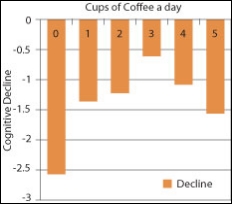 Figure 1: Coffee has shown to have protective effects on cognitive decline particularly for the elderly. In a study of nearly 700 individuals with an average age of 75, the least cognitive decline was observed with consumption of 3 cups of coffee per day, which was associated with a remarkable 4.3-times smaller level of decline in cognitive function compared with non-consumers of coffee.
Summary
After years of suspecting coffee of having negative impacts on health, scientists have now concluded that it has remarkable health benefits. Most strikingly, a recent study demonstrated sharp reductions in the risks of dying from any cause, in direct proportion to the amount of coffee consumed. This study comes on the heels of numerous others that demonstrate reduced risk of dying from specific diseases such as heart disease, stroke, cancer, diabetes, and neurodegenerative disorders.
Detailed analysis of coffee's many components reveals that polyphenols, especially chlorogenic acid, are the main contributors to coffee's beneficial effects.
Since conventional roasting processes readily destroy these compounds, it's important to seek out coffees that retain the maximum amount of polyphenol content. That way, you can enhance your health without the over consumption of coffee. Those who cannot tolerate coffee should consider taking 200 to 400 mg of standardized chlorogenic acid supplement before most meals.
Material used with permission of Life Extension. All rights reserved.
1. Freedman ND, Park Y, Abnet CC, Hollenbeck AR, Sinha R. Association of coffee drinking with total and cause-specific mortality. N Engl J Med. 2012 May 17;366(20):1891-904.
2. Butt MS, Sultan MT. Coffee and its consumption: benefits and risks. Crit Rev Food Sci Nutr. 2011 Apr;51(4):363-73.
3. Rivera, J. A brief tour of coffee’s chemical composition: everyday millions of people around the world begin their day religiously with a cup of coffee. Though today we easily identify coffee in its beverage form, it wasn’t always this way in the beginning. Tea and Coffee Trade Journal. 2009 Feb 1.
4. Higdon JV, Frei B. Coffee and health: a review of recent human research. Crit Rev Food Sci Nutr. 2006;46(2):101-23.
5. Fukushima Y, Kasuga M, Nakao K, Shimomura I, Matsuzawa Y. Effects of coffee on inflammatory cytokine gene expression in mice fed high-fat diets. J Agric Food Chem. 2009 Dec 9;57(23):11100-5.
6. Kempf K, Herder C, Erlund I, et al. Effects of coffee consumption on subclinical inflammation and other risk factors for type 2 diabetes: a clinical trial. Am J Clin Nutr. 2010 Apr;91(4):950-7.
7. Chu YF, Brown PH, Lyle BJ, et al. Roasted coffees high in lipophilic antioxidants and chlorogenic acid lactones are more neuroprotective than green coffees. J Agric Food Chem. 2009 Oct 28;57(20):9801-8.
8. Wedick NM, Brennan AM, Sun Q, Hu FB, Mantzoros CS, van Dam RM. Effects of caffeinated and decaffeinated coffee on biological risk factors for type 2 diabetes: a randomized controlled trial. Nutr J. 2011;10:93.
9. Bakuradze T, Boehm N, Janzowski C, et al. Antioxidant-rich coffee reduces DNA damage, elevates glutathione status and contributes to weight control: results from an intervention study. Mol Nutr Food Res. 2011 May;55(5):793-7.
10. Hoelzl C, Knasmuller S, Wagner KH, et al. Instant coffee with high chlorogenic acid levels protects humans against oxidative damage of macromolecules. Mol Nutr Food Res. 2010 Dec;54(12):1722-33.
11. Misik M, Hoelzl C, Wagner KH, et al. Impact of paper filtered coffee on oxidative DNA-damage: results of a clinical trial. Mutat Res. 2010 Oct 13;692(1-2):42-8.
12. Available at: http://www.google.com/patents/US20100183790?printsec=abstract#v=onepageandamp;qandamp;f=false. Accessed June 1, 2012.
13. Lopez-Garcia E, Rodriguez-Artalejo F, Rexrode KM, Logroscino G, Hu FB, van Dam RM. Coffee consumption and risk of stroke in women. Circulation. 2009 Mar 3;119(8):1116-23.
14. Lopez-Garcia E, van Dam RM, Li TY, Rodriguez-Artalejo F, Hu FB. The relationship of coffee consumption with mortality. Ann Intern Med. 2008 Jun 17;148(12):904-14.
15. Zhang WL, Lopez-Garcia E, Li TY, Hu FB, van Dam RM. Coffee consumption and risk of cardiovascular events and all-cause mortality among women with type 2 diabetes. Diabetologia. 2009 May;52(5):810-7.
16. Uto-Kondo H, Ayaori M, Ogura M, et al. Coffee consumption enhances high-density lipoprotein-mediated cholesterol efflux in macrophages. Circ Res. 2010 Mar 5;106(4):779-87.
17. Virgili F, Marino M. Regulation of cellular signals from nutritional molecules: a specific role for phytochemicals, beyond antioxidant activity. Free Radic Biol Med. 2008 Nov 1;45(9):1205-16.
18. Vitaglione P, Morisco F, Mazzone G, et al. Coffee reduces liver damage in a rat model of steatohepatitis: the underlying mechanisms and the role of polyphenols and melanoidins. Hepatology. 2010 Nov;52(5):1652-61.
19. Williams RJ, Spencer JP, Rice-Evans C. Flavonoids: antioxidants or signalling molecules? Free Radic Biol Med. 2004 Apr 1;36(7):838-49.
20. Krejci, A. Metabolic sensors and their interplay with cell signaling and transcription. Biochemical Society Transactions. 2012;40:311‐23.
21. Tunnicliffe JM, Shearer J. Coffee, glucose homeostasis, and insulin resistance: physiological mechanisms and mediators. Appl Physiol Nutr Metab. 2008 Dec;33(6):1290-300.
22. Available at: http://www.coffeeresearch.org/market/usa.htm. Accessed May 29, 2012.
23. Andersen LF, Jacobs DR, Jr., Carlsen MH, Blomhoff R. Consumption of coffee is associated with reduced risk of death attributed to inflammatory and cardiovascular diseases in the Iowa Women’s Health Study. Am J Clin Nutr. 2006 May;83(5):1039-46.
24. Wu JN, Ho SC, Zhou C, et al. Coffee consumption and risk of coronary heart diseases: a meta-analysis of 21 prospective cohort studies. Int J Cardiol. 2009 Nov 12;137(3):216-25.
25. Mukamal KJ, Hallqvist J, Hammar N, et al. Coffee consumption and mortality after acute myocardial infarction: the Stockholm Heart Epidemiology Program. Am Heart J. 2009 Mar;157(3):495-501.
26. Wilson KM, Kasperzyk JL, Rider JR, et al. Coffee consumption and prostate cancer risk and progression in the Health Professionals Follow-up Study. J Natl Cancer Inst. 2011 Jun 8;103(11):876-84.
27. Li J, Seibold P, Chang-Claude J, et al. Coffee consumption modifies risk of estrogen-receptor negative breast cancer. Breast Cancer Res. 2011;13(3):R49.
28. Inoue M, Yoshimi I, Sobue T, Tsugane S. Influence of coffee drinking on subsequent risk of hepatocellular carcinoma: a prospective study in Japan. J Natl Cancer Inst. 2005 Feb 16;97(4):293-300.
29. Huxley R, Lee CM, Barzi F, et al. Coffee, decaffeinated coffee, and tea consumption in relation to incident type 2 diabetes mellitus: a systematic review with meta-analysis. Arch Intern Med. 2009 Dec 14;169(22):2053-63.
30. Rosengren A, Dotevall A, Wilhelmsen L, Thelle D, Johansson S. Coffee and incidence of diabetes in Swedish women: a prospective 18-year follow-up study. J Intern Med. 2004 Jan;255(1):89-95.
31. Tuomilehto J, Hu G, Bidel S, Lindstrom J, Jousilahti P. Coffee consumption and risk of type 2 diabetes mellitus among middle-aged Finnish men and women. JAMA. 2004 Mar 10;291(10):1213-9.
32. Corrao G, Zambon A, Bagnardi V, D’Amicis A, Klatsky A. Coffee, caffeine, and the risk of liver cirrhosis. Ann Epidemiol. 2001 Oct;11(7):458-65.
33. Klatsky AL, Morton C, Udaltsova N, Friedman GD. Coffee, cirrhosis, and transaminase enzymes. Arch Intern Med. 2006 Jun 12;166(11):1190-5.
34. Arendash GW, Cao C. Caffeine and coffee as therapeutics against Alzheimer’s disease. J Alzheimers Dis. 2010;20 Suppl 1:S117-26.
35. Maia L, de Mendonca A. Does caffeine intake protect from Alzheimer’s disease? Eur J Neurol. 2002 Jul;9(4):377-82.
36. van Gelder BM, Buijsse B, Tijhuis M, et al. Coffee consumption is inversely associated with cognitive decline in elderly European men: the FINE Study. Eur J Clin Nutr. 2007 Feb;61(2):226-32.
37. Cropley V, Croft R, Silber B, et al. Does coffee enriched with chlorogenic acids improve mood and cognition after acute administration in healthy elderly? A pilot study. Psychopharmacology (Berl). 2012 Feb;219(3):737-49.
38. Hebert LE, Scherr PA, Bienias JL, Bennett DA, Evans DA. Alzheimer disease in the US population: prevalence estimates using the 2000 census. Arch Neurol. 2003 Aug;60(8):1119-22.
39. Lindsay J, Laurin D, Verreault R, et al. Risk factors for Alzheimer’s disease: a prospective analysis from the Canadian Study of Health and Aging. Am J Epidemiol. 2002 Sep 1;156(5):445-53.
40. Eskelinen MH, Ngandu T, Tuomilehto J, Soininen H, Kivipelto M. Midlife coffee and tea drinking and the risk of late-life dementia: a population-based CAIDE study. J Alzheimers Dis. 2009;16(1):85-91.
41. Cao C, Cirrito JR, Lin X, et al. Caffeine suppresses amyloid-beta levels in plasma and brain of Alzheimer’s disease transgenic mice. J Alzheimers Dis. 2009;17(3):681-97.
42. Hu G, Bidel S, Jousilahti P, Antikainen R, Tuomilehto J. Coffee and tea consumption and the risk of Parkinson’s disease. Mov Disord. 2007 Nov 15;22(15):2242-8.
43. Giri A, Sturgeon SR, Luisi N, Bertone-Johnson E, Balasubramanian R, Reeves KW. Caffeinated coffee, decaffeinated coffee and endometrial cancer risk: a prospective cohort study among US postmenopausal women. Nutrients. 2011 Nov;3(11):937-50.
44. Je Y, Giovannucci E. Coffee consumption and risk of endometrial cancer: Findings from a large up-to-date meta-analysis. Int J Cancer. 2011 Dec 20.
45. Kang NJ, Lee KW, Kim BH, et al. Coffee phenolic phytochemicals suppress colon cancer metastasis by targeting MEK and TOPK. Carcinogenesis. 2011 Jun;32(6):921-8.
46. Fung TT, Hu FB, Schulze M, et al. A dietary pattern that is associated with C-peptide and risk of colorectal cancer in women. Cancer Causes Control. 2012 Jun;23(6):959-65.
47. Bageman E, Ingvar C, Rose C, Jernstrom H. Coffee consumption and CYP1A2*1F genotype modify age at breast cancer diagnosis and estrogen receptor status. Cancer Epidemiol Biomarkers Prev. 2008 Apr;17(4):895-901.
48. Available at: http://www.cdc.gov/Features/CancerAndMen/ . Accessed June 1, 2012.
49. Galeone C, Turati F, La Vecchia C, Tavani A. Coffee consumption and risk of colorectal cancer: a meta-analysis of case-control studies. Cancer Causes Control. 2010 Nov;21(11):1949-59.
50. Michels KB, Willett WC, Fuchs CS, Giovannucci E. Coffee, tea, and caffeine consumption and incidence of colon and rectal cancer. J Natl Cancer Inst. 2005 Feb 16;97(4):282-92.
51. Giovannucci E. Meta-analysis of coffee consumption and risk of colorectal cancer. Am J Epidemiol. 1998 Jun 1;147(11):1043-52.
52. Lee KJ, Inoue M, Otani T, Iwasaki M, Sasazuki S, Tsugane S. Coffee consumption and risk of colorectal cancer in a population-based prospective cohort of Japanese men and women. Int J Cancer. 2007 Sep 15;121(6):1312-8.
53. Oba S, Shimizu N, Nagata C, et al. The relationship between the consumption of meat, fat, and coffee and the risk of colon cancer: a prospective study in Japan. Cancer Lett. 2006 Dec 8;244(2):260-7.
54. Shimazu T, Tsubono Y, Kuriyama S, et al. Coffee consumption and the risk of primary liver cancer: pooled analysis of two prospective studies in Japan. Int J Cancer. 2005 Aug 10;116(1):150-4.
55. Ohfuji S, Fukushima W, Tanaka T, et al. Coffee consumption and reduced risk of hepatocellular carcinoma among patients with chronic type C liver disease: A case-control study. Hepatol Res. 2006 Nov;36(3):201-8.
56. Tanaka K, Hara M, Sakamoto T, et al. Inverse association between coffee drinking and the risk of hepatocellular carcinoma: a case-control study in Japan. Cancer Sci. 2007 Feb;98(2):214-8.
57. Kurozawa Y, Ogimoto I, Shibata A, et al. Coffee and risk of death from hepatocellular carcinoma in a large cohort study in Japan. Br J Cancer. 2005 Sep 5;93(5):607-10.
58. Tavani A, Bertuzzi M, Talamini R, et al. Coffee and tea intake and risk of oral, pharyngeal and esophageal cancer. Oral Oncol. 2003 Oct;39(7):695-700.
59. Rodriguez T, Altieri A, Chatenoud L, et al. Risk factors for oral and pharyngeal cancer in young adults. Oral Oncol. 2004 Feb;40(2):207-13.
60. Zhang Y, Lee ET, Cowan LD, Fabsitz RR, Howard BV. Coffee consumption and the incidence of type 2 diabetes in men and women with normal glucose tolerance: the Strong Heart Study. Nutr Metab Cardiovasc Dis. 2011 Jun;21(6):418-23.
61. van Dam RM, Willett WC, Manson JE, Hu FB. Coffee, caffeine, and risk of type 2 diabetes: a prospective cohort study in younger and middle-aged U.S. women. Diabetes Care. 2006 Feb;29(2):398-403.
62. Tunnicliffe JM, Eller LK, Reimer RA, Hittel DS, Shearer J. Chlorogenic acid differentially affects postprandial glucose and glucose-dependent insulinotropic polypeptide response in rats. Appl Physiol Nutr Metab. 2011 Oct;36(5):650-9.
63. Johnston KL, Clifford MN, Morgan LM. Coffee acutely modifies gastrointestinal hormone secretion and glucose tolerance in humans: glycemic effects of chlorogenic acid and caffeine. Am J Clin Nutr. 2003 Oct;78(4):728-33.
64. Hemmerle H, Burger HJ, Below P, et al. Chlorogenic acid and synthetic chlorogenic acid derivatives: novel inhibitors of hepatic glucose-6-phosphate translocase. J Med Chem. 1997 Jan 17;40(2):137-45.
65. Arnlov J, Vessby B, Riserus U. Coffee consumption and insulin sensitivity. JAMA. 2004 Mar 10;291(10):1199-201.
66. Zhao Y, Wang J, Ballevre O, Luo H, Zhang W. Antihypertensive effects and mechanisms of chlorogenic acids. Hypertens Res. 2012 Apr;35(4):370-4.
67. Mesas AE, Leon-Munoz LM, Rodriguez-Artalejo F, Lopez-Garcia E. The effect of coffee on blood pressure and cardiovascular disease in hypertensive individuals: a systematic review and meta-analysis. Am J Clin Nutr. 2011 Oct;94(4):1113-26.
68. Bidel S, Hu G, Qiao Q, Jousilahti P, Antikainen R, Tuomilehto J. Coffee consumption and risk of total and cardiovascular mortality among patients with type 2 diabetes. Diabetologia. 2006 Nov;49(11):2618-26.
69. Larsson SC, Virtamo J, Wolk A. Coffee consumption and risk of stroke in women. Stroke. 2011 Apr;42(4):908-12.
70. Enga KF, Braekkan SK, Hansen-Krone IJ, Wilsgaard T, Hansen JB. Coffee consumption and the risk of venous thromboembolism: the Tromso study. J Thromb Haemost. 2011 Jul;9(7):1334-9.
71. Natella F, Nardini M, Belelli F, et al. Effect of coffee drinking on platelets: inhibition of aggregation and phenols incorporation. Br J Nutr. 2008 Dec;100(6):1276-82.
72. Panchal SK, Poudyal H, Waanders J, Brown L. Coffee extract attenuates changes in cardiovascular and hepatic structure and function without decreasing obesity in high-carbohydrate, high-fat diet-fed male rats. J Nutr. 2012 Apr;142(4):690-7.
73. Cao C, Loewenstein DA, Lin X, et al. High blood caffeine levels in MCI linked to lack of progression to dementia. J Alzheimers Dis. 2012 Mar 19. [Epub ahead of print]
Related product
-
CoffeeGenic® Green Coffee Extract
Price: 29,11 €Inhibits after-meal glucose spikes Chlorogenic acid supports healthy...
Related posts
-
 Is Conventional Pomegranate Extract Enough?
An abundance of clinical data has established pomegranate as a broad-spectrum, multi-modal defense against the...
Is Conventional Pomegranate Extract Enough?
An abundance of clinical data has established pomegranate as a broad-spectrum, multi-modal defense against the... -
Feed Your Brain!
Millions of people around the world are adhering to low-fat, low-cholesterol diets in an effort to reduce the impact...
-
Lipoic Acid Reverses Mitochondrial Decay
It is estimated that 85% of the oxygen contained in every breath you take is consumed by the mitochondria within each...
-
Vitamin C and Dihydroquercetin
Every day, our bodies are under continual assault by damaging agents known as free radicals. Generally, both internal...
-
How Resveratrol Combats Leading Causes of Death
In 1997, the first scientific paper on resveratrol was published showing that this polyphenol could prevent cancer in...