
 English
 Polski
 Deutsch
 Français
 ελληνικά
 Español
 Italiano
Osteoporosis - The Little-Known Link Between Bone Health and Total Health
 Scientists at the leading edge of osteology (bone research) are discovering that in addition to immune strength, blood cell production, and nervous system function, a healthy skeletal system is also essential to insulin sensitivity, energy metabolism, and weight management.1-4
The common bone disease osteoporosis accounts for 2.6 million doctors’ office visits and 180,000 placements in nursing homes across the country each year. According to the Surgeon General, by 2020 this potentially life-changing condition will afflict nearly half of all Americans over 50.5
Behind this alarming trend lies an even greater threat to the public health most doctors don’t know about. It turns out that strong, healthy bones play a far greater role in overall health than previously known.
In this article, the most recent data on these findings are detailed. You will also discover how calcium, magnesium, and potassium, along with vitamins D3 and K, act to optimize these functions for bone strength and system-wide health.
Until recently, the human skeleton was known to serve three basic functions.6 The first was its role in providing structural support for muscles and protection for internal organs.6 The second was its function as a reservoir for important mineral ions, especially calcium and magnesium, which are vital to nerve and muscle cell functioning and electrical conduction.6-8 Finally, the marrow space of many bones harbors all of the body’s blood-producing tissues and a major part of the cellular immune system.6
Just five years ago, however, scientists discovered a fourth, unexpected function.1 Bone-forming cells called osteoblasts were found to produce a hormone-like signaling protein called osteocalcin.9 It was further revealed that osteocalcin stimulates pancreatic insulin secretion and improves insulin sensitivity in tissues throughout the body.1,2,10-12
Osteocalcin reduces fat tissue deposition,2 while higher osteocalcin levels are associated with lower levels of leptin.13 As you read next, suppressing excess leptin is important in weight management.
 Sometimes called the “hunger hormone,” leptin induces the feeling of being full after a meal. It plays a key role in regulating energy intake and energy expenditure, including appetite and metabolism. Higher leptin levels are paradoxically detrimental; as with insulin, you can develop leptin resistance that keeps you from feeling full. Obese individuals exhibit this resistance.14 Pathologically elevated leptin levels are detrimental to multiple tissues in the body and correlate with insulin resistance, inflammation, stroke, hypertension, and other dangerous health conditions.2,15-17
High leptin levels also exert an adverse effect over osteocalcin function:18 the more leptin your body’s fatty tissue produces, the less osteocalcin your bone cells release, and the worse your insulin resistance becomes.3 And in a final unexpected discovery, leptin achieves that effect by suppressing your osteoblasts’ activity, decreasing your ability to build new bone, and threatening your bone health.18
An additional indicator of how good bone health affects longevity is the now well-understood relationship between skeletal health and atherosclerosis.19 Via a variety of mechanisms, as calcium leaves the bones in the process of osteoporosis, it builds up instead in blood vessel walls, leading to dangerous calcified plaque deposits.20,21 Those deposits can rupture, causing an immediate arterial blockage and producing a sudden heart attack or catastrophic stroke.
It is this close interrelationship between bone health and total body health that has intensified scientific interest in identifying nutritional strategies to optimize bone health and strength.1
Most doctors don’t know about these new findings. And most Americans, including many health-conscious individuals, don’t get enough of the nutrients they need to support healthy bones. Adequate bone nutrition hinges on the following group of nutrients that work synergistically to optimize skeletal health and ward off multiple diseases of aging.22-24
Calcium
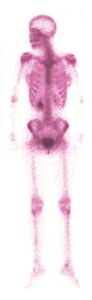 Calcium accounts for 1-2% of adult human body weight, with more than 99% of total body calcium residing in the teeth and bones.25 The remaining 1% is used in our electrically active tissues such as nerve and muscle, where it plays a vital signaling role. Thus the skeleton is the body’s only storehouse of the calcium we need to sustain life itself, yet as we age we see a progressive decrease in the amount of calcium in our bones.25 Consuming a readily-absorbed form of calcium, then, is essential for restocking that reservoir—but many people do not ingest adequate amounts of calcium.25
The mainstream medical establishment has stubbornly denied the value of calcium supplementation for years, arguing that human studies under controlled conditions were inconclusive.26 A more careful and detailed review of recent studies, however, reveals flaws in their conclusions. Most notably, in outpatient studies, patients’ adherence to the supplementation regimen was generally poor—in other words, participants weren’t actually taking the calcium doses that researchers thought they were.26 A recent re-analysis of five of those flawed studies showed that patients who took the required doses of supplements indeed had significant reductions in osteoporosis fracture risk.26 Studies designed to optimize patients’ adherence to supplementation regimens have also demonstrated improved bone health and reduced risk of fracture.22,27,28
Not all calcium is alike. Dicalcium malate is an especially rich source of elemental calcium since it is comprised of two calcium molecules attached to each malic acid molecule. In a study of calcium absorption in humans, dicalcium malate demonstrated the longest half-life and greatest bioavailability, compared to several other forms of calcium.29 Calcium bis-glycinate consists of calcium chelated to the amino acid glycine, which allows it to be easily absorbed and utilized by the body. Both dicalcium malate and calcium bis-glycinate are easily assimilated, well tolerated, and effective at improving bone mineral density, an important measure of bone health.30 These mineral formulations represent outstanding forms of calcium for those seeking to optimize their bone health.
Daily doses averaging 1,000 mg are recommended for adults. For older women, the recommendation is 1,200 mg daily.31 Higher doses don’t provide additional benefit, and doses greater than 3,000 mg per day may be associated with kidney stones and other undesirable outcomes.32
- Nearly half of all Americans over 50 will suffer from osteoporosis by the year 2020.
- Osteoporosis is only one of the consequences of inadequate bone nutrition.
- Medical researchers have recently discovered conclusive links between bone health and system-wide health.
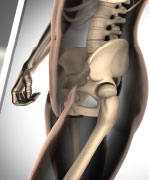
- The most recent research reveals that weak bones contribute to increased fat mass, decreased insulin sensitivity, inflammation, and greater risk of cardiovascular disease.
- While most maturing individuals know of calcium’s importance for healthy bones, many remain unenlightened of the critical need for vitamin D3, vitamin K, magnesium, potassium, and boron.
Vitamin D3
 In order to absorb calcium from the diet or from supplements, the human body requires vitamin D. For years, we believed that promoting calcium absorption from the intestinal tract was the chief function of vitamin D.33 But over the past decade there has been an explosion of scientific discoveries about vitamin D’s multiple roles throughout the body.34 We now recognize that vitamin D functions as a hormone, with receptors located in at least 35 different tissue types.34,35 That means the body’s overall requirement for vitamin D is much greater than we originally realized.33,36
With regard to bone health, vitamin D not only promotes calcium absorption but also its proper deposition in bone tissue, where it helps maintain the skeleton’s basic function as scaffold and protector of soft tissues.37 Elsewhere in the body, vitamin D acts at its specific receptors to promote immune function, subdue inflammation, reduce arterial calcification, enhance cardiac function, improve brain and nerve tissue performance, and even prevent cancer by regulating the cell replication cycle.34,38,39 Conversely, vitamin D deficiency is associated with not only bone diseases, but also cardiovascular disease, the metabolic syndrome, cancer, immune suppression, and autoimmune conditions such as multiple sclerosis, lupus, and inflammatory bowel disease.37,39-42
Despite the renewed scientific interest in vitamin D’s impact on human health, the prevalence of vitamin D deficiency remains high.43 Vitamin D3 (cholecalciferol) is synthesized in the skin from sunlight exposure and then converted into the active form, 1,25-dihydroxyvitamin D (calcitriol), by the liver and kidneys.37 But even in sunny Southern California, where one would expect most people to have sufficient vitamin D levels, almost 20% of people in one study had low vitamin D3 levels in their blood.44 In less sun-exposed regions, deficiency rates in excess of 50% have been documented.35,45
And remember that “deficiency” means exceedingly low levels of vitamin D. In aging individuals who don’t take at least 5,000 IU per day of vitamin D, approximately 85% have insufficient or “less-than-optimal” blood levels of vitamin D (measured as 25-hydroxyvitamin D).46
The combination of our increased knowledge about the importance of vitamin D throughout the body, and the widespread lack of adequate levels, has resulted in a rapidly growing international call for increased vitamin D intake.33,45,47
Many experts in the field recommend supplementing with doses of 2,000-10,000 IU per day in order to achieve optimal total-body vitamin D status for optimal skeletal, cardiovascular, neurological, immunological, and metabolic health.45,48-50
Magnesium
 While calcium and vitamin D have been considered the mainstays of bone nutrition and osteoporosis prevention, several other minerals are also essential to good bone health.51,52 Magnesium is an element that is involved in more than 300 essential metabolic reactions. Magnesium is also vital to human nerve and muscle cell function. Fully one-half to two-thirds of the total body content of magnesium is stored in bone—another example of the skeleton’s substantial role as reservoir for important minerals.53,54 While blood levels of magnesium remain virtually constant throughout life, the total body content diminishes with aging, leading to depletion of the skeletal stores.55 Magnesium deficiency is therefore common among older adults, who typically consume inadequate amounts of magnesium-rich foods and whose physiology may contribute to increased losses of the element from the body.55
Magnesium deficiency is a risk factor for osteoporosis and is also associated with a long list of other chronic ailments, many of which are themselves age-related. These include virtually all forms of cardiovascular disease, insulin resistance and diabetes, lipid disturbances, increased inflammation and oxidative stress, asthma, chronic fatigue, and depression.55
Plentiful consumption of magnesium is an important part of good bone nutrition. Higher dietary intakes are associated with higher bone mineral density.53,54,56,57 While the mechanisms of this effect are not entirely clear, it is known that magnesium supports a more alkaline environment in bone and other tissues, which helps to reduce calcium losses in the urine.51,56 Magnesium also reduces markers of excessive bone turnover, helping bones retain their vital mineral mass.58
Increasing magnesium intake improves bone mineral density and bone strength in both animal and human studies.57,59 Conversely, magnesium deficiency may impair the beneficial effects of calcium supplements. In magnesium-deficient rats, calcium supplements suppressed bone formation, a worrisome finding.60 That study serves as an important reminder of the importance of comprehensive bone nutrition that includes more than simply calcium and vitamin D.51 Simultaneously increasing calcium and magnesium intake helps promote a favorable change in cytokines that can promote bone formation.61
Vitamin K2 — Extra Nutrition for Optimal Bone Health
 Attention to the importance of vitamin K2 in supporting bone health has grown over the past decade. It works alongside vitamin D3 to keep calcium in bones where it belongs and out of arterial walls where it does not.67,68 Vitamin K2 reduces production of bone-absorbing cells (osteoclasts) and promotes development of bone-forming cells (osteoblasts).69,70 Vitamin K2 is required for production of a small family of proteins that include the bone matrix proteins and the essential bone-produced hormone called osteocalcin.35,71
Healthy bone matrix proteins hold tightly to calcium and maintain bone’s integrity and strength, reducing your risk of osteoporosis. And ample supplies of osteocalcin directly improve insulin sensitivity, reduce fat accumulation, and are associated with lower levels of leptin, a fat-produced hormone that’s implicated in the metabolic syndrome.13,18
Vitamin K2 increases osteocalcin production and improves bone mineral density, and may protect against fracture risk.72-76
NOTE: If you are taking any form of the anticoagulant medication Coumadin® (warfarin), consult with your prescribing physician before increasing your vitamin K intake. While large quantities of vitamin K may reduce the medication’s efficacy, low-dose vitamin K (100 mcg/day) may increase the stability of anticoagulant therapy, as measured by less fluctuation in international normalized ratio (INR) values.77,78
Potassium
 Potassium is one of the predominant ions in the human body, and it is essential to maintaining health at the cellular level. Even apparently minor potassium disturbances can produce significant cardiovascular disorders. Americans consume an average of only 2,600 mg of potassium daily, compared with the 4,700 mg recommended by the USDA’s Center for Nutrition Policy and Promotion.62 Older adults are at substantially increased risk for having low potassium levels, in part because of lower dietary consumption of potassium-rich fruits and vegetables and also because of the side effects of many common medications such as certain diuretics like furosemide, thiazides such as hydrochlorothiazide, asthma medications such as albuterol inhalers, and the cancer chemotherapy drug cisplatin.63,64
Potassium helps maintain a more alkaline or non-acidic tissue environment, which benefits bone health by reducing calcium losses in urine. People with higher potassium intake boast higher bone mineral density, reducing their risk of osteoporosis and potentially life-changing fractures.56,65 Animal studies show that increasing potassium intake in combination with exercise improves both bone density and bone mineral content.66 A modest amount of potassium, therefore, is a wise addition to a bone-health regimen.
Boron
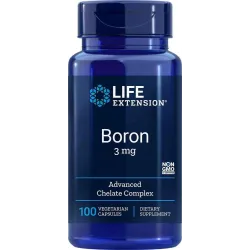
 Boron is a trace mineral that is essential to healthy bones since it supports the functions of calcium, magnesium, and vitamin D.79-82 In a revealing study, postmenopausal women consumed a boron-deficient diet for 17 weeks, followed by 7 weeks of boron consumption. While on the boron-deficient diet, the women showed increased urinary loss of calcium and magnesium. When boron was re-introduced to their diet, urinary loss of calcium and magnesium declined, and hormones linked with healthy bone mass increased. These findings suggest that boron is crucial in helping maintain the body’s optimal stores of bone-building calcium and magnesium.81
Modern eating habits make it difficult to obtain adequate amounts of boron from the typical diet. Scientists have discovered a plant-based form of boron called calcium fructoborate. Naturally found in fruits, vegetables, and other foods, this form of boron is highly stable and bioavailable and may provide antioxidant capabilities in addition to bone-building benefits.83,84
Summary
If current health trends continue, nearly half of all Americans over 50 will suffer from osteoporosis by the year 2020. Osteoporosis is just one of the consequences of inadequate bone nutrition. New research reveals that weak bones contribute to increased fat mass, decreased insulin sensitivity, inflammation, and greater risk of cardiovascular disease, among other conditions. While most maturing individuals know they need calcium for healthy bones, many remain unenlightened of the critical need for vitamin D3, vitamin K, magnesium, potassium, and boron.
As a result, nearly half of older Americans do not get enough bone health-promoting nutrients.
Material used with permission of Life Extension. All rights reserved.
1. Clemens TL, Karsenty G. The osteoblast: An insulin target cell controlling glucose homeostasis. J Bone Miner Res. 2011 Apr;26(4):677-80.
2. Kim YS, Paik IY, Rhie YJ, Suh SH. Integrative physiology: defined novel metabolic roles of osteocalcin. J Korean Med Sci. 2010 Jul;25(7):985-91.
3. Confavreux CB. Bone: from a reservoir of minerals to a regulator of energy metabolism. Kidney Int Suppl. 2011 Apr (121):S14-9.
4. Available at: http://emedicine.medscape.com/article/1254517-overview. Accessed May 13, 2011.
5. US Department of Health and Human Services. Office of the Surgeon General. “Bone Health and Osteoporosis: A Report of the Surgeon General.” October 14, 2004.
6. Grabowski P. Physiology of bone. Endocr Dev. 2009;16:32-48.
7. Simon LS. Osteoporosis. Clin Geriatr Med. 2005 Aug;21(3):603-29, viii.
8. London G, Coyne D, Hruska K, Malluche HH, Martin KJ. The new kidney disease: improving global outcomes (KDIGO) guidelines – expert clinical focus on bone and vascular calcification. Clin Nephrol. 2010 Dec;74(6):423-32.
9. Hinoi E. Control of bone remodeling by nervous system. Regulation of glucose metabolism by skeleton. Tangent point with nervous system. Clin Calcium. 2010 Dec;20(12):1814-9.
10. Wolf G. Energy regulation by the skeleton. Nutr Rev. 2008 Apr;66(4):229-33.
11. Ferron M, Wei J, Yoshizawa T, et al. Insulin signaling in osteoblasts integrates bone remodeling and energy metabolism. Cell. 2010 Jul 23;142(2):296-308.
12. Ferron M, McKee MD, Levine RL, Ducy P, Karsenty G. Intermittent injections of osteocalcin improve glucose metabolism and prevent type 2 diabetes in mice. Bone. 2011 Apr 29.
13. Gravenstein KS, Napora JK, Short RG, et al. Cross-sectional evidence of a signaling pathway from bone homeostasis to glucose metabolism. J Clin Endocrinol Metab. 2011 Mar 9.
14. Enriori PJ, Evans AE, Sinnayah P, Cowley MA. Leptin resistance and obesity. Obesity (Silver Spring). 2006 Aug;14 Suppl 5:254S-258S.
15. Wannamethee SG, Tchernova J, Whincup P, et al. Plasma leptin: associations with metabolic, inflammatory and haemostatic risk factors for cardiovascular disease. Atherosclerosis. 2007 Apr;191(2):418-26.
16. Henriksen JH, Holst JJ, Moller S, Andersen UB, Bendtsen F, Jensen G. Elevated circulating leptin levels in arterial hypertension: relationship to arteriovenous overflow and extraction of leptin. Clin Sci (Lond). 2000 Dec;99(6):527-34.
17. Soderberg S, Stegmayr B, Ahlbeck-Glader C, Slunga-Birgander L, Ahren B, Olsson T. High leptin levels are associated with stroke. Cerebrovasc Dis. 2003;15(1-2):63-9.
18. Ducy P. The role of osteocalcin in the endocrine cross-talk between bone remodelling and energy metabolism. Diabetologia. 2011Jun;54(6):1291-7.
19. Vermeer C, Theuwissen E. Vitamin K, osteoporosis and degenerative diseases of ageing. Menopause Int. 2011 Mar;17(1):19-23.
20. Demer LL, Tintut Y. Mechanisms linking osteoporosis with cardiovascular calcification. Curr Osteoporos Rep. 2009 Jul;7(2):42-6.
21. Hjortnaes J, Butcher J, Figueiredo JL, et al. Arterial and aortic valve calcification inversely correlates with osteoporotic bone remodelling: a role for inflammation. Eur Heart J. 2010 Aug;31(16):1975-84.
22. Kaats GR, Preuss HG, Croft HA, Keith SC, Keith PL. A comparative effectiveness study of bone density changes in women over 40 following three bone health plans containing variations of the same novel plant-sourced calcium. Int J Med Sci. 2011;8(3):180-91.
23. Kim MH, Yeon JY, Choi MK, Bae YJ. Evaluation of magnesium intake and its relation with bone quality in healthy young Korean women. Biol Trace Elem Res. 2011 Apr 5.
24. Palacios C. The role of nutrients in bone health, from A to Z. Crit Rev Food Sci Nutr. 2006;46(8):621-8.
25. Cashman KD. Calcium intake, calcium bioavailability and bone health. Br J Nutr. 2002 May;87 Suppl 2:S169-77.
26. Spangler M, Phillips BB, Ross MB, Moores KG. Calcium supplementation in postmenopausal women to reduce the risk of osteoporotic fractures. Am J Health Syst Pharm. 2011 Feb 15;68(4):309-18.
27. Lips P, Bouillon R, van Schoor NM, et al. Reducing fracture risk with calcium and vitamin D. Clin Endocrinol (Oxf). 2010 Sep;73(3):277-85.
28. Ferrar L, van der Hee RM, Berry M, et al. Effects of calcium-fortified ice cream on markers of bone health. Osteoporos Int. 2010 Dec 18.
29. Chaturvedi P, Mukherjee R, McCorquodale M, Crawley D, Ashmead S, Guthrie N. Comparison of calcium absorption from various calcium-containing products in healthy human adults: a bioavailability study. FASEB J. 2006 Mar;20(Meeting Abstract Supplement):A1063.
30. Patrick L. Comparative absorption of calcium sources and calcium citrate malate for the prevention of osteoporosis. Altern Med Rev. 1999 Apr;4(2):74-85.
31. Available at: http://lpi.oregonstate.edu/infocenter/minerals/calcium/. Accessed May 12, 2011.
32. Ross AC, Manson JE, Abrams SA, et al. The 2011 dietary reference intakes for calcium and vitamin d: what dietetics practitioners need to know. J Am Diet Assoc. 2011 Apr;111(4):524-7.
33. Norman AW, Bouillon R. Vitamin D nutritional policy needs a vision for the future. Exp Biol Med (Maywood). 2010 Sep;235(9):1034-45.
34. Bacchetta J, Ranchin B, Dubourg L, Cochat P. Vitamin D revisited: a cornerstone of health? Arch Pediatr. 2010 Dec;17(12):1687-95.
35. Kidd PM. Vitamins D and K as pleiotropic nutrients: clinical importance to the skeletal and cardiovascular systems and preliminary evidence for synergy. Altern Med Rev. 2010 Sep;15(3):199-222.
36. Verhave G, Siegert CE. Role of vitamin D in cardiovascular disease. Neth J Med. 2010 Mar;68(3):113-8.
37. Querales MI, Cruces ME, Rojas S, Sanchez L. Association between vitamin D deficiency and metabolic syndrome. Rev Med Chil. 2010 Oct;138(10):1312-8.
38. Petchey WG, Hickman IJ, Duncan E, et al. The role of 25-hydroxyvitamin D deficiency in promoting insulin resistance and inflammation in patients with chronic kidney disease: a randomised controlled trial. BMC Nephrol. 2009;10:41.
39. Guillot X, Semerano L, Saidenberg-Kermanac’h N, Falgarone G, Boissier MC. Vitamin D and inflammation. Joint Bone Spine. 2010 Dec;77(6):552-7.
40. Edlich RF, Mason SS, Reddig JS, Gubler K, Long Iii WB. Revolutionary advances in the diagnosis of vitamin D deficiency. J Environ Pathol Toxicol Oncol. 2010;29(2):85-9.
41. Grant WB, Schwalfenberg GK, Genuis SJ, Whiting SJ. An estimate of the economic burden and premature deaths due to vitamin D deficiency in Canada. Mol Nutr Food Res. 2010 Aug;54(8):1172-81.
42. Jorde R, Sneve M, Hutchinson M, Emaus N, Figenschau Y, Grimnes G. Tracking of serum 25-hydroxyvitamin D levels during 14 years in a population-based study and during 12 months in an intervention study. Am J Epidemiol. 2010 Apr 15;171(8):903-8.
43. Pilz S, Tomaschitz A, Drechsler C, Dekker JM, Marz W. Vitamin D deficiency and myocardial diseases. Mol Nutr Food Res. 2010 Aug;54(8):1103-13.
44. Horani M, Dror A, Holland D, Caporaso F, Sumida KD, Frisch F. Prevalence of Vitamin D(3) Deficiency in Orange County Residents. J Community Health. 2011 Feb 13.
45. Holick MF. Vitamin D: evolutionary, physiological and health perspectives. Curr Drug Targets. 2011 Jan;12(1):4-18.
46. Faloon W. Startling findings about vitamin D levels in Life Extension® members. Life Extension Magazine®. 2010 Jan;16(1):7-14.
47. Wei MY, Giovannucci EL. Vitamin D and multiple health outcomes in the Harvard cohorts. Mol Nutr Food Res. 2010 Aug;54(8):1114-26.
48. Vieth R. Vitamin D supplementation, 25-hydroxyvitamin D concentrations, and safety. Am J Clin Nutr. 1999 May;69(5):842-56.
49. Vieth R. Vitamin D toxicity, policy, and science. J Bone Miner Res. 2007 Dec;22 Suppl 2:V64-8.
50. Garland CF, French CB, Baggerly LL, Heaney RP. Vitamin D supplement doses and serum 25-hydroxyvitamin D in the range associated with cancer prevention. Anticancer Res. 2011 Feb;31(2):607-11.
51. Kitchin B, Morgan SL. Not just calcium and vitamin D: other nutritional considerations in osteoporosis. Curr Rheumatol Rep. 2007 Apr;9(1):85-92.
52. Tucker KL. Osteoporosis prevention and nutrition. Curr Osteoporos Rep. 2009 Dec;7(4):111-7.
53. Martini LA. Magnesium supplementation and bone turnover. Nutr Rev. 1999 Jul;57(7):227-9.
54. Matsuzaki H. Prevention of osteoporosis by foods and dietary supplements. Magnesium and bone metabolism. Clin Calcium. 2006 Oct;16(10):1655-60.
55. Barbagallo M, Belvedere M, Dominguez LJ. Magnesium homeostasis and aging. Magnes Res. 2009 Dec;22(4):235-46.
56. Tucker KL, Hannan MT, Chen H, Cupples LA, Wilson PW, Kiel DP. Potassium, magnesium, and fruit and vegetable intakes are associated with greater bone mineral density in elderly men and women. Am J Clin Nutr. 1999 Apr;69(4):727-36.
57. Ryder KM, Shorr RI, Bush AJ, et al. Magnesium intake from food and supplements is associated with bone mineral density in healthy older white subjects. J Am Geriatr Soc. 2005 Nov;53(11):1875-80.
58. Aydin H, Deyneli O, Yavuz D, et al. Short-term oral magnesium supplementation suppresses bone turnover in postmenopausal osteoporotic women. Biol Trace Elem Res. 2010 Feb;133(2):136-43.
59. Toba Y, Kajita Y, Masuyama R, Takada Y, Suzuki K, Aoe S. Dietary magnesium supplementation affects bone metabolism and dynamic strength of bone in ovariectomized rats. J Nutr. 2000 Feb;130(2):216-20.
60. Matsuzaki H, Miwa M. Dietary calcium supplementation suppresses bone formation in magnesium-deficient rats. Int J Vitam Nutr Res. 2006 May;76(3):111-6.
61. Bae YJ, Kim MH. Calcium and Magnesium Supplementation Improves Serum OPG/RANKL in Calcium-Deficient Ovariectomized Rats. Calcif Tissue Int. 2010 Oct;87(4):365-72.
62. Available at: http://www.therapeuticsdaily.com/news/article.cfm?contenttype=sentryarticleandamp;contentvalue=1989790andamp;channelID=26. Accessed May 13, 2011.
63. Luckey AE, Parsa CJ. Fluid and electrolytes in the aged. Arch Surg. 2003 Oct;138(10):1055-60.
64. Passare G, Viitanen M, Torring O, Winblad B, Fastbom J. Sodium and potassium disturbances in the elderly : prevalence and association with drug use. Clin Drug Investig. 2004;24(9):535-44.
65. McCarty MF. Rationale for a novel nutraceutical complex ‘K-water’: potassium taurine bicarbonate (PTB). Med Hypotheses. 2006;67(1):65-70.
66. Rico H, Aznar L, Hernandez ER, et al. Effects of potassium bicarbonate supplementation on axial and peripheral bone mass in rats on strenuous treadmill training exercise. Calcif Tissue Int. 1999 Sep;65(3):242-5.
67. Wallin R, Schurgers L, Wajih N. Effects of the blood coagulation vitamin K as an inhibitor of arterial calcification. Thromb Res. 2008;122(3):411-7.
68. Fodor D, Albu A, Poanta L, Porojan M. Vitamin K and vascular calcifications. Acta Physiol Hung. 2010 Sep;97(3):256-66.
69. Yamaguchi M, Uchiyama S, Tsukamoto Y. Inhibitory effect of menaquinone-7 (vitamin K2) on the bone-resorbing factors-induced bone resorption in elderly female rat femoral tissues in vitro. Mol Cell Biochem. 2003 Mar;245(1-2):115-20.
70. Yamaguchi M, Weitzmann MN. Vitamin K2 stimulates osteoblastogenesis and suppresses osteoclastogenesis by suppressing NF-kappaB activation. Int J Mol Med. 2011 Jan;27(1):3-14.
71. Takemura H. Prevention of osteoporosis by foods and dietary supplements. “Kinnotsubu honegenki”: a fermented soybean (natto) with reinforced vitamin K2 (menaquinone-7). Clin Calcium. 2006 Oct;16(10):1715-22.
72. Tsukamoto Y. Studies on action of menaquinone-7 in regulation of bone metabolism and its preventive role of osteoporosis. Biofactors. 2004;22(1-4):5-19.
73. van Summeren MJ, Braam LA, Lilien MR, Schurgers LJ, Kuis W, Vermeer C. The effect of menaquinone-7 (vitamin K2) supplementation on osteocalcin carboxylation in healthy prepubertal children. Br J Nutr. 2009 Oct;102(8):1171-8.
74. Forli L, Bollerslev J, Simonsen S, et al. Dietary vitamin K2 supplement improves bone status after lung and heart transplantation. Transplantation. 2010 Feb 27;89(4):458-64.
75. Inoue T, Fujita T, Kishimoto H, et al. Randomized controlled study on the prevention of osteoporotic fractures (OF study): a phase IV clinical study of 15-mg menatetrenone capsules. J Bone Miner Metab. 2009;27(1):66-75.
76. Shea MK, Booth SL. Update on the role of vitamin K in skeletal health. Nutr Rev. 2008 Oct;66(10):549-57
77. Reese AM, Farnett LE, Lyons RM, Patel B, Morgan L, Bussey HI. Low-dose vitamin K to augment anticoagulation control. Pharmacotherapy. 2005 Dec;25(12):1746-51.
78. Lurie Y, Loebstein R, Kurnik D, Almog S, Halkin H. Warfarin and vitamin K intake in the era of pharmacogenetics. Br J Clin Pharmacol. 2010 Aug;70(2):164-70.
79. Schaafsma A, de Vries PJ, Saris WH. Delay of natural bone loss by higher intakes of specific minerals and vitamins. Crit Rev Food Sci Nutr. 2001 May;41(4):225-49.
80. Miggiano GA, Gagliardi L. Diet, nutrition and bone health. Clin Ter. 2005 Jan-Apr;156(1-2):47-56.
81. Nielsen FH, Hunt CD, Mullen LM, Hunt JR. Effect of dietary boron on mineral, estrogen,and testosterone metabolism in postmenopausal women. FASEB J. 1987 Nov;1(5):394-7.
82. Hegsted M, Keenan MJ, Siver F, Wozniak P. Effect of boron on vitamin D deficient rats. Biol Trace Elem Res. 1991 Mar;28(3):243-55.
83. Palacios C. The role of nutrients in bone health, from A to Z. Crit Rev Food Sci Nutr. 2006;46(8):621-8.
84. Scorei R, Cimpoiasu VM, Iordachescu D. In vitro evaluation of the antioxidant activity of calcium fructoborate. Biol Trace Elem Res. 2005 Nov;107(2):127-34.
Related products
-
Bone Restore Calcium Supplement with Vitamin K2
Price: 22,25 €Highly absorbable nutrients for greater bone density Highly absorbable... -
Bone restore - Calcium Supplement
Price: 21,26 €Get comprehensive bone support Highly absorbable nutrients for greater... -
Related posts
-
 Lipoic Acid Reverses Mitochondrial Decay
It is estimated that 85% of the oxygen contained in every breath you take is consumed by the mitochondria within each...
Lipoic Acid Reverses Mitochondrial Decay
It is estimated that 85% of the oxygen contained in every breath you take is consumed by the mitochondria within each... -
Vitamin C and Dihydroquercetin
Every day, our bodies are under continual assault by damaging agents known as free radicals. Generally, both internal...
-
How Resveratrol Combats Leading Causes of Death
In 1997, the first scientific paper on resveratrol was published showing that this polyphenol could prevent cancer in...
-
Cukrzyca opis choroby Część 1
Brak kontroli nad cukrzycą może nieść poważne konsekwencje zdrowotne, takie jak ślepota, niewydolność nerek,...
-
Cukrzyca opis choroby Część 2
Cukrzycy typu 1 potrzebują dożywotniej insulinoterapii, choć suplementy wymienione w niniejszym rozdziale mogą pomóc...