
 English
 Polski
 Deutsch
 Français
 ελληνικά
 Español
 Italiano
Easy Way to Boost Fiber Intake
 About 90%-97% of American adults do not ingest the recommended amount of dietary fiber.1
That’s a serious health concern.2-5
Dietary fiber helps control blood sugar,6-8 cholesterol,7,9,10blood pressure,7,9,11,12 and body weight,6,7,9,13 while promoting healthy gut bacteria.14,15
Fiber can improve cardiovascular,10 gastrointestinal,3 and metabolic health.16
Increased fiber consumption is associated with a decreased risk of dying from any cause.17,18
Researchers have developed an easy way to boost fiber intake that was approved in 2020 by the FDA.
This fiber is made from the root of the konjac plant. It has been shown to be as effective as other fibers, at a lower dose that reduces GI discomforts.19
An Alternative Fiber
 For adults over 50, the Recommended Daily Allowance (RDA) for fiber is 30 grams for men and 21 grams for women. The average American consumes only 10-12 grams daily.25
That means most Americans are missing out on fiber’s ability to promote heart health,10 reduce blood sugar8 and body weight,12 and support healthy gut bacteria.3
Fiber intake has also been linked to lower all-cause mortality risk.17,18
Most fiber products contain psyllium husk, which requires high doses to deliver benefits. Many people find them unpleasantly filling.
Researchers investigating alternatives identified konjac root as a soluble fiber that provides the same health benefits as psyllium at significantly smaller doses.
Clinical Data
Clinical studies show that konjac fiber:
- Improves regularity and the balance of the gut microbiome,20,21
- Supports weight loss,22
- Reduces post-meal glucose and insulin levels,6,23 and
- Lowers LDL (“bad”) cholesterol by 10%.24
Lower dose efficacy of konjac fiber is important.
That’s because many people experience GI discomfort with traditional fiber and miss out on its lifesaving benefits.
Approved as Dietary Fiber

The konjac plant grows in Southeast Asia and Africa.26 It has been safely used to treat a wide range of ailments in China and Japan for centuries.9,27
Consumed orally, konjac fiber passes relatively unchanged into the colon, where it acts as a prebiotic, a nutrient source for healthy bacteria.28,29
Many studies have documented the benefits of konjac, and in 2020, the FDA approved konjac glucomannan, fiber derived from konjac root, as a dietary fiber.19
Regularity and Microbiome Balance
Clinical trials show that konjac fiber benefits bowel movements and the microbiome.
One study of healthy adults measured the effect of taking 4.5 grams of konjac fiber daily (compared to a placebo period) for three weeks. The results during the konjac fiber period were:20
- Significantly improved ease of bowel movements,
- A 27% increase in number of bowel movements,
- Improved markers of colonic bacteria fermentation (breakdown of carbohydrates into beneficial compounds), and
- Higher concentrations of beneficial fecal bacteria, including lactobacilli.
A similar study focused on adults suffering from constipation.21
After taking 4.5 grams of konjac fiber daily for three weeks, subjects had, compared to a placebo phase:21
- A 29% increase in number of bowel movements,
- Significantly improved ease of bowel movements,
- Greater feeling of complete relief,
- Increased production of short-chain fatty acids, which are critical to gastrointestinal health,
- Higher fecal concentration of beneficial bifidobacterial and lactobacilli bacteria, and
- Decreased proportion of clostridia, potentially harmful bacteria.
Weight Loss
 Konjac fiber also helps with excess body weight.
In a trial, overweight adults were put on a low-calorie diet and randomly assigned to take, in divided doses, either a placebo or one of three fiber combinations providing a daily total of:22
- 1,240 mg of glucomannan derived from konjac root, or
- 420 mg of glucomannan plus 420 mg of guar gum, or
- 4,320 mg of glucomannan plus 900 mg of guar gum and 900 mg of alginate.
After five weeks, compared to placebo, 1.76 lbs. per week weight loss was observed among all fiber groups.
However, adding the fibers guar gum and alginate did not cause additional weight loss beyond the amount achieved by konjac glucomannan alone.22
Blood Sugar and Insulin
The effects of konjac on blood sugar and insulin were investigated in adults whose glucose tolerance ranged from normal to borderline.
Over the course of a study, all volunteers received:23
- Rice porridge alone,
- Rice porridge with 1 gram of konjac glucomannan added, and
- Rice porridge with 2 grams of konjac glucomannan added.
Adding konjac fiber to the porridge significantly reduced levels of post-meal blood sugar after 30 minutes. Groups that received konjac had up to 14.4 mg/dL lower blood sugar as compared to the group that received rice porridge alone. Similar results were observed with insulin. Higher doses resulted in greater reductions.23
Reductions in blood sugar and insulin were greater in subjects with borderline glucose tolerance than in those with normal glucose tolerance.
Improved Blood Lipids
 A meta-analysis of clinical trials on patients with high cholesterol showed that taking 3 grams daily of konjac glucomannan over a median period of four weeks reduced LDL (“bad”) cholesterol levels by 10%.24
Other types of soluble fiber may lower LDL cholesterol by 5% at doses of 5-10 grams. Just 3 grams of konjac may reduce LDL by twice as much.
Data also showed that a median daily dose of 3.3 grams of konjac fiber for a median of four weeks reduced overall cholesterol (excluding protective HDL) by 7%.24
Along with its other benefits, these results suggest that konjac fiber can significantly improve overall health.
What You Need To Know: The Benefits of Konjac Fiber
- Getting too little fiber can cause health problems. Many people find the psyllium fiber in most products to be too bulking.
- A fiber derived from the root of the konjac plant provides the same benefits at a lower and less filling dose than psyllium.
- Clinical studies show that konjac fiber promotes bowel regularity, has prebiotic effects, lowers body weight, reduces blood sugar and insulin levels, and lowers cholesterol.
Summary
 Insufficient fiber intake increases the risk for serious disorders and early death.
Trials have shown that konjac fiber improves bowel regularity, body weight, blood sugar, cholesterol, and microbiome makeup.
Konjac protects as well as psyllium but at a lower dose, making it easier to take.
Material used with permission of Life Extension. All rights reserved.
- Available at: https://www.dietaryguidelines.gov/resources/2020-2025-dietary-guidelines-online-materials. Accessed March, 13, 2023.
- Soliman GA. Dietary Fiber, Atherosclerosis, and Cardiovascular Disease. Nutrients. 2019 May 23;11(5).
- Gill SK, Rossi M, Bajka B, et al. Dietary fibre in gastrointestinal health and disease. Nat Rev Gastroenterol Hepatol. 2021 Feb;18(2):101-16.
- Barber TM, Kabisch S, Pfeiffer AFH, et al. The Health Benefits of Dietary Fibre. Nutrients. 2020 Oct 21;12(10).
- Holscher HD. Dietary fiber and prebiotics and the gastrointestinal microbiota. Gut Microbes. 2017 Mar 4;8(2):172-84.
- Ueno H, Haraguchi N, Azuma M, et al. Active Consumption of Konjac and Konjac Products Improves Blood Glucose Control in Patients with Type 2 Diabetes Mellitus. J Am Nutr Assoc. 2023 Feb;42(2):123-9.
- Guo S. Insulin signaling, resistance, and the metabolic syndrome: insights from mouse models into disease mechanisms. J Endocrinol. 2014 Feb;220(2):T1-T23.
- Mao T, Huang F, Zhu X, et al. Effects of dietary fiber on glycemic control and insulin sensitivity in patients with type 2 diabetes: A systematic review and meta-analysis. Journal of Functional Foods. 2021 2021/07/01/;82:104500.
- Devaraj RD, Reddy CK, Xu B. Health-promoting effects of konjac glucomannan and its practical applications: A critical review. Int J Biol Macromol. 2019 Apr 1;126:273-81.
- Soliman GA. Dietary Fiber, Atherosclerosis, and Cardiovascular Disease. Nutrients. 2019 May 23;11(5):1155.
- Nepali P, Suresh S, Pikale G, et al. Hypertension and the Role of Dietary Fiber. Curr Probl Cardiol. 2022 Jul;47(7):101203.
- Reynolds AN, Akerman A, Kumar S, et al. Dietary fibre in hypertension and cardiovascular disease management: systematic review and meta-analyses. BMC Med. 2022 Apr 22;20(1):139.
- Sweat W, Manore MM. Dietary Fiber. ACSM’S Health & Fitness Journal. 2015;19(1):9-16.
- Cronin P, Joyce SA, O’Toole PW, et al. Dietary Fibre Modulates the Gut Microbiota. Nutrients. 2021 May 13;13(5).
- Oliver A, Chase AB, Weihe C, et al. High-Fiber, Whole-Food Dietary Intervention Alters the Human Gut Microbiome but Not Fecal Short-Chain Fatty Acids. mSystems. 2021 Mar 16;6(2):e00115-21.
- Lattimer JM, Haub MD. Effects of dietary fiber and its components on metabolic health. Nutrients. 2010 Dec;2(12):1266-89.
- Yang Y, Zhao LG, Wu QJ, et al. Association between dietary fiber and lower risk of all-cause mortality: a meta-analysis of cohort studies. Am J Epidemiol. 2015 Jan 15;181(2):83-91.
- Park Y, Subar AF, Hollenbeck A, et al. Dietary fiber intake and mortality in the NIH-AARP diet and health study. Arch Intern Med. 2011 Jun 27;171(12):1061-8.
- Available at: https://www.fda.gov/food/cfsan-constituent-updates/fda-grants-citizen-petition-glucomannan-dietary-fiber. Accessed March, 13, 2023.
- Chen HL, Cheng HC, Liu YJ, et al. Konjac acts as a natural laxative by increasing stool bulk and improving colonic ecology in healthy adults. Nutrition. 2006 Nov-Dec;22(11-12):1112-9.
- Chen HL, Cheng HC, Wu WT, et al. Supplementation of konjac glucomannan into a low-fiber Chinese diet promoted bowel movement and improved colonic ecology in constipated adults: a placebo-controlled, diet-controlled trial. J Am Coll Nutr. 2008 Feb;27(1):102-8.
- Birketvedt GS, Shimshi M, Erling T, et al. Experiences with three different fiber supplements in weight reduction. Med Sci Monit. 2005 Jan;11(1):PI5-8.
- Yoshida A, Kimura T, Tsunekawa K, et al. Glucomannan Inhibits Rice Gruel-Induced Increases in Plasma Glucose and Insulin Levels. Ann Nutr Metab. 2020;76(4):259-67.
- Ho HVT, Jovanovski E, Zurbau A, et al. A systematic review and meta-analysis of randomized controlled trials of the effect of konjac glucomannan, a viscous soluble fiber, on LDL cholesterol and the new lipid targets non-HDL cholesterol and apolipoprotein B. Am J Clin Nutr. 2017 May;105(5):1239-47.
- Available at: https://www.health.harvard.edu/blog/should-i-beeating-more-fiber-2019022115927#:~:text=Fiber%3A%20how%20much%20is%20enough,and%2030%20daily%20grams%2C%20 respectively. Accessed March 14, 2023.
- Choi KH, Kim ST, Bin BH, et al. Effect of Konjac Glucomannan (KGM) on the Reconstitution of the Dermal Environment against UVB-Induced Condition. Nutrients. 2020 Sep 11;12(9).
- Khan H, Marya. Konjac (Amorphophallus konjac). In: Nabavi SM, Silva AS, editors. Nonvitamin and Nonmineral Nutritional Supplements: Academic Press; 2019:307-12.
- Ariestanti CA, Seechamnanturakit V, Harmayani E, et al. Optimization on production of konjac oligo-glucomannan and their effect on the gut microbiota. Food Sci Nutr. 2019 Feb;7(2):788-96.
- Zhang Y, Zhao Y, Yang W, et al. Structural complexity of Konjac glucomannan and its derivatives governs the diversity and outputs of gut microbiota. Carbohydrate Polymers. 2022 2022/09/15/;292:119639.
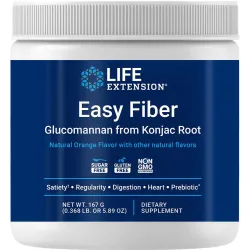
Related product
Related posts
-
 Lipoic Acid Reverses Mitochondrial Decay
It is estimated that 85% of the oxygen contained in every breath you take is consumed by the mitochondria within each...
Lipoic Acid Reverses Mitochondrial Decay
It is estimated that 85% of the oxygen contained in every breath you take is consumed by the mitochondria within each... -
Vitamin C and Dihydroquercetin
Every day, our bodies are under continual assault by damaging agents known as free radicals. Generally, both internal...
-
How Resveratrol Combats Leading Causes of Death
In 1997, the first scientific paper on resveratrol was published showing that this polyphenol could prevent cancer in...
-
Green Tea
Scientific research on the health benefits of green tea is expanding exponentially, with more than 1,500 articles...
-
The Lancet Reports Extremely Positive Data on Green Tea
As medical researchers continue to uncover the health benefits of green tea, one might think that these discoveries...