
 English
 Polski
 Deutsch
 Français
 ελληνικά
 Español
 Italiano
The Chemistry of Calm
With all the medical and media attention given to depression over the past two decades, another equally commonplace condition has been widely overlooked: anxiety disorder.
The brain is a powerhouse for a variety of important neurotransmitters. With the rise of depression and anxiety, there has never been a more important time to balance your neurotransmitters. Imbalances can increase the risk for neurodegenerative diseases such as Alzheimer’s. A contributing factor to this disease progression is when there is excessive release of glutamate, an excitatory neurotransmitter, which results in premature neuronal cell death. Researchers have made exciting discoveries about many ways to safely balance neurotransmitters with minimal side effects.
Anxiety disorders frequently co-occur with depressive disorders or substance abuse.* And most people who suffer from one type of anxiety disorder also have another type of anxiety disorder, which is what makes the information you’re about to learn so timely, relevant, and valuable.
As many clinicians will tell you, the range of drugs available to effectively treat anxiety remains relatively limited. Many are potentially addictive and lose efficacy over time, like the benzodiazepines Valium®, Xanax®, and Klonopin®. Others come with a host of undesirable side effects, including dry mouth, cognitive or memory impairment, and loss of sex drive.
Pioneering and visionary psychiatrist Dr. Henry Emmons—first profiled in Life Extension Magazine® in 2008 —has remained at the forefront in identifying natural interventions to restore calm in the face of stress, with minimal side effects.
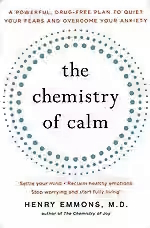
 In this exclusive excerpt from his most recent work, The Chemistry of Calm, Dr. Emmons presents a comprehensive set of natural compounds, along with recommended dosages and regimens, to effectively combat the hidden scourge of anxiety disorder.
Using medications to try to improve brain chemistry can offer relief, at least in the short term. But medications do not restore normal levels of neurotransmitters, nor even promote normal function. They manipulate the brain chemistry to achieve their desired effects.
SSRIs, for example, prevent the reuptake (or recycling) of serotonin from the space between the nerve cells (the synapse). This allows the chemical to remain in the area of activity for a longer period of time. And the benzodiazepines, such as Valium, Ativan, and Xanax®, work by stimulating the GABA receptors, thus mimicking the calming effects of GABA in the brain.
With time, the brain accommodates to medications and they often lose their effectiveness, requiring higher doses or different drugs. When you try to stop them, there are frequently withdrawal symptoms that feel worse than the original problem.
When the brain produces a neurotransmitter, it starts with a raw ingredient, usually an amino acid from the diet or another chemical that is already present in the brain. Enzymes are then used to convert the amino acid into the needed brain chemical. By understanding this process in detail, we can take measures to assure an ample supply of the raw ingredients and also enhance the activity of the enzymes. There are various cofactors, for example, that help the enzymes work faster (e.g., the B vitamins).
Understanding the function of nutrients allows for more subtle and natural interventions than standard medical practice, and if they are taken appropriately, I believe that they can work better and have fewer side effects than medication.
| BRAIN CHEMICAL | ROLE IN THE FEAR CIRCUITRY | NUTRITIONAL SUPPORT | ||||||||||||||||||
|
||||||||||||||||||||
The Talking Brain
The neurotransmitters are chemicals that enable the different parts of the brain to stay in touch with one another and coordinate their roles. The table below summarizes the key players in the fear circuitry, what they do, and how to support them nutritionally.
Calm Yourself: Glutamate and GABA
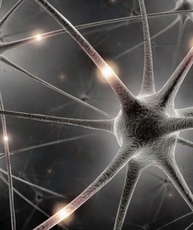 Our bodies are truly elegant in their design, and this is especially apparent with brain function. One common element of this design is a binary system, wherein one chemical activates a process while its partner turns it off again. That is true of the brain chemicals glutamate and GABA, which together account for over 80 percent of brain activity. Glutamate accelerates brain activity—it is excitatory. GABA, on the other hand, puts the brakes on brain activity—it is inhibitory. Together, they keep the brain humming along at just the right pace—not too fast, not too slow.
If you have developed anxiety, then you know that your balance of these two chemicals has been thrown off and the brain’s activity level is turned up too high, at least in some areas of the brain.
The balancing supplements for glutamate and GABA include the amino acids taurine, GABA, and L-theanine; the antioxidants NAC and green tea; vitamins B6 and D; the minerals magnesium and zinc; omega-3 fatty acids; and several herbal therapies.
Disarm Yourself: Reduce Norepinephrine
Norepinephrine raises our level of alertness and arousal. That is well and good if you’re doing something like hunting or evading capture, but not helpful if you are speaking in front of a group or if you have developed panic anxiety for any reason. With depression there is often too little norepinephrine, but in anxiety it is frequently elevated and needs to be toned down.
At an emotional level, you may feel panicky, as if something awful is about to happen. And mentally, your mind may go blank as you find that you can’t think clearly or remember things, no matter how hard you try.
 You can tone down the effects of norepinephrine by taking the amino acid L-theanine, the antioxidant NAC, inositol, and the omega-3 fatty acids. You should also avoid caffeine.
Reward Yourself: Balance Dopamine
The effects of dopamine are more complex than those of norepinephrine, at least in regard to anxiety. In some ways, they have a similar function. Both tend to be energizing and aid in mental focus and concentration. Both can aggravate anxiety when levels are way too high. But dopamine has some beneficial effects against anxiety as well, such as improving motivation and the experience of pleasure. Unless dopamine becomes really excessive, your anxiety may improve if you gently boost your dopamine levels.
Signs of dopamine deficiency include feeling apathetic and fatigued, difficulty losing weight, feeling unmotivated (as with exercise), low sex drive, and general difficulty getting pleasure from things. If you have these signs along with anxiety, consider taking these measures to boost dopamine function: B vitamins, omega-3 fatty acids, L-theanine.
Soothe Yourself: Boost Serotonin
Nearly everyone feels better when their serotonin levels are optimal. It has such a wide array of functions, involved with everything from sleep to appetite to impulse control to sexual desire. It is the brain chemical that helps soothe us when we feel stressed or threatened, and it offers considerable protection to the brain against the damaging effects of cortisol.
Because it is such a key brain chemical, the signs of serotonin depletion are many: insomnia (or irregular circadian rhythms); craving sweets and other carbohydrates; frequent muscle aches and pains; impulsive behaviors; moodiness, especially sadness, anxiety, and irritability; feeling emotionally sensitive or vulnerable; feeling insecure, lacking self-confidence; and low stress tolerance.
Most people with anxiety, especially if their mood is low as well, may benefit by boosting their serotonin levels. Consider taking the following supplements: the amino acid L-tryptophan or the related precursor 5-HTP, the hormone DHEA, the B vitamins and vitamin D, and omega-3 fats.
* Kessler RC, Chiu WT, Demler O, Walters EE. Prevalence, severity, and comorbidity of twelve-month DSM-IV disorders in the National Comorbidity Survey Replication (NCS-R). Arch Gen Psychiatry. 2005 Jun;62(6):617-27.
† U.S. Census Bureau Population Estimates by Demographic Characteristics. Table 2: Annual Estimates of the Population by Selected Age Groups and Sex for the United States: April 1, 2000 to July 1, 2004 (NC-EST2004-02) Source: Population Division, U.S. Census Bureau Release Date: June 9, 2005. http://www.census.gov/popest/national/asrh/
Protect Yourself: Take the Sting Out of Cortisol
 Do you long for a stress-free life? Do you wish that your stress hormones would go away and not come back? Actually, you wouldn’t want either of these, any more than you would want a life without pain. No one wants to be in pain all the time, but to be unable to feel pain at all creates a nightmare of its own. Likewise, if you were unable to mount a stress response, if your body suddenly became unable to produce the stress hormones, your physiology would collapse.
Stress is not the problem. It is unremitting stress and a constantly elevated level of cortisol that create the problems. The consequences can be severe. If it goes unchecked, elevated cortisol may cause weight gain, insulin resistance, or even type 2 diabetes; elevated blood pressure and coronary artery disease; memory problems and possibly dementia and other neurodegenerative diseases; and immune system problems, which may impair your body’s ability to fend off diseases of all types, including autoimmune disorders and even cancers.3
It is crucial to protect yourself with some of the following supplements: the steroid hormone DHEA, which tones down the effects of cortisol; the B vitamins, which help keep homocysteine (a harmful amino acid associated with heart disease, depression, and anxiety) in check; antioxidants; and herbal adaptogens such as rhodiola.
The Therapeutic Supplements
In addition to the basic supplements ), there are several therapeutic supplements, summarized in the table below.
I consider these supplements to be medicinal, with stronger therapeutic effects than the basic supplements. I’ve listed them roughly in the order in which I recommend them for the treatment of anxiety, with my first choices listed at the top.
If you are taking medication already, be sure to talk with your doctor before adding any of the supplements from these categories. And if you are considering going off medication, remember never to stop your medication suddenly—always consult with your doctor about how to safely taper off any psychiatric medication.
SUPPLEMENT |
TYPICAL DOSAGE |
COMMENTS |
|||||||||||||||||||||
|
|||||||||||||||||||||||
L-theanine
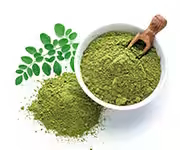 L-theanine is an amino acid found in high concentrations in green tea. But you would have to consume an awful lot of it to get a therapeutic dose of theanine. You can get more by taking a green tea extract, but you can also take a supplement containing L-theanine alone, or in combination with other calming agents.
Researchers have found that it changes brain waves as measured on EEG, promoting the relaxed and alert state associated with alpha waves.4 That makes it unusual because it can sharpen mental focus and calm anxiety at the same time.
L-theanine is one of my most common treatments for anxiety and may help any of the seven types of anxiety. It is usually taken in doses from 50 to 200 mg once or twice daily. For severe anxiety, it may be taken three or four times per day. It is not habit-forming like so many anti-anxiety medications. There are no known drug interactions, but I recommend talking to your doctor before adding it to a medication.
5-HTP
 While 5-HTP can also help sleep, it may be used during the daytime as well because it is not usually sedating. Considerable research has shown that 5-HTP can reduce anxiety, both general and panic, as well as improve mood.5
If you are already taking an SSRI, do not take 5-HTP without consulting your prescribing physician.
I usually recommend a starting dose of 50 mg daily, increasing every few days as tolerated. Most people do well with 100–150 mg daily, but the dose may safely go as high as 300 mg per day if needed. It is usually best to take it divided into two or three doses throughout the day, but if it is sedating it may all be taken at night. However, a small number of people actually have trouble sleeping from 5-HTP, and should then take it early in the day.
It may be best absorbed if taken half an hour before meals, and that can also reduce carbohydrate cravings for people who have them. But if that is a hassle or causes stomach upset, it is fine to take it with meals.
Editor’s note: Many people prefer using tryptophan combined with its essential cofactors lysine and niacinamide in lieu of 5-HTP. Tryptophan is better able to remain stable in the blood and cross the blood-brain barrier, where it is converted to serotonin. If 5-HTP converts to serotonin in the blood, this serotonin will not cross the blood-brain barrier.
NAC
 NAC is short for N-acetylcysteine. It has been used for years in emergency rooms for patients who are at risk for liver damage from something they have ingested (such as the common pain medication acetaminophen). It protects the liver for the same reason it protects the brain: it works as a powerful antioxidant, boosting levels of the body’s own primary antioxidant—glutathione.
As researchers have realized the connection between glutamate/GABA balance and anxiety conditions, they have begun experimenting with NAC. Recently, it has been used with one of the most complex anxiety illnesses—the spectrum of compulsive disorders (including OCD). Remarkably, researchers have found that this simple and inexpensive nutritional supplement works for such hard-to-treat problems as pathological gambling and compulsive hair-pulling (trichotillomania).6 Researchers at Yale are now conducting a placebo-controlled trial with patients whose OCD symptoms have not improved with other treatments.7
NAC typically comes in a dose of 600 mg and may be taken two or three times daily. Some of my patients have had mild headaches or stomach upset, but it is generally well tolerated, especially if you take it with food.
Tonic herb: RHODIOLA
 A group of herbs known as herbal adaptogens or tonic herbs have long been used to strengthen immunity, improve energy, and enhance the body’s ability to handle stress. My favorite for someone with stress, anxiety, or even depression is Rhodiola rosea, also known as arctic root.
Traditionally, rhodiola has been used to improve energy and mental focus, but recent studies have looked at its benefits with anxiety and depression.11 A small study done at UCLA in 2008 showed that participants with general anxiety improved greatly on rhodiola, with minimal side effects.12 It may work by improving serotonin and dopamine levels and counteracting the effects of cortisol.13
Look for an extract standardized to at least 3 percent rosavins and about 1 percent salidrosides. A typical dosage is 100–250 mg twice daily, with breakfast and dinner. While it usually improves anxiety and even sleep, it is usually best not to take it just before bedtime. If it feels energizing, take it early in the day, with breakfast and lunch.
Editor’s Note: While it is generally considered safe for long-term use and is not known to interact with medications, rhodiola is contraindicated for individuals with bipolar disorder. Individuals diagnosed as bipolar, or who have a family history of bipolar disorder, should consult with a psychiatrist before taking rhodiola.
Taurine
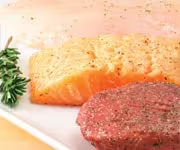 Taurine is an amino acid that increases glycine and GABA to calm the brain, and it also protects the brain by reducing the harmful effects of excess glutamate.8 You may be familiar with it, as it is added to some of the popular energy drinks such as Red Bull. Apparently the manufacturers see it as a means of further supporting someone during periods of extreme exertion, when taurine levels can become depleted. I don’t recommend replenishing it through energy drinks, but you may calm your brain if you boost your taurine levels in safer ways.
Taurine is usually taken in doses of 500 mg one to three times daily. It can cause slight drowsiness and if so may be taken at bedtime. It has also been known to reduce blood pressure, so you should use care if you are prone to hypotension or light-headedness. It may be taken with or without food.
Inositol
Inositol is often classified as a B vitamin, though technically it is not a vitamin since the body can produce it. Taken as a supplement, it has long been known to reduce general anxiety, panic, and OCD symptoms. Researchers found inositol to be just as effective as a popular antidepressant for panic disorder, and participants tolerated it well even at massive doses up to 18 grams per day.9
Inositol is often recommended at a dose of about 1,500 mg daily, though in studies it has been used at much higher doses. Its side effects are mild, including occasional nausea or diarrhea, dizziness, fatigue, and headache. There has been a report of inositol worsening bipolar disorder, and I do not recommend it if you have that condition.
Editor’s Note: The following table of basic supplements is recommended by Dr. Emmons to “support the brain and restore it to a more resilient state.” However, most Life Extension® members already include these supplements in their daily program.
THE RESILIENT SUPPLEMENT PLANThe following table summarizes the supplements I recommend to support the brain and restore it to a more resilient state. |
||||||||||||||
SUPPLEMENT |
TYPICAL DOSAGE |
COMMENTS |
||||||||||||
|
||||||||||||||
GABA
GABA has already been discussed as the neurotransmitter most responsible for calming down an overactive brain, and it is available as a nutritional supplement without prescription. Then why isn’t it higher on my list of recommendations? If you take it by mouth, most of it gets broken down before it gets to the brain, so it is not as useful as you might think. Still, a portion of it does appear to get into the brain, and some of GABA’s calming effects may occur in the rest of the body, as with muscle relaxation. It has been shown in human studies to help create a relaxed alpha brain wave pattern even more effectively than L-theanine, and also to boost immune function in individuals who were subjected to stress.10
 GABA may be taken in doses as small as 100 mg twice daily, up to 750 mg three times per day. If drowsiness occurs, take it just at bedtime.
DHEA
Dehydroepiandrosterone or DHEA is a steroid hormone produced in the adrenal glands, where cortisol and adrenaline are also made. It can be converted into testosterone and estrogen, and levels of DHEA are higher in men than in women. More and more physicians are recommending it, particularly in midlife or beyond, when DHEA levels drop below normal. Some clinicians recommend doses up to 50 mg or more. Levels can be monitored to be sure it doesn’t get too high.
From THE CHEMISTRY OF CALM by Henry Emmons, MD, Copyright 2010
Reprinted by permission of Touchstone, A Division of Simon & Schuster, Inc.
Material used with permission of Life Extension. All rights reserved.
- B. Hassel and R. Dingledine, “Glutamate,” in G. J. Siegel et al., eds., Basic Neurochemistry: Molecular, Cellular and Medical Aspects (Burlington, MA: Elsevier Academic Press, 2006).
- A.H. Kim et al., “Blocking Excitotoxicity,” in F. W. Marcoux and D. W. Choi, eds., CNS Neuroprotection (New York: Springer, 2002): 3–36.
- R. Peled et al., “Breast Cancer, Psychological Distress and Life Events Among Young Women,” BMC Cancer 8 (2008): 245.
- K. Kobayashi et al., “Effects of L‑Theanine on the Release of Alpha-Brain Waves in Human Volunteers,” Journal of the Agricultural Chemical Society of Japan 72, no. 2 (1998): 153–157.
- J. Lake, “Integrative Management of Anxiety,” Psychiatric Times 25, no. 1 (January 2008): 13–16.
- J. Grant et al., “N-Acetyl Cysteine, a Glutamate-Modulating Agent, in the Treatment of Pathological Gambling: A Pilot Study,” Biological Psychiatry 62, no. 6 (2007): 652–657; J. Grant et al., “N-Acetylcysteine, a Glutamate Modulator, in the Treatment of Trichotillomania,” Archives of General Psychiatry 66, no. 7(July 2009): 756–763.
- www.med.yale.edu/psych/clinics/OCD%20Research%20Clinic/N-acetycysteine.htm.
- M. Mori et al., “Beta-Alanine and Taurine as Endogenous Agonists at Glycine Receptors in Rat Hippocampus in Vitro,” Journal of Physiology 539 (2002): 191–200; H. Wu et al., “Mode of Action of Taurine as a Neuroprotector,” Brain Research 1038, no. 2 (March 2005): 123–131.
- A. Palatnik et al., “Double Blind, Controlled, Crossover Trial of Inositol Versus Fluvoxamine for the Treatment of Panic Disorder,” Journal of Clinical Psychopharmacology 21, no. 3 (2001): 335–339.
- A. Abdou et al., “Relaxation and Immunity Enhancement Effects of Gamma- Aminobutyric Acid (GABA) Administration in Humans,” BioFactors 26 (2006): 201–208.
- V. Darbinyan et al., “Clinical Trial of Rhodiola rosea L. Extract SHR-5 in the Treatment of Mild to Moderate Depression,” Nordic Journal of Psychiatry 61, no. 5 (2007): 343–348.
- A. Bystritsky et al., “A Pilot Study of Rhodiola rosea (Rhodax) for Generalized Anxiety Disorder (GAD),” Journal of Alternative and Complementary Medicine 14, no. 2 (2008): 175–180.
- F. Khanum et al., “Rhodiola rosea: A Versatile Adaptogen,” Comprehensive Reviews in Food Science and Food Safety 4 (2005): 55–62.
Related product
-
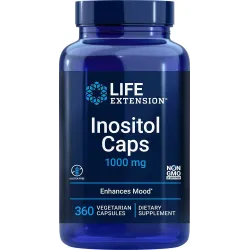
Inositol Caps 1000 mg
Price: 59,79 €Supports a stable mood Involved in serotonin activity modulation...
Related posts
-
 Feed Your Brain!
Millions of people around the world are adhering to low-fat, low-cholesterol diets in an effort to reduce the impact...
Feed Your Brain!
Millions of people around the world are adhering to low-fat, low-cholesterol diets in an effort to reduce the impact... -
Lipoic Acid Reverses Mitochondrial Decay
It is estimated that 85% of the oxygen contained in every breath you take is consumed by the mitochondria within each...
-
Vitamin C and Dihydroquercetin
Every day, our bodies are under continual assault by damaging agents known as free radicals. Generally, both internal...
-
How Resveratrol Combats Leading Causes of Death
In 1997, the first scientific paper on resveratrol was published showing that this polyphenol could prevent cancer in...
-
Discovering Coffee's Unique Health Benefits
Every morning, many of us sip our coffee with no real thought given to the beans behind the brew. But coffee beans...