
 English
 Polski
 Deutsch
 Français
 ελληνικά
 Español
 Italiano
Fisetin and Brain aging
 Nutrients derived from plants have been shown to protect against changes in the brain that lead to neurological disorders.
In 2021, two review articles identified fisetin as one of the most promising.1,2
Preclinical studies show the potential of fisetin to reduce the impact of stroke, mild cognitive impairment, and dementia.1,2
A Multifunctional Nutrient
The flavonoids are a group of plant compounds with health-promoting properties.
Fisetin is a flavonoid with dozens of biological mechanisms that support neurological health.2
Fisetin is found in many fruits and vegetables, but only in very small amounts. Most commercially available oral fisetin has poor bioavailability.3
Scientists have overcome this problem by coating the fisetin in a form of fiber found in the fenugreek plant.
This helps protect the fisetin from getting broken down, leading to about 25 times more fisetin being absorbed into the body.4
Promise for Neurological Conditions
 In pre-clinical studies, fisetin has shown promise for a range of neurological disorders that include:1,2
- Alzheimer’s disease,
- Brain aging and cognitive decline,
- Stroke,
- Neurological complications of diabetes,
- Depression,
- Traumatic brain injury,
- Parkinson’s disease,
- Huntington’s disease,
- Amyotrophic lateral sclerosis (ALS),
- Neurotoxicity (damage to the nervous system caused by toxins),
- Schizophrenia,
- Vascular dementia, and
- Other forms of neurodegenerative disease.
Additionally, in a clinical trial, fisetin improved response to treatment in ischemic stroke.5
Fighting Against Neurological Disease
A review published in 2021 found that fisetin modulates 37 different biological pathways.2
All these actions could reduce the risk and severity of age-related neurological conditions.
Five ways that fisetin protects the brain and nervous system are:
1. Preventing Toxic Brain Deposits
The plaques and tangles deposited in the brain are made of toxic proteins called beta-amyloid and hyperphosphorylated tau. In preclinical models, fisetin prevents their accumulation.6,7
 In another study, fisetin increased autophagy, a form of cellular cleaning, which helps clear existing toxic proteins from brain cells.8
2. Antioxidant Activity
Oxidative stress is a significant contributor to neurological disorders.
Fisetin is a potent antioxidant that can scavenge harmful compounds before they do damage.1
It has been shown in preclinical models that fisetin increases intracellular levels of glutathione, a free-radical scavenger important for cell survival.9
3. Reduced Chronic Inflammation
Chronic inflammation contributes to most chronic disease in the brain.
In preclinical trials, two forms of fisetin blocked activation of nuclear factor-kappa B (NF-kB), a master regulator of inflammation.10,11 This action prevents the release of pro-inflammatory compounds.
In a study in a particular strain of mice susceptible to Alzheimer’s-type neurological degeneration, feeding them fisetin in early to mid-life prevented learning and memory decline.
Fisetin also limited levels of inflammatory compounds that are elevated in Alzheimer’s disease and other neurodegenerative disorders.12
4. Memory and Learning Support
 A protein called CREB helps brain cells adapt to experiences over time, a process known as long-term potentiation.13 This is a critical component of memory formation.
Fisetin increases activation of CREB and enhances long-term potentiation in preclinical studies.13-15
5. Blocking Glycation Damage
Glycation occurs when glucose attaches to proteins, DNA, and lipids, forming toxic compounds.
Damage caused by glycation has been associated with cognitive dysfunction and neurodegenerative diseases like Alzheimer’s disease.16 Glycated beta-amyloid is even more damaging to brain function than non-glycated forms.17
In mice, fisetin was shown to reduce glycation and its damaging effects.18
 Neurological disorders were identified, as of 2016, as responsible for more disability than any other cause and were the second leading cause of death.
- Fisetin is a nutrient found in many fruits and vegetables in small amounts.
- Oral fisetin is rapidly metabolized. Combining it with fiber from fenugreek increases its bioavailability by about 25 times.
- Preclinical research has shown that fisetin may have benefits for neurological conditions including stroke, Alzheimer’s disease, Parkinson’s disease, brain aging, and cognitive decline. A clinical study has also been completed and others are on the way.
Summary
The flavonoid fisetin acts in multiple ways that may help improve nervous system health and reduce risk for neurological disorders.
Two recent reviews amalgamate mostly preclinical evidence supporting fisetin’s abilities.
These include the prevention or management of neurological conditions such as stroke, Alzheimer’s, Parkinson’s, and cognitive decline.
 The discovery of senolytics is one of the most important breakthroughs in the field of aging.
Senolytic compounds can eliminate aged senescent cells from the brain and body. These dysfunctional cells contribute to many conditions of older age, including neurodegenerative disease.19
Removing senescent cells improves tissue function, reduces risk for chronic disease, and extends lifespan in preclinical studies.20-22
In a panel of 10 flavonoids tested in mice genetically predisposed to rapid and premature aging, fisetin was the most potent senolytic.23
Senolytics like fisetin hold promise in the fight against aging and age-related disease.
Material used with permission of Life Extension. All rights reserved.
- Maher P. Preventing and Treating Neurological Disorders with the Flavonol Fisetin. Brain Plast. 2021 Feb 9;6(2):155-66.
- Ravula AR, Teegala SB, Kalakotla S, et al. Fisetin, potential flavonoid with multifarious targets for treating neurological disorders: An updated review. Eur J Pharmacol. 2021 Nov 5;910:174492.
- Grynkiewicz G, Demchuk OM. New Perspectives for Fisetin. Front Chem. 2019;7:697.
- Akay. A cross over pilot pharmacokinetic study of fisetin 1000 mg and formulated fisetin 200 mg administered in a single dose to healthy volunteers. Manufacturer’s study (in press for future publication). 2020.
- Wang L, Cao D, Wu H, et al. Fisetin Prolongs Therapy Window of Brain Ischemic Stroke Using Tissue Plasminogen Activator: A Double-Blind Randomized Placebo-Controlled Clinical Trial. Clin Appl Thromb Hemost. 2019 Jan-Dec;25:1076029619871359.
- Ahmad A, Ali T, Park HY, et al. Neuroprotective Effect of Fisetin Against Amyloid-Beta-Induced Cognitive/Synaptic Dysfunction, Neuroinflammation, and Neurodegeneration in Adult Mice. Mol Neurobiol. 2017 Apr;54(3):2269-85.
- Xiao S, Lu Y, Wu Q, et al. Fisetin inhibits tau aggregation by interacting with the protein and preventing the formation of beta-strands. Int J Biol Macromol. 2021 May 1;178:381-93.
- Kim S, Choi KJ, Cho SJ, et al. Fisetin stimulates autophagic degradation of phosphorylated tau via the activation of TFEB and Nrf2 transcription factors. Sci Rep. 2016 Apr 26;6:24933.
- Maher P. How fisetin reduces the impact of age and disease on CNS function. Front Biosci (Schol Ed). 2015 Jun 1;7(1):58-82.
- Molagoda IMN, Jayasingha J, Choi YH, et al. Fisetin inhibits lipopolysaccharide-induced inflammatory response by activating beta-catenin, leading to a decrease in endotoxic shock. Sci Rep. 2021 Apr 16;11(1):8377.
- Xu M-X, Ge C-X, Li Q, et al. Fisetin nanoparticles protect against PM2.5 exposure-induced neuroinflammation by down-regulation of astrocytes activation related NF-B signaling pathway. Journal of Functional Foods. 2020 2020/02/01/;65:103716.
- Currais A, Prior M, Dargusch R, et al. Modulation of p25 and inflammatory pathways by fisetin maintains cognitive function in Alzheimer’s disease transgenic mice. Aging Cell. 2014 Apr;13(2):379-90.
- Maher P, Akaishi T, Abe K. Flavonoid fisetin promotes ERK-dependent long-term potentiation and enhances memory. Proc Natl Acad Sci U S A. 2006 Oct 31;103(44):16568-73.
- He WB, Abe K, Akaishi T. Oral administration of fisetin promotes the induction of hippocampal long-term potentiation in vivo. J Pharmacol Sci. 2018 Jan;136(1):42-5.
- Maher P. Modulation of multiple pathways involved in the maintenance of neuronal function during aging by fisetin. Genes Nutr. 2009 Dec;4(4):297-307.
- Chrysanthou M, Miro Estruch I, Rietjens I, et al. In Vitro Methodologies to Study the Role of Advanced Glycation End Products (AGEs) in Neurodegeneration. Nutrients. 2022 Jan 15;14(2).
- Chen C, Li XH, Tu Y, et al. Abeta-AGE aggravates cognitive deficit in rats via RAGE pathway. Neuroscience. 2014 Jan 17;257:1-10.
- Thangthaeng N, Poulose SM, Miller MG, et al. Preserving Brain Function in Aging: The Anti-glycative Potential of Berry Fruit. Neuromolecular Med. 2016 Sep;18(3):465-73.
- Kritsilis M, S VR, Koutsoudaki PN, et al. Ageing, Cellular Senescence and Neurodegenerative Disease. Int J Mol Sci. 2018 Sep 27;19(10):2937.
- Kirkland JL, Tchkonia T. Cellular Senescence: A Translational Perspective. EBioMedicine. 2017 Jul;21:21-8.
- Kirkland JL, Tchkonia T, Zhu Y, et al. The Clinical Potential of Senolytic Drugs. J Am Geriatr Soc. 2017 Oct;65(10):2297-301.
- Zhu Y, Tchkonia T, Pirtskhalava T, et al. The Achilles’ heel of senescent cells: from transcriptome to senolytic drugs. Aging Cell. 2015 Aug;14(4):644-58.
- Yousefzadeh MJ, Zhu Y, McGowan SJ, et al. Fisetin is a senotherapeutic that extends health and lifespan. EBioMedicine. 2018 Oct;36:18-28.
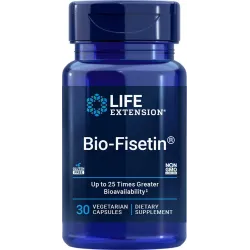
Related product
Related posts
-
 Is Conventional Pomegranate Extract Enough?
An abundance of clinical data has established pomegranate as a broad-spectrum, multi-modal defense against the...
Is Conventional Pomegranate Extract Enough?
An abundance of clinical data has established pomegranate as a broad-spectrum, multi-modal defense against the... -
Feed Your Brain!
Millions of people around the world are adhering to low-fat, low-cholesterol diets in an effort to reduce the impact...
-
Lipoic Acid Reverses Mitochondrial Decay
It is estimated that 85% of the oxygen contained in every breath you take is consumed by the mitochondria within each...
-
Vitamin C and Dihydroquercetin
Every day, our bodies are under continual assault by damaging agents known as free radicals. Generally, both internal...
-
How Resveratrol Combats Leading Causes of Death
In 1997, the first scientific paper on resveratrol was published showing that this polyphenol could prevent cancer in...