
 English
 Polski
 Deutsch
 Français
 ελληνικά
 Español
 Italiano
The Silent Epidemic of Iodine Deficiency
 Doctors say, “Cut back on the Salt…” But How Will We Obtain Our Iodine?
Those who consume heavily salted foods suffer an increased incidence of certain cancers.1,2 In susceptible individuals, high sodium intake spikes blood pressure.
In response to the dangers of consuming excess salt, Americans are restricting their sodium intake. This has led to a risky unintended consequence.
Typical Western diets are low in iodine. When iodized table salt is reduced, people can easily become iodine insufficient or deficient.
Inadequate iodine not only impairs thyroid function, but is also linked to increased risks of breast cancer and fibrocystic breast disease, along with fatigue and weight gain.
Fortunately, iodine is such a low-cost element that more of it can be added to multi-nutrient formulas that health-conscious individuals take each day
Widespread Iodine Use Eliminates Goiter Epidemic
 Most Americans over 60 years old remember the days of goiters, the unsightly thyroid gland enlargement visible on the neck that was wildly rampant. As many as one-third of the inhabitants of some parts of the country were affected.
Goiters were not just unattractive. They sometimes reached grotesque proportions, compressing adjacent structures like the trachea, necessitating surgical removal. If a pregnant woman had goiter, she was at risk for delivering a mentally impaired child.
The connection between goiter and deficiency of the trace element iodine was confirmed when a family doctor conducted an experiment on schoolgirls in 1916. Despite objections from local residents, Dr. David Marine administered what we now recognize as a very large dose of iodine: 170-340 mg (170,000 -340,000 micrograms or mcg) sodium iodide per day for a period of 10 days, repeated every 6 months for 2.5 years. Of the 900 girls with normal thyroids who received iodine supplementation, virtually none developed goiters, compared to 28% of the control group not receiving iodine.3,4
Recognition of iodine’s importance launched it into the realm of public health, felt to be too important an issue to leave to individuals, families, or physicians to remedy on their own. With no TV, radio, or internet, and much of the country rural or illiterate, how could the US ensure iodine intake nationwide? In 1924, the FDA introduced a voluntary program for adding iodine to table salt.5
From the 1950s to the 1970s, most Americans willingly complied by liberally shaking the salt shaker over anything and everything. Overt iodine deficiency largely became a thing of the past, and goiters became a rarity. By FDA guidelines, approximately one half teaspoon of iodized salt per day, or 3,000 mg (containing 1,150 mg sodium), provided the Recommended Daily Allowance of iodine of 150 mcg per day (the RDA is higher for pregnant or lactating women).6
Following the widespread application of the salt shaker was the recognition of the dangers of hypertension. Sodium from salt increased blood pressure and fluid retention in susceptible individuals.7 As a result, after goiter had been erased from the consciousness of most Americans, the public health message reversed and urged reduced use of salt. Salt use was demonized as the cardiovascular dangers of hypertension gained public recognition.
In the 21st century, many health-conscious people proudly declare their assiduous avoidance of salt, especially iodized table salt. Others have turned to alternative preparations, such as sea salt (containing very little iodine content), Kosher salt (containing no iodine), or potassium chloride-based salt substitutes (containing no iodine).
Iodine Has Been Forgotten
The public health message to limit salt use underlies a gradual and insidious return of iodine deficiency. The National Health and Nutrition Examination Surveys (NHANES) assessment of Americans’ health revealed a 50% reduction in iodine levels and a quadrupling of iodine deficiency in the period between 1971 and 1994. Twelve percent of the population surveyed from 1988 to 1994 were severely iodine deficient, judged by urinary levels of iodine.8 Women of childbearing age are at particular risk for iodine deficiency, with up to 36% evidencing low levels.9
Even goiters are staging a comeback. In my cardiology clinic, I now see about two or three patients with small to moderate goiters every day. So history repeats itself.
Your Iodized Salt Isn’t So Iodized
 If you rely on iodized salt for iodine, are you really meeting your body’s iodine needs?
A recent detailed analysis of several brands of commercially available salt showed that, after opening, iodine is lost rapidly from the product. Once the container is exposed to air, iodine content is nearly gone within four weeks after opening (even faster under conditions of high humidity). The study suggests that, even among people who use the salt shaker frequently for cooking and food, daily iodine intake may be below the recommended daily intake.10
The majority of salt used in processed foods is not iodized. While dairy products and baked foods (bread and related products) were formerly substantial sources of iodine, the iodine content of these foods has dropped due to changing practices by dairy producers and bakers.10-12
There’s no question that iodized salt worked to stop goiters during a time when the entire family liberally used salt, causing mothers to buy another canister every couple of months. But with modern efforts to reduce salt, a single canister can last 6 months or longer—completely devoid of iodine.
Does No Goiter Mean Perfect Thyroid Health?
 How much iodine is necessary for ideal health? Over the years since iodine and thyroid disease have been connected, the absence of goiter has been used as the index of iodine adequacy. Goiter suggests inadequate iodine; no goiter means sufficient iodine. (Note: While most goiters suggest low iodine, other conditions can occasionally be at fault, such as the overactive thyroid of Graves’ disease.)13
Twentieth century overuse of iodized salt led to complacency. Since iodized salts erase most goiters, medical professionals and the pubic mistakenly believed they knew what they needed about iodine. But does alleviating goiter also mean that thyroid function is optimized? If goiter represents the visible manifestation of hypothyroidism, is there an intake of iodine that can further improve thyroid function, even after goiter is reversed or suppressed?
The current RDA for iodine of 150 mcg per day for non-pregnant adults is indeed sufficient to prevent or reverse goiter. Iodine intake below the RDA over months to years leads to a thyroid gland that enlarges, or “hypertrophies,” an attempt to overcompensate by growing larger and thus better able to extract the little iodine available from the blood. If iodine deficiency continues, production of thyroid hormones, T3 and T4, begins to suffer, and hypothyroidism (low thyroid hormone levels) ensues. To counterbalance this, the pituitary gland produces higher levels of thyroid-stimulating hormone (TSH); TSH increases the production of T4—sometimes back to normal levels early on—and also stimulates thyroid growth.14
The Japanese provide some unique insights into higher intakes of iodine. Japanese consume a variety of foods from the ocean, including iodine-rich seaweeds like kelp and nori. Even foods grown in Japanese soil, such as fruits and vegetables, have iodine content several-fold higher than in most other parts of the world.15
Estimates of Japanese iodine intake vary widely, with values ranging from 378 mcg to as high as 13,800 mcg per day. The extraordinary range is partly due to the variable consumption of iodine-rich seaweeds.15-18 Because of the wide variation, Japanese researchers have argued that a “typical” Japanese intake of iodine is impossible to determine, though it is clearly several-fold higher than that of Americans.
Some authorities argue that greater iodine intake is responsible for the reduced incidence of fibrocystic breast disease, breast cancer, and thyroid disease in Japan.19 The evidence for a connection between iodine and fibrocystic breast disease is strongest.
Is the Japanese intake of iodine closer to “ideal”? If the RDA for iodine of 150 mcg yields some improvement of thyroid measures, would 300 mcg, 900 mcg, 10,000 mcg, or even 50,000 micrograms further improve thyroid function or overall health? There are proponents of very high doses of iodine with claims of extravagant results; however, the data have not yet been formally published. Unfortunately, studies examining these iodine doses have not yet been performed in the modern era using current methods. However, experiences
like those of the Japanese argue that the ideal dose of iodine is much greater than the current RDA in the United States.
Despite nearly 90 years of public health efforts, we are left with the impression that there are many stones yet unturned in the area of iodine and its role in health. The optimal dose of iodine for health appears to be among these unsolved mysteries
- Iodine is an essential trace element that has origins in primitive life on earth as a rudimentary antioxidant, anti-infective, and metabolic control factor.

- Iodized table salt was the solution offered in the early 20th century for epidemic iodine deficiency resulting in disfiguring goiters, or thyroid gland enlargement. Now that excessive salt use is discouraged by the American Heart Association, the American Medical Association, and other agencies, iodine deficiency is staging a comeback.
- Iodine deficiency is proving to be a risk not only for goiter and low thyroid hormone levels (hypothyroidism), but also for fibrocystic breast disease and breast cancer. Iodine deficiency is suggested by blood tests that also suggest hypothyroidism (such as higher thyroid-stimulating hormone, or TSH).
- The ideal dose for iodine is a topic of controversy. The Japanese obtain much greater quantities of iodine from habitual consumption of seaweed. Whether this provides lessons for non-Japanese populations is a fascinating question, though not fully settled.
- Iodine supplementation is easy to accomplish using various forms of iodine, such as kelp tablets or Iodoral®.
Iodine and the Lessons from Fibrocystic Breast Disease and Breast Cancer
 The most revealing insights into what quantity of iodine is ideal for health come from investigations into the relationship of iodine and breast health. Over the years, there have been several reports that suggest that iodine deficiency underlies increased risk for breast disease.
Apart from the fact that both the thyroid and breast have high concentrations of iodine,16 several other connections have been made:
- Breast cancer and thyroid disease are most common in post-menopausal females.20
- Women with breast cancer are more likely to have enlarged thyroid glands.20
- Japanese women have low risk for breast cancer—nearly the lowest in the world—compared to US women, who have much higher risk. Americans of Japanese descent have risk similar to that of Caucasian Americans.21
- Several Canadian studies examined the effects of iodine treatment of women with fibrocystic breast disease and showed marked improvement of symptoms with both sodium iodide and molecular iodine (I2).22 These observations are part of the basis for the popular high-dose form of iodine, Iodoral®, which contains a combination of 5 mg of iodine as I2, and 7.5 mg of potassium iodide.
The close relationship between iodine and healthy breasts free of fibrocystic disease and cancer might be interpreted to mean that all of us might do better with these greater intakes of iodine. Some people argue that the ideal dose of iodine is many times greater than the RDA. The Japanese experience argues that milligram-range (thousands of micrograms) intakes are safe and perhaps confer health benefits. Several studies have also suggested that doses in the milligram range are safe,22,23 although an initial period of increased TSH may develop, which usually then normalizes over a longer period.23-25
It is a fascinating argument, ripe with anecdotal stories of success. Do the purported benefits of higher iodine doses argue that all humans require milligram doses of iodine, even our children? Or, do higher doses simply restore depleted iodine stores that develop over years of inadequate intake?
Unfortunately, formal data outside of breast disease studies are virtually non-existent. Clinical trials using higher doses of iodine over a long period using modern measures of thyroid adequacy are required to answer such questions; these studies have not yet been performed. Until then, we remain in the dark over the ideal dose of iodine.
Are You Iodine Deficient?
 Ironically, health-conscious people are often most likely to develop iodine deficiency. One reason is that athletes and people engaged in heavy physical effort lose the trace element through perspiration, increasing their need for it.26 In one study of high school soccer players, 38.5% of the students were severely iodine deficient.27 Vegetarians also have substantially greater likelihood of iodine deficiency than carnivorous people, since foods of plant origin are less rich in iodine than animal-derived foods. One study demonstrated iodine deficiency in 25% of vegetarians and an incredible 80% of vegans, compared with only 9% of those consuming a mixed diet that contained meat.28
While urinary testing (“spot” or 24-hour urine collection) is used in epidemiologic studies to assess iodine adequacy in a population, the method suffers from great day-to-day variation in specific individuals29 and is therefore not generally used in daily practice.
With the difficulty in directly assessing a specific individual’s iodine status, indirect assessment can be made by looking for signs of hypothyroidism. When iodine intake is inadequate, thyroid hormone production suffers, resulting in hypothyroidism. The most common symptoms include abnormal fatigue, intolerance to cold, cold hands and feet, foggy thinking or difficulty concentrating, increased need for sleep, dry skin, thinning hair, and constipation. The presence of any of these symptoms is suggestive of low thyroid hormone levels and possibly low iodine levels.
Body temperature also provides insights into thyroid health, since the thyroid is the body’s thermoregulatory organ. By taking an oral temperature first thing upon waking before getting out of bed, you can get an approximation of the body’s lowest overnight temperature, which correlates with thyroid status.30 Oral temperatures consistently andlt;97.3° F may suggest hypothyroidism; temperatures consistently andlt;97.0° F almost certainly reflect hypothyroidism.
Laboratory assessment of thyroid status can be particularly helpful. Although the ideal range for the commonly measured thyroid-stimulating hormone (TSH) is debated, the newest data, from a study of 25,000 participants argues that the ideal TSH level is 1.4 or less, not the usual 5.5 upper limit still cited by some laboratories.31 The typical pattern of hypothyroidism is increased TSH with lower levels of free T4 and free T3 (although T3 and especially T4 can sometimes be normal).14,32 If iodine deficiency is at fault, thyroid measures generally gravitate back to a more favorable range with iodine replacement.
Should You Supplement With Iodine?
 Everyone needs iodine. Just as anyone deprived of vitamin C will develop scurvy, iodine is likewise essential—without it, health suffers profoundly.
Conventional wisdom holds that iodine deficiency is rare, since everyone presumably obtains sufficient quantities through iodized salt and processed foods. But the emerging data, including growing rates of iodine deficiency in the most health conscious individuals, suggests otherwise. Obtaining iodine through use of iodized salt is potentially unhealthy, since salt increases blood pressure and causes fluid retention in susceptible individuals. Increased sodium intake can also increase risk of certain cancers.1,2 Obtaining iodine from dietary salt is also unreliable, since the iodine content is so inconsistent.10
While the RDA for iodine remains at 150 mcg per day, it is not clear that 150 mcg is sufficient for perfect thyroid health. The dose for ideal health may be higher, perhaps substantially higher, in people who exercise, vegans, vegetarians, and anyone who has experienced a period of iodine scarcity that has depleted iodine stores.
Several forms of iodine are available as single supplements. Note that many multivitamins and multi-minerals contain the RDA of 150 mcg. Kelp is one useful source of multiple forms of iodine that mimics the Japanese experience of consuming seaweed.
In my clinic, as part of our effort to achieve heart disease prevention and reversal, I have patients increase iodine intake to 500-1,000 mcg per day. Side effects with this dose are very unusual.
If hypothyroidism is present, iodine intake may need to be individualized by your health care provider. Rarely, someone with hypothyroidism will develop an abnormal thyroid response to iodine.33 This occurs because iodine deficiency perturbs thyroid function; restoring iodine can worsen the situation temporarily and trigger transient excessive thyroid activity.
But don’t be frightened of iodine. It is no more dangerous than a modest application of iodized salt on your evening meal.
As word spreads about how much iodine insufficiency exists in the Western diet, I anticipate supplement companies will increase the amount of low-cost iodine contained in their multi-nutrient products.
Material used with permission of Life Extension. All rights reserved.
1. World J Gastroenterol. 2009 May 14;15(18):2204-13.
2. Asian Pac J Cancer Prev. 2003 Apr-Jun;4(2):119-24.
3. J Nutr. 2005 Apr;135(4):675-80.
4. Arch Intern Med. 1920;25(6):661-72.
5. http://www.fda.gov/AboutFDA/WhatWeDo/History/ProductRegulation/
SelectionsFromFDLIUpdateSeriesonFDAHistory/ucm091883.htm.
6. Duyuff RL. American Dietetic Association Complete Food and Nutrition Guide.
3rd ed. Hoboken, New Jersey: John Wiley andamp; Sons;2006.
7. J Nephrol. 2009 Mar-Apr;22(2):177-89.
8. J Clin Endocrinol Metab. 1998 Oct;83(10):3401-8.
9. Thyroid. 2005 Jul;15(7):692-9.
10. Environ Sci Technol. 2008 Feb 15;42(4):1315-23.
11. JAMA. 1977 Oct 17;238(26):1741-3.
12. Int J Vitam Nutr Res. 1996;66(4):342-9.
13. http://www.endocrine.niddk.nih.gov/pubs/graves/.
14. Monson JP. Assessment of thyroid function. In: Grossman A, ed. Clinical Endocrinology.
2nd ed. Wiley-Blackwell; 1998: 289-97.
15. J Radiat Res (Tokyo). 1972 Jun;13(2):81-90.
16. Altern Med Rev. 2008 Jun;13(2):116-27.
17. J Nutr Sci Vitaminol (Tokyo). 1986 Oct;32(5):487-95.
18. J Nutr Sci Vitaminol (Tokyo). 1985 Aug;31(4):409-15.
19. J Am Coll Nutr. 2006;25(1):1-11.
20. J Clin Endocrinol Metab. 1996 Mar;81(3):937-41.
21. Int J Cancer. 2002 Jun 10;99(5):747-50.
22. Can J Surg. 1993 Oct;36(5):453-60.
23. J Clin Endocrinol Metab. 2007 Jan;92(1):212-4.
24. Eur J Endocrinol. 1998 Jul;139(1):14-5.
25. Endocr Pract. 2003 Sep;9(5):363-9.
26. Horm Metab Res. 2005 Sep;37(9):555-8.
27. Arch Environ Health. 2001 May;56(3):271-7.
28. Ann Nutr Metab. 2003;47(5):183-5.
29. Eur J Endocrinol. 2001 May;144(5):461-5.
30. Altern Med Rev. 2006 Dec;11(4):278-93.
31. Arch Intern Med. 2008 Apr 28;168(8):855-60.
32. Weetman AP. Goitre and hypothyroidism. In: Grossman A, ed. Clinical Endocrinology.
2nd ed. 1998; Wiley-Blackwell:1998:315-27.
33. J Am Diet Assoc. 1990 Nov;90(11):1571-81.
Related products
-
-
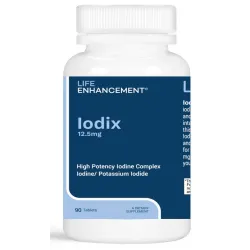
Iodix 12.5 mg
Price: 24,96 €Trace element essential for life The primary role of iodine is to support... -
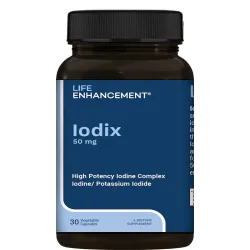
Iodix 50 mg
Price: 27,04 €Trace element essential for life The primary role of iodine is to support... -
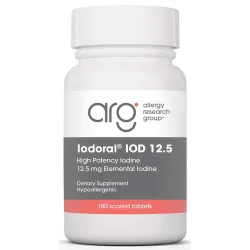
Iodoral ® 12,5 mg 180 tbl.
Price: 60,29 €High potency iodine/potassium iodide supplement Contains both iodine and...
Related posts
-
 Rebuild Aging Joints!
In this article, you will learn about UC-II®, or undenatured type II collagen, a novel intervention for both...
Rebuild Aging Joints!
In this article, you will learn about UC-II®, or undenatured type II collagen, a novel intervention for both... -
Is Conventional Pomegranate Extract Enough?
An abundance of clinical data has established pomegranate as a broad-spectrum, multi-modal defense against the...
-
Feed Your Brain!
Millions of people around the world are adhering to low-fat, low-cholesterol diets in an effort to reduce the impact...
-
Lipoic Acid Reverses Mitochondrial Decay
It is estimated that 85% of the oxygen contained in every breath you take is consumed by the mitochondria within each...
-
Vitamin C and Dihydroquercetin
Every day, our bodies are under continual assault by damaging agents known as free radicals. Generally, both internal...