
 English
 Polski
 Deutsch
 Français
 ελληνικά
 Español
 Italiano
Restore Youthful Cell Function via Autophagy
 With age, the insides of our cells accumulate damaged proteins and other debris that impair youthful function.
Humans are equipped with a built-in process that removes these toxic waste products to make room for healthy internal regeneration.
This natural, cell housekeeping process is called autophagy.
Autophagy declines with age and poor diet,1 causing cells to be damaged at an increasing rate.2
Animal studies show that stimulating autophagy leads to improvements in healthspan and increased longevity.3-5
Scientists at Life Extension®, in collaboration with the Insilico Medicine research group, identified two plant extracts that stimulate autophagy.
What Is Autophagy?
 Every cell in the body contains proteins and other components that serve vital metabolic purposes, from regulating cellular function to facilitating biochemical reactions.
When we are young, our internal cell machinery and its built-in cleaning process (autophagy) work at peak efficiency. This enables younger cells to clean up their metabolic waste.
The literal definition of autophagy is self-eating. In this process, the cell consumes and breaks down old cellular parts and debris.
This normal autophagy process supports healthy tissue function and promotes overall health.
But aging and poor diet contribute to lower rates of autophagy.1,4
As autophagy slows down, metabolic waste products and toxins accumulate. This slowdown compromises optimal cellular function.
The result is that cell health and function rapidly decline. This autophagy decline has been linked to many diseases of older age.4,6-10
Boosting Autophagy Extends Healthy Lifespan
 In recent years, scientists investigating ways to maximize lifespan and reduce risk of chronic disease have increasingly focused on autophagy.4,6-9
In several animal studies, stimulating autophagy led to increased longevity.3-5
One study activated autophagy in mice by altering gene expression. The lifespan of these mice was extended by an average of 17.2%.5
This would be the equivalent of increasing the average human lifespan in the U.S. from 78.5 years to 92 years.
These animals didn’t just live longer. They were also healthier.
They maintained lower body weight than normal mice well into older age. They had increased insulin sensitivity, indicating improved metabolic health. And they had better physical functioning.
When the scientists inhibited the autophagy process, all these beneficial effects disappeared. That indicates that autophagy stimulation was the factor responsible for the health and longevity improvements.
Ways to Stimulate Autophagy
 Research has shown that during times of intermittent fasting or caloric restriction, when nutrients are scarce, cells activate autophagy on their own.11,12
Physical exercise also stimulates autophagy.13
At a cellular level, two regulatory proteins play a key role in controlling autophagy: mTOR and AMPK.
The protein mTOR acts as a nutrient sensor. When caloric intake is high and nutrients are abundant, mTOR is activated and shuts off autophagy.14 Inhibiting excess mTOR activity, on the other hand, can lead to increased autophagy (removal of celluar waste).
Said differently, constant consumption of calories denies aging cells the ability of clean house via autophagy. Fasting 16-18 hours most days can facilitate autophagy, but most people need ancillary support in the form of drugs or nutrients that suppress excess mTOR.
AMPK is an activator of autophagy. Stimulating AMPK has been shown to improve metabolic health and lifespan.14-16
Using this knowledge, scientists set out to discover effective ways to stimulate autophagy.
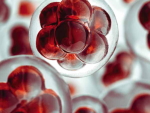 Autophagy is a process cells use to remove old and damaged parts and replace them with new ones. This helps keep cells clear of debris, youthful, and fully functional.
- With age comes a decrease in autophagy, combined with an increase in accumulated damage, accelerating the aging process and increasing risk for many chronic diseases.
- Scientists have identified two nutrients that can stimulate autophagy: the flavonoid luteolin and piperlongumine, a compound isolated from the long pepper plant.
- Working in overlapping and distinct ways, these nutrients can help to maintain cells clear of debris, and functioning to promote better health.
Working with advanced artificial intelligence (AI) technology, they focused on two nutrients, luteolin and piperlongumine.
 Cellular senescence is a major contributor to the aging process. Senescent cells have become old and dysfunctional but refuse to die off to make room for new, healthy cells.
Compounds called senolytics can remove these harmful cells from tissues.
One effective senolytic approach is a weekly combination of quercetin, theaflavins, and apigenin, together with the recently bioavailable fisetin.
Using senolytics and nutrients that activate autophagy is a way to help fight aging.
Autophagy helps to keep cells healthy and potentially functioning longer, while senolytics get rid of cells that are already damaged.
These interventions may help keep tissues in peak form and prevent age-related deterioration and disease.
Each has been shown to induce autophagy individually via overlapping and distinct mechanisms.
Luteolin Protects Brain and Body
 Luteolin belongs to the flavonoid group of plant nutrients. It is found in several fruits, vegetables, and herbs, including broccoli, parsley, and thyme.
Luteolin has been shown to both increase AMPK activity and inhibit mTOR signaling.17-20 The cumulative effect is that autophagy is activated, and cellular metabolism is improved.
In animals and cell culture, treatment with luteolin has been shown to protect the brain, heart, and tested cells.21-29
For example, animals with a brain injury fared better than their non-treated counterparts when given luteolin.27
Autophagy was activated, inflammation was reduced, and the overall outcome and recovery from the injury were improved.
Piperlongumine Keeps Cells Youthful
 Piperlongumine is a compound isolated from the long pepper plant.
Like luteolin, piperlongumine has been shown in animal and cell-culture studies to activate autophagy by inhibiting mTOR signaling.30,31 There is also evidence that it activates AMPK.32
But piperlongumine encourages autophagy in another way that’s distinct from luteolin.
A protein known as beclin-1 is a critical activator of autophagy. Another protein, called Bcl-2, binds to beclin-1 and blocks its ability to start autophagy.
Piperlongumine causes the release of beclin-1 from Bcl-2, allowing it to activate autophagy.30
Luteolin and piperlongumine hold promise in maximizing healthy autophagy, rejuvenating cells, and maintaining their optimal function.
Summary
 Autophagy declines with age and poor diet, causing cells to become overwhelmed by damage and metabolic waste at an increasing rate. This leads to accelerated aging and increased risk for chronic disease.
Stimulating autophagy can help prevent this slide into old age, improving the health and extending the lifespan of animals.
Scientists at the Insilico Medicine group in collaboration with Life Extension® have found two nutrients that activate autophagy: luteolin and piperlongumine.
In overlapping and distinct ways, they stimulate beneficial autophagy. Together, they can help keep cells functioning youthfully for improved health.
 Discovery of new medicines and nutraceuticals often takes years. Insilico Medicine has created a paradigm shift by using advanced artificial intelligence that reduces development time and costs by analyzing thousands of data points to identify nutrients that reduce aging factors.
With over 120 scientists, the Insilico Medicine group uses deep-learning artificial intelligence technology to identify compounds to circumvent deleterious aging processes.
A unique aspect of Insilico’s research into dietary ingredients is referred to as “geroprotectors” that mimic the young, healthy signaling state in older human tissues. This research has allowed Insilico to identify nutrients that target aging factors such as cellular senescence, declining stem cell health and reduced autophagy. These nutrient-based “geroprotectors” provide research-driven data to create formulations that foster longevity and increased lifespan.
In addition to nutrient discovery, Insilico works with global pharma and biotech to discover new therapeutics to treat cancer, immune dysfunction and senescence
Material used with permission of Life Extension. All rights reserved.
- Cuervo AM, Bergamini E, Brunk UT, et al. Autophagy and aging: the importance of maintaining “clean” cells. Autophagy. 2005 Oct-Dec;1(3):131-40.
- Martinez-Lopez N, Athonvarangkul D, Singh R. Autophagy and aging. Adv Exp Med Biol. 2015;847:73-87.
- Fernandez AF, Sebti S, Wei Y, et al. Disruption of the beclin 1-BCL2 autophagy regulatory complex promotes longevity in mice. Nature. 2018 Jun;558(7708):136-40.
- Hansen M, Rubinsztein DC, Walker DW. Autophagy as a promoter of longevity: insights from model organisms. Nat Rev Mol Cell Biol. 2018 Sep;19(9):579-93.
- Pyo JO, Yoo SM, Ahn HH, et al. Overexpression of Atg5 in mice activates autophagy and extends lifespan. Nat Commun. 2013;4:2300.
- Abdellatif M, Sedej S, Carmona-Gutierrez D, et al. Autophagy in Cardiovascular Aging. Circ Res. 2018 Sep 14;123(7):803-24.
- Nakamura S, Yoshimori T. Autophagy and Longevity. Mol Cells. 2018 Jan 31;41(1):65-72.
- Ren J, Zhang Y. Targeting Autophagy in Aging and Aging-Related Cardiovascular Diseases. Trends Pharmacol Sci. 2018 Dec;39(12):1064-76.
- Wong SQ, Kumar AV, Mills J, et al. Autophagy in aging and longevity. Hum Genet. 2020 Mar;139(3):277-90.
- Xie Z, Klionsky DJ. Autophagosome formation: core machinery and adaptations. Nat Cell Biol. 2007 Oct;9(10):1102-9.
- Madeo F, Carmona-Gutierrez D, Hofer SJ, et al. Caloric Restriction Mimetics against Age-Associated Disease: Targets, Mechanisms, and Therapeutic Potential. Cell Metab. 2019 Mar 5;29(3):592-610.
- Mattson MP, Moehl K, Ghena N, et al. Intermittent metabolic switching, neuroplasticity and brain health. Nat Rev Neurosci. 2018 Feb;19(2):63-80.
- Vainshtein A, Hood DA. The regulation of autophagy during exercise in skeletal muscle. J Appl Physiol (1985). 2016 Mar 15;120(6):664-73.
- Kim J, Kundu M, Viollet B, et al. AMPK and mTOR regulate autophagy through direct phosphorylation of Ulk1. Nat Cell Biol. 2011 Feb;13(2):132-41.
- Burkewitz K, Weir HJ, Mair WB. AMPK as a Pro-longevity Target. Exp Suppl. 2016;107:227-56.
- Li Y, Chen Y. AMPK and Autophagy. Adv Exp Med Biol. 2019;1206: 85-108.
- Ou HC, Pandey S, Hung MY, et al. Luteolin: A Natural Flavonoid Enhances the Survival of HUVECs against Oxidative Stress by Modulating AMPK/PKC Pathway. Am J Chin Med. 2019;47(3): 541-57.
- Wang Q, Wang H, Jia Y, et al. Luteolin reduces migration of human glioblastoma cell lines via inhibition of the p-IGF-1R/PI3K/AKT/mTOR signaling pathway. Oncol Lett. 2017 Sep;14(3):3545-51.
- Zhang L, Han YJ, Zhang X, et al. Luteolin reduces obesity-associated insulin resistance in mice by activating AMPKalpha1 signalling in adipose tissue macrophages. Diabetologia. 2016 Oct;59(10):2219-28.
- Zhang X, Zhang QX, Wang X, et al. Dietary luteolin activates browning and thermogenesis in mice through an AMPK/PGC1alpha pathway-mediated mechanism. Int J Obes (Lond). 2016 Dec;40(12):1841-9.
- Cao Z, Zhang H, Cai X, et al. Luteolin Promotes Cell Apoptosis by Inducing Autophagy in Hepatocellular Carcinoma. Cell Physiol Biochem. 2017;43(5):1803-12.
- Gelabert-Rebato M, Wiebe JC, Martin-Rincon M, et al. Enhancement of Exercise Performance by 48 Hours, and 15-Day Supplementation with Mangiferin and Luteolin in Men. Nutrients. 2019 Feb 6;11(2).
- Hu J, Man W, Shen M, et al. Luteolin alleviates post-infarction cardiac dysfunction by up-regulating autophagy through Mst1 inhibition. J Cell Mol Med. 2016 Jan;20(1):147-56.
- Liao Y, Xu Y, Cao M, et al. Luteolin Induces Apoptosis and Autophagy in Mouse Macrophage ANA-1 Cells via the Bcl-2 Pathway. J Immunol Res. 2018;2018:4623919.
- Luo Y, Shang P, Li D. Luteolin: A Flavonoid that Has Multiple Cardio-Protective Effects and Its Molecular Mechanisms. Front Pharmacol. 2017;8:692.
- Verschooten L, Barrette K, Van Kelst S, et al. Autophagy inhibitor chloroquine enhanced the cell death inducing effect of the flavonoid luteolin in metastatic squamous cell carcinoma cells. PLoS One. 2012;7(10):e48264.
- Xu J, Wang H, Lu X, et al. Posttraumatic administration of luteolin protects mice from traumatic brain injury: implication of autophagy and inflammation. Brain Res. 2014 Sep 25;1582:237-46.
- You Y, Wang R, Shao N, et al. Luteolin suppresses tumor proliferation through inducing apoptosis and autophagy via MAPK activation in glioma. Onco Targets Ther. 2019;12:2383-96.
- Aziz N, Kim MY, Cho JY. Anti-inflammatory effects of luteolin: A review of in vitro, in vivo, and in silico studies. J Ethnopharmacol. 2018 Oct 28;225:342-58.
- Liu J, Liu W, Lu Y, et al. Piperlongumine restores the balance of autophagy and apoptosis by increasing BCL2 phosphorylation in rotenone-induced Parkinson disease models. Autophagy. 2018;14(5):845-61.
- Makhov P, Golovine K, Teper E, et al. Piperlongumine promotes autophagy via inhibition of Akt/mTOR signalling and mediates cancer cell death. Br J Cancer. 2014 Feb 18;110(4):899-907.
- Ryu J, Kim MJ, Kim TO, et al. Piperlongumine as a potential activator of AMP-activated protein kinase in HepG2 cells. Nat Prod Res. 2014;28(22):2040-3.
Related product
-
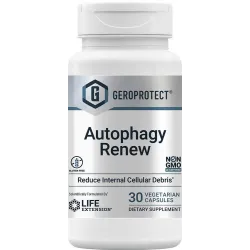
GEROPROTECT® Autophagy Renew
Price: 22,69 €Encourages “cellular housekeeping” and longevity Innovative longevity...
Related posts
-
 Is Conventional Pomegranate Extract Enough?
An abundance of clinical data has established pomegranate as a broad-spectrum, multi-modal defense against the...
Is Conventional Pomegranate Extract Enough?
An abundance of clinical data has established pomegranate as a broad-spectrum, multi-modal defense against the... -
Lipoic Acid Reverses Mitochondrial Decay
It is estimated that 85% of the oxygen contained in every breath you take is consumed by the mitochondria within each...
-
How Resveratrol Combats Leading Causes of Death
In 1997, the first scientific paper on resveratrol was published showing that this polyphenol could prevent cancer in...
-
Autoimmune Diseases part 1
Autoimmune diseases are characterized by the body's immune responses being directed against its own tissues, causing...
-
Autoimmune Diseases part 2
In a healthy body, circulating antibodies attack and destroy pathogenic invaders by means of humoral or cell-mediated...