
 English
 Polski
 Deutsch
 Français
 ελληνικά
 Español
 Italiano
GlyNAC: Glycine and NAC as Support for Glutathione Production
GlyNAC, a combination of glycine and NAC, supports the body’s production of glutathione - one of the key elements of cellular protection against oxidative stress. Discover why scientists are studying this combination in the context of aging, mitochondria, and cellular balance.
What Is GlyNAC?
 GlyNAC is a combination of two compounds: glycine and N-acetylcysteine, or NAC. This combination is interesting primarily because both compounds participate in the pathway leading to the synthesis of glutathione — one of the key elements of cellular defense against oxidative stress. [1], [2], [3], [5]
Glutathione, often abbreviated as GSH, is a tripeptide made of three amino acids: glutamate, cysteine, and glycine. Its synthesis requires the availability of appropriate precursors, which is why any discussion of glutathione should also include the question of whether the body has the necessary building blocks to produce it. [2]
Why Glutathione Matters
The importance of glutathione comes from its role in maintaining cellular redox balance. GSH participates in neutralizing reactive oxygen species, protecting cells from oxidative damage, and cooperating with antioxidant enzymes. For this reason, it is one of the important components of cellular protection, especially under conditions of increased oxidative stress. [2], [3]
Oxidative Stress and Antioxidant Defense
Oxidative stress refers to a situation in which the production of reactive oxygen species exceeds the body’s defensive capacity. With age, oxidative stress and mitochondrial dysfunction are increasingly described as factors associated with cellular aging and the deterioration of cellular function. [4]
Glycine + NAC as Precursors
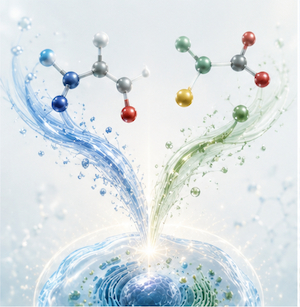 In this context, GlyNAC is interesting not as a “trendy supplement,” but as a combination of two precursors needed for glutathione synthesis. NAC provides cysteine, while glycine is a direct component of the glutathione molecule. [2], [5]
One of the key studies on this topic is the 2011 paper by Sekhar and colleagues. The authors showed that in older adults, reduced glutathione levels may result from decreased synthesis, and that providing precursors — cysteine and glycine — may restore glutathione synthesis and reduce oxidative stress. [6]
This study is important because it shifts the focus from the simple question “Is there a lack of glutathione?” to the more practical question: does the body have access to the ingredients needed to synthesize it? If the problem is limited synthesis, then supporting the availability of cysteine and glycine becomes biologically logical. [6]
GlyNAC and Healthy Aging
The most scientifically justified context for GlyNAC concerns older adults. In this group, several phenomena are more commonly observed together: lower glutathione levels, higher oxidative stress, impaired mitochondrial function, chronic low-grade inflammation, and a decline in physical performance. [1], [4], [6], [7], [8]
In a pilot clinical trial involving older adults, 24 weeks of GlyNAC supplementation was associated with improvement in glutathione deficiency, reduced oxidative stress, and improvements in mitochondrial function, inflammation, insulin resistance, endothelial function, muscle strength, gait speed, and cognition. However, this was a pilot study, so the results should be considered promising but requiring further confirmation. [1]
Another important study was a randomized placebo-controlled clinical trial in older adults. In this study, 16 weeks of GlyNAC supplementation was described as safe and well tolerated in the study group, and the authors reported improvements in glutathione levels, oxidative stress, mitochondrial function, inflammation, and selected parameters related to physical function and aging. Here, too, caution is needed, because the study was relatively small. [7]
Independent Research and Study Limitations
 It is also worth analysing an independent 2022 study involving 114 healthy older adults. In this study, GlyNAC was well tolerated, but the primary endpoint was not met in the whole study population. A post hoc analysis suggested an increase in glutathione levels among individuals with higher oxidative stress and lower baseline glutathione status. [8]
This study is particularly important because it helps avoid overly broad promises. The results suggest that GlyNAC may make the most sense where there is a greater need for glutathione — for example, in the presence of higher oxidative stress — rather than necessarily as a supplement “for everyone.” [8]
GlyNAC in Selected Chronic Conditions
Beyond aging, GlyNAC has also been studied in selected chronic conditions, but the data are more preliminary. In a study of older patients with HIV, GlyNAC supplementation was associated with improvements in oxidative stress, mitochondrial function, inflammation, endothelial function, insulin resistance, strength, and cognition. However, this was an open-label study, so its strength of evidence is limited. [9]
In a pilot study of patients with type 2 diabetes, GlyNAC taken for 14 days improved selected parameters of mitochondrial fuel oxidation and reduced insulin resistance. The authors described these findings as preliminary, proof-of-concept results — a basis for further research rather than a ready therapeutic recommendation. [10]
What Glycine Contributes
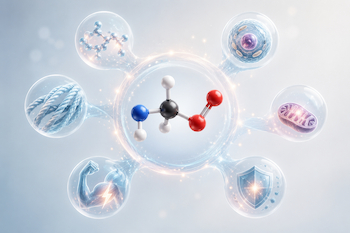 Glycine itself is the simplest amino acid, but it performs many metabolic functions. It participates, among other things, in the synthesis of glutathione, collagen, creatine, heme, and purines. In the context of GlyNAC, however, its most important role is as one of the amino acids that build glutathione. [2], [11], [12]
The metabolic role of glycine in this article is its participation in glutathione synthesis and its cooperation with NAC in providing precursors needed to rebuild the GSH pool. [2], [6]
What NAC Contributes
NAC, or N-acetylcysteine, is a derivative of cysteine. In medicine, it is known, among other uses, as a mucolytic agent and as an antidote in paracetamol overdose. From the perspective of glutathione, the most important point is that NAC can increase the availability of cysteine, and cysteine is one of the key substrates needed for GSH synthesis. [5], [13]
NAC is often described as a compound with antioxidant and anti-inflammatory properties, but much of its importance comes not from simply “scavenging free radicals,” but from its effect on cysteine availability and, indirectly, on glutathione synthesis. [5]
Safety, Context and Responsible Use
 At the same time, NAC is not a completely neutral substance. In the literature, it is generally described as well tolerated, but adverse effects may include gastrointestinal symptoms, and safety depends on the dose, route of administration, and the health status of the person using it. [5]
In older adults, chronically ill individuals, people taking multiple medications, or those with kidney disease, liver disease, cardiovascular disease, asthma, or significant gastrointestinal sensitivity, the use of NAC or GlyNAC should be considered cautiously and preferably discussed with a physician. Clinical studies are conducted in specific populations, doses, and conditions, and their results cannot be automatically applied to every individual. [5], [8], [13]
Summary
The most honest conclusion from the current evidence is this: GlyNAC may support glutathione production, especially in older adults or in people burdened with higher oxidative stress, because it provides two precursors needed for GSH synthesis. At the same time, it should not be presented as a universal supplement for everyone or as a means of “reversing aging.” [1], [6], [7], [8]
GlyNAC is therefore an interesting and biologically logical combination of glycine and NAC. Its main value lies in supporting the pathway of glutathione synthesis, not in marketing claims about “miraculous anti-aging.” The strongest data concern older adults, while in chronic conditions the available findings are promising but still preliminary and require further research. [1], [7], [8], [9], [10]
Material used with permission of Life Extension. All rights reserved.
Frequently Asked Questions About GlyNAC, Glycine, NAC, and Glutathione
What is GlyNAC?
GlyNAC is a combination of glycine and N-acetylcysteine, or NAC. Both compounds are important from the perspective of glutathione synthesis: glycine is one of the amino acids that build glutathione, while NAC provides cysteine — another necessary component. [1], [2], [5]
Why is glutathione so important?
Glutathione, often abbreviated as GSH, is one of the key elements of cellular defense against oxidative stress. It participates in maintaining redox balance, protecting cells from oxidative damage, and supporting the function of antioxidant enzymes. [2], [3]
Why is it not enough to talk only about glutathione itself?
Because the body must have the building blocks needed to produce glutathione. Its synthesis requires, among other compounds, cysteine and glycine. Studies on aging suggest that in older adults, the problem may be not only low glutathione levels, but also reduced capacity to synthesize it. [2], [6]
Why is glycine combined specifically with NAC?
NAC is a source of cysteine, while glycine is a direct component of the glutathione molecule. The combination of these two compounds therefore has a logical metabolic rationale: it provides two precursors needed for GSH synthesis. [2], [5], [6]
For whom may GlyNAC be especially important?
The strongest data concern older adults. In this group, studies have observed lower glutathione status, higher oxidative stress, mitochondrial dysfunction, inflammation, and deterioration in some functional parameters. GlyNAC has been studied precisely as a way to support glutathione synthesis and cellular protective mechanisms in this context. [1], [7], [8]
Does GlyNAC “reverse aging”?
It should not be presented this way. In studies, the authors reported improvements in many parameters associated with aging, but these were small clinical trials conducted in specific groups. It is more accurate to write that GlyNAC is a promising combination studied in the context of supporting glutathione, oxidative stress, mitochondria, and body function in older adults. [1], [7], [8]
Has GlyNAC also been studied in chronic conditions?
Yes, but the data are more preliminary. GlyNAC has been studied, among others, in older patients with HIV and in people with type 2 diabetes. The results were promising in terms of oxidative stress, mitochondrial function, and insulin resistance, but these were small or pilot studies, so they should not be treated as ready therapeutic recommendations. [9], [10]
What does glycine do on its own?
Glycine is an amino acid involved, among other things, in the synthesis of glutathione, collagen, creatine, heme, and purines. In the context of GlyNAC, however, its most important role is as one of the components needed to build glutathione. [2], [11], [12]
What does NAC do on its own?
NAC, or N-acetylcysteine, is a derivative of cysteine. From the perspective of glutathione, its importance comes mainly from the fact that it can increase cysteine availability, and cysteine is one of the amino acids needed for GSH synthesis. NAC also has medical uses, including as a mucolytic agent and as an antidote in paracetamol overdose. [5], [13]
Is GlyNAC safe?
In clinical studies involving older adults, GlyNAC was described as well tolerated at the doses and durations studied. This does not mean, however, that everyone should use GlyNAC without consideration. Particular caution should be taken by older adults, chronically ill individuals, people taking multiple medications, and those with kidney disease, liver disease, cardiovascular disease, asthma, or significant gastrointestinal sensitivity. [5], [7], [8], [13]
Does GlyNAC replace medical treatment or a healthy diet?
No. GlyNAC should be treated as potential support for a selected metabolic mechanism — glutathione synthesis — not as a substitute for medical treatment, management of chronic diseases, diet, physical activity, or medical advice. Current studies are interesting, but they still require confirmation in larger and longer clinical trials. [1], [7], [8], [9], [10]
- Kumar P. et al., “Glycine and N-acetylcysteine (GlyNAC) supplementation in older adults improves glutathione deficiency, oxidative stress, mitochondrial dysfunction, inflammation, insulin resistance, endothelial dysfunction, genotoxicity, muscle strength, and cognition: Results of a pilot clinical trial,” Clinical and Translational Medicine, 2021. PubMed | Full text PMC
- Lu S.C., “Glutathione synthesis,” Biochimica et Biophysica Acta, 2013. PubMed | Full text PMC
- Forman H.J., Zhang H., Rinna A., “Glutathione: overview of its protective roles, measurement, and biosynthesis,” Molecular Aspects of Medicine, 2009. PubMed | Full text PMC
- Cui H., Kong Y., Zhang H., “Oxidative Stress, Mitochondrial Dysfunction, and Aging,” Journal of Signal Transduction, 2012. PubMed | Full text PMC
- Tenório M.C.S. et al., “N-Acetylcysteine (NAC): Impacts on Human Health,” Antioxidants, 2021. PubMed | Full text PMC
- Sekhar R.V. et al., “Deficient synthesis of glutathione underlies oxidative stress in aging and can be corrected by dietary cysteine and glycine supplementation,” American Journal of Clinical Nutrition, 2011. PubMed | Full text PMC
- Kumar P. et al., “Supplementing Glycine and N-Acetylcysteine (GlyNAC) in Older Adults Improves Glutathione Deficiency, Oxidative Stress, Mitochondrial Dysfunction, Inflammation, Physical Function, and Aging Hallmarks: A Randomized Clinical Trial,” The Journals of Gerontology: Series A, 2023. PubMed | Full text PMC
- Lizzo G. et al., “A Randomized Controlled Clinical Trial in Healthy Older Adults to Determine Efficacy of Glycine and N-Acetylcysteine Supplementation on Glutathione Redox Status and Oxidative Damage,” Frontiers in Aging, 2022. PubMed | Full text PMC | Journal page
- Kumar P. et al., “Supplementing Glycine and N-acetylcysteine (GlyNAC) in Aging HIV Patients Improves Oxidative Stress, Mitochondrial Dysfunction, Inflammation, Endothelial Dysfunction, Insulin Resistance, Genotoxicity, Strength, and Cognition,” AIDS, 2020. PubMed | Full text PMC
- Sekhar R.V., “GlyNAC (Glycine and N-Acetylcysteine) Supplementation Improves Impaired Mitochondrial Fuel Oxidation and Lowers Insulin Resistance in Patients with Type 2 Diabetes: Results of a Pilot Study,” Antioxidants, 2022. PubMed | Full text PMC
- Razak M.A. et al., “Multifarious Beneficial Effect of Nonessential Amino Acid, Glycine: A Review,” Oxidative Medicine and Cellular Longevity, 2017. PubMed | Full text PMC
- Johnson A.A., Cuellar T.L., “Glycine and aging: Evidence and mechanisms,” Ageing Research Reviews, 2023. PubMed
- Ershad M. et al., “N-Acetylcysteine,” StatPearls / NCBI Bookshelf. NCBI Bookshelf
Related products
-
Glycine 1000 mg
Price: 16,00 €Amino acid that promotes healthy sleep Promotes relaxation Promotes... -
N-Acetyl-L-Cysteine (NAC)
Price: 15,31 €Powerful antioxidant for liver & immune health Promotes healthy cellular...
Related posts
-
 Is Conventional Pomegranate Extract Enough?
An abundance of clinical data has established pomegranate as a broad-spectrum, multi-modal defense against the...
Is Conventional Pomegranate Extract Enough?
An abundance of clinical data has established pomegranate as a broad-spectrum, multi-modal defense against the... -
Lipoic Acid Reverses Mitochondrial Decay
It is estimated that 85% of the oxygen contained in every breath you take is consumed by the mitochondria within each...
-
Vitamin C and Dihydroquercetin
Every day, our bodies are under continual assault by damaging agents known as free radicals. Generally, both internal...
-
Green Tea
Scientific research on the health benefits of green tea is expanding exponentially, with more than 1,500 articles...
-
The Lancet Reports Extremely Positive Data on Green Tea
As medical researchers continue to uncover the health benefits of green tea, one might think that these discoveries...