
 English
 Polski
 Deutsch
 Français
 ελληνικά
 Español
 Italiano
Magnesium Intake Linked to Longer Life After Heart Attack
Magnesium Intake Linked to Longer Life After Heart Attack
 People with a history of heart attack who reported a high intake of magnesium had a lower risk of death from cardiovascular disease or any cause during a median follow-up of12.4 years, according to a study published in Frontiers in Cardiovascular Medicine.*
The study included 4,365 men and women, 60-80 years old, in the Alpha Omega Cohort, an ongoing follow-up of participants in the 40-month Alpha Omega Trial.
A high magnesium intake, defined as greater than 320 mg per day, was associated with a 28% lower risk of dying from cardiovascular disease and a 22% lower risk of death from any cause compared to a low intake, defined as less than 283 mg.
The protective effect of magnesium was even stronger in patients who were being treated with diuretic drugs. In this group, the risk of mortality from cardiovascular disease was 45% lower among those with high magnesium compared to those with low magnesium.
Editor’s Note: An adequate intake of magnesium may be important for lowering long-term mortality risk after myocardial infarction, especially in patients treated with diuretics.
* Front Cardiovasc Med. 2022 Aug 12;9:936772.
Fish Oil Supplementation Associated with Reduced Risk of COPD
 Taking fish oil supplements on a regular basis is associated with a reduced risk of chronic obstructive pulmonary disease, according to a study published in Clinical Nutrition.*
COPD, a chronic airway obstruction that leads to irreversible decline in lung function, is accelerated by inflammation. Researchers collected data from 484,414 participants in the UK Biobank, aged 40 – 69 years.
The individuals answered questionnaires on fish oil supplements used between 2006 and 2010 and were then followed up for an average of nine years.
Results showed that habitual fish oil supplementation was associated with a 12% reduced risk of COPD, regardless of a person’s genetic predisposition for the condition.
Editor’s Note: Several studies have suggested that omega-3 fatty acids may have anti-inflammatory properties. Future studies should further evaluate the mechanisms underlying this relationship to aid efforts to prevent incident COPD.
*Clinical Nutrition, December 2022. https://doi.org/10.1016/j.clnu.2022.10.002
Quercetin Phytosome® Reduces Allergy Symptoms
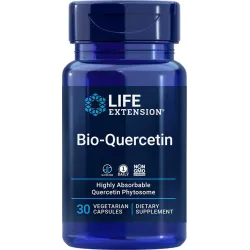
 A clinical trial revealed a decrease in seasonal allergy symptoms among men and women who received quercetin, the European Review of Medical Pharmacology reported.*
The trial included 66 participants 22–78 years old, with allergic eye and nasal symptoms related to pollen or dust exposure. Half of the participants received 200 mg of quercetin and the others received a placebo daily for four weeks. Quality-of-life questionnaires and other tests evaluating eye and nasal symptoms were administered before and after the treatment period to grade and compare severity of the symptoms.
Among participants who received quercetin, allergy symptoms at the conclusion of the trial, including eye itching, sneezing, nasal discharge, and sleep disorder, were significantly improved compared to the placebo group.
Editor’s Note: Quercetin is a flavonoid found in fruits, tea, onions, and herbs. The quercetin phytosome® used in the study is a food-grade bioavailable quercetin formulation.
* Eur Rev Med Pharmacol Sci. 2022 Jun;26(12):4331-4345.
Chlorophyllin May Help Improve Inflammatory Bowel Disease, Animal Study Shows
 In an animal study published in the American Journal of Physiology Gastrointestinal and Liver Physiology, chlorophyllin was shown to improve inflammatory bowel disease, a disease class that encompasses Crohn’s disease and ulcerative colitis.*
Chlorophyllin is a derivative of chlorophyll, the green pigment in plants. Researchers induced chronic colitis in a group of mice and supplemented some of the animals’ diets with chlorophyllin in an amount reflective of consuming 200 grams to 400 grams per day of spinach in humans.
Supplementation with chlorophyllin prevented weight loss and colon shortening, improved stool consistency, decreased blood in the stool, and decreased premature mortality. Treated animals had less intestinal mucosal damage and inflammation.
Editor’s Note: These results demonstrate that oral administration of chlorophyllin can significantly impede the biogenesis of experimental colitis.
* Am J Physiol Gastrointest Liver Physiol. 2022 Aug 1;323(2):G102-G113.
Material used with permission of Life Extension. All rights reserved.
Related products
-
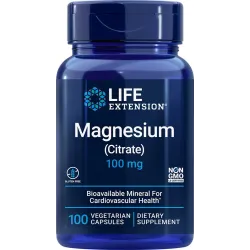
Magnesium (Citrate)
Price: 16,75 €Get the magnesium your body needs Is required as a cofactor in hundreds of... -
-
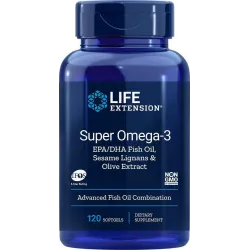
Super Omega-3 EPA/DHA with Sesame Lignans &...
Price: 40,41 €Get enough omega-3s Powerful cardiovascular and cognitive health support... -
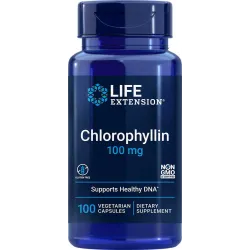
Chlorophyllin
Price: 24,60 €Potent antioxidant & DNA health support Supports mitochondrial health...
Related posts
-
 Rebuild Aging Joints!
In this article, you will learn about UC-II®, or undenatured type II collagen, a novel intervention for both...
Rebuild Aging Joints!
In this article, you will learn about UC-II®, or undenatured type II collagen, a novel intervention for both... -
Is Conventional Pomegranate Extract Enough?
An abundance of clinical data has established pomegranate as a broad-spectrum, multi-modal defense against the...
-
Next-Generation Nutrients for Rapid Relief of Joint Pain
In recent years, adults seeking relief from the crippling pain of arthritis have had to choose between expensive,...
-
Lipoic Acid Reverses Mitochondrial Decay
It is estimated that 85% of the oxygen contained in every breath you take is consumed by the mitochondria within each...
-
Vitamin C and Dihydroquercetin
Every day, our bodies are under continual assault by damaging agents known as free radicals. Generally, both internal...