
 English
 Polski
 Deutsch
 Français
 ελληνικά
 Español
 Italiano
Low Testosterone Promotes Abdominal Obesity in Aging Men
 As men age, many become trapped in a vicious cycle that leads to life-threatening abdominal obesity.
No matter how much they exercise or how little they eat, these men are unable to shed this excess weight that accumulates in their belly. Published studies have shown that low testosterone and obesity reinforce each other, trapping men in a spiral of weight gain and hormonal imbalance.1-5
In spite of this widespread threat to men’s health, most physicians do not test for testosterone levels in their obese male patients. If they did, millions of men could be protected against the scourge of metabolic syndrome, type 2 diabetes, high blood pressure, atherosclerosis, and cancer.
If you happen to be one of these plagued men, please have your testosterone blood levels measured and share the results with your doctor.
This article describes the science linking testosterone insufficiency to weight gain and its deadly cousin, the metabolic syndrome. You’ll learn how testosterone determines body composition and fat accumulation. You’ll read why experts now recommend testosterone testing for most men of middle age and beyond. And you’ll see compelling evidence for the role of testosterone therapy as a means of promoting weight loss.
Testosterone Rules
 Throughout our lives, sex hormones controls how we look, feel, and even think. Studies in the past few years show that low testosterone levels are strongly correlated with obesity and the metabolic syndrome in men.1 In fact, there’s now compelling evidence that low testosterone levels are not only markers for developing the metabolic syndrome, but that they are likely to be part of the cause.2,3
Those findings have led experts to strongly recommend testosterone blood testing in most older men, and especially those with type 2 diabetes or the metabolic syndrome.1,4,5 And many are recommending supplemental testosterone as a way of fending off obesity, insulin resistance, and the other components of the metabolic syndrome.6-8 Let’s examine these findings and recommendations carefully, to help men decide if testing and testosterone treatment might be right for them.
Reversing a Longstanding Relationship
 It’s long been clear that obesity and the metabolic syndrome are linked to low testosterone levels; the question has been which is cause and which is effect.9 The traditional view was that obesity came first, and that low testosterone was simply the result. That makes sense, because fat tissue is an extremely active hormonal modulator, particularly for testosterone and estrogen. An enzyme in fat tissue known as aromatase converts testosterone into estradiol, the major estrogen in humans. Excess aromatase activity decreases testosterone and increases estrogen levels, resulting in a host of deleterious body changes for men.10,11 Low serum testosterone concentrations are closely correlated with high body mass index (BMI), along with elevated ratios of body fat to lean mass.12,13
But we’re learning that this is only half of the story. Abundant evidence developed over the past few years now shows that, while obesity does cause low testosterone, low testosterone causes obesity. Indeed, low testosterone levels may be among the earliest detectable signs that a man is undergoing the bodily changes that will later become apparent as obesity and the metabolic syndrome.2
An early clue was provided by studies of men undergoing testosterone-lowering androgen deprivation therapies for prostate cancer. Reducing men’s testosterone levels decreased insulin sensitivity and increased body fat mass.14 In one study, more than 50% of men undergoing long-term androgen deprivation therapy developed the metabolic syndrome, manifested in particular by increased abdominal obesity and elevated blood sugar.15 And men who have lost their testicles to cancer generally develop increased BMI and are at elevated risk for the metabolic syndrome.16
Conversely, men who receive testosterone replacement therapy for hypogonadism (diminished testosterone production) experience slower progression from metabolic syndrome to diabetes or cardiovascular disease.17 In those men, testosterone has beneficial effects on insulin regulation, lipid profiles, and blood pressure.17 And in healthy aging men, higher natural testosterone levels are associated with higher insulin sensitivity and a reduced risk of developing the metabolic syndrome.18
Declining Testosterone Levels—Why We Find It So Hard to Lose Weight
 Beginning in middle age, men’s testosterone levels begin a steady decline, culminating in the so-called “andropause,” a state defined as partial androgen deficiency.19,20 On the same time-scale, men begin to gain weight as fat, and to lose lean muscle mass. It’s now abundantly clear that these two parallel processes are related—that is, the decline in testosterone levels is a direct cause of middle-aged men’s “battle of the bulge.”21 That’s a literal statement: age-associated testosterone decline is closely associated with deposition of deep abdominal fat, a component of the metabolic syndrome.22
But how does testosterone affect obesity and metabolism? In fact, testosterone, like most hormones, has multiple target tissues, and a correspondingly large and diverse set of effects. We now understand, for example, that testosterone plays a vital role in how our bodies balance glucose, insulin, and fat metabolism.23 One mechanism is its powerful stimulation of insulin sensitivity in men, which can have a major impact when levels fall.24 In fact, experts now recognize low testosterone levels as an independent risk factor for insulin resistance (“pre-diabetes”), type 2 diabetes itself, and the full-blown metabolic syndrome with all of its consequences.25-28
Declining testosterone levels are also closely linked to a steady rise in markers of inflammation such as C-reactive protein (CRP).29 Inflammation plays a critical role in development of obesity and many of its related conditions such as atherosclerosis and cancer. And inflammation is also intimately involved in insulin resistance and type 2 diabetes.29 At the same time, the fat deposited as a result of a testosterone deficiency pumps out increasing levels of inflammatory cytokines. That fuels the cycle of inflammation, insulin resistance, and cardiovascular disease that constitutes the metabolic syndrome.30
Together, these findings demonstrate the intimate relationships between testosterone and a host of chronic conditions. Indeed, current thinking is that many of the typical ailments of older men, such as atherosclerosis, hypertension, diabetes, lower urinary tract symptoms, and erectile dysfunction are not in fact separate and distinct entities.23 Rather, they are seen as being integrally related through their dependence on testosterone levels. That’s a radical shift in the way we should be thinking about men’s health!
- Obesity causes men’s testosterone levels to drop, as aromatase in adipose tissue converts testosterone to estrogen.
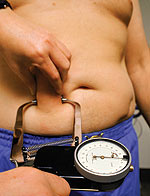
- New evidence demonstrates that the opposite is also true: falling testosterone levels predict (and cause) development of obesity and the metabolic syndrome.
- Testosterone has a powerful impact on many features of metabolism, most notably glucose, insulin, and fat regulation.
- The decline in testosterone levels with age may explain why so many men at or beyond middle age have trouble shedding weight even through diet and exercise.
- Experts are now calling for checking testosterone levels regularly as the best early indicator of risk for the metabolic syndrome.
- Careful testosterone replacement therapy has proven effective in reducing body weight, fat content, and insulin resistance.
- All men, not only those already overweight or obese, should have regular testosterone checks.
Testosterone Levels — Early Warning of Impending Disaster
 The association of declining testosterone levels with obesity, the metabolic syndrome, and cardiovascular disease is so strong that many experts now recommend checking testosterone levels to provide early warning of the metabolic syndrome.1
Testosterone deficiency has been found to be a significant and independent risk factor for metabolic syndrome, even in non-obese older men.31 It causes not only increased fat mass, but also triggers elevations in fasting insulin levels, a late marker of developing metabolic syndrome.7,32
The association of low testosterone levels with metabolic syndrome is independent of age—that is, even younger men with low testosterone are immediately at increased risk for the syndrome.33 Somewhat surprisingly, the association is also independent of BMI, pointing to testosterone’s multiple effects on regulation of glucose, insulin, and lipid metabolism.34 It has recently been proposed, in fact, that low testosterone levels be included in the very definition of the metabolic syndrome, because of the consistency with which it occurs.35
There’s an obvious implication here. Subtle deficiencies in testosterone may be present long before obesity and other more obvious manifestations of the metabolic syndrome become evident.34 That makes it vital for all men, not just the overweight or obese, to have testosterone levels checked regularly by a reliable laboratory. Be sure that both total testosterone and free testosterone are ordered—both have been associated with metabolic syndrome.35
When having your blood tested for total and free testosterone, make sure you also order tests for PSA to rule out existing prostate cancer, estradiol to determine whether you need to take an aromatase inhibiting drug in case estrogen levels are too high, and a CBC/chemistry test to measure liver function and blood cell counts.
Restoring Healthy Testosterone Levels
 What should you do if your testosterone level comes back low? There’s a growing body of evidence suggesting that careful testosterone replacement therapy is protective against many features of the metabolic syndrome and can enhance blood sugar control.36 Given early enough, testosterone therapy may slow or even halt the progression from early metabolic syndrome to diabetes or cardiovascular disease.17 In one study of diabetic men with low testosterone, oral treatment improved their glucose control and decreased their abdominal obesity. A beneficial side effect was reduction in erectile dysfunction.6 Other placebo-controlled studies have shown decreases in whole body, total, and subcutaneous abdominal fat mass, accompanied by increases in lean body mass, as a result of testosterone therapy.8
Of course it’s important to check and to follow testosterone levels when considering treatment. Achieving testosterone levels within the existing reference ranges may not be sufficient to combat obesity and metabolic syndrome. Some testosterone-dependent biological functions require higher levels than others, and those thresholds differ among men.37
Finally, a word about testosterone therapy and the risk of prostate cancer. For decades we believed (and some still do) that higher serum testosterone concentrations contribute to the risk of prostate cancer. More recently, considerable data have emerged suggesting a more complex picture, and indicating that in fact testosterone therapy may not be nearly as risky as once assumed.38 In fact, according to Dr. Abraham Morgentaler of Harvard’s Beth Israel Deaconess Medical Center, “One of the more interesting changes over the last several years has been the growing acceptance of the use of testosterone therapy in men with a prior history of prostate cancer, with early data indicating minimal risk of cancer recurrence or progression.”38 Other experts in the field agree that the risks of testosterone therapy are often exaggerated and should not outweigh the benefits of treatment.21
Indeed, Dr. Morgentaler goes on to note, new evidence suggests that it is not high, but low serum testosterone that is responsible for many features of prostate cancer risk.38 Since we now know that low testosterone causes obesity, and we further know that obesity is a risk factor for cancer,39,40 there is certainly a logical basis for the idea that low testosterone is indirectly a cancer risk factor.
Summary
Testosterone and body fat content have an intricate and bidirectional relationship. Excess body fat causes low testosterone, but low testosterone also causes excess body fat. Testosterone regulates many facets of energy balance, with an especially powerful impact on glucose, insulin, and fat metabolism. The deadly results of low testosterone therefore exceed simply causing obesity. Low testosterone also dramatically raises men’s risk for the metabolic syndrome, a major health threat for anyone at or beyond middle age. Experts now recommend regular testing for any man at risk for low testosterone, including aging men.1 If your testosterone levels prove to be low, you should consider testosterone treatment in consultation with a physician.
Material used with permission of Life Extension. All rights reserved.
1. Spark RF. Testosterone, diabetes mellitus, and the metabolic syndrome. Curr Urol Rep. 2007 Nov;8(6):467-71.
2. Laaksonen DE, Niskanen L, Punnonen K, et al. Testosterone and sex hormone-binding globulin predict the metabolic syndrome and diabetes in middle-aged men. Diabetes Care. 2004 May;27(5):1036-41.
3. Haider A, Gooren LJ, Padungtod P, Saad F. Concurrent improvement of the metabolic syndrome and lower urinary tract symptoms upon normalisation of plasma testosterone levels in hypogonadal elderly men. Andrologia. 2009 Feb;41(1):7-13.
4. Dhindsa S, Miller MG, McWhirter CL, et al. Testosterone concentrations in diabetic and nondiabetic obese men. Diabetes Care. 2010 Jun;33(6):1186-92.
5. Available at: http://www.livescience.com/health/obesity-lowers-testosterone-100503.html. Accessed June 23, 2010.
6. Boyanov MA, Boneva Z, Christov VG. Testosterone supplementation in men with type 2 diabetes, visceral obesity and partial androgen deficiency. Aging Male. 2003 Mar;6(1):1-7.
7. Lunenfeld B. Testosterone deficiency and the metabolic syndrome. Aging Male. 2007 Jun;10(2):53-6.
8. Bhasin S, Parker RA, Sattler F, et al. Effects of testosterone supplementation on whole body and regional fat mass and distribution in human immunodeficiency virus-infected men with abdominal obesity. J Clin Endocrinol Metab. 2007 Mar;92(3):1049-57.
9. Chen RY, Wittert GA, Andrews GR. Relative androgen deficiency in relation to obesity and metabolic status in older men. Diabetes Obes Metab. 2006 Jul;8(4):429-35.
10. Cohen PG. Obesity in men: the hypogonadal-estrogen receptor relationship and its effect on glucose homeostasis. Med Hypotheses. 2008;70(2):358-60.
11. Zumoff B. Hormonal abnormalities in obesity. Acta Med Scand Suppl. 1988;723:153-60.
12. Diaz-Arjonilla M, Schwarcz M, Swerdloff RS, Wang C. Obesity, low testosterone levels and erectile dysfunction. Int J Impot Res. 2009 Mar-Apr;21(2):89-98.
13. Kaplan SA, Meehan AG, Shah A. The age related decrease in testosterone is significantly exacerbated in obese men with the metabolic syndrome. What are the implications for the relatively high incidence of erectile dysfunction observed in these men? J Urol. 2006 Oct;176(4 Pt 1):1524-7; discussion 27-8.
14. Schubert M, Jockenhovel F. Testosterone and the metabolic syndrome. Urologe A. 2010 Jan;49(1):47-50.
15. Braga-Basaria M, Dobs AS, Muller DC, et al. Metabolic syndrome in men with prostate cancer undergoing long-term androgen-deprivation therapy. J Clin Oncol. 2006 Aug 20;24(24):3979-83.
16. Nuver J, Smit AJ, Wolffenbuttel BH, et al. The metabolic syndrome and disturbances in hormone levels in long-term survivors of disseminated testicular cancer. J Clin Oncol. 2005 Jun 1;23(16):3718-25.
17. Makhsida N, Shah J, Yan G, Fisch H, Shabsigh R. Hypogonadism and metabolic syndrome: implications for testosterone therapy. J Urol. 2005 Sep;174(3):827-34.
18. Muller M, Grobbee DE, den Tonkelaar I, Lamberts SW, van der Schouw YT. Endogenous sex hormones and metabolic syndrome in aging men. J Clin Endocrinol Metab. 2005 May;90(5):2618-23.
19. Corrales JJ, Burgo RM, Garca-Berrocal B, et al. Partial androgen deficiency in aging type 2 diabetic men and its relationship to glycemic control. Metabolism. 2004 May;53(5):666-72.
20. Anawalt BD, Merriam GR. Neuroendocrine aging in men. Andropause and somatopause. Endocrinol Metab Clin North Am. 2001 Sep;30(3):647-69.
21. Dandona P, Rosenberg MT. A practical guide to male hypogonadism in the primary care setting. Int J Clin Pract. 2010 May;64(6):682-96.
22. Tong PC, Ho CS, Yeung VT, et al. Association of testosterone, insulin-like growth factor-I, and C-reactive protein with metabolic syndrome in Chinese middle-aged men with a family history of type 2 diabetes. J Clin Endocrinol Metab. 2005 Dec;90(12):6418-23.
23. Yassin AA, Saad F, Gooren LJ. Metabolic syndrome, testosterone deficiency and erectile dysfunction never come alone. Andrologia. 2008 Aug;40(4):259-64.
24. Kapoor D, Malkin CJ, Channer KS, Jones TH. Androgens, insulin resistance and vascular disease in men. Clin Endocrinol (Oxf). 2005 Sep;63(3):239-50.
25. Stanworth RD, Jones TH. Testosterone in obesity, metabolic syndrome and type 2 diabetes. Front Horm Res. 2009;37:74-90.
26. Rice D, Brannigan RE, Campbell RK, et al. Men’s health, low testosterone, and diabetes: individualized treatment and a multidisciplinary approach. Diabetes Educ. 2008 Nov-Dec;34 Suppl 5:97S-112S; quiz 13S-4S.
27. Saad F. The role of testosterone in type 2 diabetes and metabolic syndrome in men. Arq Bras Endocrinol Metabol. 2009 Nov;53(8):901-7.
28. Chubb SA, Hyde Z, Almeida OP, et al. Lower sex hormone-binding globulin is more strongly associated with metabolic syndrome than lower total testosterone in older men: the Health in Men Study. Eur J Endocrinol. 2008 Jun;158(6):785-92.
29. Dandona P, Dhindsa S, Chaudhuri A, Bhatia V, Topiwala S, Mohanty P. Hypogonadotrophic hypogonadism in type 2 diabetes, obesity and the metabolic syndrome. Curr Mol Med. 2008 Dec;8(8):816-28.
30. Traish AM, Saad F, Guay A. The dark side of testosterone deficiency: II. Type 2 diabetes and insulin resistance. J Androl. 2009 Jan-Feb;30(1):23-32.
31. Rabijewski M, Papierska L, Kozakowski J, Zgliczynski W. The relationship between androgens concentrations (testosterone and dehydroepiandrosterone sulfate) and metabolic syndrome in non-obese elderly men. Endokrynol Pol. 2007 Nov-Dec;58(6):496-504.
32. Niskanen L, Laaksonen DE, Punnonen K, Mustajoki P, Kaukua J, Rissanen A. Changes in sex hormone-binding globulin and testosterone during weight loss and weight maintenance in abdominally obese men with the metabolic syndrome. Diabetes Obes Metab. 2004 May;6(3):208-15.
33. Blouin K, Despres JP, Couillard C, et al. Contribution of age and declining androgen levels to features of the metabolic syndrome in men. Metabolism. 2005 Aug;54(8):1034-40.
34. Laaksonen DE, Niskanen L, Punnonen K, et al. Sex hormones, inflammation and the metabolic syndrome: a population-based study. Eur J Endocrinol. 2003 Dec;149(6):601-8.
35. Goncharov NP, Katsya GV, Chagina NA, Gooren LJ. Three definitions of metabolic syndrome applied to a sample of young obese men and their relation with plasma testosterone. Aging Male. 2008 Sep;11(3):118-22.
36. Heufelder AE, Saad F, Bunck MC, Gooren L. Fifty-two-week treatment with diet and exercise plus transdermal testosterone reverses the metabolic syndrome and improves glycemic control in men with newly diagnosed type 2 diabetes and subnormal plasma testosterone. J Androl. 2009 Nov-Dec;30(6):726-33.
37. Saad F, Gooren L, Haider A, Yassin A. Effects of testosterone gel followed by parenteral testosterone undecanoate on sexual dysfunction and on features of the metabolic syndrome. Andrologia. 2008 Feb;40(1):44-8.
38. Morgentaler A. Rapidly shifting concepts regarding androgens and prostate cancer. ScientificWorldJournal. 2009;9:685-90.
39. Gotay CC. Cancer prevention: major initiatives and looking into the future. Expert Rev Pharmacoecon Outcomes Res. 2010 Apr;10(2):143-54.
40. Tsugane S, Inoue M. Insulin resistance and cancer: epidemiological evidence. Cancer Sci. 2010 May;101(5):1073-9.
Related product
-

Super Miraforte with Standardized Lignans
Price: 56,91 €Maintain optimized testosterone levels Natural support for healthy...
Related posts
-
 Is Conventional Pomegranate Extract Enough?
An abundance of clinical data has established pomegranate as a broad-spectrum, multi-modal defense against the...
Is Conventional Pomegranate Extract Enough?
An abundance of clinical data has established pomegranate as a broad-spectrum, multi-modal defense against the... -
Lipoic Acid Reverses Mitochondrial Decay
It is estimated that 85% of the oxygen contained in every breath you take is consumed by the mitochondria within each...
-
Vitamin C and Dihydroquercetin
Every day, our bodies are under continual assault by damaging agents known as free radicals. Generally, both internal...
-
How Resveratrol Combats Leading Causes of Death
In 1997, the first scientific paper on resveratrol was published showing that this polyphenol could prevent cancer in...
-
Autoimmune Diseases part 1
Autoimmune diseases are characterized by the body's immune responses being directed against its own tissues, causing...