
 English
 Polski
 Deutsch
 Français
 ελληνικά
 Español
 Italiano
Oral Collagen Improves Skin and Joint Health
 Collagen makes up about one-third of all protein in the body.1
In the skin and joints, collagen provides structural support, strength and resiliency.
In youth, damaged collagen is continually repaired and replaced.
But with age, the body’s ability to replenish collagen stores declines by about 1.5% each year.2
This loss of collagen is a major contributor to skin aging and loss of joint function.
Whole collagen is a large, complex protein that cannot be easily digested or absorbed into the body.
But scientists have discovered that partially broken-down collagen—known as hydrolyzed collagen—is highly absorbable.
Consumed orally, hydrolyzed collagen stimulates the production of new collagen in the skin and joints.3-5
What Is Collagen?
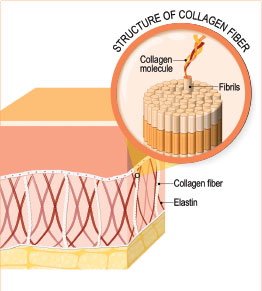 There are connective tissues throughout the body, in the skin, bone, cartilage, tendons, ligaments, and more. They give structure, strength, and support to tissues.
All connective tissues have protein fibers within them that influence the mechanics and strength of that tissue. Collagen makes up a large proportion of these fibers.
In humans, most of the collagen is present in three forms:2
- Type I collagen is especially prevalent in the skin, where it makes up over 80% of all collagen. This collagen is the reinforcement structure of connective tissues. It has great tensile strength, resisting stretching and tearing. It is also prevalent in bone, tendons, and ligaments.
- Type II collagen is primarily found in cartilage, the connective tissue that protects the bones at the joints.
- Type III collagen is found in skin, cartilage, blood vessels, and throughout many other soft tissues.
Collagen is produced primarily by connective tissue cells called fibroblasts and by cartilage cells called chondrocytes.
But they produce less collagen as we age, gradually declining at a rate of about 1.5% per year.2
In the skin, this loss of collagen has immediate, visible effects. Skin loses elasticity and strength, leading to sagging, fine lines, and wrinkles.6
In joints, age-related changes in the collagen structure means articular cartilage no longer functions effectively. This contributes, in part, to the joint stiffness and the movement limitations characteristic of patients with osteoarthritis.8
How Oral Collagen Works
 Whole collagen is difficult to digest and too large to be absorbed into the body.
But scientists have found that if the collagen is prepared in such a way that it is already broken into fragments, as much as 95% of it can be absorbed and distributed to tissues throughout the body.2,9
Collagen formulated in this manner is known as hydrolyzed collagen. Once these collagen pieces reach the skin or cartilage, they stimulate repair and rejuvenation of tissues.
Researchers have identified at least two different mechanisms by which this happens:
- Collagen fragments directly activate fibroblasts and chondrocytes, stimulating them to increase their production of collagen and other connective tissue components.2-5
- Immune system cells recognize the collagen fragments and activate a process that stimulates fibroblasts, further energizing their production of collagen and other connective-tissue proteins.7
In skin, this improves age-related skin changes, increasing skin hydration and elasticity while reducing fine lines, wrinkles, and dryness.7
In joints, chondrocytes are stimulated to repair and replace damaged collagen, leading to less pain and greater mobility.3
Healthier, Younger-Looking Skin
 Many clinical trials have assessed the ability of oral collagen to improve skin health and appearance. In just the last two years, a number of reviews have summarized their findings.7,10,11
The vast majority of published studies have found that skin appearance and markers of skin health are improved after oral intake of collagen.7
Collectively, these studies show that collagen intake results in:
- Improved skin hydration,
- Improved skin elasticity (the ability to stretch and bounce back without sagging),
- Improved skin texture and condition, and
- Reduction of lines and wrinkles, including crow’s feet.
Oral collagen also benefits the nails, improving flexibility and texture.
One joint Korean and Japanese study published in the journal Nutrients evaluated the use of hydrolyzed collagen peptides (short chains of amino acids that provide the building blocks for collagen) in adult women.12
Subjects were randomized to receive either the collagen or a placebo. After six weeks, measurements of skin hydration in the collagen group were 7.23-fold greater than the placebo group.
By week 12, the visual improvement in skin wrinkles was 10.5-fold greater in the collagen group than in the placebo group. Skin elasticity also improved significantly in the collagen group.
Other similar studies have shown comparable findings.2,7,10
Several studies have evaluated collagen intake for skin conditions, including dryness, cellulite, and skin ulcers (open sores that don’t heal properly).10
For all these conditions, oral hydrolyzed collagen has a positive impact. It accelerates skin healing, improves skin hydration, reverses signs of skin aging, and reduces cellulite.
Collagen and Joint Health
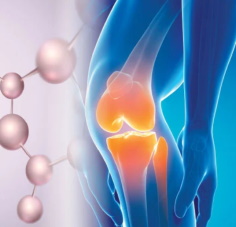 Joints are structures where two or more bones meet.
Cartilage keeps joints like the knee, elbow, fingers, shoulder, and hip working through a full range of motion without pain. This lubricated, rubber-like tissue lines the ends of the bones, cushioning them so that they can glide over each other smoothly without damaging each other.
With wear and tear, joint cartilage breaks down. Over time, it becomes thin, rough, and cracked, and can even erode completely, leaving bone on bone.
This condition is referred to as osteoarthritis, the most common form of arthritis. It results in inflammation, pain, and significant reduction in the range of motion of joints.
Osteoarthritis is a major source of chronic pain and disability in older adults. Knee osteoarthritis is the most common condition leading to surgical joint replacement.13
Collagen is vital to the structure and health of cartilage, along with other supportive structures around joints, such as ligaments and tendons.
Hydrolyzed collagen has been shown to protect cartilage and repair it in an animal model of osteoarthritis, and to improve measures of osteoarthritis severity and quality of life in a clinical trial.14,15
In a mouse model of osteoarthritis, hydrolyzed collagen increased total cartilage area, increased the number of chondrocytes producing cartilage, and increased the extracellular matrix, which can be thought of as the scaffolding for surrounding tissues.
All of these benefits led to preserved cartilage volume and function.14 At the same time, it was associated with a reduction in signs of painful inflammation in the joint.
Collagen has also been tested in human subjects.
A randomized, controlled trial evaluated the use of collagen peptides in patients suffering from osteoarthritis.15 Subjects receiving placebo had no change in the severity of their symptoms, including pain. But those receiving collagen had significant reduction in pain.
What you need to know: Collagen for Healthy Skin and Strong Joints
 Collagen is the most prevalent protein in the body.
- Collagen lends strength and resilience to many tissues, including the skin and joints.
- With age, collagen production drops. In skin, this contributes to dryness and wrinkles. In joints, this leads to dysfunction and, over time, osteoarthritis.
- Oral collagen that has been partially broken down, known as hydrolyzed collagen, is easily absorbed into the body and distributed to tissues.
- Human studies have found that hydrolyzed collagen improves markers of skin aging and health, improving hydration and elasticity while reducing fine lines and wrinkles.
- Collagen has also been found to stimulate cartilage repair in joints, improving range of motion and reducing pain.
Individuals taking collagen also had improvements in other symptoms, like stiffness, physical function, and quality of life.
Summary
 Collagen is the most prominent protein in the body. It gives form and strength to various tissues, including the skin and joints. Collagen production declines with advancing age. In the skin, that leads to dryness and wrinkles. In joints, it causes a breakdown in cartilage that can result in arthritis.
A partially broken-down collagen, known as hydrolyzed collagen, is highly absorbable and can reach the skin and joints. There, it stimulates collagen production and improves the overall health and youthfulness of these tissues.
Clinical trials have demonstrated that intake of hydrolyzed collagen results in younger-looking skin, improving hydration and reducing wrinkles, while protecting joints and improving their function.
Material used with permission of Life Extension. All rights reserved.
- Alcock RD, Shaw GC, Burke LM. Bone Broth Unlikely to Provide Reliable Concentrations of Collagen Precursors Compared With Supplemental Sources of Collagen Used in Collagen Research. Int J Sport Nutr Exerc Metab. 2019 May 1;29(3):265-72.
- Sibilla S, Godfrey M, Brewer S, et al. An Overview of the Beneficial Effects of Hydrolysed Collagen as a Nutraceutical on Skin Properties: Scientific Background and Clinical Studies. The Open Nutraceuticals Journal. 2015 03/04;8(1):29-42.
- Oesser S, Seifert J. Stimulation of type II collagen biosynthesis and secretion in bovine chondrocytes cultured with degraded collagen. Cell Tissue Res. 2003 Mar;311(3):393-9.
- Postlethwaite AE, Seyer JM, Kang AH. Chemotactic attraction of human fibroblasts to type I, II, and III collagens and collagen-derived peptides. Proc Natl Acad Sci U S A. 1978 Feb;75(2):871-5.
- Torita A, Miyamoto A, Hasegawa Y. The effects of scallop shell extract on collagen synthesis. Fisheries Science. 2007 2007/11/01;73(6):1388-94.
- Czajka A, Kania EM, Genovese L, et al. Daily oral supplementation with collagen peptides combined with vitamins and other bioactive compounds improves skin elasticity and has a beneficial effect on joint and general wellbeing. Nutr Res. 2018 Sep;57:97-108.
- Barati M, Jabbari M, Navekar R, et al. Collagen supplementation for skin health: A mechanistic systematic review. J Cosmet Dermatol. 2020 May 21.
- Hügle T, Geurts J, Nüesch C, et al. Aging and osteoarthritis: an inevitable encounter? Journal of aging research. 2012;2012:950192-.
- Oesser S, Adam M, Babel W, et al. Oral administration of (14)C labeled gelatin hydrolysate leads to an accumulation of radioactivity in cartilage of mice (C57/BL). J Nutr. 1999 Oct;129(10):1891-5.
- Choi FD, Sung CT, Juhasz ML, et al. Oral Collagen Supplementation: A Systematic Review of Dermatological Applications. J Drugs Dermatol. 2019 Jan 1;18(1):9-16.
- Lupu MA, Gradisteanu Pircalabioru G, Chifiriuc MC, et al. Beneficial effects of food supplements based on hydrolyzed collagen for skin care (Review). Exp Ther Med. 2020 Jul;20(1):12-7.
- Kim DU, Chung HC, Choi J, et al. Oral Intake of Low-Molecular-Weight Collagen Peptide Improves Hydration, Elasticity, and Wrinkling in Human Skin: A Randomized, Double-Blind, Placebo-Controlled Study. Nutrients. 2018 Jun 26;10(7).
- Available at: https://www.hopkinsmedicine.org/health/treatment-tests-and-therapies/knee-replacement-surgery-procedure. Accessed September 22, 2020.
- Dar QA, Schott EM, Catheline SE, et al. Daily oral consumption of hydrolyzed type 1 collagen is chondroprotective and anti-inflammatory in murine posttraumatic osteoarthritis. PLoS One. 2017;12(4):e0174705.
- Kumar S, Sugihara F, Suzuki K, et al. A double-blind, placebo-controlled, randomised, clinical study on the effectiveness of collagen peptide on osteoarthritis. J Sci Food Agric. 2015 Mar 15;95(4):702-7.
Related product
-
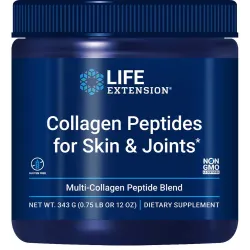
Collagen Peptides for Skin & Joints
Price: 30,03 €Healthy, beautiful skin. Comfortable joints. Contain Types I, II &...
Related posts
-
 Rebuild Aging Joints!
In this article, you will learn about UC-II®, or undenatured type II collagen, a novel intervention for both...
Rebuild Aging Joints!
In this article, you will learn about UC-II®, or undenatured type II collagen, a novel intervention for both... -
Next-Generation Nutrients for Rapid Relief of Joint Pain
In recent years, adults seeking relief from the crippling pain of arthritis have had to choose between expensive,...
-
Vitamin C and Dihydroquercetin
Every day, our bodies are under continual assault by damaging agents known as free radicals. Generally, both internal...
-
Green Tea
Scientific research on the health benefits of green tea is expanding exponentially, with more than 1,500 articles...
-
The Lancet Reports Extremely Positive Data on Green Tea
As medical researchers continue to uncover the health benefits of green tea, one might think that these discoveries...