English
 Polski
 Deutsch
 Français
 ελληνικά
 Español
 Italiano
38,57 €

Quantity:
Total:
Total products:
Total shipping: To be determined
Total:
Science-based food supplements

Manufacturer: Life Extension

In stock
| Quantity | Price | You Save |
|---|---|---|
| 2 | 26,04 € | Up to 2,17 € |
| 4 | 25,50 € | Up to 6,51 € |
By buying this product you can collect up to 27 loyalty points. Your cart will total 27 points that can be converted during next order into a voucher of 1,35 €.

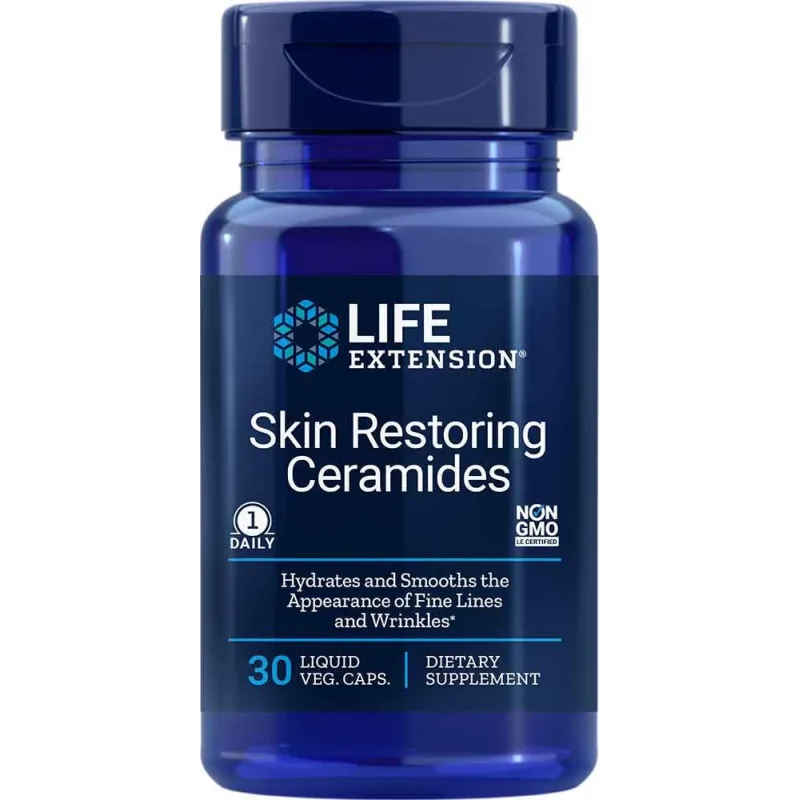
Skin Supporting Ceramides
30 liquid vegetarian capsules
Item Catalog Number: 02096EU

The ceramides naturally present in our skin give it that young, supple appearance. Wheat contains these same ceramides, but you can't get enough from wheat in your diet to make a difference. Skin Restoring Ceramides is a convenient oral supplement that smooths the appearance of wrinkles, hydrating and revitalizing your skin from within.
Benefits at a Glance:
Our Skin Supporting Ceramides is made with the exact same ultra-pure ceramide wheat oil as the above studies. So add Skin Supporting Ceramides to your daily beauty regimen, and nourish your skin from within.
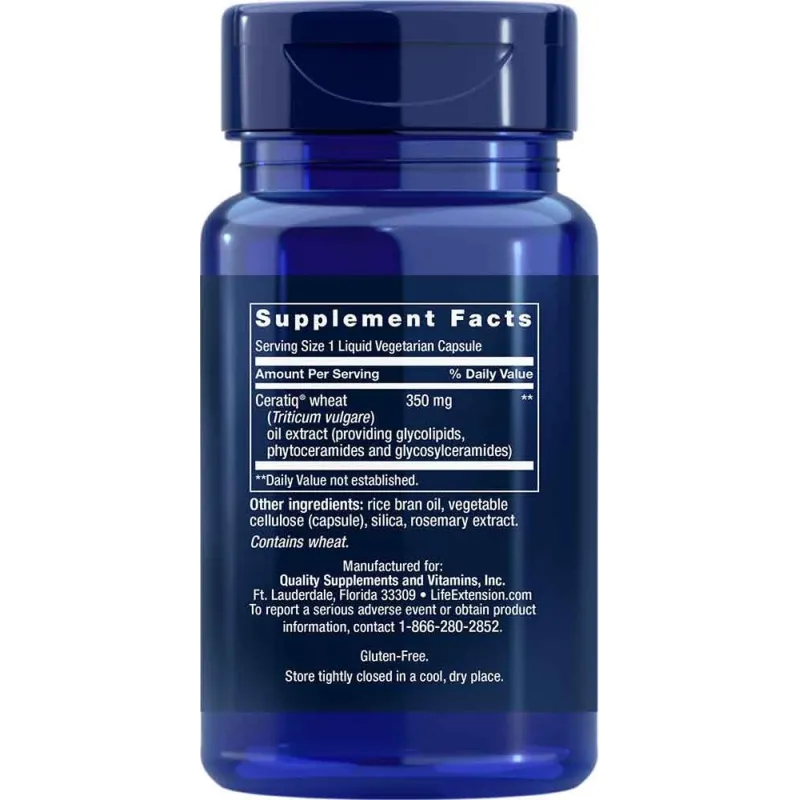
Serving Size 1 liquid vegetarian capsule
| Amount Per Day (1 capsule): | |
|---|---|
| Ceratiq® wheat (Triticum vulgare) oil extract (providing glycolipids, phytoceramides and glycosylceramides) | 350 mg |
| Ingredients: Wheat germ oil, rice bran oil, capsule (hydroxypropylmethylcellulose), anti-caking agent (silicon dioxide [nano]), antioxidant (extracts of rosemary) | |
Non-GMO
Dosage and Use
Take one (1) capsule daily with food or as recommended by a healthcare practitioner.
Warnings
KEEP OUT OF REACH OF CHILDREN
DO NOT EXCEED RECOMMENDED DOSE
Do not purchase if outer seal is broken or damaged.
When using nutritional supplements, please consult with your physician if you are undergoing treatment for a medical condition or if you are pregnant or lactating.
38,57 €
56,47 €
40,55 €
24,87 €
Skin Supporting Ceramides provide phytoceramides derived from wheat, which are plant-based lipids that mimic the natural ceramides found in human skin. Ceramides are essential components of the skin's protective barrier, making up about 50% of the outer skin layer composition. As we age, ceramide levels naturally decline, leading to dryness, fine lines, and reduced skin elasticity. Oral ceramide supplementation works from within to replenish these vital lipids, helping restore skin's moisture barrier, improve hydration retention, and support a smoother, more youthful skin appearance.
While topical ceramides work on the skin's surface, oral ceramides support skin health from the inside out through systemic delivery. When taken orally, phytoceramides are absorbed in the digestive system and distributed throughout the body via the bloodstream, reaching all skin layers including deeper dermal layers that topical products cannot penetrate. This internal approach supports the skin's natural ceramide production and helps maintain skin barrier function across the entire body, not just where topically applied. Clinical studies show oral ceramides complement topical skincare by providing comprehensive whole-body skin support.
Clinical research demonstrates multiple skin benefits from oral ceramide supplementation. Most people notice improved skin hydration and moisture retention within 4-6 weeks, with skin feeling softer and smoother. Studies show reduction in fine lines and wrinkles, particularly around the eyes and face. Skin elasticity and firmness typically improve after 8-12 weeks of consistent use. Many users report reduced skin dryness, flaking, and roughness. The skin's protective barrier becomes stronger, better protecting against environmental damage and water loss. Benefits continue to improve with ongoing supplementation as ceramide levels are maintained.
Wheat-derived phytoceramides undergo extensive processing that removes virtually all gluten proteins, making them generally well-tolerated even by those with gluten sensitivity. The ceramides are extracted and purified lipid molecules, not proteins. However, individuals with celiac disease or severe gluten allergies should consult their healthcare provider before use as a precaution. Alternative rice-derived ceramides are available for those who prefer to avoid wheat entirely. Clinical studies using wheat ceramides have shown excellent safety profiles with minimal adverse effects reported across diverse populations including those with sensitive skin.
For best results, take the recommended dose daily with a meal containing some dietary fat, as ceramides are lipid-soluble nutrients that absorb better with fat. Consistency is crucial—take ceramides at the same time each day to maintain steady levels in your system. Most clinical studies showing significant skin benefits used daily supplementation for at least 8-12 weeks, so patience is important as skin cell turnover takes time. Combine ceramide supplementation with adequate daily water intake, sun protection, and a good topical skincare routine for comprehensive anti-aging skin support and optimal visible improvements.
Results: Clinical studies demonstrate oral phytoceramide supplementation significantly improves skin hydration by 35-40% after 12 weeks, with participants showing measurable increases in skin moisture content and reduced transepidermal water loss compared to placebo groups.
Citation: Guillou S, et al. J Cosmet Dermatol. 2011 Dec;10(4):266-74.
Results: Research shows ceramide supplementation reduces visible wrinkles and fine lines, with clinical trials reporting 20-25% improvement in wrinkle depth and skin smoothness after 8-12 weeks of daily oral phytoceramide intake.
Citation: Bizot V, et al. Int J Cosmet Sci. 2017 Feb;39(1):41-6.
Results: Studies indicate oral ceramides improve skin elasticity and firmness, with participants experiencing significant improvements in skin suppleness and reductions in visible sagging after consistent supplementation for three months.
Citation: Segger D, et al. Int J Cosmet Sci. 2008 Oct;30(5):365-73.
Results: Clinical trials confirm wheat-derived phytoceramides are well-absorbed systemically and accumulate in skin tissues, strengthening the skin barrier function and reducing inflammatory markers associated with skin aging and environmental damage.
Citation: Ueda O, et al. J Oleo Sci. 2009;58(12):639-42.