
 English
 Polski
 Deutsch
 Français
 ελληνικά
 Español
 Italiano
What is Bromelain?
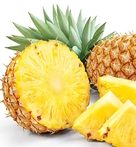 For centuries, people have used pineapple for its medicinal qualities.1,2
The stem of the pineapple is rich in a compound called bromelain, an enzyme renowned for its ability to inhibit inflammation and support joint comfort.3
Research has shown that bromelain has other benefits, ranging from promoting wound healing and relieving symptoms of sinusitis, to fighting cancer.3
Reducing Osteoarthritis Pain
In a study of patients with hip osteoarthritis, using a bromelain preparation for six weeks was shown to be as effective as the anti-inflammatory drug diclofenac in standard scales of pain, stiffness, and physical function.4
In another study, bromelain was found to be as good as diclofenac on a standard pain assessment scale, in patients with osteoarthritis of the knee joint. In some instances, it yielded better results than diclofenac in reducing pain at rest and improving restricted function.5
Aids in Wound Healing
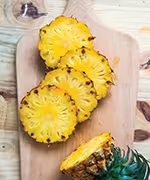 Due to its anti-inflammatory properties, bromelain can aid in the healing and treatment of minor injuries such as sprains, strains, and other trauma.
In an observational study of patients who had suffered blunt trauma involving muscles and bones, bromelain reduced the patients’ swelling, pain at rest and in motion, and tenderness at the site of injury.6
Cancer-Fighting Properties
Several studies suggest that bromelain may have a role as a novel anticancer therapy.
In animal models of bone, mammary gland, blood (leukemia), and lung cancer, treatment with bromelain increased survival rates, compared to untreated animals.7 It also reduced the number of lung metastases, suggesting it might play an important role in fighting cancer growth.
Scientists have proposed that bromelain may work through several mechanisms, including boosting immune function, inhibiting tumor metastasis (spread to other locations), and decreasing tumor growth and invasive potential.8
May Help Relieve Sinusitis Symptoms
 Bromelain may offer some relief from sinusitis symptoms.9 Rhinosinusitis, commonly known as sinusitis, is a potentially painful inflammation of the sinus cavities that can manifest with symptoms such as nasal congestion and discharge, postnasal drip, headache, cough, and sore throat.10
One older systematic review of herbal medicines reported on two randomized controlled trials which found that bromelain may be an effective adjunctive treatment in acute or chronic rhinosinusitis.11
In a clinical trial, researchers evaluated penetration of bromelain in the nasal mucosa of patients with chronic rhinosinusitis.
For the study, participants were evaluated after 30 days of bromelain administration. Bromelain was found to have better distribution in nasal mucosa than controls. The researchers concluded that this ability may allow the use of bromelain as an anti-inflammatory agent in nasal and sinus pathologies.12
Resolves Skin Disorders
 Bromelain has shown promise in treating a skin disorder called pityriasis lichenoides chronica, which is characterized by long-lasting skin lesions.
In a three-month trial of bromelain in eight pityriasis lichenoides chronica patients, all patients showed complete clinical recovery by the end of the trial with no adverse effects.
After 12 months of follow up, only two of these patients had relapsed, both of whom responded to another cycle of bromelain treatment.13
The immuno-modulatory function of bromelain also makes it a potential aid to eliminate burn debris and to accelerate wound healing.3
Supplementing with Bromelain
 The bromelain that has been studied and used in clinical studies comes from pineapple stems. Eating pineapple is not a source of bromelain with these benefits.14
This pineapple-stem bromelain is available to consumers in the form of a nutritional supplement.
Bromelain can also be used to enhance food digestion, since it is a digestive enzyme.
It can be combined with additional digestive enzymes, such as lipase and amylase, at mealtime. Some authorities believe bromelain’s non-digestive therapeutic benefits are enhanced by taking it on an empty stomach, so that it doesn’t expend its enzymatic properties on breaking down protein in foods.
Others use an enteric-coated bromelain tablet that bypasses digestive juices. This enables bromelain to be better absorbed into the bloodstream through the small intestine for potential systemic benefits.
Material used with permission of Life Extension. All rights reserved.
- Available at: https://www.herbalgram.org/resources/herbalegram/volumes/volume-18/issue-7-july-2021/news-and-features-1/food-as-medicine-pineapple/. Accessed November 27, 2022.
- Collins JL. History, Taxonomy and Culture of the Pineapple. Economic Botany. 1949;3(4):335-59.
- Chakraborty AJ, Mitra S, Tallei TE, et al. Bromelain a Potential Bioactive Compound: A Comprehensive Overview from a Pharmacological Perspective. Life (Basel). 2021 Apr 6;11(4):317.
- Klein G, Kullich W, Schnitker J, et al. Efficacy and tolerance of an oral enzyme combination in painful osteoarthritis of the hip. A double-blind, randomised study comparing oral enzymes with non-steroidal anti-inflammatory drugs. Clin Exp Rheumatol. 2006 Jan-Feb;24(1):25-30.
- Akhtar NM, Naseer R, Farooqi AZ, et al. Oral enzyme combination versus diclofenac in the treatment of osteoarthritis of the knee--a double-blind prospective randomized study. Clin Rheumatol. 2004 Oct;23(5):410-5.
- Masson M. [Bromelain in blunt injuries of the locomotor system. A study of observed applications in general practice]. Fortschr Med. 1995 Jul 10;113(19):303-6.
- Baez R, Lopes MT, Salas CE, et al. In vivo antitumoral activity of stem pineapple (Ananas comosus) bromelain. Planta Med. 2007 Oct;73(13):1377-83.
- Maurer HR. Bromelain: biochemistry, pharmacology and medical use. Cell Mol Life Sci. 2001 Aug;58(9):1234-45.
- Wu AW, Gettelfinger JD, Ting JY, et al. Alternative therapies for sinusitis and rhinitis: a systematic review utilizing a modified Delphi method. Int Forum Allergy Rhinol. 2020 Apr;10(4):496-504.
- Available at: https://www.ncbi.nlm.nih.gov/books/NBK470383/. Accessed September 25, 2022.
- Guo R, Canter PH, Ernst E. Herbal medicines for the treatment of rhinosinusitis: a systematic review. Otolaryngol Head Neck Surg. 2006 Oct;135(4):496-506.
- Passali D, Passali GC, Bellussi LM, et al. Bromelain’s penetration into the blood and sinonasal mucosa in patients with chronic rhinosinusitis. Acta Otorhinolaryngol Ital. 2018 Jun;38(3):225-8.
- Massimiliano R, Pietro R, Paolo S, et al. Role of bromelain in the treatment of patients with pityriasis lichenoides chronica. J Dermatolog Treat. 2007;18(4):219-22.
- Pavan R, Jain S, Shraddha, et al. Properties and therapeutic application of bromelain: a review. Biotechnol Res Int. 2012;2012:976203.
Related product
-
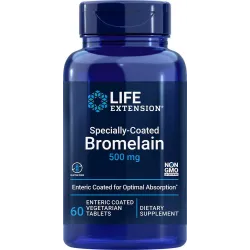
Specially-Coated Bromelain 500 mg
Price: 20,45 €Promotes joint health, comfort & more Inhibits inflammation to support...
Related posts
-
 Rebuild Aging Joints!
In this article, you will learn about UC-II®, or undenatured type II collagen, a novel intervention for both...
Rebuild Aging Joints!
In this article, you will learn about UC-II®, or undenatured type II collagen, a novel intervention for both... -
Next-Generation Nutrients for Rapid Relief of Joint Pain
In recent years, adults seeking relief from the crippling pain of arthritis have had to choose between expensive,...
-
Vitamin C and Dihydroquercetin
Every day, our bodies are under continual assault by damaging agents known as free radicals. Generally, both internal...
-
Autoimmune Diseases part 1
Autoimmune diseases are characterized by the body's immune responses being directed against its own tissues, causing...
-
Autoimmune Diseases part 2
In a healthy body, circulating antibodies attack and destroy pathogenic invaders by means of humoral or cell-mediated...