
 English
 Polski
 Deutsch
 Français
 ελληνικά
 Español
 Italiano
Boost Testosterone Without Drugs
 Testosterone levels drop as men get older. This begins much earlier than most realize.
As early as age 30, testosterone levels start falling at a rate of about 1% per year.1,2
Decreased libido and erectile dysfunction are well-known symptoms associated with low testosterone levels.3 But this hormone deficit affects more than the reproductive system.
Low levels of testosterone are also associated with depression, obesity, diabetes, heart disease, osteoporosis, muscle wasting, and more.4-8
Studies also show that low testosterone levels in aging men are associated with an increased risk of death from any cause.9
Three plant-based nutrients have been identified that support the body’s ability to produce testosterone, significantly raising levels.
In one clinical study, a proprietary blend of pomegranate and cacao extracts was shown to increase free testosterone by as much as 48% in aging males.10
In cell and animal studies, luteolin, a flavonoid found in fruit and vegetables, has been shown to inhibit the aromatase enzyme.11,12 This enzyme converts testosterone into estrogen.
These nutrients can help support more youthful testosterone balance in aging men.
Importance of Testosterone
 Testosterone is a hormone produced primarily in the testes of men and in the ovaries of women. A small amount is also made in the adrenal glands of men and women.13-15
This sex hormone is critical to the development of the male reproductive system. But testosterone levels also impact metabolism, energy, muscle strength and mass, inflammation, cognition, mood, and more.16
Low levels of testosterone become increasingly common and more severe as men age.17-20
Not only does this rob men of energy, virility, and the youthful feeling of general well-being, but it is also associated with age-related chronic conditions, including heart disease and diabetes. 9
In one meta-analysis, low testosterone levels were associated with an increased risk of death due to cardiovascular disease or any cause.9
“Free” and “Bound” Testosterone
 Testosterone circulates in the blood bound to circulating plasma proteins, most importantly sex hormone binding globulin (SHBG) and albumin.13,21
Only about 2% of circulating testosterone is non-protein bound, or free.22 This free testosterone is the biologically active form.
For testosterone to exert its effects, free testosterone must bind to receptors in target tissues.
Total testosterone is the measure of all circulating testosterone, including that which is bound to carrier proteins like sex hormone binding globulin (SHBG). In this “bound” form, testosterone is not available for the body to use.
Both total testosterone and free testosterone drop significantly with advancing age.
What’s more, being overweight or obese has been associated with increases in the levels of an enzyme called aromatase. This enzyme converts testosteroneinto estrogen, one of the primary sex hormones in women.23,24
As a result, overweight men, especially those with a high amount of abdominal fat, are at higher risk for low testosterone levels.
Pomegranate and Cacao Raise Testosterone
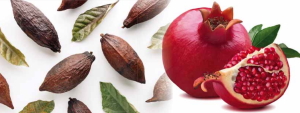 Scientists have been searching for ways to safely elevate testosterone levels without drugs.
In one study, researchers found that in healthy adult men and women, intake of pomegranate fruit juice for just two weeks increased salivary testosterone levels by 23%-27%. Measures of mood and well-being were also improved.25
These findings inspired scientists to screen hundreds of other plant extracts and nutrients for the ability to raise testosterone levels.
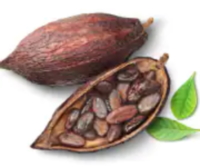
In a study using testes cells from mice, they confirmed that pomegranate extract raised testosterone production. They also discovered that cacao seed extract—from the same beans used to make cocoa and chocolate—significantly increased testosterone production.26
When combined, the pomegranate and cacao seed extracts had an impressive impact on testosterone production in an animal model.
In a study on rats, this pomegranate-cacao combination boosted total testosterone levels by over 72% after just six weeks.27
Results from Human Studies
 In a clinical trial, the pomegranate and cacao extracts were tested in men ranging from 36 to 55 years of age.10 They were randomized to receive either a combination of both extracts or a placebo.
After eight weeks, free testosterone levels were elevated by over 48% compared to baseline in men receiving 400 mg of the pomegranate-cacao blend.
Notably, free testosterone increased by a greater percentage than total testosterone.
That wasn’t all. In those taking pomegranate and cacao extract, overall well-being improved. Measures of stress dropped by 26%. Hand grip strength increased by almost 25%, compared to baseline.
 Levels of the male sex hormone testosterone drop steadily after around age 30.
- Low testosterone is associated with erectile dysfunction, loss of virility, and serious chronic health issues including heart disease, obesity, depression, and more.
- Scientists have found that a proprietary blend of pomegranate and cacao extracts stimulate production and increase blood levels of testosterone.
- In a clinical trial, this combination increased biologically active free testosterone by as much as 48% and led to reduced stress, increased hand grip strength, and other health improvements.
- Luteolin, a flavonoid found in several fruits and vegetables, was shown in cell and animal studies to support testosterone production and reduce its conversion into estrogen.
The study also measured what’s known as the Aging Males’ Symptoms scale, which includes:28
- Joint pain and muscle aches,
- Excessive sweating,
- Sleep problems and exhaustion,
- Anxiety and irritability,
- Depression and feeling burned out, and
- Decrease in libido and other sexual problems.
Measures of these symptoms were reduced by 19% in those who took the pomegranate-cacao combination.
A similar study was performed in healthy younger men, aged 21 to 35.29 Even in this age group, pomegranate and cacao increased free testosterone by 25%. Hand grip strength and the circumference of the upper arm increased as well.
Luteolin Supports Testosterone Production
 Luteolin is a flavonoid found in several herbs, fruits, and vegetables, including celery, broccoli, parsley, and thyme.
Preclinical studies have shown that luteolin may support healthy testosterone levels by at least two different ways:
- Increasing StAR protein: The steroidogenic acute regulatory (StAR) protein is an enzyme that is required for testosterone production to occur.30
- Inhibition of aromatase: Luteolin has also been found to inhibit aromatase—the enzyme that converts testosterone into estrogen—in cell culture and animal models.11,12
Scientists combined luteolin with pomegranate and cacao extracts to help support healthy free testosterone levels.
Summary
 Testosterone is the primary male sex hormone. It plays important roles in reproductive function and impacts many other aspects of health.
Beginning around age 30, levels of testosterone in men begin to decline.
Low testosterone is associated with loss of energy, erectile dysfunction, and increased risk for heart disease, obesity, diabetes,osteoporosis, muscle wasting, and other health conditions.
Scientists have discovered that a proprietary blend of pomegranate and cacao seed extracts can raise blood levels of free testosterone in men.10,29
In one study free testosterone was increased by as much as 48% in aging males taking this proprietary blend.10
The increases in free testosterone also correlated with improvements in levels of stress, strength, mood, and more.
Evidence from cell and animal studies suggests that luteolin may also support testosterone levels by increasing production and preventing its breakdown to estrogen.
The combination pomegranate/cacao with added luteolin may offer a solution to the age-related decreases in testosterone levels seen in men.
Material used with permission of Life Extension. All rights reserved.
- Brawer MK. Testosterone replacement in men with andropause: an overview. Rev Urol. 2004;6 Suppl 6(Suppl 6):S9-S15.
- Kazi M, Geraci SA, Koch CA. Considerations for the diagnosis and treatment of testosterone deficiency in elderly men. Am J Med. 2007 Oct;120(10):835-40.
- Rizk PJ, Kohn TP, Pastuszak AW, et al. Testosterone therapy improves erectile function and libido in hypogonadal men. Current opinion in urology. 2017;27(6):511-5.
- Bassil N, Morley JE. Late-life onset hypogonadism: a review. Clin Geriatr Med. 2010 May;26(2):197-222.
- Marin P, Arver S. Androgens and abdominal obesity. Baillieres Clin Endocrinol Metab. 1998 Oct;12(3):441-51.
- Nead KT. Androgens and depression: a review and update. Curr Opin Endocrinol Diabetes Obes. 2019 Jun;26(3):175-9.
- Seidell JC, Bjorntorp P, Sjostrom L, et al. Visceral fat accumulation in men is positively associated with insulin, glucose, and C-peptide levels, but negatively with testosterone levels. Metabolism. 1990 Sep;39(9):897-901.
- Travison TG, Morley JE, Araujo AB, et al. The relationship between libido and testosterone levels in aging men. J Clin Endocrinol Metab. 2006 Jul;91(7):2509-13.
- Araujo AB, Dixon JM, Suarez EA, et al. Clinical review: Endogenous testosterone and mortality in men: a systematic review and meta-analysis. J Clin Endocrinol Metab. 2011 Oct;96(10):3007-19.
- Laila Nutraceutical Internal Study. A randomized, double blind, placebo controlled study to evaluate the efficacy and safety of a novel herbal composition improving aging males’ symptoms. Data on file. 2018.
- Li F, Wong TY, Lin SM, et al. Coadministrating luteolin minimizes the side effects of the aromatase inhibitor letrozole. J Pharmacol Exp Ther. 2014 Nov;351(2):270-7.
- Lu DF, Yang LJ, Wang F, et al. Inhibitory effect of luteolin on estrogen biosynthesis in human ovarian granulosa cells by suppression of aromatase (CYP19). J Agric Food Chem. 2012 Aug 29;60(34):8411-8.
- Available at: https://www.ncbi.nlm.nih.gov/books/NBK526128/. Accessed July 6, 2021.
- Burger HG. Androgen production in women. Fertil Steril. 2002 Apr;77 Suppl 4:S3-5.
- Available at: https://www.bumc.bu.edu/sexualmedicine/publications/testosterone-insufficiency-in-women-fact-or-fiction/. Accessed July 16, 2021.
- Buvat J, Maggi M, Guay A, et al. Testosterone deficiency in men: systematic review and standard operating procedures for diagnosis and treatment. J Sex Med. 2013 Jan;10(1):245-84.
- Feldman HA, Longcope C, Derby CA, et al. Age trends in the level of serum testosterone and other hormones in middle-aged men: longitudinal results from the Massachusetts male aging study. J Clin Endocrinol Metab. 2002 Feb;87(2):589-98.
- Muller M, den Tonkelaar I, Thijssen JH, et al. Endogenous sex hormones in men aged 40-80 years. Eur J Endocrinol. 2003 Dec;149(6):583-9.
- Stanworth RD, Jones TH. Testosterone for the aging male; current evidence and recommended practice. Clin Interv Aging. 2008;3(1):25-44.
- Wu FC, Tajar A, Pye SR, et al. Hypothalamic-pituitary-testicular axis disruptions in older men are differentially linked to age and modifiable risk factors: the European Male Aging Study. J Clin Endocrinol Metab. 2008 Jul;93(7):2737-45.
- Edwards RZ. Chapter 64 - Testosterone Deficiency. In: Rakel D, ed. Integrative Medicine (Fourth Edition): Elsevier; 2018:630-7.e1.
- Hinson J, Raven P, Chew S. 8 - HORMONAL CONTROL OF REPRODUCTION PART I: MALE REPRODUCTIVE SYSTEM. In: Hinson J, Raven P, Chew S, editors. The Endocrine System (Second Edition): Churchill Livingstone; 2010:87-98.
- Cohen PG. The hypogonadal-obesity cycle: role of aromatase in modulating the testosterone-estradiol shunt--a major factor in the genesis of morbid obesity. Med Hypotheses. 1999 Jan;52(1):49-51.
- Kalyani RR, Dobs AS. Androgen deficiency, diabetes, and the metabolic syndrome in men. Curr Opin Endocrinol Diabetes Obes. 2007 Jun;14(3):226-34.
- Al-Dujaili E, Smail N. Pomegranate juice intake enhances salivary testosterone levels and improves mood and well being in healthy men and women. Presented at Society for Endocrinology BES 2012. Endocrine Abstracts. 2012;28:P313.
- Laila Nutraceutical Internal Study. Evaluating testosterone production activating capacity of herbal extracts in MA-10 mouse leydig cells. Data on file. 2018.
- Laila Nutraceutical Internal Study. Evaluation of LNE05593F12 for testosterone boosting efficacy in Sprague Dawley rats. Data on file.
- Heinemann LAJ, Saad F, Zimmermann T, et al. The Aging Males’ Symptoms (AMS) scale: update and compilation of international versions. Health and quality of life outcomes. 2003;1:15-.
- Laila Nutraceutical Internal Study. A Randomized, Double-Blind, Placebo-Controlled Clinical Study to Evaluate the Efficacy and Safety of a Novel Herbal Composition Improving Testosterone Level in Healthy Young Males. Data on file. 2019.
- Couture R, Mora N, Al Bittar S, et al. Luteolin modulates gene expression related to steroidogenesis, apoptosis, and stress response in rat LC540 tumor Leydig cells. Cell Biol Toxicol. 2020 Feb;36(1):31-49.
Related product
-
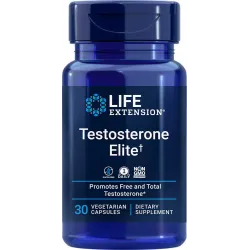
Testosterone Elite
Price: 47,09 €Promotes youthful testosterone production Promotes healthy testosterone...
Related posts
-
 Optimal Prostate Defense Requires a Multi-Modal Strategy
As an aging man, your odds of suffering benign prostate enlargement (BPH) and/or prostate cancer are exceedingly...
Optimal Prostate Defense Requires a Multi-Modal Strategy
As an aging man, your odds of suffering benign prostate enlargement (BPH) and/or prostate cancer are exceedingly... -
Testosterone. Natural Methods to Improve Vitality, Sexual Function, and Prostate Health
As men grow older, they often face daunting health challenges caused by the age-related decline in testosterone...
-
Newly Discovered Anti-Aging Effects of Ginkgo Biloba
A review of the current scientific literature might suggest that ginkgo (Ginkgo biloba) is the ultimate natural...
-
Low Testosterone Promotes Abdominal Obesity in Aging Men
As men age, many become trapped in a vicious cycle that leads to life-threatening abdominal obesity. No matter how...
-
Benign Prostatic Hyperplasia (BPH) part 1
The majority of men older than 60 years will be affected by benign (noncancerous) enlargement of the prostate gland....