
 English
 Polski
 Deutsch
 Français
 ελληνικά
 Español
 Italiano
Why People Supplement with B Vitamins

B vitamins have numerous vital functions throughout the body.
They aid in the assembly of your genetic blueprint, keep your nervous system healthy, turn food into energy, and more.1-13
Maintaining healthy B vitamin levels helps protect against problems ranging from cardiovascular disease and neurodegenerative disorders to UV-induced skin damage and vision loss.
A deficiency in B vitamins is common for multiple reasons:14
- They are not stored by the body. B vitamins are water-soluble and are quickly washed out of the body.
- They are impacted by low dietary intake, poor absorption associated with age, taking certain medications, alcohol, and following certain diets.
These factors make daily supplementation with a B-complex essential for aging individuals.
In this article, you'll learn how B vitamins can reduce the odds of a variety of serious disorders.
- B vitamins have numerous functions in the body, including keeping your nervous system healthy, turning food into energy, protecting vision, and more.
- B vitamins also inhibit some diseases associated with aging, including cardiovascular disease and neurodegenerative disorders.
- B vitamins are not stored by the body, requiring daily replenishment.
- The need for B vitamins is more critical for specific individuals, such as older adults, those taking certain medications, or those following particular diets.
- At-risk individuals and all aging people can greatly benefit from a daily, high-quality, B-complex supplement.
Cardiovascular Disease

B vitamins help convert homocysteine into an important protein building block. When there's a shortage of the four B vitamins mentioned above, that conversion process isn't as efficient, causing homocysteine levels to increase.15,16
Elevated homocysteine is associated with cardiovascular disease.17 Studies indicate lower blood homocysteine will reduce risk of coronary heart disease up to 16% and risk of stroke up to 24%.18
Research shows that different B vitamins play an important role in balancing homocysteine, demonstrating the necessity of supplementing with all of them, for example:
- Both B2 (riboflavin) and folate must be present in ample amounts for optimal homocysteine-lowering.18,19
- Even people whose B2 and folate levels are restored by supplementation may not significantly lower homocysteine until vitamin B6 is added to the equation.20
- Patients with coronary artery disease have, on average, 34.2% lower levels of the bioactive form of B6 (pyridoxal 5'-phosphate) compared to those without heart problems, which may relate to its role in lowering homocysteine.21-23
Folic acid and vitamin B12 detoxify homocysteine via the "methylation"24 pathway, whereas vitamin B6 detoxifies homocysteine via the "transsulfuration"25 pathway.
Activated forms of these vitamins (such as 5-MTHF, methylcobalamin, and pyridoxal-5-phosphate) provide direct maintenance of these two homocysteine-detoxification pathways.
Brain Shrinkage
A deficiency of B vitamins can cause the brain to shrink. Close associations have been found between low folate levels and severe gray-matter (brain) damage, as well as atrophy of the hippocampus,26 a main memory-processing center in the brain.
Similarly, people with lower vitamin B12 levels have been shown to have progressive brain atrophy, with rates of brain volume loss 517% greater than those with higher B12 levels.15,27
Depression

Taking a B-complex supplement for 60 days has been shown to improve depression and anxiety symptoms, compared to placebo.28
The active form of folate, 5-MTHF, is especially beneficial against depression. It's been shown to boost the response rate of antidepressant drugs, and it can also help those drugs work more quickly.
In one study, only 7.04% of subjects taking an antidepressant drug experienced major improvement on a standard depression score. But that number jumped to 18.5% in patients taking 5-MTHF in addition to the drug.29
Even more impressive, those with the most severe depression improved by just 16.3% when taking the drug by itself. But that number jumped to 40% when they added 5-MTHF.29
In addition, it took 150 days for the severely depressed patients taking just the antidepressant drug to experience improvement. But adding in 5-MTHF cut the time almost in half, with the patients seeing improvements in just 85 days.29
Inositol is often included in quality B-complex products despite not being a B vitamin. Inositol has a long history of reducing general anxiety, panic, and OCD (obsessive-compulsive disorder) symptoms.30
In one study, researchers found inositol to be just as effective as a popular antidepressant for panic disorders, and volunteers tolerated it well even at extremely massive doses up to 18 grams a day. 30
Neurodegenerative Disorders

Thiamine (vitamin B1) is critical to healthy brain function.31 A thiamine deficiency triggers a cascade of events that lead to oxidative stress and inflammation, which are major contributors to Alzheimer's, Parkinson's, and other dementia-producing disorders.32
Researchers have used experimental thiamine deficiency for years to model many of these age-related brain diseases. And research shows that a deficiency in thiamine leads to many of the same brain abnormalities associated with those disorders.32
Finally, supplementation with folate has been shown to decrease blood levels of molecules involved in forming brain-damaging beta-amyloid plaques.33 The presence of these plaque-forming molecules may predict early Alzheimer's disease or cognitive decline.33-36
UV-Induced Skin Damage

A form of vitamin B3 called nicotinamide helps prevent skin damage caused by the sun's rays.
Ultraviolet rays cause the body to lose ATP (adenosine triphosphate), the cellular energy that the body needs to repair damaged DNA.37 Nicotinamide helps prevent the loss of ATP.
Not surprisingly, studies also show that nicotinamide helps directly prevent UV-induced DNA damage.
In one study, researchers pretreated skin cells with nicotinamide and then exposed them to ultraviolet radiation. The nicotinamide removed and replaced damaged DNA and increased the number of cells undergoing DNA repair. It also reduced the production of damaging DNA photoproducts in cell cultures and in human skin.38
Nicotinamide has also been shown to protect against UV-induced immune suppression.39
Taken together, the two actions of repairing DNA and protecting immune suppression contribute to nicotinamide's ability to reduce the risk of skin cancer.40
Vision Loss

An epidemiological study found that a deficiency of folate was associated with an 89% higher risk of age-related macular degeneration, a leading cause of blindness. Deficiency of vitamin B12 was associated with 2.56-fold greater odds of developing the condition.41
Supplementation with vitamin B12 was associated with reduced odds of developing age-related macular degeneration.41
In a randomized, placebo-controlled trial, women who took folic acid, vitamin B6, and vitamin B12 for an average of 7.3 years had a 34% reduced risk of macular degeneration compared to the placebo group. When scientists looked only at those cases of macular degeneration that were causing vision problems, the protection level with treatment rose to 41%.42
These were impressive results, especially considering the levels of daily supplementation are readily obtainable: just 2,500 mcg of folate, 50 mg of B6, and 1,000 mcg of B12.42
WHAT THE B VITAMINS DO
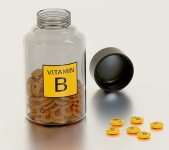 B vitamins provide vital support for numerous fundamental and critical body functions:
- B1 (thiamine) helps convert food into energy, playing an essential role in metabolism.1
- B2 (riboflavin) helps convert nutrients into energy and provides antioxidant activity.2
- B3 (niacin) plays a role in DNA repair, cellular signaling, and metabolism.3
- B5 (pantothenic acid) helps produce hormones and converts food to energy.4
- B6 (pyridoxine) helps metabolize amino acids and produces neurotransmitters and red blood cells.5
- B7 (biotin) regulates gene expression and is required for metabolism of fat and carbohydrates.6
- B9 (folic acid, or for superior absorption,7 5-MTHF) is vital for cell growth, amino acid metabolism, production of red and white blood cells, healthy cell division, and proper fetal growth and development to reduce the risk of birth defects.8-11
- B12 (cobalamin or methylcobalamin) is important for neurological function, development of red blood cells, production of DNA, and promoting healthy homocysteine levels.12,13,48 Methylcobalamin is the form of B12 that is biologically active in the brain.
- Inositol is not a B vitamin, but it is often added to higher quality B-complex supplements. Inositol is essential for calcium and insulin signal transduction.67,68
Who Is at Risk?
Getting sufficiently high dosages of all B vitamins daily not only ensures an adequate supply to meet the body's vital needs, but also enhances protection against an array of diseases.
The problem is that many older adults are deficient in their Bs for multiple reasons.
First, unlike fat-soluble vitamins that are stored by the body (such as vitamins K and D), the water-soluble B vitamins must be resupplied daily.
Additionally, some circumstances either boost the body's demand for B vitamins or greatly inhibit vitamin B absorption, making supplementation necessary.
The following information highlights those individuals with the greatest risk of a deficiency. For these individuals, the need for a daily, high-potency B-complex supplement can be much more critical.
Older adults

Deficiencies in vitamins B6, folate, and B12 are common in the elderly.43-46
Many older adults experience a decline in their appetite, reducing their overall dietary intake of all B vitamins.
Even when they do consume B vitamins, older individuals may be unable to absorb naturally occurring vitamin B12. That's because adequate stomach acid is required for B12 to be released from food, and many aging adults do not produce enough stomach acid.47
Deficiencies of B12 are associated with a host of symptoms, including sore tongue, depression, weakness, digestive disturbances, cognitive problems, and tingling in the limbs.47,48
Those Who Take Certain Medications
Metformin, the popular diabetes drug, is known to interfere with the absorption of vitamin B12.50,51
Birth control pills can deplete vitamins B2, B6, folic acid, and B12.52
Pregnant or Breastfeeding Women
B vitamins, especially vitamin B12, are important for healthy fetal development. A deficiency in either vitamin B12 or folate in breast-feeding or pregnant women can result in severe neurological damage or birth defects in the infant or fetus.53,54
Patients with Certain Medical Conditions
People suffering from alcoholism, hypothyroidism, anorexia, celiac disease, and Crohn's disease have a much greater risk of developing a deficiency in B vitamins.55-59
Also, a certain genetic mutation (called MTHFR) can affect how the body metabolizes folate, leading to a folate deficiency.60 This mutation can also cause elevated levels of serum homocysteine,60 which vitamin B supplementation can help prevent.61
Weight-loss surgery also increases the risk of a deficiency in B vitamins.62
Vegetarians and Vegans
 Because they avoid meat and animal products, vegans and strict vegetarians may be at risk of a B12 deficiency unless they take a supplement.63
This deficiency can lead to digestive disturbances, anemia and blood disorders, and fatigue, but it principally affects the peripheral nerves. In later stages, it may target the spinal cord.48,64,65
Impaired mental function is the usual result, often manifesting as slower thinking, attention deficits, and memory lapses.65
Those Who Consume Alcohol
In those who abuse alcohol, thiamine (B1) deficiency occurs in up to 80% of cases and is a key mechanism for the brain-damaging effects of chronic alcohol intake. The reasons for thiamine deficiency in alcoholics have been theorized to include:66
- Inadequate nutrition (as a result of alcohol replacing a quality diet),
- Decreased thiamine absorption from the gastrointestinal tract and reduced cell uptake, and
- Impaired utilization of thiamine within the cells.
Summary
 B vitamins are required for critical body functions.
The body does not store B vitamins, and some circumstances, such as older age, significantly boost the body's demand for B vitamins.
These factors make daily supplementation with B-complex vitamins an important component of a comprehensive wellness program.
Material used with permission of Life Extension. All rights reserved.
-
Thakur K, Tomar SK, Singh AK, et al. Riboflavin and health: A review of recent human research. Crit Rev Food Sci Nutr. 2017 Nov 22;57(17):3650-60.
-
Meyer-Ficca M, Kirkland JB. Niacin. Adv Nutr. 2016 May;7(3):556-8.
-
Available at: https://pubchem.ncbi.nlm.nih.gov/compound/pantothenic_acid. Accessed November 15, 2018.
-
Available at: https://pubchem.ncbi.nlm.nih.gov/compound/pyridoxine. Accessed November 15, 2018.
-
Zempleni J, Wijeratne SS, Hassan YI. Biotin. Biofactors. 2009 Jan-Feb;35(1):36-46.
-
Scaglione F, Panzavolta G. Folate, folic acid and 5-methyltetrahydrofolate are not the same thing. Xenobiotica. 2014 May;44(5):480-8.
-
Stanger O. Physiology of folic acid in health and disease. Curr Drug Metab. 2002 Apr;3(2):211-23.
-
Available at: https://www.ncbi.nlm.nih.gov/books/NBK114318. Accessed November 15, 2018.
-
Quinlivan EP, McPartlin J, McNulty H, et al. Importance of both folic acid and vitamin B12 in reduction of risk of vascular disease. Lancet. 2002 Jan 19;359(9302):227-8.
-
Kim MW, Ahn KH, Ryu KJ, et al. Preventive effects of folic acid supplementation on adverse maternal and fetal outcomes. PLoS One. 2014;9(5):e97273.
-
O'Leary F, Samman S. Vitamin B12 in health and disease. Nutrients. 2010 Mar;2(3):299-316.
-
Nohr D, Biesalski HK. Vitamin B12. Reference Module in Food Science: Elsevier; 2016.
-
Porter K, Hoey L, Hughes CF, et al. Causes, Consequences and Public Health Implications of Low B-Vitamin Status in Ageing. Nutrients. 2016 Nov 16;8(11).
-
Grober U, Kisters K, Schmidt J. Neuroenhancement with vitamin B12-underestimated neurological significance. Nutrients. 2013 Dec 12;5(12):5031-45.
-
Herrmann W, Obeid R. Homocysteine: a biomarker in neurodegenerative diseases. Clin Chem Lab Med. 2011 Mar;49(3): 435-41.
-
Mickel C, Schnabel RB, Zengin E, et al. Homocysteine concentration in coronary artery disease: Influence of three common single nucleotide polymorphisms. Nutr Metab Cardiovasc Dis. 2017 Feb;27(2):168-75.
-
McNulty H, Dowey le RC, Strain JJ, et al. Riboflavin lowers homocysteine in individuals homozygous for the MTHFR 677C->T polymorphism. Circulation. 2006 Jan 3;113(1):74-80.
-
Moat SJ, Ashfield-Watt PA, Powers HJ, et al. Effect of riboflavin status on the homocysteine-lowering effect of folate in relation to the MTHFR (C677T) genotype. Clin Chem. 2003 Feb;49(2):295-302.
-
McKinley MC, McNulty H, McPartlin J, et al. Low-dose vitamin B-6 effectively lowers fasting plasma homocysteine in healthy elderly persons who are folate and riboflavin replete. Am J Clin Nutr. 2001 Apr;73(4):759-64.
-
Dalery K, Lussier-Cacan S, Selhub J, et al. Homocysteine and coronary artery disease in French Canadian subjects: relation with vitamins B12, B6, pyridoxal phosphate, and folate. Am J Cardiol. 1995 Jun 1;75(16):1107-11.
-
Lin PT, Cheng CH, Liaw YP, et al. Low pyridoxal 5'-phosphate is associated with increased risk of coronary artery disease. Nutrition. 2006 Nov-Dec;22(11-12):1146-51.
-
Robinson K, Mayer EL, Miller DP, et al. Hyperhomocysteinemia and low pyridoxal phosphate. Common and independent reversible risk factors for coronary artery disease. Circulation. 1995 Nov 15;92(10):2825-30.
-
Brosnan JT, Jacobs RL, Stead LM, et al. Methylation demand: a key determinant of homocysteine metabolism. Acta Biochim Pol. 2004;51(2):405-13.
-
Selhub J. Homocysteine metabolism. Annu Rev Nutr. 1999;19: 217-46.
-
Gallucci M, Zanardo A, Bendini M, et al. Serum folate, homocysteine, brain atrophy, and auto-CM system: The Treviso Dementia (TREDEM) study. J Alzheimers Dis. 2014;38(3):581-7.
-
Vogiatzoglou A, Refsum H, Johnston C, et al. Vitamin B12 status and rate of brain volume loss in community-dwelling elderly. Neurology. 2008 Sep 9;71(11):826-32.
-
Lewis JE, Tiozzo E, Melillo AB, et al. The effect of methylated vitamin B complex on depressive and anxiety symptoms and quality of life in adults with depression. ISRN Psychiatry. 2013;2013:621453.
-
Ginsberg LD, Oubre AY, Daoud YA. L-methylfolate Plus SSRI or SNRI from Treatment Initiation Compared to SSRI or SNRI Monotherapy in a Major Depressive Episode. Innov Clin Neurosci. 2011 Jan;8(1):19-28.
-
Palatnik A, Frolov K, Fux M, et al. Double-blind, controlled, crossover trial of inositol versus fluvoxamine for the treatment of panic disorder. J Clin Psychopharmacol. 2001 Jun;21(3):335-9.
-
Available at: https://lpi.oregonstate.edu/mic/vitamins/thiamin. Accessed November 16, 2018.
-
Liu D, Ke Z, Luo J. Thiamine Deficiency and Neurodegeneration: the Interplay Among Oxidative Stress, Endoplasmic Reticulum Stress, and Autophagy. Mol Neurobiol. 2017 Sep;54(7):5440-8.
-
Ma F, Li Q, Zhou X, et al. Effects of folic acid supplementation on cognitive function and Abeta-related biomarkers in mild cognitive impairment: a randomized controlled trial. Eur J Nutr. 2017 Dec 18.
-
Bush AI, Whyte S, Thomas LD, et al. An abnormality of plasma amyloid protein precursor in Alzheimer's disease. Ann Neurol. 1992 Jul;32(1):57-65.
-
Martins RN, Muir J, Brooks WS, et al. Plasma amyloid precursor protein is decreased in Alzheimer's disease. Neuroreport. 1993 Jun;4(6):757-9.
-
Teunissen CE, de Vente J, Steinbusch HW, et al. Biochemical markers related to Alzheimer's dementia in serum and cerebrospinal fluid. Neurobiol Aging. 2002 Jul-Aug;23(4):485-508.
-
Park J, Halliday GM, Surjana D, et al. Nicotinamide prevents ultraviolet radiation-induced cellular energy loss. Photochem Photobiol. 2010 Jul-Aug;86(4):942-8.
-
Surjana D, Halliday GM, Damian DL. Nicotinamide enhances repair of ultraviolet radiation-induced DNA damage in human
keratinocytes and ex vivo skin. Carcinogenesis. 2013 May;34(5): 1144-9. -
Yiasemides E, Sivapirabu G, Halliday GM, et al. Oral nicotinamide protects against ultraviolet radiation-induced immunosuppression in humans. Carcinogenesis. 2009 Jan;30(1):101-5.
-
Nazarali S, Kuzel P. Vitamin B Derivative (Nicotinamide)Appears to Reduce Skin Cancer Risk. Skin Therapy Lett. 2017 Sep;22(5):1-4.
-
Gopinath B, Flood VM, Rochtchina E, et al. Homocysteine, folate, vitamin B-12, and 10-y incidence of age-related macular degeneration. Am J Clin Nutr. 2013 Jul;98(1):129-35.
-
Christen WG, Glynn RJ, Chew EY, et al. Folic acid, pyridoxine, and cyanocobalamin combination treatment and age-related macular degeneration in women: the Women's Antioxidant and Folic Acid Cardiovascular Study. Arch Intern Med. 2009 Feb 23;169(4):335-41.
-
Lindenbaum J, Rosenberg IH, Wilson PW, et al. Prevalence of cobalamin deficiency in the Framingham elderly population. Am J Clin Nutr. 1994 Jul;60(1):2-11.
-
Carmel R. Cobalamin, the stomach, and aging. Am J Clin Nutr. 1997 Oct;66(4):750-9.
-
Kjeldby IK, Fosnes GS, Ligaarden SC, et al. Vitamin B6 deficiency and diseases in elderly people--a study in nursing homes. BMC Geriatr. 2013 Feb 8;13:13.
-
Clarke R, Grimley Evans J, Schneede J, et al. Vitamin B12 and folate deficiency in later life. Age Ageing. 2004 Jan;33(1):34-41.
-
Available at: https://lpi.oregonstate.edu/mic/vitamins/vitamin-b12. Accessed November 17, 2018.
-
Available at: https://www.ncbi.nlm.nih.gov/books/nbk114302. Accessed November 17, 2018.
-
Heidelbaugh JJ. Proton pump inhibitors and risk of vitamin and mineral deficiency: evidence and clinical implications. Ther Adv Drug Saf. 2013 Jun;4(3):125-33.
-
Mazokopakis EE, Starakis IK. Recommendations for diagnosis and management of metformin-induced vitamin B12 (Cbl) deficiency. Diabetes Res Clin Pract. 2012 Sep;97(3):359-67.
-
de Jager J, Kooy A, Lehert P, et al. Long term treatment with metformin in patients with type 2 diabetes and risk of vitamin B-12 deficiency: randomised placebo controlled trial. BMJ. 2010 May 20;340:c2181.
-
Palmery M, Saraceno A, Vaiarelli A, et al. Oral contraceptives and changes in nutritional requirements. Eur Rev Med Pharmacol Sci. 2013 Jul;17(13):1804-13.
-
Pepper MR, Black MM. B12 in fetal development. Semin Cell Dev Biol. 2011 Aug;22(6):619-23.
-
Kominiarek MA, Rajan P. Nutrition Recommendations in Pregnancy and Lactation. Med Clin North Am. 2016 Nov;100(6):1
199-215. -
Brinkman DJ, Bekema JK, Kuijenhoven MA, et al. [Thiamine in patients with alcohol use disorder and Wernicke's encephalopathy]. Ned Tijdschr Geneeskd. 2017;161:D931.
-
Jabbar A, Yawar A, Waseem S, et al. Vitamin B12 deficiency common in primary hypothyroidism. J Pak Med Assoc. 2008 May;58(5):258-61.
-
Achamrah N, Coeffier M, Rimbert A, et al. Micronutrient Status in 153 Patients with Anorexia Nervosa. Nutrients. 2017 Mar 2;9(3).
-
Wierdsma NJ, van Bokhorst-de van der Schueren MA, Berkenpas M, et al. Vitamin and mineral deficiencies are highly prevalent in newly diagnosed celiac disease patients. Nutrients. 2013 Sep 30;5(10):3975-92.
-
Huang S, Ma J, Zhu M, et al. Status of serum vitamin B12 and folate in patients with inflammatory bowel disease in China. Intest Res. 2017 Jan;15(1):103-8.
-
Available at: https://www.ncbi.nlm.nih.gov/books/NBK66131. Accessed November 18, 2018.
-
Schwammenthal Y, Tanne D. Homocysteine, B-vitamin supplementation, and stroke prevention: from observational to interventional trials. Lancet Neurol. 2004 Aug;3(8):493-5.
-
John S, Hoegerl C. Nutritional deficiencies after gastric bypass surgery. J Am Osteopath Assoc. 2009 Nov;109(11):601-4.
-
Rizzo G, Lagana AS, Rapisarda AM, et al. Vitamin B12 among Vegetarians: Status, Assessment and Supplementation. Nutrients. 2016 Nov 29;8(12).
-
Savage DG, Lindenbaum J. Neurological complications of acquired cobalamin deficiency: clinical aspects. Baillieres Clin Haematol. 1995 Sep;8(3):657-78.
-
Briani C, Dalla Torre C, Citton V, et al. Cobalamin deficiency: clinical picture and radiological findings. Nutrients. 2013 Nov 15;5(11):4521-39.
-
Martin PR, Singleton CK, Hiller-Sturmhofel S. The role of thiamine deficiency in alcoholic brain disease. Alcohol Res Health. 2003;27(2):134-42.
-
Mitchell CA, Gurung R, Kong AM, et al. Inositol polyphosphate 5-phosphatases: lipid phosphatases with flair. IUBMB Life. 2002 Jan;53(1):25-36.
-
Tamarina NA, Kuznetsov A, Rhodes CJ, et al. Inositol (1,4,5)-trisphosphate dynamics and intracellular calcium oscillations in pancreatic beta-cells. Diabetes. 2005 Nov;54(11):3073-81.
Related products
-

BioActive Complete B-Complex
Price: 13,63 €Our most complete B-complex formula ever Provides potent, scientifically... -
Methylcobalamin 1 mg
Price: 8,84 €The neurologically active form of vitamin B12 Essential for cell growth... -
BioActive Folate & Vitamin B12
Price: 11,60 €Promotes heart, brain, & GI tract health Helps promote healthy DNA... -
Optimized Folate (L-Methylfolate) 1,700 mcg DFE
Price: 14,51 €Benefit your heart and mind Supports cardiovascular health Supports... -

Liposomal Methyl B-Complex
Price: 46,22 €B vitamins are necessary for energy metabolism, detoxification, immunity,...
Related posts
-
 Using Niacin to Improve Cardiovascular Health
Patient: I recently had a cholesterol profile blood test and learned that I may be at risk of heart disease because...
Using Niacin to Improve Cardiovascular Health
Patient: I recently had a cholesterol profile blood test and learned that I may be at risk of heart disease because... -
Vitamin B12
Vitamin B12 (cobalamin), nature’s most chemically complex vitamin, also has been called its most beautiful, owing to...
-
Brain Protection from New Form of Vitamin B12
Two active forms of vitamin B12 offer support to the aging brain. Preclinical data shows one of the forms protects...
-
How Dopamine Protects the Aging Brain
By preserving healthy dopamine levels, phellodendron bark may help maintain clear thinking and motivation—while...
-
Best Supplements for Men Over 40
Gentlemen, you probably don't need us to tell you that as you get older, your body needs a little extra support and...