
 English
 Polski
 Deutsch
 Français
 ελληνικά
 Español
 Italiano
Melatonin
 New research indicates that melatonin does much more than help some people sleep better. Exciting studies show that melatonin’s multifaceted effects may improve treatment outcomes in cancer patients and extend their lives. Additional applications of melatonin include guarding the nervous system against degenerative diseases—such as Alzheimer’s disease and stroke—and preventing debilitating migraines.
What you need to know - Melatonin
 Melatonin is known as the sleeping hormone, but it plays a bigger role in the body than most would presume. Those with neurodegenerative diseases, such as Alzheimer’s and Parkinson’s, have decreased production of melatonin and can benefit from supplementation. Melatonin does this by easily diffusing into cells and crossing the blood-brain barrier to protect against oxidative damage. Melatonin’s benefits have even been documented in several cancers. In one of these studies, patients with metastatic breast cancer showed an improved response to chemotherapy and increased anxiety relief by taking 20 mg of melatonin in the evening. These studies are proving that melatonin does more than just aid in sleep; learn more about these unexpected benefits of melatonin in this article.
Neuroprotective Benefits
 Melatonin is a powerful and versatile antioxidant produced within the body. Melatonin protects both lipids and proteins against damage, and can scavenge some of the most dangerous free radicals in the body—including hydroxyl radicals and hydrogen peroxide. Unlike other antioxidants, melatonin easily diffuses into all cells, and even crosses the blood-brain barrier to protect the delicate brain.1
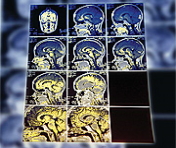 The brain can suffer dramatic, irreparable damage when an individual suffers a stroke. Utilizing animal models of stroke, scientists have found that melatonin may offer important protection against stroke-related damage and deterioration. When administered at the time of stroke, melatonin limited the area of brain tissue damage, decreased brain cell death, lessened behavioral deficits, and reduced the rate of stroke-related death. These investigators believe that melatonin’s protective actions stem from its free-radical-scavenging and antioxidant activities, and suggest that melatonin may hold promise in improving stroke outcomes in humans.4
In a randomized, double-blind study, 18 women (aged 47 to 63) with either normal blood pressure or treated high blood pressure received a three-week course of slow-release melatonin (3 mg) or placebo, one hour before bedtime. Researchers recorded blood pressure readings for 41 hours at the end of the trial. While the daytime blood pressure readings remained unchanged com-pared to placebo, the melatonin treatment significantly decreased nighttime blood pressure, without modifying heart rate.6
Fighting Cancer
 One of melatonin’s most important applications is in fighting a wide array of cancers, including breast and liver cancers, non-small-cell lung cancer, and brain metastases from solid tumors.7
 Scientists conducted a meta-analysis of 10 randomized, controlled trials examining melatonin’s effects (alone or as an adjuvant treatment) on patients with various types of cancer. Supplementation with melatonin reduced the relative risk of death at one year by an impressive 34%—regardless of the type of cancer or the melatonin dosage. Importantly, no adverse effects were reported.12
In addition to its benefits for cancer survival, melatonin may also help counteract the toxicity of chemotherapy treatment. Two-hundred-fifty individuals undergoing chemotherapy for advanced cancers of the lung, breast, gastrointestinal tract, or head and neck received chemotherapy, either alone or in combination with melatonin (20 mg/day). After one year, the melatonin-supplemented individuals demonstrated a higher rate of survival, and were significantly protected against many of the side effects associated with chemotherapy, including decreased platelet count, neurotoxicity, heart damage, mouth sores, and fatigue.1
Migraine Prevention
 A promising study suggests that migraine sufferers may be able to reduce the frequency and severity of their headaches by using melatonin. Researchers gave 34 migraine sufferers (29 women and 5 men) a 3-mg dose of melatonin, 30 minutes before bedtime, for three months. Of the 32 patients who finished the study, more than two thirds experienced at least a 50% reduction in number of headaches per month. Additionally, the intensity and duration of headaches decreased. The scientists believe that melatonin’s anti-inflammatory effect and free-radical-scavenging effects contribute to its headache-relieving benefits.14
Promoting Healthy Sleep
 A large analysis revealed several of melatonin’s sleep-enhancing benefits. Reviewing 15 studies of sleep in healthy adults, scientists noted that melatonin administration significantly reduced sleep latency (the amount of time needed to fall asleep), while boosting sleep efficiency (the percentage of time in bed spent asleep) and increasing total sleep duration.16
Dosage and Interactions
Conclusion
 A factor in restorative sleep, melatonin’s benefits extend to neuroprotection and fighting cancer. Its powerful antioxidant effect offers important enhancements to the brain and nervous system, helping protect against age-related damage. Most exciting are melatonin’s benefits for cancer patients—relieving anxiety and improving survival from an array of cancers. Finally, migraine sufferers using melatonin may enjoy a vast decline in the frequency and severity of their headaches—leading to a tremendously improved quality of life.
Material used with permission of Life Extension. All rights reserved.
1. Suzen S. Recent developments of melatonin related antioxidant compounds. Comb Chem High Throughput Screen. 2006 Jul;9(6):409-19.
2. Cardinali DP, Furio AM, Reyes MP. Clinical perspectives for the use of melatonin as a chronobiotic and cytoprotective agent. Ann NY Acad Sci. 2005 Dec;1057:327-36.
3. Srinivasan V, Pandi-Perumal S, Cardinali D, Poeggeler B, Hardeland R. Melatonin in Alzheimer’s disease and other neurodegenerative disorders. Behav Brain Funct. 2006;2(1):15.
4. Reiter RJ, Tan DX, Leon J, Kilic U, Kilic E. When melatonin gets on your nerves: its beneficial actions in experimental models of stroke. Exp Biol Med (Maywood.). 2005 Feb;230(2):104-17.
5. Scheer FA, Van Montfrans GA, van Someren EJ, Mairuhu G, Buijs RM. Daily nighttime melatonin reduces blood pressure in male patients with essential hypertension. Hypertension. 2004 Feb;43(2):192-7.
6. Cagnacci A, Cannoletta M, Renzi A, et al. Prolonged melatonin administration decreases nocturnal blood pressure in women. Am J Hypertens. 2005 Dec;18(12 Pt 1):1614-8.
7. [No authors listed] Melatonin. Monograph. Altern Med Rev. 2005 Dec;10(4):326-36.
8. Lissoni P, Barni S, Meregalli S, et al. Modulation of cancer endocrine therapy by melatonin: a phase II study of tamoxifen plus melatonin in metastatic breast cancer patients progressing under tamoxifen alone. Br J Cancer.1995 Apr;71(4):854-6.
9. Cos S, Gonzalez A, Martinez-Campa C, et al. Estrogen-signaling pathway: a link between breast cancer and melatonin oncostatic actions. Cancer Detect Prev. 2006;30(2):118-28.
10. Sanchez-Barcelo EJ, Cos S, Mediavilla D, et al. Melatonin-estrogen interactions in breast cancer. J Pineal Res. 2005 May;38(4):217-22.
11. Sainz RM, Mayo JC, Tan DX, Leon J, Manchester L, Reiter RJ. Melatonin reduces prostate cancer cell growth leading to neuroendocrine differentiation via a receptor and PKA independent mechanism. Prostate. 2005 Apr 1;63(1):29-43.
12. Mills E, Wu P, Seely D, Guyatt G. Melatonin in the treatment of cancer: a systematic review of randomized controlled trials and meta-analysis. J Pineal Res. 2005 Nov;39(4):360-6.
13. Lissoni P, Barni S, Mandala M, et al. Decreased toxicity and increased efficacy of cancer chemotherapy using the pineal hormone melatonin in metastatic solid tumour patients with poor clinical status. Eur J Cancer. 1999 Nov;35(12):1688-92.
14. Peres MF, Zukerman E, da Cunha TF, Moreira FR, Cipolla-Neto J. Melatonin, 3 mg, is effective for migraine prevention. Neurology. 2004 Aug 24;63(4):757.
15. Drake MJ, Mills IW, Noble JG. Melatonin pharmacotherapy for nocturia in men with benign prostatic enlargement. J Urol. 2004 Mar;171(3):1199-202.
16. Brzezinski A, Vangel MG, Wurtman RJ, et al. Effects of exogenous melatonin on sleep: a meta-analysis. Sleep Med Rev. 2005 Feb;9(1):41-50.
17. Available at: http://www.pdrhealth.com/drug_info/nmdrugprofiles/nutsupdrugs/mel_0286.shtml. Accessed March 16, 2007.
Related products
-
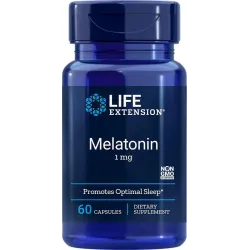
-
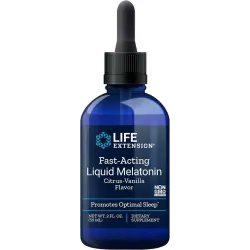
Fast-Acting Liquid Melatonin (Citrus-Vanilla)
Price: 11,98 €Promotes optimal sleep & cellular health Promotes optimal sleep This... -
Melatonin IR/XR
Price: 13,03 €All-night melatonin support for sustained, restful sleep Promotes healthy,... -
Melatonin 6 Hour Timed Release 750 mcg
Price: 10,16 €Sleep & cellular health support in a gradual-release formula Promotes...
Related posts
-
 Feed Your Brain!
Millions of people around the world are adhering to low-fat, low-cholesterol diets in an effort to reduce the impact...
Feed Your Brain!
Millions of people around the world are adhering to low-fat, low-cholesterol diets in an effort to reduce the impact... -
Discovering Coffee's Unique Health Benefits
Every morning, many of us sip our coffee with no real thought given to the beans behind the brew. But coffee beans...
-
Depression. New Human Study Confirms Potent Antidepressant Effects of SAMe
Life Extension® introduced SAMe (S-adenosylmethinone) in 1997. Back then it was enormously popular in Europe, but...
-
Tryptophan. Why Aging People Become Depressed, Fatigued, and Overweight part 1
Serotonin is a compound in the brain that promotes feelings of personal security, relaxation, and confidence. A...
-
Tryptophan. Why Aging People Become Depressed, Fatigued, and Overweight part 2
Fortunately, the new understanding of how tryptophan is degraded in aging humans provides a basis for engineering a...