
 English
 Polski
 Deutsch
 Français
 ελληνικά
 Español
 Italiano
Improve Lung Function
 With age, lung function begins to decline.1-3
The problem is further exacerbated by exposure to secondhand smoke and air pollution.
This decline threatens overall health, quality of life, and lifespan.2
Scientists have identified four plant-derived ingredients that can help counter this decline.
Human studies have validated significant improvements in lung function.
Over 40% of Americans live in areas with poor air quality. Pollution levels correlate with increased rates of lung disease.4-6
For example:4
- Ohio has the country’s worst air quality—and a lung disease prevalence of 15.5%.
- Hawaii has the country’s best air quality—and a lung disease prevalence of just 3.5%.
- Lung symptoms of air pollution exposure can include coughing, breathing difficulties, congestion and worse.
- Excessive air pollution can result in development of respiratory conditions, including asthma and chronic obstructive pulmonary disease (COPD).
Key Nutrients Can Help
Scientists have identified four plant-derived compounds that improve lung health as follows:7-16
- Boswellia serrata and Aegle marmelos improved breathing and lung function in healthy adults sensitive to pollution,8
- Boswellia serrata, Aegle marmelos, and saffron were shown to improve breathing ability in asthmatics,7,9,10 and
- In preclinical studies, andrographolide has been shown to reduce smoke-induced lung damage.14-16
Boswellia-Bael Fruit Blend
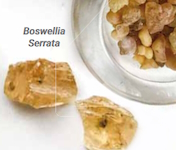
 Boswellia serrata is a plant found in Arabia and India. It has shown benefits for several conditions, including asthma.17
Bael fruit is a shrub native to the Indian subcontinent and southeast Asia. Its fruit and seeds are used in traditional medicine for various disorders.18
An equal blend of extracts of these plants was shown, in a clinical trial, to alleviate asthma symptoms and to provide a clinically meaningful improvement in lung health parameters.7
In one study, scientists enlisted healthy adults with self-described sensitivity to air pollution.8
This trial included a group that took a placebo, while another group took 200 mg daily of the Boswellia-Bael blend. After just three weeks, the group that received the Boswellia-Bael combination had some improved lung function. After six weeks, they had a:8
- 30.2% improvement in total air exhaled during a spirometry test (which measures lung capacity, or how much air you can breathe into or out of your lungs),
- 16.4% improvement in air forced out in the first second, a measure of air movement through larger airways, and
- 7.4% improvement in aerobic exercise capa-city, measured by average speed walked during a six-minute period (from 3. 36 mph to 3.5 mph).
 COPD and asthma can require use of inhalers for coughing, wheezing, or troubled breathing during a flare-up. For this reason, they are also called rescue drugs or rescue inhalers.
A second study investigated the effect of the same blend in subjects who suffered from mild to moderate bronchial asthma. One group took a placebo, while the other took 100 mg of theBoswellia-Bael blend twice daily.7
The treatment group experienced improved breathing and reduced use of inhalers, including a:7
- 50.17% improvement in peak expiratory flow rate, a measure of the maximum amount of air a person can push out of their lungs when exhaling forcefully, after eight weeks, and
- 44% decrease in the use of a “rescue” asthma inhaler after four weeks.
The improvements were attributed to the extracts’ anti-inflammatory activity.7
Saffron
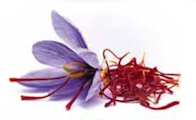 The spice saffron has long been used in traditional medicine for respiratory ailments and to counter inflammation, among other purposes.10
Eighty adults with mild to moderate asthma were enrolled in a placebo-controlled trial. After taking 50 mg of saffron twice daily for eight weeks, the treatment group had:9,10
- 50% less waking at night due to asthma symptoms,
- 40% less “rescue” inhaler use,
- 36.8% less activity limitation, and
- 33.8% less shortness of breath during the night.
Saffron also reduced biomarkers of inflammation (such as C-reactive protein).10,19-21 Animal data show that saffron has relaxing effects on the smooth muscle of the trachea (windpipe) as an additional mechanism of supporting breathing/lung function.19-25
WHAT YOU NEED TO KNOW: Breathe Easy as You Age
 Beginning around age 25-35, lung function begins to decline with each passing year. Respiratory health is further damaged by air pollution.
- Scientists identified four plant-derived ingredients that enhance lung health: Boswellia serrata, Bael fruit, saffron, and andrographolide.
- Human studies show that a blend of Boswellia and Bael fruit extracts improved breathing and boosted lung function in healthy individuals, as well as people with sensitivity to air pollution or those with asthma.
- A clinical study shows that saffron extract increased breathing capacity and reduced symptoms in those suffering from asthma.
- Preclinical data suggest that andro-grapholide could protect lungs against pollution and smoke.
Andrographolide
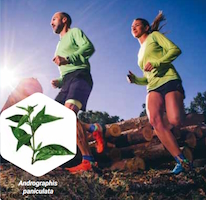
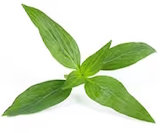 The compound andrographolide is extracted from the stem and leaves of Andrographis paniculata. It has been used in traditional Indian medicine and is best known for supporting immunity.26
Cell and animal models of smoke- or pollution-induced lung toxicity suggest that andrographolide may protect against lung damage. It appears to do so by:11,13-16
- Inhibiting DNA damage,
- Protecting against oxidative stress, and
- Reducing inflammation.
A combination of Boswellia-Bael blend, saffron, and andrographolide may help protect lung function and promote better breathing well into older age.
WHAT YOU NEED TO KNOW: How Breathing Problems Develop
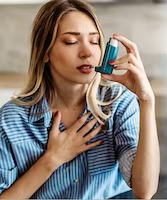 Proper lung function is essential to overall health.2 But starting around age 35, lung function declines at a rate of 1%-2% yearly.1
That’s because aging causes changes that can decrease lung capacity:3
- Diaphragm muscles weaken,
- The tissue that keeps airways open loses elasticity, making airways smaller, and
- Rib cage bones decrease in size, leaving less room for lungs to expand.
Deterioration of breathing capacity affects every cell in the body. This age-related decline may be accelerated by other factors, including inflammation and air pollution.
Summary
Aging, declining lung function, and air pollution can damage lungs and cause breathing difficulties. Researchers have identified four plant-based ingredients that protect healthy lung function.
A blend of Boswellia and Bael fruit extracts was clinically shown to improve breathing and relieve asthma symptoms.
Saffron extract was clinically demonstrated to improve asthma.
Andrographolide was found in preclinical research to protect against lung damage from pollutants and smoke.
Together, these ingredients may help preserve vital lung function and breathing capacity.
Material used with permission of Life Extension. All rights reserved.
- Sharma G, Goodwin J. Effect of aging on respiratory system physiology and immunology. Clin Interv Aging. 2006;1(3):253-60.
- Bowdish DME. The Aging Lung: Is Lung Health Good Health for Older Adults? Chest. 2019 Feb;155(2):391-400.
- Available at: https://www.lung.org/lung-health-diseases/how-lungs-work/lung-capacity-and-aging. Accessed December, 7, 2022.
- Available at: https://www.lung.org/research/trends-in-lung-disease/prevalence-incidence-lung-disease. Accessed December, 7, 2022.
- Available at: https://worldpopulationreview.com/state-rankings/air-quality-by-state. Accessed December, 7, 2022.
- Available at: https://www.npr.org/2022/04/21/1093205632/air-quality-pollution-state-of-air-report. Accessed December, 7, 2022.
- Yugandhar P, Rao KM, Sengupta K. A novel herbal composition containing extracts of Boswellia serrata gum resin and Aegle marmelos fruit alleviates symptoms of asthma in a placebo controlled double-blind clinical study. Phytother Res. 2018 Jan;32(1):140-50.
- PLT. Alviolife. 2022.
- Zilaee M, Hosseini SA, Jafarirad S, et al. An evaluation of the effects of saffron supplementation on the asthma clinical symptoms and asthma severity in patients with mild and moderate persistent allergic asthma: a double-blind, randomized placebo-controlled trial. Respir Res. 2019 Feb 22;20(1):39.
- Hosseini SA, Zilaee M, Shoushtari MH, et al. An evaluation of the effect of saffron supplementation on the antibody titer to heat-shock protein (HSP) 70, hsCRP and spirometry test in patients with mild and moderate persistent allergic asthma: A triple-blind, randomized placebo-controlled trial. Respir Med. 2018 Dec;145:28-34.
- Tan WSD, Liao W, Peh HY, et al. Andrographolide simultaneously augments Nrf2 antioxidant defense and facilitates autophagic flux blockade in cigarette smoke-exposed human bronchial epithelial cells. Toxicol Appl Pharmacol. 2018 Dec 1;360:120-30.
- Liao W, Lim AYH, Tan WSD, et al. Restoration of HDAC2 and Nrf2 by andrographolide overcomes corticosteroid resistance in chronic obstructive pulmonary disease. Br J Pharmacol. 2020 Aug;177(16):3662-73.
- Luo W, Jia L, Zhang JW, et al. Andrographolide Against Lung Cancer-New Pharmacological Insights Based on High-Throughput Metabolomics Analysis Combined with Network Pharmacology. Front Pharmacol. 2021;12:596652.
- Tan WS, Peh HY, Liao W, et al. Cigarette Smoke-Induced Lung Disease Predisposes to More Severe Infection with Nontypeable Haemophilus influenzae: Protective Effects of Andrographolide. J Nat Prod. 2016 May 27;79(5):1308-15.
- Yang D, Zhang W, Song L, et al. Andrographolide protects against cigarette smoke-induced lung inflammation through activation of heme oxygenase-1. J Biochem Mol Toxicol. 2013 May;27(5):259-65.
- Guan SP, Tee W, Ng DS, et al. Andrographolide protects against cigarette smoke-induced oxidative lung injury via augmentation of Nrf2 activity. Br J Pharmacol. 2013 Apr;168(7):1707-18.
- Ernst E. Frankincense: systematic review. BMJ. 2008 Dec 17;337:a2813.
- Available at: https://hort.purdue.edu/newcrop/CropFactSheets/bael.html. Accessed December, 7, 2022.
- Neamati A, Boskabady MH. Effect of Crocus sativus ( Saffron ) on Muscarinic Receptors of Guinea Pig Tracheal Chains. 2010.
- Boskabady MH, Aslani MR. Relaxant effect of Crocus sativus (saffron) on guinea-pig tracheal chains and its possible mechanisms. J Pharm Pharmacol. 2006 Oct;58(10):1385-90.
- Boskabady MH, Seyedhosseini Tamijani SM, Rafatpanah H, et al. The effect of Crocus sativus extract on human lymphocytes’ cytokines and T helper 2/T helper 1 balance. J Med Food. 2011 Dec;14(12):1538-45.
- Nemati H, Boskabady MH, Ahmadzadef Vostakolaei H. Stimulatory effect of Crocus sativus (saffron) on beta2-adrenoceptors of guinea pig tracheal chains. Phytomedicine. 2008 Dec;15(12):1038-45.
- Boskabady MH, Tabatabaee A, Byrami G. The effect of the extract of Crocus sativus and its constituent safranal, on lung pathology and lung inflammation of ovalbumin sensitized guinea-pigs. Phytomedicine. 2012 Jul 15;19(10):904-11.
- Byrami G, Boskabady MH, Jalali S, et al. The effect of the extract of Crocus sativus on tracheal responsiveness and plasma levels of IL-4, IFN-γ, total NO and nitrite in ovalbumin sensitized guinea-pigs. J Ethnopharmacol. 2013 May 20;147(2):530-5.
- Mokhtari-Zaer A, Khazdair MR, Boskabady MH. Smooth muscle relaxant activity of Crocus sativus (saffron) and its constituents: possible mechanisms. Avicenna J Phytomed. 2015 Sep-Oct;5(5):365-75.
- Okhuarobo A, Falodun JE, Erharuyi O, et al. Harnessing the medicinal properties of Andrographis paniculata for diseases and beyond: a review of its phytochemistry and pharmacology. Asian Pac J Trop Dis. 2014 Jun;4(3):213-22. doi: 10.1016/S2222-1808(14)60509-0.
Related product
-
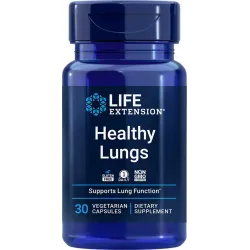
Healthy Lungs
Price: 28,44 €Time to take a deep breath and support healthy lung function Supports lung...
Related posts
-
 N-acetylcysteine (NAC)
The amino acid derivative N-acetylcysteine protects against a broad array of environmental toxins, helps boost the...
N-acetylcysteine (NAC)
The amino acid derivative N-acetylcysteine protects against a broad array of environmental toxins, helps boost the... -
Magnesium Intake Linked to Longer Life After Heart Attack
Higher magnesium intake after heart attack may reduce mortality risk; fish oil supplements reduce COPD risk;...