
 English
 Polski
 Deutsch
 Français
 ελληνικά
 Español
 Italiano
Maintain Youthful Urinary Flow
Prostate problems are widespread as men age.
Benign prostate enlargement and associated urinary difficulties adversely impact sleep and overall life quality.1
Researchers have identified nutrients that can improve prostate function and circumvent urinary discomforts.
Most impressive are clinical data showing benefits in response to combinations of standardized plant extracts.
Consequences of an Aging Prostate
 The prostate is a walnut-size gland located just below the bladder in men.1
Prostate cancer is prevalent in aging males2 but non-malignant prostate disorders are more widespread.1
Benign prostate hyperplasia (BPH) affects about 8% of men in their 40s and gradually worsens to more than 80% as men age past 79 years.3
Those afflicted with BPH may experience lower urinary tract symptoms, including the sudden need to urinate, frequent urination, waking often during the night to urinate, difficulty urinating, and similar symptoms.4
Medications are available to alleviate BPH, but many men do not tolerate their side effects.
Several nutrients have been shown to reduce urinary symptoms without side effects.
Saw Palmetto and Beta-Sitosterol

A systematic review published in 2020 compared saw palmetto extract with the drug tamsulosin in over 1,000 men with BPH.6
After at least six months of treatment, saw palmetto showed comparable benefits to tamsulosin (with the exception of prostate volume), but without the common side effects of tamsulosin, like ejaculation disorders and decreased libido.
Saw palmetto’s effects may be enhanced when its active component, beta-sitosterol, is extracted and taken with it. Beta-sitosterol is a compound that is believed to reduce levels of the hormone dihydrotestosterone (DHT),7 which at high levels is linked to an enlarged prostate.8
In a randomized, controlled trial, men with BPH who took 500 mg of beta-sitosterol-enriched saw palmetto oil daily for 12 weeks had significantly improved symptoms and reduced PSA (prostate specific antigen) levels.9 High PSA levels can indicate an enlarged prostate or possible prostate cancer.10
In another trial, patients with chronic prostatitis who took saw palmetto daily for 12 weeks had significantly improved urinary health scores, including reduced pelvic pain and discomfort.11
Prostatitis , or inflammation of the prostate is frequently caused by bacterial infections. It may cause similar urinary symptoms, along with fever, sexual dysfunction, and pelvic pain.1,12
Nettle Extracts
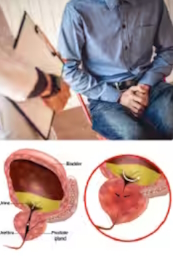 Extracts of the dwarf and stinging nettle plants can provide a range of prostate benefits.13
Nettle extracts exert anti-microbial effects to reduce prostatitis risk.14 They also enable some reduction in prostate size, improvement in urinary flow, and reduced residual urine in the bladder.15,16
In a clinical trial, 60 men with benign prostate hyperplasia took either stinging nettle root extract or a placebo daily for 12 weeks. Those taking the nettle extract had reduced inflammation and improved urinary health scores.17
An evaluation was done of four randomized controlled studies of 922 patients with moderate-to-severe prostate symptoms. Findings from this analysis showed significantly more men responded positively to the combination of saw palmetto and nettle extracts, compared to placebo. The majority of those who responded experienced a reduction of one urination episode per night.18
A combination of saw palmetto and nettle extracts is popular in European medicine to improve urinary symptoms in aging men.19
- Benign prostate hyperplasia and prostatitis are common diseases of the prostate gland that are frequent causes of urinary problems in men.
- Multiple plant extracts and compounds have been shown to prevent and relieve symptoms of these diseases, without side effects that may come with medications, and may even reduce risk of prostate cancer.
Pumpkin Seed
Pumpkin seeds have been used to promote urinary health around the world for centuries.20
In one controlled clinical trial, the combination of pumpkin seed and saw palmetto oils resulted in an over 40% reduction in PSA levels, compared to baseline. The improvement was evident after three months and continued throughout the one-year trial.
In this trial, supplementation with either pumpkin seed or saw palmetto oils or both, resulted in improvement in quality-of-life scores.21
Pygeum Africanum
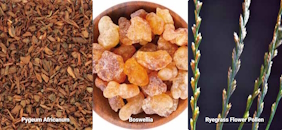 The bark of Pygeum africanum, the African prune tree, contains compounds that support prostate and bladder health.
In a rigorous meta-analysis of 18 controlled trials, men taking Pygeum were more than twice as likely as placebo users to report an improvement in BPH symptoms.22
In a clinical trial of men with BPH, taking Pygeum extract twice daily for two months, compared to baseline, resulted in a:
- 40% improvement in prostate symptoms score,
- 31% improvement in quality of life, and
- 32% reduction in nocturnal urinary frequency.23
Pygeum has been used in Europe for decades as a medication to improve urinary symptoms in men with BPH.22
Boswellia
Boswellia serrata, also known as Indian frankincense, has been used for centuries in traditional Indian medicine to treat inflammatory conditions.
Preclinical research has shown that it can:
- Induce death in prostate cancer cells,24,25
- Decrease formation of androgen receptors that many prostate cancers require to survive, and26
- Inhibit the growth of blood vessels that tumors need to metastasize.27
Clinical studies are needed to evaluate how these beneficial functional effects may impact prostate cancer risk and outcomes in aging men.
Flower Pollen
One study found that a ryegrass pollen extract worked as well as six different drugs commonly used for benign prostate hyperplasia.30
In a preclinical study, flower pollen extract reduced harmful activity of altered prostate cells, which suggested it could benefit prostatitis and have a possible prostate cancer preventative effect.31
Norway Spruce
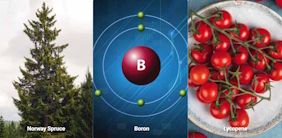 Research has shown that increased dietary intake of lignans, polyphenols found in many plants, correlates with reduced prostate cancer risk.32-34
The Norway spruce contains particularly high amounts of lignans.
In preclinical studies, Norway spruce lignans reduced prostate tumor volume and increased the death of cancer cells. Other Norway spruce extracts reduced lower urinary tract symptoms in a model of chronic prostatitis.35,36
In the body, lignans convert into a compound called enterolactone,37 which may promote hormonal changes associated with lower prostate cancer risk.38,39
An epidemiological study found that those with the highest enterolactone levels were 60% less likely to have prostate cancer than those with low levels.33
Boron
Preclinical research in mice found that boron can decrease the size of existing prostate tumors.
In addition, a large survey showed that the risk of prostate cancer was 52% lower in those whose daily boron intake averaged 1.8 mg compared to those who consumed 0.9 mg or less.40
Lycopene
Lycopene is a carotenoid found in many plants, including tomatoes.41 One meta-analysis found that higher lycopene intake was associated with reduced risk of prostate cancer.42
Other research has found that increased lycopene intake is associated with decreased prostate size,41,43 and reduced risk for prostate cancer development and progression.43,44
Summary
 Many men over age 40 deal with persistenturinary discomforts mostly caused by benign prostate hyperplasia and sometimes prostatitis.
A large volume of published scientific data demonstrates benefits in response to certain nutrients individually.
Even more impressive is evidence showing significant results when these plant extracts are taken in combination.
Some of these nutrients possess mechanisms that may help protect against prostate cancer development.
Material used with permission of Life Extension. All rights reserved.
- Available at:https://www.cancer.gov/types/prostate/understanding-prostate-changes#:~:text=The%20three%20most%20common%20prostate%20problems%20are%20inflammation,does%20not%20increase%20your%20risk%20of%20prostate%20cancer. Accessed December, 1, 2022.
- Siegel RL, Miller KD, Fuchs HE, et al. Cancer statistics, 2022. CA: A Cancer Journal for Clinicians. 2022;72(1):7-33.
- Nimeh T, Magnan B, Almallah YZ. Benign Prostatic Hyperplasia: Review of Modern Minimally Invasive Surgical Treatments. Semin Intervent Radiol. 2016 Sep;33(3):244-50.
- Devlin CM, Simms MS, Maitland NJ. Benign prostatic hyperplasia - what do we know? BJU Int. 2021 Apr;127(4):389-99.
- Available at: https://www.herbalgram.org/resources/expanded-commission-e/saw-palmetto-berry/. Accessed December, 9, 2022.
- Cai T, Cui Y, Yu S, et al. Comparison of Serenoa repens With Tamsulosin in the Treatment of Benign Prostatic Hyperplasia: A Systematic Review and Meta-Analysis. Am J Mens Health. 2020 Mar-Apr;14(2):1557988320905407.
- Zamani P, Mokhtari O, Dehghanian F. Identification of Beta-Sitosterol and Stigmasterol as Possible Inhibitors of 5 Alpha-Reductase 1: An In-Silico Study. 2021;1(1):e121545.
- Madersbacher S, Sampson N, Culig Z. Pathophysiology of Benign Prostatic Hyperplasia and Benign Prostatic Enlargement: A Mini-Review. Gerontology. 2019;65(5):458-64.
- Sudeep HV, Thomas JV, Shyamprasad K. A double blind, placebo-controlled randomized comparative study on the efficacy of phytosterol-enriched and conventional saw palmetto oil in mitigating benign prostate hyperplasia and androgen deficiency. BMC Urol. 2020 Jul 3;20(1):86.
- Available at: https://www.cancer.org/cancer/prostate-cancer/detection-diagnosis-staging/tests.html#:~:text=About%2015%25%20of%20men%20with,prostate%20cancer%20is%20over%2050%25. Accessed December, 9, 2022.
- Zhang K, Guo RQ, Chen SW, et al. The efficacy and safety of Serenoa repens extract for the treatment of patients with chronic prostatitis/chronic pelvic pain syndrome: a multicenter, randomized, double-blind, placebo-controlled trial. World J Urol. 2021 Sep;39(9):3489-95.
- Khan FU, Ihsan AU, Khan HU, et al. Comprehensive overview of prostatitis. Biomed Pharmacother. 2017 Oct;94:1064-76.
- Mohammadi A, Mansoori B, Aghapour M, et al. Urtica dioica dichloromethane extract induce apoptosis from intrinsic pathway on human prostate cancer cells (PC3). Cell Mol Biol (Noisy-le-grand). 2016 Mar 31;62(3):78-83.
- Cai T, Mazzoli S, Bechi A, et al. Serenoa repens associated with Urtica dioica (ProstaMEV) and curcumin and quercitin (FlogMEV) extracts are able to improve the efficacy of prulifloxacin in bacterial prostatitis patients: results from a prospective randomised study. Int J Antimicrob Agents. 2009 Jun;33(6):549-53.
- Safarinejad MR. Urtica dioica for treatment of benign prostatic hyperplasia: a prospective, randomized, double-blind, placebo-controlled, crossover study. J Herb Pharmacother. 2005;5(4):1-11.
- Chrubasik JE, Roufogalis BD, Wagner H, et al. A comprehensive review on the stinging nettle effect and efficacy profiles. Part II: urticae radix. Phytomedicine. 2007 Aug;14(7-8):568-79. Akbar Karami A, Sheikhsoleimani M, Reza Memarzadeh M, et al. Urtica Dioica Root Extract on Clinical and Biochemical Parameters in Patients with Benign Prostatic Hyperplasia, Randomized Controlled Trial. Pak J Biol Sci. 2020 Jan;23(10):1338-44.
- Oelke M, Berges R, Schlafke S, et al. Fixed-dose combination PRO 160/120 of sabal and urtica extracts improves nocturia in men with LUTS suggestive of BPH: re-evaluation of four controlled clinical studies. World J Urol. 2014 Oct;32(5):1149-54.
- Koch E. Extracts from fruits of saw palmetto (Sabal serrulata) and roots of stinging nettle (Urtica dioica): viable alternatives in the medical treatment of benign prostatic hyperplasia and associated lower urinary tracts symptoms. Planta Med. 2001 Aug;67(6):489-500.
- Batool M, Ranjha M, Roobab U, et al. Nutritional Value, Phytochemical Potential, and Therapeutic Benefits of Pumpkin (Cucurbita sp.). Plants (Basel). 2022 May 24;11(11).
- Hong H, Kim CS, Maeng S. Effects of pumpkin seed oil and saw palmetto oil in Korean men with symptomatic benign prostatic hyperplasia. Nutr Res Pract. 2009 Winter;3(4):323-7.
- Wilt T, Ishani A, Mac Donald R, et al. Pygeum africanum for benign prostatic hyperplasia. Cochrane Database Syst Rev. 2002;1998(1):CD001044.
- Breza J, Dzurny O, Borowka A, et al. Efficacy and acceptability of tadenan (Pygeum africanum extract) in the treatment of benign prostatic hyperplasia (BPH): a multicentre trial in central Europe. Curr Med Res Opin. 1998;14(3):127-39.
- Lu M, Xia L, Hua H, et al. Acetyl-keto-beta-boswellic acid induces apoptosis through a death receptor 5-mediated pathway in prostate cancer cells. Cancer Res. 2008 Feb 15;68(4):1180-6.
- El Gaafary M, Büchele B, Syrovets T, et al. An α-acetoxy-tirucallic acid isomer inhibits Akt/mTOR signaling and induces oxidative stress in prostate cancer cells. J Pharmacol Exp Ther. 2015 Jan;352(1):33-42.
- Yuan HQ, Kong F, Wang XL, et al. Inhibitory effect of acetyl-11-keto-beta-boswellic acid on androgen receptor by interference of Sp1 binding activity in prostate cancer cells. Biochem Pharmacol. 2008 Jun 1;75(11):2112-21.
- Saraswati S, Pandey M, Mathur R, et al. Boswellic acid inhibits inflammatory angiogenesis in a murine sponge model. Microvasc Res. 2011 Nov;82(3):263-8.
- El-Khatib FM, Yafi NR, Yafi FA. Over-the-Counter Supplements and Men’s Health. In: Yafi FA, Yafi NR, editors. Effects of Lifestyle on Men’s Health: Academic Press; 2019:281-300.
- Chambliss WG. A Critical Review of Graminex Flower pollen extract for Symptomatic Relief Of Lower Urinary Tract Symptoms ( LUTS ) in Men. 2010.
- Li NC, Wu SL, Jin J, et al. [Comparison of different drugs on the treatment of benign prostate hyperplasia]. Zhonghua Wai Ke Za Zhi. 2007 Jul 15;45(14):947-50.
- Locatelli M, Macchione N, Ferrante C, et al. Graminex Pollen: Phenolic Pattern, Colorimetric Analysis and Protective Effects in Immortalized Prostate Cells (PC3) and Rat Prostate Challenged with LPS. Molecules. 2018 May 11;23(5).
- Low YL, Taylor JI, Grace PB, et al. Polymorphisms in the CYP19 gene may affect the positive correlations between serum and urine phytoestrogen metabolites and plasma androgen concentrations in men. J Nutr. 2005 Nov;135(11):2680-6.
- Heald CL, Ritchie MR, Bolton-Smith C, et al. Phyto-oestrogens and risk of prostate cancer in Scottish men. Br J Nutr. 2007 Aug;98(2):388-96.
- McCann SE, Ambrosone CB, Moysich KB, et al. Intakes of selected nutrients, foods, and phytochemicals and prostate cancer risk in western New York. Nutr Cancer. 2005;53(1):33-41.
- Chen LH, Fang J, Li H, et al. Enterolactone induces apoptosis in human prostate carcinoma LNCaP cells via a mitochondrial-mediated, caspase-dependent pathway. Mol Cancer Ther. 2007 Sep;6(9):2581-90.
- Konkol Y, Vuorikoski H, Tuomela J, et al. Galactoglucomannan-rich hemicellulose extract from Norway spruce (Picea abies) exerts beneficial effects on chronic prostatic inflammation and lower urinary tract symptoms in vivo. Int J Biol Macromol. 2017 Aug;101:222-9.
- Lamblin F, Hano C, Fliniaux O, et al. [Interest of lignans in prevention and treatment of cancers]. Med Sci (Paris). 2008 May;24(5):511-9.
- Brooks JD, Thompson LU. Mammalian lignans and genistein decrease the activities of aromatase and 17beta-hydroxysteroid dehydrogenase in MCF-7 cells. J Steroid Biochem Mol Biol. 2005 Apr;94(5):461-7.
- Yassin A, AlRumaihi K, Alzubaidi R, et al. Testosterone, testosterone therapy and prostate cancer. Aging Male. 2019 Dec;22(4):219-27.
- Pizzorno L. Nothing Boring About Boron. Integr Med (Encinitas). 2015 Aug;14(4):35-48.
- Li N, Wu X, Zhuang W, et al. Tomato and lycopene and multiple health outcomes: Umbrella review. Food Chem. 2021 May 1;343:128396.
- Chen P, Zhang W, Wang X, et al. Lycopene and Risk of Prostate Cancer: A Systematic Review and Meta-Analysis. Medicine (Baltimore). 2015 Aug;94(33):e1260.
- Mirahmadi M, Azimi-Hashemi S, Saburi E, et al. Potential inhibitory effect of lycopene on prostate cancer. Biomed Pharmacother. 2020 Sep;129:110459.
- Zu K, Mucci L, Rosner BA, et al. Dietary Lycopene, Angiogenesis, and Prostate Cancer: A Prospective Study in the Prostate-Specific Antigen Era. JNCI: Journal of the National Cancer Institute. 2014;106(2).
Related products
-
Ultra Prostate Formula
Price: 32,02 €Next-generation prostate protection Supports prostate health with... -
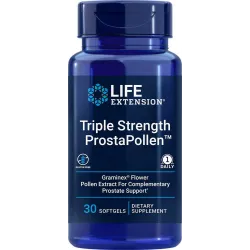
Triple Strength ProstaPollen™
Price: 26,96 €Protect your prostate and maintain its healthy function Supports healthy... -
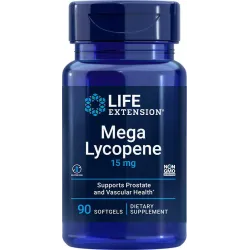
-
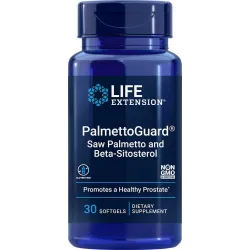
PalmettoGuard® Saw Palmetto and Beta-Sitosterol
Price: 14,51 €Supports healthy prostate function & hormone metabolism Supports men’s...
Related posts
-
 Optimal Prostate Defense Requires a Multi-Modal Strategy
As an aging man, your odds of suffering benign prostate enlargement (BPH) and/or prostate cancer are exceedingly...
Optimal Prostate Defense Requires a Multi-Modal Strategy
As an aging man, your odds of suffering benign prostate enlargement (BPH) and/or prostate cancer are exceedingly... -
Testosterone. Natural Methods to Improve Vitality, Sexual Function, and Prostate Health
As men grow older, they often face daunting health challenges caused by the age-related decline in testosterone...
-
The Inflammatory Factor Underlying Most Cancers
Implicated in the onset of 95% of all cancers is a common but under-recognized molecule most people have never heard...
-
Low Testosterone Promotes Abdominal Obesity in Aging Men
As men age, many become trapped in a vicious cycle that leads to life-threatening abdominal obesity. No matter how...
-
Benign Prostatic Hyperplasia (BPH) part 1
The majority of men older than 60 years will be affected by benign (noncancerous) enlargement of the prostate gland....