
 English
 Polski
 Deutsch
 Français
 ελληνικά
 Español
 Italiano
Reversing Female Sexual Dysfunction
 Sexual dysfunction afflicts 43% of women compared to 31% of men.1,2 Yet the only sexual enhancement commercials you see on TV are those promoting drugs to treat male erectile dysfunction.
While prevalence of female sexual dysfunction increases with age,3 40% of affected women do not seek help from a physician.4 One reason is that no pharmaceutical has yet been approved for the treatment of female sexual dysfunction and doctors have no protocol (other than hormone replacement) for this condition.5
The exciting news is that recent discoveries have identified several new natural compounds that work together to halt the mechanisms behind female sexual dysfunction, as well as menopausal symptoms.
This article describes how these botanical-based extracts beneficially modulate six pathways that can lead to female sexual dysfunction. Just one of these extracts—taken alone—reduced sexual dysfunction for over 86% of the women enrolled in a double-blind, placebo-controlled study in just 40 days!6
You will also learn how another compound made from several plants modulates hormonal activity behind the menopausal symptoms—which frequently trigger female sexual dysfunction. In a double-blind, placebo-controlled human study, this multi-extract blend reduced menopausal symptoms by an average of 62% in 12 weeks!7
Preferring at times not to engage in sexual activity does not indicate a woman has female sexual dysfunction. Disinterest, or even occasional dysfunction, can be a normal response to a variety of life situations.
But when a woman is frustrated and depressed by a lack of normal sexual interest and function, it indicates disruption of one or more pathways in the body’s overall physiological matrix—a condition that demands treatment.
Although the incidence of female sexual dysfunction increases with age,8 it is not an inevitable symptom of aging, and it can afflict women of any age.
One study warned that the increasing number of women with sexual dysfunction complaints indicates that “it is time for physicians to start to acknowledge women’s sexuality with the same importance their patients do.”4
Supporting the underlying physiological mechanisms is a vital step in preventing sexual dysfunction.
As you will learn, several botanical extracts have been studied—Cordyceps sinensis, maca, and a three-extract blend called EstroG-100™—for their ability to complement each other and simultaneously modulate diverse biochemical pathways to provide a multi-factorial treatment for this complex disorder.
How Female Sexual Dysfunction Develops
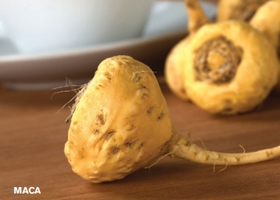 Female sexual dysfunction can be difficult to diagnose due to the complexities of the female sexual response. It manifests as one or more of a set of symptoms that can come and go: reduction of sex drive, aversion to sex, lack of arousal, vaginal dryness, pain during sex, and inability to feel pleasure or reach orgasm.
Symptoms of female sexual dysfunction may be triggered by physiological changes, especially those that affect the reproductive system such as premenstrual syndrome, pregnancy, postpartum, or menopause.9
Female sexual dysfunction is often the result of reduced levels of estrogen, testosterone, progesterone, serotonin, antioxidants, and nitric oxide; or increased levels of pro-inflammatory cytokines and monoamine oxidase.9
In the brain, increased levels of monoamine oxidase destroy the pleasure chemical dopamine.
Menopausal transition is considered the most difficult time to remain sexually healthy and can be a frequent cause of reduced sexual interest or desire in women. Menopause involves symptoms such as hot flashes, night sweats, fatigue, anxiety, and memory loss—but the accompanying depression, vaginal dryness, and loss of libido can be elements of female sexual dysfunction.
Up until a decade ago, conventional medicine erroneously treated menopausal symptoms with unnatural-to-the-human-body hormones such as conjugated equine estrogen plus medroxyprogesterone acetate. All that changed with the publication of a landmark July 2002 study called the Women’s Health Initiative (WHI), which concluded that the benefits of treatment did not outweigh the 26% increased risk of breast cancer, the 29% increased risk of heart disease, and the 41% higher risk of stroke.10-12
Female sexual dysfunction involves the disruption of multiple physiological mechanisms for which modern medicine has no consistently safe and effective treatment.
For this reason, mainstream physicians have been virtually helpless in the face of increasing numbers of women afflicted by female sexual dysfunction or menopause, or both—until now.
| Table 1 | |
Botanical Compound |
Benefit in Reversing Female Sexual Dysfunction |
| Cordyceps(Cs-4) | Balance communication pathways between the brain and the body, optimize adrenal function, mediate inflammation, minimize oxidative stress, support energy production. |
| Maca | Support balanced brain chemistry (neurotransmitters), help the body better manage stress, optimize signals from the brain to the body. |
| Estro G-100™ | Selectively reinforce appropriate hormonal response by amplifying/inhibiting estradiol action in tissues. |
Targeting Multiple Pathways
 To find an effective, non-pharmaceutical solution to the complexities of female sexual dysfunction, scientists screened numerous botanical sources. They discovered specific botanical extracts to address the multiple underlying causes of female sexual dysfunction. Research scientists narrowed down the search and found that the following botanicals were the most effective in treating female sexual dysfunction:
- 1. Cordyceps sinensis extract
- 2. Lepidium meyenii (maca) extract
- 3. EstroG-100™ three-extract blend
Cordyceps
An extract of Cordyceps sinensis—derived from the Cs-4 strain of this medicinal mushroom—was found to have the ability to modulate various physiological pathways that impact female sexual dysfunction. Its efficacy is believed to originate with its unique composition of pharmacologically active substances.
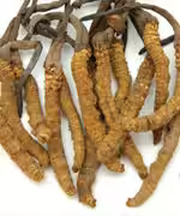 The Cordyceps sinensis extract works on the following distinct pathways to:
- Modulate the hypothalamus-pituitary axis (HPA), balancing levels of estrogen and testosterone as required.6
- Optimize adrenal function, promoting downstream flow of sex hormones.6,13
- Support mitochondrial function by increasing adenosine triphosphate (ATP) production, and with it, energy levels and sexual interest.6,14,15
- Boost antioxidant action, inhibiting the destruction of nitric oxide, and allowing normal vaginal lubrication, and sexual function.6,16,17
- Moderate inflammation by controlling levels of pro-inflammatory cytokines, thus blocking their dampening effect on sexual desire, and activity.18,19
Scientists tested the Cs-4 strain of Cordyceps in a double-blind, placebo-controlled study involving 40 elderly patients suffering from sexual dysfunction. The test group took Cordyceps Cs-4 in dosages that translate to 375 mg of commercially prepared product, because it is formulated as an 8:1 extract. Over 86% of the women in the Cs-4 group significantly improved both hyposexuality signs and symptoms—in only 40 days!6
And in a similar Cordyceps sinensis study of 189 subjects with decreased sex drive, this time including both women and men, improved symptoms were noted in over 66% of participants—again, in just 40 days!6
 Modern medicine offers no effective treatment for female sexual dysfunction, which afflicts 43% of women,1,2 As a result, 40% of these women do not even bother to consult a physician,4 and are in need of a safe and effective solution.
- Scientists working on what has been termed an “important public health concern”1,2 have identified two botanical extracts—Cordyceps sinensis and maca—that work together to modulate six distinct pathways that can lead to female sexual dysfunction.
- Cordyceps was found in placebo-controlled studies to reduce sexual dysfunction for over 66% of women—in just 40 days!6
- A third multi-plant extract, EstroG-100™, addresses the imbalance in estrogenic activity that causes the many menopausal symptoms—which often trigger sexual dysfunction. In a placebo-controlled study, this blend reduced menopausal symptoms (and sexual dysfunction risk) by 62%–in only 12 weeks!26
- These three scientifically validated natural botanical compounds are now available to safely reverse female sexual dysfunction, and alleviate menopausal symptoms.
Maca
An extract of Lepidium peruvianum, a high-altitude root plant popularly known as maca, has been shown to regulate several key physiological pathways of female sexual dysfunction. Maca is believed to work primarily by providing the optimum balance of nutrients utilized by the body’s neuroendocrine system.20
Scientists discovered the significant complementary effects of maca extract, which has been cultivated for over 2,000 years. Maca is believed to influence three different mechanisms to:
- Modulate the hypothalamus-pituitary axis.21-23
- Regulate adrenal gland function.23,24
- Optimize levels of brain neurotransmitters, in turn reducing the risk of decreased libido, depression, and sexual dysfunction.23,25
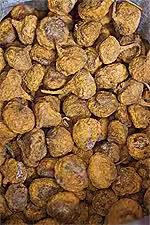 The benefits of maca were assessed in a randomized, double-blind, placebo-controlled, crossover study. Fourteen postmenopausal women were given each day either placebo or powdered maca that translates to 583 mg to 875 mg a day of product, because it is formulated as a 4-6:1 extract. Sexual problems were measured using subscales of the Greene Climacteric Scale, which provides a measure of menopausal symptoms.25
The participants who took maca were found to score more than 34% lower (which by this measure means better) than the placebo subjects on a standard sexual dysfunction scale. This significant improvement was observed in just six weeks! Also, the maca subjects tested 30% lower on the psychological subscale of anxiety and depression symptoms, a substantial improvement for a period of just six weeks!23
Also, to determine maca’s effect on sexual dysfunction in cases that had been specifically diagnosed to be caused by taking antidepressants known as SSRIs (selective serotonin reuptake inhibitors), scientists carried out a double-blind, randomized, pilot study on 20 subjects. Sexual dysfunction was found to be reduced in the group that received maca with mean scores decreased by 25.8%, and 29.4%, on two standard sexual dysfunction scales (the ASEX and the MGH-SFQ questionnaires, respectively). Libido also improved and no adverse side effects were found.25
EstroG-100™
 The third new compound comprises three plant extracts that synergistically work to correct menopausal imbalance by an action believed to be a selective modulation of estrogen activity.
When integrated into a single formula known as EstroG-100™, this multi-compound extract supports balanced estrogenic activity, which in turn inhibits the many symptoms of menopause—including female sexual dysfunction.
Recognizing transitional menopause to be a contributing cause of female sexual dysfunction—scientists began screening a variety of promising plant extracts for potential effect, using a method known as a non-reproductive tract target tissue response (E-screen) test.
Three extracts were eventually pinpointed for their combined beneficial effects on both menopause and female sexual dysfunction: Phlomis umbrosa, Cynanchum wilfordii, and Angelica gigas Nakai (Korean Angelica). Each of these extracts have been used for over 400 years in Korean-Chinese folk medicine. Ultimately, a potent effect was found after these three plant extracts were hot-water-extracted and blended in correct proportions within a single formula, subsequently named EstroG-100™.
Researchers found that EstroG-100™ enhances hormonal function possibly by optimizing estrogenic activity in some target tissues related to menopausal symptoms.26 Because EstroG-100™ has not been found to have an effect on follicle stimulating hormone, estradiol, or growth hormone levels,26 its substantial menopausal relief may stem from its ability to provide activity that is similar to the action of a “phyto-SERM,” a plant-based mimic of the drug class known as selective estrogen receptor modulators, or SERMs. These are agents that—unlike distinct estrogen agonists or estrogen antagonists, which either boost or block estrogen—selectively enhance estrogenic activity in some tissue while inhibiting estrogenic activity in other tissue. In this way, EstroG-100™ may work by mimicking the benefits of SERM drugs—while producing none of the serious health risks of these pharmaceuticals. A randomized, double-blind, placebo-control study showed that EstroG-100™ substantially diminished menopausal symptoms and female sexual dysfunction risk.26
This study of the three-extract EstroG-100TM formula involved 64 women with moderate or severe menopausal symptoms. The test group was given EstroG-100™ in dosages of 257 mg twice daily, a total of 514 mg a day. All subjects were assessed using the Kupperman Menopausal Index, and special scores for vaginal dryness.
The mean Kupperman Menopausal Index score—a measure of menopausal symptoms—was reduced by 62% in the EstroG-100™ group, contrasted with a decrease of just 19% in the placebo group. The mean vaginal dryness score was decreased by 59% in the treatment group versus just 27% among the placebo subjects. The EstroG-100™ group experienced this substantial improvement in both sexual and menopausal symptoms within only 12 weeks, and experienced no accompanying weight gain or other negative effects.
 Research has shown that those experiencing female sexual dysfunction can benefit from naturally elevating their testosterone levels.
Slightly increasing testosterone levels—which can decrease with age—restores libido, arousal response, and the relative frequency of sexual fantasy. In fact, low testosterone levels can be viewed as a contributing cause for female sexual dysfunction.
While expensive testosterone drug patches are available to women by prescription, natural approaches can raise testosterone levels safely and less expensively.
DHEA—dehydroepiandrosterone—is another hormone recognized by holistic practitioners as essential for optimal health in both men and women. Like testosterone, DHEA levels decline with age after peaking when a woman is in her twenties, increasing the risk of heart disease, cancer, osteoporosis—and female sexual dysfunction.
DHEA is released into the bloodstream by the adrenal glands and is a precursor to both testosterone and estrogen. Studies show that increasing levels of DHEA results in an increase in testosterone levels in females (but not males).
Rebalancing these hormonal levels is a key strategy in reversing female sexual dysfunction.
Diverse Mechanisms of Action
 Scientific studies indicate that—when all of the botanical extracts described thus far combine—they modulate all of the following pathways involved in female sexual dysfunction.
- 1. The hypothalamus-pituitary axis (HPA) is crucial to proper sexual libido and function. The hypothalamus secretes substances that regulate the pituitary gland. The pituitary, in turn, secretes adrenocorticotropic hormone (ACTH), which regulates the adrenal cortex, and modulates production by the ovaries, of the key sex hormones estrogen and progesterone. Disturbances in these hormones are a common cause of female sexual dysfunction.
- 2. Adrenal glands produce important hormones that include estrogen, testosterone, progesterone, pregnenolone, aldosterone, DHEA, and adrenal androgens. When secretion of adrenal androgens or other hormones is decreased, this can cause depletion of downstream sex hormones, which in turn lowers sexual function and exacerbates menopausal transition.
- 3. Mitochondria use adenosine triphosphate (ATP) to store, carry, and utilize energy. The biochemical reactions involved in muscle contractions depend on sufficient levels of ATP. Diminished levels of ATP can cause a form of immunological non-responsiveness sometimes associated with diminished interest in sex.
- 4. Antioxidant activity, if deficient, can trigger female sexual dysfunction. Nitric oxide (NO) is a chemical messenger that dilates blood vessels, allowing blood to flow more quickly to various parts of the body, including the genital area. Nitric oxide is required for the ability to relax smooth muscles, for proper vaginal function, and for production of vaginal fluid. If antioxidant function is compromised, free radicals can destroy nitric oxide or limit its activity. Also, the aging process itself is associated with reduced nitric acid production.27 Antidepressants known as SSRIs, or selective serotonin reuptake inhibitors, can interfere with nitric oxide synthase, thus lowering nitric oxide production and blocking sexual arousal. SSRIs can also produce sexual anhedonia, an absence of any feeling of pleasure from sex, or even from orgasm.
- 5. Inflammation is linked to female sexual dysfunction. High levels of pro-inflammatory cytokines can inhibit sexual desire, attraction, and activity.28
- 6. Brain neurotransmitters play a key role in female sexual dysfunction, notably the compound monoamine oxidase (MAO). If MAO levels are not optimal, then depression and reduced libido can result.29 When specifically asked about sexual side-effects, they were acknowledged by as many as 73% of clinical depression patients.30 However, antidepressants known as MAO-inhibitors can compromise the MAO levels required for proper sexual function. Depletion of MAO levels is one of the links between smoking and sexual dysfunction. Conversely, too much MAO depletes dopamine,31 a vital neurotransmitter that enables us to experience pleasure.
- 7. Menopause involves a dramatic drop in estrogen. Often causing discomfort in itself, it also triggers sexual dysfunction in many women,32 inhibiting libido, reducing vaginal blood flow, and causing vulvovaginal atrophy.33,34 This deterioration of urogenital tissue often causes vaginal dryness, irritation, itching, dyspareunia (pain during intercourse), vaginal bleeding with sex, and urinary infections. Serotonin levels decline along with estrogen, increasing the risk of depression and female sexual dysfunction.34
Summary
 Female sexual dysfunction is an important public health concern afflicting 43% of women,1,2 a statistic expected to explode in step with the aging population.8
Yet 40% of women suffering from female sexual dysfunction do not seek help from a physician.4
Recent scientific advances have identified two botanical based substances, Cordyceps and maca, that work together to modulate six distinct pathways that can lead to female sexual dysfunction. Cordyceps, taken by itself, was found in double-blind, placebo-controlled studies to reduce sexual dysfunction for over 66% of women—in only 40 days!6
A third extract, EstroG-100TM, a multi-extract blend of compounds from three plants, balances estrogenic activity in body tissues, alleviating menopausal symptoms—which often trigger female sexual dysfunction. In a double-blind, placebo-controlled study, EstroG-100™ reduced menopausal symptoms (and sexual dysfunction incidence) by 62% in just 12 weeks.26
While the medical establishment offers no effective treatment for the multiple mechanisms causing these conditions, natural botanical extracts can now safely reverse female sexual dysfunction, as well as menopausal symptoms.
It is difficult to pinpoint which of various factors are causing any particular case of female sexual dysfunction. Multiple mechanisms often work together to upset the body’s normal balance of hormones, energy transport, neurotransmitters, and chemical messengers. Here we reveal the underlying causes of female sexual dysfunction and simple steps you can take to correct them.
 Psychological issues can cause a disruption in levels and activity of various neurotransmitters that in turn affects libido, function, and pleasure. They can also result in depression, which often has a negative effect on sexual libido and function. Seeking treatment for emotional and psychological issues can clarify whether the origins of female sexual dysfunction are psychological or physiological. The plant extract commonly known as maca, promotes optimal levels of certain brain neurotransmitters, such as monoamine oxidase (MAO). Unbalanced levels of MAO can cause depression and trigger development of sexual dysfunction symptoms.
Pharmaceuticals can interfere with the body’s biochemistry in ways that negatively affect circulation, respiration, neurotransmitters, or other physiological functioning. If female sexual dysfunction could be the result of your medications, work with your healthcare practitioner to try to find effective but safer alternatives for any blood pressure medications, antihistamines, or psychotherapeutic drugs. Also, avoid excess stimulants, over-consumption of alcohol, and narcotics. Smoking is commonly linked to sexual dysfunction.
Adrenocorticotropic hormone (ACTH) regulates the adrenal cortex and modulates the production of important sex hormones estrogen and progesterone, low levels of which can interfere with sexual libido and function. ACTH is secreted by the pituitary gland, which is regulated by substances produced by the hypothalamus gland. Botanical extracts Cordyceps sinensis and maca support the proper working of the hypothalamus-pituitary axis.
Sex hormones must be available for normal sexual health and function. The adrenal glands produce testosterone, pregnenolone, aldosterone, DHEA, progesterone, estrogen, and adrenal androgens. Underproduction causes downstream depletion of sex hormones, which can be a strong trigger for the symptoms of both female sexual dysfunction and menopausal transition. Botanical extracts Cordyceps sinensis and maca enhance adrenal performance and promote downstream availability of sex hormones.
Adenosine triphosphate (ATP) is utilized by the mitochondria, tiny power plants within cells, to carry and utilize energy. Contractions of muscle depend on a sufficient supply of ATP, and low levels can drain sexual interest and function. Also, chronically depleted ATP levels can result in a condition known as anergy, a form of non-responsiveness of the immune system that is sometimes associated with a diminished sexual libido and attraction. Cordyceps sinensis is a natural botanical extract that targets female sexual dysfunction by promoting an increase in suboptimal ATP production via increased availability of adenosine.
Nitric oxide acts a chemical messenger that causes blood vessels to dilate, facilitating blood flow to the different areas of the body including the genital area. Nitric oxide is required for the proper vaginal function, production of vaginal fluid, and the ability to let smooth muscles relax. However, the action of free radicals can destroy nitric oxide or constrain its activity. Antidepressants called SSRIs, or selective serotonin reuptake inhibitors, can interfere with nitric oxide synthetase, thus decreasing nitric oxide production and blocking sexual arousal. Possibly through their effect on nitric oxide, SSRIs can produce sexual anhedonia, an absence of any feeling of pleasure from sex, or even from orgasm. Also, production of nitric oxide is associated with aging. Studies indicate that Cordyceps sinensis boosts antioxidant activity and inhibits the destruction of nitric oxide, promoting the flow of blood that is central to sexual function and vaginal fluid production.
 Pro-inflammatory cytokines have been shown in studies to decrease sexual desire, attraction, and activity. The botanical extract Cordyceps sinensis dampens the inflammatory response by inhibiting the production of cytokines.
Monoamine oxidase (MAO) and some other brain neurotransmitters play a complicated role in the development of female sexual dysfunction symptoms. If MAO levels are either too low or too high, this can cause diminished sexual libido and depression. Depression itself is a factor in triggering sexual dysfunction symptoms, and 70% of depression patients acknowledge having sexual side effects. Antidepressant drugs also promote sexual dysfunction. One type of antidepressant known as an MAO-inhibitor is specifically designed to combat depression by inhibiting monoamine oxidase, which can cause female sexual dysfunction as a side effect of excess MAO inhibition. The ancient plant extract maca balances levels of monoamine oxidase, preventing the loss of libido, and potentially combating depression.
Estrogen levels fall during menopause, which most often results in menopausal symptoms such as night sweats, hot flashes, fatigue, insomnia, depression, and—in 55% of menopausal women—female sexual dysfunction. The reduction in estrogenic availability to certain tissues can cause reduced vaginal blood flow and vulvovaginal atrophy, which is a form of urogenital tissue deterioration. Vulvovaginal atrophy often causes vaginal dryness, irritation, itching, dyspareunia (pain during intercourse), vaginal bleeding with sex, and urinary infections. Serotonin levels dive along with estrogen levels, increasing the risk of depression and female sexual dysfunction. Pharmaceutical agents known as selective estrogen receptor modulators (SERMs) can modulate estrogen activity, selectively enhancing its action where needed in certain tissues, while beneficially inhibiting estrogenic activity in some other tissues. However, SERM drugs have side effects: leg cramps, hot flashes, and a two- to three-fold increase in the risk of venous thromboembolism, a potentially fatal blood clot. EstroG-100™ is a special blend of hot-water extracts of three different plants—Phlomis umbrosa, Cynanchum wilfordii, and Angelica gigas Nakai (Korean Angelica). EstroG-100™. It is suspected to act like a phyto-SERM. This means that its remarkable impact on menopausal symptoms may result from its selectively balancing estrogenic activity, enhancing estrogen among only some tissues—mimicking SERM drugs but without any of the adverse effects of these pharmaceuticals. Balanced estrogen activity often substantially alleviates menopausal symptoms including hot flashes, fatigues and depression, promotes vaginal blood flow, helps prevent vulvovaginal atrophy, supports vaginal fluid production, revives libido, and slashes the risk of menopause-related female sexual dysfunction.
Material used with permission of Life Extension. All rights reserved.
- Lewis RW, Fugl-Meyer KS, Corona G, et al. Definitions/epidemiology/risk factors for sexual dysfunction. J Sex Med. 2010;7(4):1598-607.
- Laumann EO, Paik A, Rosen RC. Sexual dysfunction in the United States. Prevalence and predictors. JAMA. 1999;281(6):537-44.
- Hisasue S, Kumamoto Y, Sato Y, et al. Prevalence of female sexual dysfunction symptoms and its relationship to quality of life: a Japanese female cohort study. Urology. 2005 Jan;65(1):143-8.
- Berman L, Berman J, Felder S, et al. Seeking help for sexual function complaints: what gynecologists need to know about the female patient’s experience. Fertil Steril. 2003 Mar;79(3):572-6.
- Jordan R, Hallam TJ, Molinoff P, Spana C. Developing treatments for female sexual dysfunction. Clin Pharmacol Ther. 2011;89(1):137-41.
- Zhu J-S, Halpern GM, Jones K. The scientific rediscovery of an ancient Chinese herbal medicine: Cordyceps sinensis parti. J Alt Complement Med. 1998;4(3):289-303.
- Chang A, Kwak B-Y, Yi K, Kim JS. The effect of herbal extract (EstroG-100) on pre-, peri- and post-menopausal women: a randomized double-blind, placebo-controlled study. Phtyother Res. 2011;doi:10.1002/ptr.3597.
- Hiasue S, Kumamoto Y, Sato Y, et al. Prevalence of female sexual dysfunction symptoms and its relationship to quality of life: a Japanese female cohort study. Urology. 2005 Jan;65(1):143-8.
- Saks BR. Common issues in female sexual dysfunction. Psych Times. 2008 April;15;25(5).
- Rossouw JE, Anderson GL, Prentice RL, et al. Risks and benefits of estrogen plus progestin in healthy postmenopausal women: principal results From the Women’s Health Initiative randomized controlled trial. JAMA. 2002;288(3):321-33.
- Anderson GL, Limacher M, Assaf AR, et al. Effects of conjugated equine estrogen in postmenopausal women with hysterectomy: the Women’s Health Initiative randomized controlled trial. JAMA. 2004;291(14):1701-12.
- Vassilopoulou-Sellin R. Breast cancer and hormonal replacement therapy. Ann N Y Acad Sci. 2003;997:341-50.
- Wan F, Guo Y, Deng X. Sex hormone-like effects of JinShuiBao capsule: Pharmacological and clinical studies. Chinese Trad Pat Med. 1988;9:29-31.
- Yang WZ, Deng Xa, Hu W. Treatment of sexual hypofunction with Cordyceps sinensis. Jiangxi Zhongyiyao. 1985;5:46-7.
- Manabe N, Sugimoto M, Azume Y, et al. 1996. Effects of the mycelial extract of cultured Cordyceps sinensis on in vivo hepatic energy metabolism in the mouse. Jpn J Pharmacol. 70:85-8.
- Wan F, Guo Y, Deng X. Sex hormone-like effects of JinShuiBao capsule: Pharmacological and clinical studies. Chinese Trad Pat Med. 1988;9:29-31.
- Wang Y, Wang M, Ling Y, Fan W, Wang Y, Yin H. Structural determination and antioxidant activity of a polysaccharide from the fruiting bodies of cultured Cordyceps sinensis. Am J Chin Med. 2009;37(5):977-89.
- Liu P, Zhu J, Huang Y, Liu C. Influence of Cordyceps sinensis (Berk.) Sacc. and rat serum containing same medicine on IL-1, IFN, and TNF produced by rat Kupffer. China J Chin Materia Medica. 1996;21:367-9.
- Piacente S, Carbone V, Plaza A, Zampelli A, Pizza C. Investigation of the tuber constituents of maca (Lepidium meyenii Walp.). J Agricul Food Chem. 2002;50(20):5621–5.
- Gonzales GF, Córdova A, Vega K, Chung A, Villena A, Góñez C. Effect of Lepidium meyenii (Maca), a root with aphrodisiac and fertility-enhancing properties, on serum reproductive hormone levels in adult healthy men. J Endocrinol. 2003 Jan;176(1):163-8.
- Bogani P, Simonini F, Iriti M, et al. Lepidium meyenii (Maca) does not exert direct androgenic activities. J Ethnopharmacol. 2006 Apr 6;104(3):415-7.
- Brooks NA, Wilcox G, Walker KZ, Ashton JF, Cox MB, Stojanovska L. Beneficial effects of Lepidium meyenii (Maca) on psychological symptoms and measures of sexual dysfunction in postmenopausal women are not related to estrogen or androgen content. Menopause. 2008 Nov-Dec;15(6):1157-62.
- Gonzales GF. Ethnobiology and ethnopharmacology of Lepidium meyenii (Maca), a plant from the Peruvian Highlands. Evid Based Complement Alternat Med. 2012;2012:193496. Epub 2011 Oct 2.
- Dording CM, Fisher L, Papakostas G, et al. A double-blind, randomized, pilot dose-finding study of maca root (L. meyenii) for the management of SSRI-induced sexual dysfunction. CNS Neurosci Ther. 2008 Fall;14(3):182-91.
- Chang A, Kwak B-Y, Yi K, Kim JS. The effect of herbal extract (EstroG-100) on pre-, peri- and post-menopausal women: a randomized double-blind, placebo-controlled study. Phtyother Res. 2011;doi:10.1002/ptr.3597.
- Francesco Visioli, Tory M. Hagen. Antioxidants to enhance fertility: Role of eNOS and potential benefits. Pharmacol Res. 2011 November;64(5):431-7.
- Avitsur R, Weidenfeld J, Yirmiya R. Cytokines inhibit sexual behavior in female rats: II. Prostaglandins mediate the suppressive effects of interleukin-1beta. Brain Behav Immun. 1999 Mar;13(1):33-45.
- Meyer JH, Ginovart N, Boovariwala A, et al. Elevated monoamine oxidase a levels in the brain: an explanation for the monoamine imbalance of major depression. Arch Gen Psychiatry. 2006 November;63(11):1209-16.
- Montejo AL, Llorca G, Izquierdo JA, Rico-Villademoros F. Incidence of sexual dysfunctions associated with antidepressant agents: a prospective multi-center study of 1022 outpatients. Spanish working group for the study of psychotropic-related Sexual Dysfunction. J Clin Psychiatry. 2001;62(Suppl 3):10-21.
- Shih JC, Chen K, Ridd MJ. Monoamine oxidase: from genes to behavior. Annu Rev Neurosci. 1999;22:197-217.
- Levine KB, Williams RE, Hartmann KE. Vulvovaginal atrophy is strongly associated with female sexual dysfunction among sexually active postmenopausal women. Menopause. 2008 Jul-Aug;15(4 Pt 1):661-6.
- Simon JA. Identifying and treating sexual dysfunction in postmenopausal women: the role of estrogen. J Womens Health (Larchmt). 2011 Oct;20(10):1453-65.
- Tan O, Bradshaw K, Carr BR. Management of vulvovaginal atrophy-related sexual dysfunction in postmenopausal women: an up-to-date review. Menopause. 2012 Jan;19(1):109-17.
Related product
-
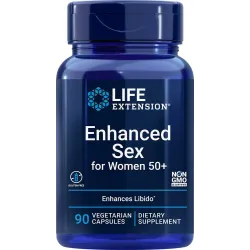
Enhanced Sex for Women 50+
Price: 57,03 €Supports a woman’s healthy sexual response Powerful sexual health...
Related posts
-
 Osteoporosis. The Importance of Bone Health
The health of our bones is instrumental to our health and longevity in general. This understanding is especially...
Osteoporosis. The Importance of Bone Health
The health of our bones is instrumental to our health and longevity in general. This understanding is especially... -
Osteoporosis - The Little-Known Link Between Bone Health and Total Health
Scientists at the leading edge of osteology (bone research) are discovering that in addition to immune strength,...
-
Estrogen. Enjoy Estrogen’s Multiple Benefits While Guarding Against Potential Risks
Women who properly replace their estrogen and progesterone usually feel better, sleep better, look better, think...
-
A Non-Hormone Approach to Menopause Management
Menopausal women can obtain symptomatic relief with proper use of estrogen, progesterone, and other hormones. Life...
-
Is Soy Safe? Busting the Myths of a Nutritional Powerhouse
Is soy safe? A vocal minority has fueled a “controversy” of misinformation that surrounds this nutritional...