
 English
 Polski
 Deutsch
 Français
 ελληνικά
 Español
 Italiano
How To Reduce Prostate Symptoms
 For most aging men, it’s not a matter of if prostate problems will manifest, but when.
Between the ages of 40 to 49, about 25% of men will suffer from lower urinary tract symptoms caused by progressive prostate enlargement. At 70 to 79 years of age, more than 80% of men suffer these symptoms.1-3
Enlargement of the prostate can lead to lower urinary tract symptoms, such as urinary frequency, urgency, and dribbling—and may progress to produce kidney damage and bladder infections.4 An enlarged prostate is also often associated with erectile dysfunction.5
The most common cause of lower urinary tract symptoms in men is benign prostatic hyperplasia (BPH).6
A series of impressive laboratory and clinical studies have shown that a flower pollen extract can help shrink overgrown prostate tissues and relieve lower urinary tract symptoms.
Most male Life Extension® members already take a multi-ingredient prostate formula that contains a flower pollen extract. The clinical data presented in this article provides an enlightened understanding of how pollen extracts beneficially function in the body.
Men who continue to experience urinary discomforts may consider adding an additional dose of pollen extract, as will be discussed.
Lower Urinary Tract Symptoms
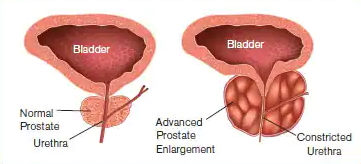
 Weighing less than an ounce,7 a healthy prostate is a small gland situated in the male urinary-genital tract just behind the pubic bone. It surrounds the urethra, which is the outflow tract that carries urine from the bladder, through the penis, and out for excretion.
Because of its location, even a relatively small amount of swelling of the prostate will lead to substantial blockage of the urethra, resulting in decreased urine flow and the potential for incomplete bladder emptying. This can eventually lead to bladder and kidney infections,8 bladder stones,9 and other serious long-term problems.
The prostate can become enlarged for several reasons, the most dangerous of which is prostate cancer.
Fortunately, the majority of men with prostate enlargement don’t have cancer. Instead, their enlarged prostate is likely due to one of the two following non-malignant conditions:10,11
- Benign prostate hyperplasia (BPH) occurs when cells in the prostate increase in number, causing the prostate to swell. BPH is the most common cause of urinary difficulties afflicting men over age 40.
- Prostatitis, another cause of prostate enlargement, is a condition that is characterized by inflammation and/or infection of the prostate. Prostatitis has a number of categories: acute and chronic bacterial prostatitis, chronic nonbacterial prostatitis, inflammatory and noninflammatory prostatodynia (prostate pain), and asymptomatic inflammatory prostatitis.12-14 Treating chronic prostatitis has been medically challenging.15-18
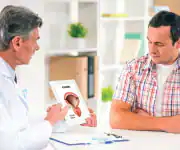 Regardless of the cause, when the prostate becomes enlarged, it typically leads to lower urinary tract symptoms (LUTS), which include symptoms such as urinary urgency, weak stream, urinary hesitation, incontinence, bladder pain, and more.4,19
BPH with resulting LUTS becomes quite prevalent in men in their early to mid-50s.20-22 Up to 42% of men in their 50s or older have BPH; estimates of men aged 70-79 with BPH who have discernible lower urinary tract symptoms are greater than 80%.1-3
BPH with lower urinary tract symptoms is a progressive condition that may worsen over time, depending to some extent on age, symptom severity, the volume of the prostate gland, and the degree of urinary tract obstruction.3,23
To make matters worse, BPH with resulting LUTS is often accompanied by erectile dysfunction (ED).20-22 There is now increasing evidence that BPH/LUTS and ED have common features and may be related problems.20,24,25 Indeed, epidemiological studies suggest that BPH/LUTS is a risk factor for developing erectile dysfunction, (about 70% of men with BPH/LUTS have erectile dysfunction), lending urgency to the need to treat and slow the progress of BPH.1,20,26
WHAT YOU NEED TO KNOW: Pollen Extracts Support Prostate Health
 Lower urinary tract symptoms caused by progressive prostate enlargement plague millions of men, with about 25% suffering some symptoms between the ages of 40 to 49 and more than 80% suffering after age 70.
- Leading causes of such symptoms are benign prostatic hyperplasia (BPH) and chronic prostatitis with chronic pelvic pain.
- Obstruction to the urinary outflow tract from the bladder by an enlarged prostate can produce not only uncomfortable and embarrassing signs and symptoms (such as urgency, frequency, and dribbling) but also dangerous consequences (such as bladder and kidney infections).
- Mainstream medicine offers several drugs with limited effectiveness against BPH, but effective treatments for chronic prostatitis are lacking.
- An ancient remedy, extracts from plant pollen, is emerging as a major challenger to mainstream drugs and their host of side effects.
- Studies reveal that men treated with pollen extracts have significant reductions in their lower urinary tract symptoms, whether caused by BPH or by chronic prostatitis.
- Pollen extracts work by mechanisms similar to prescription drugs, but have several additional beneficial properties of their own.
Pollen Extracts Help BPH
 There is now an abundance of evidence that pollen extracts are effective at shrinking prostates enlarged by BPH and chronic prostatitis, helping to reduce annoying and ultimately dangerous lower urinary tract symptoms that occur as a result. Laboratory studies show that pollen extracts act uniquely on prostate cells by selectively inhibiting their growth.27
In fact, one study showed that pollen extracts are almost equally as effective as the prescription drug finasteride and the standard natural treatment saw palmetto at reducing prostate size. For the study, when rats with experimentally induced BPH were treated with either finasteride, saw palmetto, pollen extract, or a combination of saw palmetto and pollen extract, all prostate glands decreased to roughly the same size as control animals.28
Initial human studies showed that 80% of patients with BPH who took pollen extracts for four to 12 weeks experienced improvements in subjective symptoms (such as a sense of residual urine in bladder, frequency, hesitancy, straining, or weak urine stream), while up to 66% of patients experienced improvements in objective signs (such as urinary volume and urinary flow rate). No significant side effects were detected.29-32
Similarly, in studies of pollen extracts versus a proprietary, standardized mixture of amino acids called Paraprost, the pollen supplement was significantly better at improving objective measures, such as residual urinary volume after voiding, average urine flow rate, maximum urine flow rate, and prostate weight.33
 In one large study of men with BPH who were an average of 68 years old, researchers found that taking 126 mg of pollen extract three times daily for 12 or more weeks was effective at reducing symptom scores on a widely used scale.34 Maximum urine flow rates increased significantly by approximately 18%, and average urine flow rates increased by nearly 18%, while residual urine volume (the amount of urine left in the bladder) after voiding significantly decreased by approximately 45%. In patients who remained on the supplement for more than one year, there was also a 20% decrease in mean prostate volume.
In a study of men with BPH severe enough to cause obstruction to urine flow, 69% of those treated with a pollen extract had significant improvement in symptoms compared to only 30% of those who took a placebo.35 In addition, the supplemented patients had significantly less residual urine in their bladders after voiding and in the measured diameter of their prostate glands by ultrasound. These latter findings are extremely important because residual, post-void urine in the bladder can be a set-up for serious bladder infections.
A systematic review of studies on pollen extracts in men with BPH concluded that those treated with the pollen extract were 2.4 times more likely to experience improvement compared with those receiving placebo.19,36 In the same analysis, men who supplemented with the pollen extract were more than two times as likely to reduce their need to urinate at night, compared with placebo. Adverse events were considered rare and mild.
Pollen Extracts Help Prostatitis
 Treating chronic nonbacterial prostatitis and chronic prostatitis/chronic pelvic pain syndrome is widely regarded as a major challenge, and consistently effective drug treatments are lacking.37 That’s what makes pollen extracts so exciting. Multiple studies on humans have shown that prostatitis patients respond so positively to pollen extracts that some experienced complete relief,37 while others were completely cured of their symptoms.38
First, an open trial of 15 patients with chronic prostatitis showed that a pollen extract produced either complete and lasting relief, or marked improvement in symptoms in 13 patients (87%), while two patients failed to respond.37
In a second, later study, 90 patients took pollen extract tablets three times daily for six months.38 The patients were divided into two groups: one without associated complicating factors and one with complications (such as urethral strictures, prostate stones, or bladder neck narrowing). In the group without complicating factors, 78% had a favorable response in their symptoms, while 36% experienced a complete disappearance of their symptoms and detectable signs of prostatitis. In addition, 42% of patients had some degree of improvement, including an increase in urine flow rate and a reduction in white blood cells (markers of inflammation) in the post-prostate massage urine. However, the researchers found that patients with complications did not respond nearly as well, suggesting that the pollen extract is most useful in patients who lack such complications.
A landmark study published in 2009 on chronic prostatitis/chronic pelvic pain syndrome found that after 12 weeks of treatment with pollen extracts, patients experienced significant improvements in pain scores and quality of life, as well as improvements on the total score on the NIH Chronic Prostatitis Symptom Index (NIH-CPSI), compared with men receiving placebo.18 More than 70% of patients in the supplemented group had a detectable response, defined as a decrease in the NIH score by at least 25%, while only 50% of placebo recipients had such a response.
LOWER URINARY TRACT SYMPTOMS OF BENIGN PROSTATIC HYPERPLASIA (BPH) AND CHRONIC PROSTATITIS/CHRONIC PELVIC PAIN SYNDROME (CP/CPPS)
|
Symptoms |
Benign Prostatic |
Chronic |
|
Weak urinary stream |
X |
X |
|
Delayed, prolonged, or incomplete bladder emptying |
X |
|
|
Hesitation (a pause before urine begins to flow), straining to urinate |
X |
X |
|
Nighttime urination (nocturia) |
X |
|
|
Frequent urination |
X |
X |
|
Urgent urination |
X |
X |
|
Dribbling after urination |
X |
X |
|
Urinary leakage or incontinence |
X |
|
|
Painful urination |
X |
X |
|
Ejaculatory problems |
X |
X |
|
Pelvic pain (pain in the lower abdomen) |
X |
|
|
Pain in the penis, testicles, or pubic area |
X |
|
|
Joint or muscle pain |
X |
|
|
Unexplained fatigue |
X |
|
|
Ejaculatory or post-ejaculatory pain50.51 |
X |
|
|
Low libido, sexual dysfunction, erectile difficulties |
X |
How Pollen Extracts Reduce Prostate Size
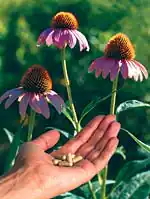 A number of published studies demonstrate that pollen extracts are powerful allies in the fight against an enlarged prostate due to BPH or prostatitis.
Pollen extracts offer powerful anti-inflammatory properties. This is important because of evidence suggesting that inflammation and an excessive response to the hormone DHT are heavily involved in BPH.
Basic lab studies show that pollen extracts inhibit enzymes that produce pro-inflammatory signaling molecules such as cyclooxygenase (COX) and 5-lipoxygenase (5-LOX).39 In tests, the pollen extracts performed as well as mainstream nonsteroidal anti-inflammatory drugs (NSAIDS) such as diclofenac.39 These features may help in the observed shrinkage of prostate glands when treated with pollen extracts.
In men, pollen extracts appear to have similar effects on hormone (androgen) metabolism as prescription drugs such as finasteride .8 Pollen extracts inhibit the enzyme 5-alpha-reductase40 that converts testosterone to DHT, which in turn promotes prostate cell proliferation.28,41,42 And, in another mechanism similar to how a popular prescription drug works, pollen extracts have shown the ability to influence the alpha-1 adrenergic  receptors that keep smooth muscle tone elevated in the prostate and bladder, thereby reducing the pain and discomfort those receptors produce when activated.41
Studies of rats with experimentally induced nonbacterial prostatitis (similar to chronic prostatitis/chronic pelvic pain syndrome in humans) show that pollen extracts diminish the changes to the glandular tissue of the prostate and enlargement of the stroma (structural cells), which contributes to symptoms.43 These beneficial changes may be related to the effects pollen extracts have on smooth muscle in the bladder and urethra, as well as their potent anti-inflammatory effects and their ability to slow cellular proliferation.15
Pollen extracts have also been shown to induce apoptosis (programmed cell death) in prostate cancer cells, where they produce a decrease in the marker called prostate-specific antigen, or PSA.44-47
Based on current data, pollen extract is a useful strategy to complement and boost a daily regimen to reduce prostate symptoms and maintain prostate health.
Summary

Most men suffer lower urinary tract symptoms as they age. These symptoms can range from the mildly disturbing to outright dangerous, posing the threat of bladder and kidney infections.
Benign prostatic hyperplasia (BPH) and chronic prostatitis are leading causes of lower urinary tract symptoms in men. Studies show that pollen extracts can shrink overgrown prostate glands and relieve lower urinary tract symptoms, without significant side effects. These extracts have been shown to be effective in both BPH and chronic prostatitis.
There is every reason for men with lower urinary tract symptoms, who have been screened by a physician to rule out prostate cancer, to include pollen extract in their daily program.
Male Life Extension members have long used a multi-ingredient formula of nutrients that has been shown to promote prostate health. This formula contains a potent 252 mg dose of standardized pollen extract.
For men who continue to encounter urinary discomforts, the addition of 378 mg of pollen extract daily may provide a resolution for this all-too-common male problem.
Material used with permission of Life Extension. All rights reserved.
- Park HJ, Won JE, Sorsaburu S, Rivera PD, Lee SW. Urinary tract symptoms (LUTS) secondary to benign prostatic hyperplasia (BPH) and LUTS/BPH with erectile dysfunction in Asian men: a systematic review focusing on tadalafil. World J Mens Health. 2013 Dec;31(3):193-207.
- Patel NS, Blick C, Kumar PV, Malone PR. The diagnostic value of abdominal ultrasound, urine cytology and prostate-specific antigen testing in the lower urinary tract symptoms clinic. Int J Clin Pract. 2009 Dec;63(12):1734-8.
- Berges R. Epidemiology of benign prostatic syndrome. Associated risks and management data in German men over age 50. Urologe A. 2008 Feb;47(2):141-8.
- Available at: https://www.niddk.nih.gov/health-information/urologic-diseases/prostate-problems/prostate-enlargement-benign-prostatic-hyperplasia. Accessed November 25, 2014.
- Carbone DJ Jr, Hodges S. Medical therapy for benign prostatic hyperplasia: sexual dysfunction and impact on quality of life. Int J Impot Res. 2003 Aug;15(4):299-306.
- Chambliss, WG. A critical review of Graminex flower pollen extract for symptomatic relief of lower urinary tract symptoms (LUTS) in men. Prostate Support: Graminex flower pollen extract. 2003 Jan;4-9.
- White J, O’Brien D, III. Clinical Methods 3rd edition: The History, Physical, and Laboratory Examinations. Boston: Butterworths; 1990.
- Available at: http://my.clevelandclinic.org/services/urology-kidney/diseases-conditions/kidney-infection. Accessed November 25,2014.
- Available at: http://www.mayoclinic.org/diseases-conditions/bladder-stones/basics/causes/con-20030296. Accessed November 25, 2014.
- Schiller DS, Parikh A.Identification, pharmacologic considerations, and management of prostatitis. Am J Geriatr Pharmacother. 2011 Feb;9(1):37-48.
- Hamilton W, Sharp D. Symptomatic diagnosis of prostate cancer in primary care: a structured review. Br J Gen Pract. 2004 Aug;54(505):617-21.
- Available at: http://emedicine.medscape.com/article/2002872-overview. Accessed November 25, 2014.
- Gurunadha Rao Tunuguntla HS, Evans CP. Prostate Cancer Prostatic Dis. 2002;5(3):172-9.
- Nickel JC. Perplexing problem of persistently painful prostatitis. Rev Urol .1999 Summer;1(3):160-9.
- Wagenlehner FM, Bschleipfer T, Pilatz A, Weidner W. Pollen extract for chronic prostatitis-chronic pelvic pain syndrome. Urol Clin North Am. 2011 Aug;38(3):285-92.
- Schaeffer AJ. Epidemiology and evaluation of chronic pelvic pain syndrome in men. Int J Antimicrob Agents. 2008 Feb;31 Suppl 1:S108-11.
- Luzzi GA. Chronic prostatitis and chronic pelvic pain in men: aetiology, diagnosis and management. J Eur Acad Dermatol Venereol. 2002 May;16(3):253-6.
- Wagenlehner FM, Schneider H, Ludwig M, Schnitker J, Brahler E, Weidner W. A pollen extract (Cernilton) in patients with inflammatory chronic prostatitis-chronic pelvic pain syndrome: a multicentre, randomised, prospective, double-blind, placebo-controlled phase 3 study. Eur Urol. 2009 Sep;56(3):544-51.
- Wilt T, MacDonald R, Ishani A, Rutks I, Stark G. Cernilton for benign prostatic hyperplasia. Cochrane Database Syst Rev. 2000 (2):Cd001042.
- Glina S, Glina FP. Pathogenic mechanisms linking benign prostatic hyperplasia, lower urinary tract symptoms and erectile dysfunction. Ther Adv Urol. 2013 Aug;5(4):211-8.
- Singh DV, Mete UK, Mandal AK, Singh SK. A comparative randomized prospective study to evaluate efficacy and safety of combination of tamsulosin and tadalafil vs. tamsulosin or tadalafil alone in patients with lower urinary tract symptoms due to benign prostatic hyperplasia. J Sex Med. 2014 Jan;11(1):187-96.
- Yan H, Zong H, Cui Y, Li N, Zhang Y. The efficacy of PDE5 inhibitors alone or in combination with alpha-blockers for the treatment of erectile dysfunction and lower urinary tract symptoms due to benign prostatic hyperplasia: a systematic review and meta-analysis. J Sex Med. 2014 Mar 13.
- Kok ET, Schouten BW, Bohnen AM, Groeneveld FP, Thomas S, Bosch JL. Risk factors for lower urinary tract symptoms suggestive of benign prostatic hyperplasia in a community based population of healthy aging men: the Krimpen Study. J Urol. 2009 Feb;181(2):710-6.
- Foster SA, Annunziata K, Shortridge EF, Freedman D, Viktrup L. Erectile dysfunction with or without co-existing benign prostatic hyperplasia in the general US population: analysis of US National Health and Wellness Survey. Curr Med Res Opin. 2013 Dec;29(12):1709-17.
- Alsaikhan B, Alrabeeah K, Carrier S. Management options for the treatment of benign prostatic hyperplasia with or without erectile dysfunction: a focus on tadalafil and patient considerations. Int J Gen Med. 2014 Jun 12;7:271-6.
- Lee JH, Kwon H, Park YW. Association of lower urinary tract symptom/benign prostatic hyperplasia measures with international index of erectile function 5 in middle-aged policemen of Korea and the role of metabolic syndrome and testosterone in their relationship. Urology. 2013 Nov;82(5):1008-12.
- Habib FK, Ross M, Buck AC, Ebeling L, Lewenstein A. In vitro evaluation of the pollen extract, cernitin T-60, in the regulation of prostate cell growth. Br J Urol. 1990 Oct;66(4):393-7.
- Talpur N, Echard B, Bagchi D, Bagchi M, Preuss HG. Comparison of saw palmetto (extract and whole berry) and cernitin on prostate growth in rats. Mol Cell Biochem. 2003 Aug;250(1-2):21-6.
- Horii A, Iwai S, Maekawa M, Tsujita M. Clinical evaluation of cernilton in the treatment of the benign prostatic hypertrophy. Hinyokika Kiyo. 1985 Apr;31(4):739-46.
- Ueda K, Jinno H, Tsujimura S. Clinical evaluation of Cernilton on benign prostatic hyperplasia. Hinyokika Kiyo. 1985 Jan;31(1):187-91.
- Hayashi J, Mitsui H, Yamakawa G, et al. Clinical evaluation of Cernilton in benign prostatic hypertrophy. Hinyokika Kiyo. 1986 Jan;32(1):135-41.
- Jodai A, Maruta N, Shimomae E, Sakuragi T, Shindo K, Saito Y. A long-term therapeutic experience with Cernilton in chronic prostatitis. Hinyokika Kiyo. 1988 Mar;34(3):561-8.
- Maekawa M, Kishimoto T, Yasumoto R, et al. Clinical evaluation of Cernilton on benign prostatic hypertrophy—a multiple center double-blind study with Paraprost. Hinyokika Kiyo. 1990 Apr;36(4):495-516.
- Yasumoto R, Kawanishi H, Tsujino T, et al. Clinical evaluation of long-term treatment using cernitin pollen extract in patients with benign prostatic hyperplasia. Clin Ther. 1995 Jan-Feb;17(1):82-7.
- Buck AC, Rees RW, Ebeling L. Treatment of chronic prostatitis and prostatodynia with pollen extract. Br J Urol. 1989 Oct;66(4):398-9.
- MacDonald R, Ishani A, Rutks I, Wilt TJ. A systematic review of Cernilton for the treatment of benign prostatic hyperplasia. BJU Int. 2000 May;85(7):836-41.
- Buck AC, Rees RW, Ebeling L. Treatment of outflow tract obstruction due to benign prostatic hyperplasia with the pollen extract, cernilton: a double-blind, placebo-controlled study. Br J Urol. 1990 Nov;64(5):496-404.
- Rugendorff EW, Weidner W, Ebeling L, Buck AC. Results of treatment with pollen extract (Cernilton N) in chronic prostatitis and prostatodynia. Br J Urol. 1993 Apr;71(4):433-8.
- Loschen G, Ebeling L. Inhibition of arachidonic acid cascade by extract of rye pollen. Arzneimittelforschung. 1991 Feb;41(2):162-7.
- Li YH, Yang YF, Li K, Jin LL, Yang NY, Kong DY. 5 alpha-reductase and aromatase inhibitory constituents from Brassica rapa L. pollen. Chem Pharm Bull. 2009 Apr;57(4):401-4.
- Shaplygin LV, Sivakov AA. Use of cernilton in the therapy of prostatic adenoma and chronic prostatitis. Urologiia. 2007 May-Jun (3):35-9.
- Rao X, Bao L, Feng X, Yao N, Xie G, Hiroshi K. Effect of fenghuaqianqingcha on experimentally induced prostatic hyperplasia in mice. Zhong Yao Cai. 2008 Sep;31(9):1381-5.
- Kamijo T, Sato S, Kitamura T. Effect of cernitin pollen-extract on experimental nonbacterial prostatitis in rats. Prostate. 2001 Oct 1;49(2):122-31.
- Wu YD, Lou YJ. Brassinolide, a plant sterol from pollen of Brassica napus L., induces apoptosis in human prostate cancer PC-3 cells. Pharmazie. 2007 May;62(5):392-5.
- Wu YD, Lou YJ. A steroid fraction of chloroform extract from bee pollen of Brassica campestris induces apoptosis in human prostate cancer PC-3 cells. Phytother Res. 2007 Nov;21(11):1087-91.
- Han HY, Shan S, Zhang X, Wang NL, Lu XP, Yao XS. Down-regulation of prostate specific antigen in LNCaP cells by flavonoids from the pollen of Brassica napus L. Phytomedicine. 2007 May;14(5):338-43.
- Zhang X, Habib FK, Ross M, et al. Isolation and characterization of a cyclic hydroxamic acid from a pollen extract, which inhibits cancerous cell growth in vitro. J Med Chem. 1995 Feb 17;38(4):735-8.
- Trinchieri A, Magri V, Cariani L, et al. Prevalence of sexual dysfunction in men with chronic prostatitis/chronic pelvic pain syndrome. Arch Ital Urol Androl. 2007 Jun;79(2):67-70.
- Shoskes DA, Landis JR, Wang Y, Nickel JC, Zeitlin SI, Nadler R. Impact of post-ejaculatory pain in men with category III chronic prostatitis/chronic pelvic pain syndrome. J Urol. 2004 Aug;172(2):542-7.
- Trinchieri A, Magri V, Cariani L, Bonamore R, Restelli A, Garlaschi MC, Perletti G. Prevalence of sexual dysfunction in men with chronic prostatitis/chronic pelvic pain syndrome. Arch Ital Urol Androl. 2007 Jun;79(2):67-70.
- Shoskes DA, Landis JR, Wang Y, Nickel JC, Zeitlin SI, Nadler R. Impact of post-ejaculatory pain in men with category III chronic prostatitis/chronic pelvic pain syndrome. J Urol. 2004 Aug;172(2):542-7.
Related product
-
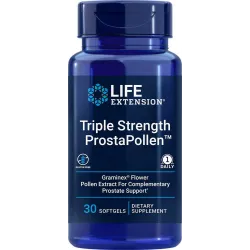
Triple Strength ProstaPollen™
Price: 26,96 €Protect your prostate and maintain its healthy function Supports healthy...
Related posts
-
 Optimal Prostate Defense Requires a Multi-Modal Strategy
As an aging man, your odds of suffering benign prostate enlargement (BPH) and/or prostate cancer are exceedingly...
Optimal Prostate Defense Requires a Multi-Modal Strategy
As an aging man, your odds of suffering benign prostate enlargement (BPH) and/or prostate cancer are exceedingly... -
Testosterone. Natural Methods to Improve Vitality, Sexual Function, and Prostate Health
As men grow older, they often face daunting health challenges caused by the age-related decline in testosterone...
-
The Inflammatory Factor Underlying Most Cancers
Implicated in the onset of 95% of all cancers is a common but under-recognized molecule most people have never heard...
-
Low Testosterone Promotes Abdominal Obesity in Aging Men
As men age, many become trapped in a vicious cycle that leads to life-threatening abdominal obesity. No matter how...
-
Benign Prostatic Hyperplasia (BPH) part 1
The majority of men older than 60 years will be affected by benign (noncancerous) enlargement of the prostate gland....