
 English
 Polski
 Deutsch
 Français
 ελληνικά
 Español
 Italiano
Protect Eyes from Computer Blue Light
 Exposure to ultraviolet solar rays accelerates age-related visual loss. Enlightened individuals wear UV protection sunglasses outdoors to minimize sunray-induced ocular damage.
A new vision-robbing culprit has emerged that is more prevalent than sunlight exposure. Our round-the-clock use of smartphones and computers exposes our eyes to an unnaturally high amount of blue light. Research shows that blue light is damaging to the retina and other parts of our eye.1
Chronic exposure to blue light is associated with increased risk of developing age-related macular degeneration,1-4 a leading cause of blindness in older adults.5
Supplementing with multivitamins and xanthophyll carotenoids that include lutein, zeaxanthin, and meso-zeaxanthin have demonstrated intriguing effects for preventing or mitigating macular degeneration.6
If you use a smartphone or a computer on a daily basis, it is important to ingest xanthophyll carotenoids to protect your eyes from the damaging risks of blue light.
 While most of us know the dangers of ultraviolet light and take steps to avoid it, blue light is in some ways a more insidious problem.
Blue-violet rays that emanate from our ubiquitous screens can penetrate into the retina, where they induce photochemical stress that directly damages retinal cells and indirectly leads them to self-destruct.1,2,4,29
Nature provided us with powerful protection against blue light, in the form of pigments in our retinas that absorb light in the blue wavelengths.
But while sunlight, to which we are directly exposed only during the day contains about 25% blue light, our screens, particularly those powered by light-emitting diodes, or LEDs, can contain about 35% of retina-threatening blue light.1 And LEDs, increasingly in use for interior lighting, produce still higher proportions of blue light the “cooler” the LED’s emissions are.1
A recent publication summed the situation up by saying that “…our exposure to blue light is everywhere and only increasing.”1 That’s why supplementation with carotenoid nutrients like lutein, zeaxanthin, and meso-zeaxanthin is so essential, even for those who spend little time in the sun.
Preventing Blue Light-Associated Eye Diseases
 Evidence that supplementing with lutein and zeaxanthin provides retina-protecting effects has been accumulating for years, even since before the explosion of blue light exposure now facing modern populations. As that threat has grown, however, so has the importance of knowing how best to protect our eyes against retinal damage, and particularly age-related macular degeneration.
Our natural protection against damaging light of all wavelengths, primarily ultraviolet (UV) and blue, comes from a layer of pigmented cells called the retinal pigment epithelium.7,8 These pigmented cells are rich in lutein, zeaxanthin, and other carotenoids derived from our diet.7,8
Carotenoids have a unique molecular structure that enables them to soak up intense blue wavelengths, thus sparing the delicate rod and cone cells in our eyes that convert light energy into electrical impulses.7 Once those cells burn out, they are gone for good—retinal cells cannot normally regenerate.9,10
Ophthalmologists now recognize that the density of pigmented cells in the macula, or central portion of the retina, is closely associated with the degree of protection provided to retinal cells. This measure, called macular pigment optical density, is now considered a strong indicator of retinal health, and is therefore the main outcome measure in most studies of natural supplements with protective properties.
To date, studies reveal strong and consistent benefits of lutein, zeaxanthin, and meso-zeaxanthin on retinal health and resistance to development of age-related macular degeneration, as measured by improvements in macular pigment optical density. The strongest evidence, as is usually the case, comes from studies of early age-related macular degeneration, reinforcing the idea that early prevention is vastly superior to late attempts at cures.
Studies of early age-related macular degeneration have shown that lutein, zeaxanthin, and meso-zeaxanthin increase macular pigment optical density with continued supplementation (generally one or more years).11-14 This increase in macular pigment optical density is presumed to account for most of the protective effect of these nutrients.
A growing body of evidence reveals that boosting one’s intake of omega-3s and carotenoids like lutein helps maintain healthy eyes.
In a 2013 study, patients with early/mild age-related macular degeneration were supplemented once- or twice-daily with lutein, zeaxanthin, low-dose omega-3s (100 mg DHA, 30 mg EPA), and antioxidant nutrients for one year. The result showed improved macular pigment optical density, while macular pigment optical density was reduced in unsupplemented placebo recipients.15
By 2016, sufficient data from many studies on this subject have been published to allow for a powerful meta-analysis, in which results from multiple small studies are analyzed as one large group. This study evaluated 20 clinical trials involving 938 patients with macular degeneration and 826 control subjects.16 It showed that supplementation with the xanthophyll carotenoids, including lutein, zeaxanthin, and meso-zeaxanthin, was consistently associated with significant increases in macular pigment optical density. This benefit was found in patients with macular degeneration and in currently healthy subjects. This meta-analysis showed that trials using meso-zeaxanthin produced the greatest increases in macular pigment optical density, suggesting that this nutrient is an important addition to lutein/zeaxanthin supplements for eye health.
 Energetic wavelengths of blue light are powerfully destructive of the eye’s most essential components, the vision receptors in the retina, which are most highly concentrated in the macula, or central portion.
- Human eyes contain adequate protection against natural levels of blue light, but that protection wanes with age, as the light-absorbing pigments lutein and zeaxanthin fade out of the retinal pigment layer.27
- Excessive blue light exposure is expected to cause increased rates of age-related macular degeneration as the baby-boom generation ages, the first in history to be bathed in such intense blue light.1
- Replacing the carotenoid pigments in the eye’s protective layer, however, is an effective means of quenching much of the photochemical damage done by blue light.
- Studies show that the progression of age-related macular degeneration can be effectively slowed with regular supplementation with lutein, zeaxanthin, and meso-zeaxanthin.28
- Retinal damage is irreversible, so early and powerful protection is our only hope, and supplementation with these carotenoid nutrients is a clinically-validated means of gaining that protection.
Improving Vision
 When blue light strikes the retina, a variety of photochemical reactions take place.
Improvements in macular pigment optical density provide protection against blue light damage. But is it possible lutein, zeaxanthin, and other carotenoids can also improve vision?
Vision can be measured in a number of ways. Visual acuity is derived from some version of the familiar Snellen eye chart (the chart of letters used by doctors to test your eyes), and indicates how well a subject sees objects at fixed distances.
Visual acuity has now been shown to be increased in at least one study of lutein, zeaxanthin, and omega-3 fatty acids, along with the expected increases in protective pigment density, in those with early age-related macular degeneration.15 Indeed, a landmark 2015 meta-analysis of eight such studies reported improvements in visual acuity in response to lutein and zeaxanthin supplementation in people with age-related macular degeneration.17 This analysis also revealed a close association between supplement-induced increases in macular pigment optical density and visual performance.
Another, higher-tech approach to determining visual responses to supplementation is to use an electroretinogram. This device measures the minute electrical impulses produced by retinal cells in response to light.
A 2016 study demonstrated that, in addition to significant increases in macular pigment optical density with lutein supplementation, there was also a significant increase in how quickly retinal cells responded to light stimuli, as measured by the electroretinogram.18
All of the data point to one conclusion—that the combination of lutein, zeaxanthin, and, ideally, meso-zeaxanthin has real effectiveness at restoring the eye’s natural blue light shield, the macular pigment epithelium, which should protect against progression of age-related macular degeneration. Indeed, this large body of evidence has resulted in a change in ophthalmologists’ recommendations about eye-protective supplements.
While the supplement formula recommended by the original Age-Related Eye Disease Study (AREDS) included beta carotene as the only carotenoid, subsequent studies, including the more recent AREDS-2, found that replacing beta carotene with the combination of lutein and zeaxanthin produces superior risk reduction for developing the most serious forms of macular degeneration. That replacement alone produced an 18% reduction in the risk of developing late age-related macular degeneration, and a 22% reduction in risk of developing the blindness-inducing “wet,” or neovascular, macular degeneration.19
How the Carotenoids Protect Eyes Against Blue Light Damage
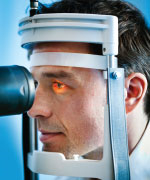 When blue light strikes the retina, a variety of photochemical reactions take place.20 These include intense oxidative damage, as light photons energetically interact with oxygen-rich blood, producing reactive oxygen species. These caustic compounds then attack the vital fats that form nerve and light-receptor cell membranes, impairing their function.21,22
Worse, all of this chemical reactivity triggers inflammatory signals and changes in gene expression that perpetuate the retinal injury, which, in turn, triggers further oxidative stress in a vicious cycle.21
The carotenoids lutein and zeaxanthin are already well known for their ability to absorb energetic blue light radiation, and for preventing development, and promoting scavenging of, reactive oxygen species.23,24 Recent studies have found that these compounds also promote an anti-inflammatory environment in retinal cells.21,23
In fact, those studies show that retinal cells have an active mechanism for concentrating lutein and zeaxanthin within their cytoplasm, producing up to 14-fold higher concentrations within the cell than in the medium surrounding them.21
Other studies have shown that the anti-inflammatory effect of these nutrients extends beyond the local environment of the eye, producing what seem to be body-wide effects.25
In the specific context of age-related macular degeneration, these same carotenoids have been shown to prevent the development of overgrown blood vessels that produce the blindness-inducing “wet” form of macular degeneration. This again is a consequence of the ability of these vegetable-derived carotenoids to shield eye structures from blue light damage.23,26
Summary
 Modern technology has increased the risk of retinal damage and macular degeneration with a host of electronic devices whose screens project blue light.
Scientists are just now beginning to recognize the threats posed by chronic blue light exposure at work, at home, and even during recreational activities throughout the day and night.
A clinically-validated means of mitigating this blue light-induced retinal damage is to supplement with carotenoid nutrients, particularly lutein, zeaxanthin, and meso-zeaxanthin.
As with so many nutrients, the multiple mechanisms by which carotenoids like lutein and zeaxanthin operate to protect tissue is a direct mirror of the multiple mechanisms that nature has created to protect our eyes. These nutrients provide protection from the moment a blue light photon enters the eye, shielding the irreplaceable light-sensing cells from photochemical damage. We now recognize that these compounds also act to slow the inflammatory reactions that aggravate light-induced damage, and they can prevent development of blood vessel overgrowth that produces “wet” macular degeneration, the leading cause of age-related blindness.
Those who spend a significant amount of time in front of a television, computer, tablet, or smartphone should ensure adequate intake of lutein, zeaxanthin and meso-zeaxanthin to reduce their risk of catastrophic vision loss.
Readers of this publication have been using lutein, zeaxanthin and meso-zeaxanthin supplements for many years to protect against solar eye damage. It’s comforting to know these same nutrients also afford protection against indoor blue light.
Material used with permission of Life Extension. All rights reserved.
-
Available at: https://www.reviewofoptometry.com/ce/the-lowdown-on-blue-light-good-vs-bad-and-its-connection-to-amd-109744. Accessed November 4, 2016.
-
van der Burght BW, Hansen M, Olsen J, et al. Early changes in gene expression induced by blue light irradiation of A2E-laden retinal pigment epithelial cells. Acta Ophthalmol. 2013;91(7):e537-45.
-
Wielgus AR, Collier RJ, Martin E, et al. Blue light induced A2E oxidation in rat eyes--experimental animal model of dry AMD. Photochem Photobiol Sci. 2010;9(11):1505-12.
-
Algvere PV, Marshall J, Seregard S. Age-related maculopathy and the impact of blue light hazard. Acta Ophthalmol Scand. 2006;84(1):4-15.
-
Congdon N, O’Colmain B, Klaver CC, et al. Causes and prevalence of visual impairment among adults in the United States. Arch Ophthalmol. 2004;122(4):477-85.
-
Wei CX, Sun A, Yu Y, et al. Challenges in the Development of Therapy for Dry Age-Related Macular Degeneration. Adv Exp Med Biol. 2016;854:103-9.
-
Loskutova E, Nolan J, Howard A, et al. Macular pigment and its contribution to vision. Nutrients. 2013;5(6):1962-9.
-
Strauss O. The retinal pigment epithelium in visual function. Physiol Rev. 2005;85(3):845-81.
-
Fischer D. Stimulating axonal regeneration of mature retinal ganglion cells and overcoming inhibitory signaling. Cell Tissue Res. 2012;349(1):79-85.
-
Sluch VM, Zack DJ. Stem cells, retinal ganglion cells and glaucoma. Dev Ophthalmol. 2014;53:111-21.
-
Ma L, Dou HL, Huang YM, et al. Improvement of retinal function in early age-related macular degeneration after lutein and zeaxanthin supplementation: a randomized, double-masked, placebo-controlled trial. Am J Ophthalmol. 2012;154(4):625-34.e1.
-
Akuffo KO, Nolan JM, Howard AN, et al. Sustained supplementation and monitored response with differing carotenoid formulations in early age-related macular degeneration. Eye (Lond). 2015;29(7):902-12.
-
Huang YM, Dou HL, Huang FF, et al. Effect of supplemental lutein and zeaxanthin on serum, macular pigmentation, and visual performance in patients with early age-related macular degeneration. Biomed Res Int. 2015;2015:564738.
-
Huang YM, Dou HL, Huang FF, et al. Changes following supplementation with lutein and zeaxanthin in retinal function in eyes with early age-related macular degeneration: a randomised, double-blind, placebo-controlled trial. Br J Ophthalmol. 2015;99(3):371-5.
-
Dawczynski J, Jentsch S, Schweitzer D, et al. Long term effects of lutein, zeaxanthin and omega-3-LCPUFAs supplementation on optical density of macular pigment in AMD patients: the LUTEGA study. Graefes Arch Clin Exp Ophthalmol. 2013;251(12):2711-23.
-
Ma L, Liu R, Du JH, et al. Lutein, Zeaxanthin and Meso-zeaxanthin Supplementation Associated with Macular Pigment Optical Density. Nutrients. 2016;8(7).
-
Liu R, Wang T, Zhang B, et al. Lutein and zeaxanthin supplementation and association with visual function in age-related macular degeneration. Invest Ophthalmol Vis Sci. 2015;56(1):252-8.
-
Berrow EJ, Bartlett HE, Eperjesi F. The effect of nutritional supplementation on the multifocal electroretinogram in healthy eyes. Doc Ophthalmol. 2016;132(2):123-35.
-
Chew EY, Clemons TE, Sangiovanni JP, et al. Secondary analyses of the effects of lutein/zeaxanthin on age-related macular degeneration progression: AREDS2 report No. 3. JAMA Ophthalmol. 2014;132(2):142-9.
-
Ham WT, Jr., Mueller HA, Ruffolo JJ, Jr., et al. Basic mechanisms underlying the production of photochemical lesions in the mammalian retina. Curr Eye Res. 1984;3(1):165-74.
-
Bian Q, Gao S, Zhou J, et al. Lutein and zeaxanthin supplementation reduces photooxidative damage and modulates the expression of inflammation-related genes in retinal pigment epithelial cells. Free Radic Biol Med. 2012;53(6):1298-307.
-
Sparrow JR, Boulton M. RPE lipofuscin and its role in retinal pathobiology. Exp Eye Res. 2005;80(5):595-606.
-
Xue C, Rosen R, Jordan A, et al. Management of Ocular Diseases Using Lutein and Zeaxanthin: What Have We Learned from Experimental Animal Studies? J Ophthalmol. 2015;2015:523027.
-
Chucair AJ, Rotstein NP, Sangiovanni JP, et al. Lutein and zeaxanthin protect photoreceptors from apoptosis induced by oxidative stress: relation with docosahexaenoic acid. Invest Ophthalmol Vis Sci. 2007;48(11):5168-77.
-
Kijlstra A, Tian Y, Kelly ER, et al. Lutein: more than just a filter for blue light. Prog Retin Eye Res. 2012;31(4):303-15.
-
Fernandez-Robredo P, Sadaba LM, Salinas-Alaman A, et al. Effect of lutein and antioxidant supplementation on VEGF expression, MMP-2 activity, and ultrastructural alterations in apolipoprotein E-deficient mouse. Oxid Med Cell Longev. 2013;2013:213505.
-
Coleman HR, Chan CC, Ferris FL, 3rd, et al. Age-related macular degeneration. Lancet. 2008;372(9652):1835-45.
-
Lim LS, Mitchell P, Seddon JM, et al. Age-related macular degeneration. Lancet. 2012;379(9827):1728-38.
-
Kuse Y, Ogawa K, Tsuruma K, et al. Damage of photoreceptor-derived cells in culture induced by light emitting diode-derived blue light. Sci Rep. 2014;4:5223.
Related products
-
MacuGuard® Ocular Support with Saffron &...
Price: 38,60 €Complete nutritional and antioxidant support for eye health and night vision... -
MacuGuard® Ocular Support with Saffron
Price: 22,97 €Unique nutritional support for eye health Comprehensive ocular nutrition... -
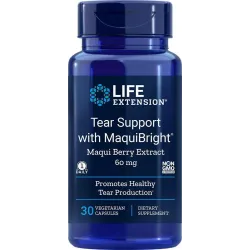
Tear Support with MaquiBright®
Price: 17,36 €Promotes healthy tear production from within Promotes healthy tear...
Related posts
-
 Nutrient Intervention for Glaucoma
Glaucoma is the second-leading cause of blindness.1 It often progresses without symptoms until it succeeds in...
Nutrient Intervention for Glaucoma
Glaucoma is the second-leading cause of blindness.1 It often progresses without symptoms until it succeeds in... -
Autoimmune Diseases part 1
Autoimmune diseases are characterized by the body's immune responses being directed against its own tissues, causing...
-
Autoimmune Diseases part 2
In a healthy body, circulating antibodies attack and destroy pathogenic invaders by means of humoral or cell-mediated...
-
Cukrzyca opis choroby Część 1
Brak kontroli nad cukrzycą może nieść poważne konsekwencje zdrowotne, takie jak ślepota, niewydolność nerek,...
-
Cukrzyca opis choroby Część 2
Cukrzycy typu 1 potrzebują dożywotniej insulinoterapii, choć suplementy wymienione w niniejszym rozdziale mogą pomóc...