
 English
 Polski
 Deutsch
 Français
 ελληνικά
 Español
 Italiano
Probiotics supports mood and relaxation

Anxiety and mood disorders are now being recognized as major medical and societal issues. With millions of people medicated for mood disorders that include anxiety and mild depression, researchers have sought a safer way to reduce their impact.
In a unique discovery, two specific probiotic organisms have been identified that show impressive reductions in the manifestation of stress, anxiety, and depression.
Human studies on two unique probiotics (Lactobacillus helveticus R0052 and Bifidobacterium longum R0175) show notable results. For example, one study showed a 50% decrease in depression scores while another showed a 55% improvement in anxiety scores.5,6
While it may seem remarkable that a probiotic can have effects outside of the gastrointestinal tract, a massive accumulation of data suggests that the gut is, in fact, practically a “second brain,” with a powerful and lasting impact on mood.
“Gut-Brain Axis”
Depression and anxiety are highly prevalent in the US (and around the world), affecting approximately 6.7% and 18.1% of Americans respectively.8,9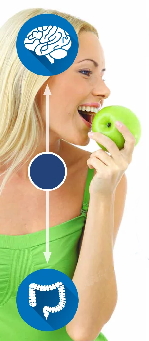 Until quite recently, these mental health disorders were viewed as primarily related to brain function, since it has long been believed that the brain is solely responsible for thoughts, feelings, and behavior.
There is an increasing awareness among scientists of the role played by the microorganisms that live in the gastrointestinal tract in affecting other body systems, including the brain.10
In fact, the close relationship between the microbes in the gastrointestinal tract and the biochemical functioning of brain cells and structures has given rise to the term gut-brain axis, indicating that what happens in the gut can affect the brain, and vice versa.12,13
Animal studies show that the makeup of organisms in the gastrointestinal tract (intestinal flora) can affect brain development in young animals, influencing specific behaviors such as anxiety.14,15 Conversely, early life stresses can change the makeup of the gastrointestinal flora, accompanied by increases in stress hormones such as cortisol, in immune system responses, and in intestinal pain sensations.16
Therefore, deliberately introducing changes to the gastrointestinal flora through supplementation with probiotics is an exciting new way to introduce changes in how the brain functions, including how people experience emotions.10,17-19
Mechanisms of Probiotic Impact on Stress

High-quality, reliable animal models of stress, anxiety, and depression have been developed in the pursuit of chemical drugs to treat these conditions.28-31
In addition, various biochemical markers have been identified that can help indicate an animal’s state of stress and its responses, which are useful in determining the effects of an intervention such as a drug or a supplement.
These markers include hormones such as cortisol and the closely related corticosterone, both of which correlate with chronic stress, as well as epinephrine (adrenaline) and norepinephrine (noradrenaline), which indicate immediate stress and anxiety.
Such animal models have now been used to study the impact of the probiotic combination of Lactobacillus helveticus R0052 and Bifidobacterium longum R0175.
Reducing Anxiety, Depression, and Stress Safely
 Stress, anxiety, and depression affect millions of Americans.
- Mainstream medicine relies on costly medications, with only partial effectiveness and substantial side effects, in an attempt to manage these conditions.
- The recognition of the enormous role played by the intestinal flora, the community of microorganisms living in our intestines, has shifted attention to these organisms as potential partners in managing human mental illnesses.
- Changing the composition of the intestinal flora has been shown in animal studies to significantly affect behaviors and biochemical markers of stress, anxiety, and depression.
- The combination of Lactobacillus helveticus R0052 and Bifidobacterium longum R0175 was specifically developed with mental health in mind.
- This probiotic combination, in oral form, has been proven in human and animal studies to relieve symptoms of anxiety and depression, while demonstrating reductions in stress and anxiety-promoting hormones.
- For anyone currently using medication to manage symptoms of depression and/or anxiety, the new probiotic combination deserves a hard look, both for its effectiveness and for its safety.
Human Studies Show Dramatic Reductions in Anxiety and Depression
Even high-quality animal models are limited in what they can tell us about any drug or supplement’s impact on human mood and behaviors. That’s why human randomized, placebo-controlled trials are so important. Such studies have now been carried out using the probiotic Lactobacillus helveticus R0052 and Bifidobacterium longum R0175 combination.
A human study of 55 participants with mild depression or anxiety, ages 30 to 60, was conducted to determine the effects of the probiotic combination on anxiety, depression, stress, and coping strategies.5 Subjects were given 3 billion colony-forming-units (CFUs, a measure of the number of individual organisms) of the probiotic, or a placebo, for 30 days.
 49% drop in the global severity index, a measure of overall psychological distress
- 50% decrease in depression scores
- 60% decrease in anger-hostility scores
- 36% decrease in the hospital anxiety and depression score (HADS)
- 13% decrease in urinary free cortisol, a hormonal measure of chronic stress, which was not seen in placebo patients.
Supplemented patients also displayed reductions in self-blame and higher problem-solving skills after the study.5
Even people who don’t consider themselves “high-stress” may attain a serenity boost from this novel probiotic combination. When the same research team analyzed data on 25 original study participants whose baseline cortisol was below the median, indicating generally lower stress, they found that these individuals also experienced marked improvements in mood scores.6
Another human study evaluated the impact of the probiotic combination on stress-induced digestive symptoms, a common manifestation of stress even in basically healthy people. Subjects ages 18 to 60, with at least two self-reported symptoms of stress (nervousness, irritability, anxiety, sleeping problems, gastrointestinal disturbances), were randomly assigned to receive either placebo or the probiotic combination at the same dosage as in the other studies.
Compared with placebo, supplemented subjects had a significant 7.6-fold greater reduction in stress-induced abdominal pain, and a significant 2.1-fold greater reduction in stress-induced nausea and vomiting. For many of us, these effects alone would make the supplement worthwhile!36
Summary
Depression and anxiety are serious medical conditions that can be disabling, and in the case of depression and suicide, fatal.
Supplementation with the probiotic combination of Lactobacillus helveticus R0052 and Bifidobacterium longum R0175 is an evidence-based, biologically plausible approach to addressing symptoms of depression, anxiety, and stress.
Studies show favorable biochemical and behavioral changes in animals treated with the probiotic, and sharp and significant decreases in symptoms of depression and anxiety in human trials.
For anyone experiencing anxiety and/or depression, regular supplementation with this probiotic combination seems a natural and worthwhile practice. It is conceivable that such supplementation could reduce reliance on prescription medications and deliver freedom from the burdens of these common mental illnesses.
Material used with permission of Life Extension. All rights reserved.
-
Lindsley CW. The top prescription drugs of 2011 in the United States: antipsychotics and antidepressants once again lead CNS therapeutics. ACS Chem Neurosci. 2012;3(8):630-1.
-
Verhoeven JE, Revesz D, van Oppen P, et al. Anxiety disorders and accelerated cellular ageing. Br J Psychiatry. 2015;206(5):371-8.
-
Schutte NS, Malouff JM. The association between depression and leukocyte telomere length: a meta-analysis. Depress Anxiety. 2015;32(4):229-38.
-
Messaoudi M, Lalonde R, Violle N, et al. Assessment of psychotropic-like properties of a probiotic formulation (Lactobacillus helveticus R0052 and Bifidobacterium longum R0175) in rats and human subjects. Br J Nutr. 2011;105(5):755-64.
-
Messaoudi M, Violle N, Bisson JF, et al. Beneficial psychological effects of a probiotic formulation (Lactobacillus helveticus R0052 and Bifidobacterium longum R0175) in healthy human volunteers. Gut Microbes. 2011;2(4):256-61.
-
Ridaura V, Belkaid Y. Gut microbiota: the link to your second brain. Cell. 2015;161(2):193-4.
-
Available at: http://www.nimh.nih.gov/health/statistics/prevalence/major-depression-among-adults.shtml. Accessed November 23, 2015.
-
Available at: http://www.nimh.nih.gov/health/statistics/prevalence/any-anxiety-disorder-among-adults.shtml. Accessed November 23, 2015.
-
Foster JA, Lyte M, Meyer E, et al. Gut microbiota and brain function: An evolving field in neuroscience. Int J Neuropsychopharmacol. 2015.
-
Forsythe P, Sudo N, Dinan T, et al. Mood and gut feelings. Brain Behav Immun. 2010;24(1):9-16.
-
Alonso C, Vicario M, Pigrau M, et al. Intestinal barrier function and the brain-gut axis. Adv Exp Med Biol. 2014;817:73-113.
-
Petra AI, Panagiotidou S, Hatziagelaki E, et al. Gut-microbiota-brain axis and its effect on neuropsychiatric disorders withsuspected immune dysregulation. Clin Ther. 2015;37(5):984-95.
-
Sudo N, Chida Y, Aiba Y, et al. Postnatal microbial colonization programs the hypothalamic-pituitary-adrenal system for stress response in mice. J Physiol. 2004;558(Pt 1):263-75.
-
Clarke G, Grenham S, Scully P, et al. The microbiome-gut-brain axis during early life regulates the hippocampal serotonergic system in a sex-dependent manner. Mol Psychiatry. 2013;18(6):666-73.
-
O’Mahony SM, Marchesi JR, Scully P, et al. Early life stress alters behavior, immunity, and microbiota in rats: implications for irritable bowel syndrome and psychiatric illnesses. Biol Psychiatry. 2009;65(3):263-7.
-
Forsythe P, Kunze WA. Voices from within: gut microbes and the CNS. Cell Mol Life Sci. 2013;70(1):55-69.
-
Cryan JF, Dinan TG. Mind-altering microorganisms: the impact of the gut microbiota on brain and behaviour. Nat Rev Neurosci. 2012;13(10):701-12.
-
Bienenstock J, Collins S. 99th Dahlem conference on infection, inflammation and chronic inflammatory disorders: psycho-neuroimmunology and the intestinal microbiota: clinical observations and basic mechanisms. Clin Exp Immunol. 2010;160(1):85-91.
-
Bercik P, Denou E, Collins J, et al. The intestinal microbiota affect central levels of brain-derived neurotropic factor and behavior in mice. Gastroenterology. 2011;141(2):599-609, .e1-3.
-
Gareau MG, Jury J, MacQueen G, et al. Probiotic treatment of rat pups normalises corticosterone release and ameliorates colonic dysfunction induced by maternal separation. Gut. 2007;56(11):1522-8.
-
Desbonnet L, Garrett L, Clarke G, et al. The probiotic Bifidobacteria infantis: An assessment of potential antidepressant properties in the rat. J Psychiatr Res. 2008;43(2):164-74.
-
Rethorst CD, Toups MS, Greer TL, et al. Pro-inflammatory cytokines as predictors of antidepressant effects of exercise in major depressive disorder. Mol Psychiatry. 2013;18(10):1119-24.
-
Martin C, Tansey KE, Schalkwyk LC, et al. The inflammatory cytokines: molecular biomarkers for major depressive disorder? Biomark Med. 2015;9(2):169-80.
-
Khairova RA, Machado-Vieira R, Du J, et al. A potential role for pro-inflammatory cytokines in regulating synaptic plasticity in major depressive disorder. Int J Neuropsychopharmacol. 2009;12(4):561-78.
-
Hanstock TL, Clayton EH, Li KM, et al. Anxiety and aggression associated with the fermentation of carbohydrates in the hindgut of rats. Physiol Behav. 2004;82(2-3):357-68.
-
Shultz SR, MacFabe DF, Ossenkopp KP, et al. Intracerebroventricular injection of propionic acid, an enteric bacterial metabolic end-product, impairs social behavior in the rat: implications for an animal model of autism. Neuropharmacology. 2008;54(6):901-11.
-
Cryan JF, Sweeney FF. The age of anxiety: role of animal models of anxiolytic action in drug discovery. Br J Pharmacol. 2011;164(4):1129-61.
-
Kumar V, Bhat ZA, Kumar D. Animal models of anxiety: a comprehensive review. J Pharmacol Toxicol Methods. 2013;68(2):175-83.
-
Xu Y, Barish PA, Pan J, et al. Animal models of depression and neuroplasticity: assessing drug action in relation to behavior and neurogenesis. Methods Mol Biol. 2012;829:103-24.
-
Micale V, Kucerova J, Sulcova A. Leading compounds for the validation of animal models of psychopathology. Cell Tissue Res. 2013;354(1):309-30.
-
Ait-Belgnaoui A, Colom A, Braniste V, et al. Probiotic gut effect prevents the chronic psychological stress-induced brain activity abnormality in mice. Neurogastroenterol Motil. 2014;26(4):510-20.
-
Maes M, Kubera M, Leunis JC, et al. Increased IgA and IgM responses against gut commensals in chronic depression: further evidence for increased bacterial translocation or leaky gut. J Affect Disord. 2012;141(1):55-62.
-
de Kort S, Keszthelyi D, Masclee AA. Leaky gut and diabetes mellitus: what is the link? Obes Rev. 2011;12(6):449-58.
-
Keshavarzian A, Holmes EW, Patel M, et al. Leaky gut in alcoholic cirrhosis: a possible mechanism for alcohol-induced liver damage. Am J Gastroenterol. 1999;94(1):200-7.
-
Diop L, Guillou S, Durand H. Probiotic food supplement reduces stress-induced gastrointestinal symptoms in volunteers: a double-blind, placebo-controlled, randomized trial. Nutr Res. 2008;28(1):1-5.
-
Available at: http://www.mayoclinic.org/diseases-conditions/depression/basics/definition/con-20032977. Accessed November 25, 2015.
-
Available at: http://www.cdc.gov/mmwr/preview/mmwrhtml/mm6051a7.htm. Accessed November 25, 2015.
-
Available at: http://www.nimh.nih.gov/health/statistics/prevalence/dysthymic-disorder-among-adults.shtml. Accessed November 25, 2015.
-
Available at: http://www.mayoclinic.org/diseases-conditions/anxiety/basics/definition/con-20026282. Accessed November 25, 2015.
Related product
-
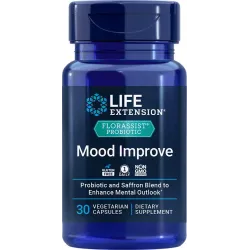
FLORASSIST® Mood Improve
Price: 28,06 €Probiotic and saffron blend enhances mood & mental outlook. Promotes...
Related posts
-
 Feed Your Brain!
Millions of people around the world are adhering to low-fat, low-cholesterol diets in an effort to reduce the impact...
Feed Your Brain!
Millions of people around the world are adhering to low-fat, low-cholesterol diets in an effort to reduce the impact... -
Discovering Coffee's Unique Health Benefits
Every morning, many of us sip our coffee with no real thought given to the beans behind the brew. But coffee beans...
-
Depression. New Human Study Confirms Potent Antidepressant Effects of SAMe
Life Extension® introduced SAMe (S-adenosylmethinone) in 1997. Back then it was enormously popular in Europe, but...
-
Tryptophan. Why Aging People Become Depressed, Fatigued, and Overweight part 1
Serotonin is a compound in the brain that promotes feelings of personal security, relaxation, and confidence. A...
-
Tryptophan. Why Aging People Become Depressed, Fatigued, and Overweight part 2
Fortunately, the new understanding of how tryptophan is degraded in aging humans provides a basis for engineering a...