
 English
 Polski
 Deutsch
 Français
 ελληνικά
 Español
 Italiano
What is Glutamine?
 There are 20 amino acids utilized by our genetic code to manufacture proteins. Glutamine is the most abundant and versatile.1
Research shows that it may improve digestive and gut health and enhance the body’s response to exercise.1,2
Researchers consider glutamine to be semi-essential because the body often doesn’t produce enough.3 The difference needs to be made up by oral intake.
Many people take whey or vegan protein, which already contains glutamine. For some individuals, however, this might not be sufficient.
While glutamine is found throughout the body, about 30% of total glutamine is used just in the intestines.4 Because of this, a depletion of glutamine can be especially consequential to gut health.
Three randomized, controlled studies have shown that glutamine use benefits intestinal health:
- Thirty-three obese or overweight adults received either glutamine or the amino acid L-alanine for two weeks to analyze changes in gut microbiota.5 Those who received glutamine had a decreased ratio of Firmicutes bacteria to Bacteroidetes bacteria. Imbalance of this ratio is considered dysbiosis. Higher ratios are usually seen in obesity and in inflammatory bowel disease (IBD).6 The improved gut microbiota balance with the use of glutamine suggests it is a good candidate to help restore gut flora balance.
- Ten active men received glutamine or a placebo before intense exercise, to study gastrointestinal permeability differences post-exercise.7 Increased intestinal permeability, also known as "leaky gut," is related to multiple digestive disorders. Those taking glutamine had decreased gastrointestinal permeability compared to those in the placebo group.
- In a larger study, 106 participants with irritable bowel syndrome took glutamine or a placebo for eight weeks.8 Irritable bowel syndrome severity scores were reduced by 50 points or more in 79.6% of the glutamine group but in only 5.8% of the placebo group.
 Additional studies have shown that glutamine may:
- Improve immune function in heavy-load-training athletes,9
- Reduce the accumulation of blood ammonia (believed to be a cause of fatigue) in high-level endurance athletes,10
- Decrease muscle soreness following eccentric exercise (a workout in which the muscles get longer in response to a force, for instance, the downward phase of a biceps curl),11
- Reduce symptoms for sickle cell anemia patients,12 and
- Reduce chemotherapy- and radiation-induced mucositis (inflammation of the mucous membrane) in cancer patients.13
To summarize, research has shown that glutamine can improve intestinal health and exercise response.
Material used with permission of Life Extension. All rights reserved.
- Cruzat V, Macedo Rogero M, Noel Keane K, et al. Glutamine: Metabolism and Immune Function, Supplementation and Clinical Translation. Nutrients. 2018 Oct 23;10(11).
- Kim MH, Kim H. The Roles of Glutamine in the Intestine and Its Implication in Intestinal Diseases. Int J Mol Sci. 2017 May 12;18(5).
- Xiao D, Zeng L, Yao K, et al. The glutamine-alpha-ketoglutarate (AKG) metabolism and its nutritional implications. Amino Acids. 2016 Sep;48(9):2067-80.
- Kim MH, Kim H. The Roles of Glutamine in the Intestine and Its Implication in Intestinal Diseases. Int J Mol Sci. 2017 May 12;18(5):1051.
- de Souza AZ, Zambom AZ, Abboud KY, et al. Oral supplementation with L-glutamine alters gut microbiota of obese and overweight adults: A pilot study. Nutrition. 2015 Jun;31(6):884-9.
- Stojanov S, Berlec A, Štrukelj B. The Influence of Probiotics on the Firmicutes/Bacteroidetes Ratio in the Treatment of Obesity and Inflammatory Bowel disease. Microorganisms. 2020 Nov 1;8(11).
- Pugh JN, Sage S, Hutson M, et al. Glutamine supplementation reduces markers of intestinal permeability during running in the heat in a dose-dependent manner. Eur J Appl Physiol. 2017 Dec;117(12):2569-77.
- Zhou Q, Verne ML, Fields JZ, et al. Randomised placebo-controlled trial of dietary glutamine supplements for postinfectious irritable bowel syndrome. Gut. 2019 Jun;68(6):996-1002.
- Song QH, Xu RM, Zhang QH, et al. Glutamine supplementation and immune function during heavy load training. Int J Clin Pharmacol Ther. 2015 May;53(5):372-6.
- Carvalho-Peixoto J, Alves RC, Cameron LC. Glutamine and carbohydrate supplements reduce ammonemia increase during endurance field exercise. Appl Physiol Nutr Metab. 2007 Dec;32(6):1186-90.
- Legault Z, Bagnall N, Kimmerly DS. The Influence of Oral L-Glutamine Supplementation on Muscle Strength Recovery and Soreness Following Unilateral Knee Extension Eccentric Exercise. Int J Sport Nutr Exerc Metab. 2015 Oct;25(5):417-26.
- Niihara Y, Miller ST, Kanter J, et al. A Phase 3 Trial of l-Glutamine in Sickle Cell Disease. N Engl J Med. 2018 Jul 19;379(3):226-35.
- Sayles C, Hickerson SC, Bhat RR, et al. Oral Glutamine in Preventing Treatment-Related Mucositis in Adult Patients With Cancer: A Systematic Review. Nutr Clin Pract. 2016 Apr;31(2):171-9.
Related product
-
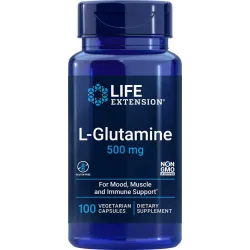
L-Glutamine 500 mg
Price: 14,80 €Supports muscle & immune health Supports healthy muscle mass Helps...
Related posts
-
 Turn Off Your Fat Switch: Deflating Your Spare Tire For a Longer, Leaner Life
If you’re like most Americans, you are struggling with at least a few extravpounds. And if you’re over 40, those...
Turn Off Your Fat Switch: Deflating Your Spare Tire For a Longer, Leaner Life
If you’re like most Americans, you are struggling with at least a few extravpounds. And if you’re over 40, those... -
Critical Need For a Multi-Modal Approach to Combat Obesity part 1
The scientific community now recognizes the role that obesity plays in the induction of age-related diseases and...
-
Critical Need For a Multi-Modal Approach to Combat Obesity part 2
Blocking the breakdown and absorption of carbohydrates are important points of intervention for losing weight. The...
-
Coffee. National Institutes Of Health Discovers Protective Effects Of Coffee
An exciting new study published in the New England Journal of Medicine suggests that coffee drinking may add years to...
-
Digestive Enzymes. Are You Obtaining the Proper Enzymes?
Even if you eat a healthy diet, you may not be absorbing vital fat-soluble nutrients and amino acids needed for...