
 English
 Polski
 Deutsch
 Français
 ελληνικά
 Español
 Italiano
Nutrient Intervention for Glaucoma
 Glaucoma is the second-leading cause of blindness.1 It often progresses without symptoms until it succeeds in damaging the optic nerve.2 Up to 50% of people with glaucoma remain undiagnosed,3 and as many as one in ten individuals aged 80 or older are afflicted by it.
Encouraging news reveals that several of glaucoma’s underlying causative factors may be prevented and even reversed through natural interventions, offering new hope to the millions at risk for this widespread, debilitating condition.
In this article, you will learn of a recently published human study revealing how proprietary, standardized extracts of French maritime pine bark and bilberry may effectively target the underlying mechanisms that lead to glaucoma. In a group of human subjects, these nutrients combated one of glaucoma’s primary contributing factors, elevated pressure in the eyes, with reductions as much as 24%. Even more impressive results occurred when these same nutrients were combined with standard therapy.4
In a recent study, researchers have found a nutrient intervention that brings us a step closer to conquering vision-robbing glaucoma, the second-leading cause of blindness worldwide.1 Glaucoma is a group of diseases that silently and without warning can cause blindness or disabling vision loss that result from damage to the eye’s optic nerve.2
 Hope may not be far off for millions of people affected or at risk for this devastating disease. The revealing study,4 reported in the May 2010 issue of Clinical Ophthamology, involved 79 subjects who had elevation of the pressure within the eyes, known as intraocular pressure or IOP. Persistent and progressive IOP has been considered the single most important factor associated with the development of the most common type of the disease—open angle glaucoma, diagnosed in more than eight out of ten glaucoma patients.5
In the most recent study, subjects had high intraocular pressure, but did not yet show signs of open-angle glaucoma when given complete eye exams. No subjects with age-related eye disease or other generalized or systemic diseases were included in the trial.4
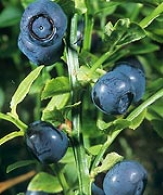
Subjects were randomly assigned to receive either an oral nutrient compound containing both standardized French maritime pine bark extract and a phenolic bilberry (Vaccinium myrtillus) extract, standard medical therapy with latanoprost (Xalatan®) eye drops, or both the nutrient compound and latanoprost drops for 24 weeks.4
Latanoprost is a synthetic agent developed to mirror in structure and function the messaging molecule prostaglandin F2α (PGF2α). Among other actions, PGF2α causes smooth muscle cells, such as those in blood vessels and the eyes, to relax or contract. Prostaglandins are used in medical therapy of glaucoma to lower pressure inside the eye. However, in part due to complications associated with its short- and longer-term use, latanoprost and other PGF2α-derived prescription eye drops are not acceptable preventive agents to halt glaucoma from developing for many people with elevated intraocular  pressure or other predisposing conditions. This last limitation of the prescription medication helped generate excitement for this study, as this oral nutrient compound containing pine bark/bilberry has not been associated with the type of side effects seen with the prostaglandin-type drugs, such as ocular cysts, swelling, and inflammation.6
In the study, all three treatment groups showed improvement, or lowering of their intraocular pressure, which was measured carefully under protocol and in triplicate to decrease chances of random variation or error. Initially, subjects who received the prescription eye drops saw the most rapid drop in their eye pressures of 28%, beginning at four weeks of treatment. The group that received the pine bark/bilberry compound began to show a statistically significant drop in intraocular pressure beginning at the sixth week of treatment that continued throughout the study period, to a 24% reduction at 16 weeks. While the pressure drop approached the degree of intraocular pressure-lowering associated with latanoprost drops, the group given the pine bark/bilberry compound alone did not reach the exact same level of pressure lowering with latanoprost alone.4
However, the most exciting results emerged from the group that used both agents. This group also began showing statistically significant pressure lowering of 28% at four weeks. However, the degree of pressure lowering at 24 weeks with both agents was 40%, far greater than what was seen in those receiving the prescription drug alone (28%). The pine bark/bilberry compound plus the synthetic prescription eye drops appeared to work in synergy to amplify the lowering of intraocular pressure better than either agent alone.4
While this study did not include a control group, a prior controlled study in 38 subjects with high intraocular pressure but without evidence of glaucoma measured eye blood flow in a group that took the pine bark/bilberry compound for six months and subjects that did not.7 At three months, the group taking the pine bark/bilberry compound showed statistically significant 13% reduction in intraocular pressure and improved ocular blood flow in three different blood vessels over baseline values taken at study entry and when compared to untreated controls.
 Aside from rigorous and regular eye examination by a trained professional, there currently is no accepted preventive strategy for glaucoma, and certainly not one that can be generalized or safe for large populations. Given the need for ways to prevent the progression of this sight-robbing disease, the findings in this study are very promising and call out for larger studies in broader populations.
The promising findings from the May 2010 study also add to the body of evidence pointing to a greater role of prevention in maintaining sharp vision and eye health.8 This strategy recognizes that delicate eye tissues, under assault by environmental toxins, free radicals, and other cellular byproducts associated with aging, injury, and oxidative stress, can be supported or protected by nutritional or other therapeutic means.9 Natural prevention takes on an added dimension in the fight against glaucoma as eye specialists recognize that high IOP may not be the defining characteristic for diagnosing glaucoma or predicting whether the disease will worsen.10 It turns out that 25-50% of people with glaucoma have intraocular pressure measurements that fall within the normal range.11 In addition, up to one in ten glaucoma patients who are treated with standard medical or surgical therapies may still progress to glaucoma.12
 The most common type of glaucoma is an age-related, painless disease that often goes undetected and can lead to vision loss or blindness.
- While all people are at risk for glaucoma, those at increased risk include African-Americans, Hispanics, Asians, diabetics, and people 60 years of age and older.
- Many glaucoma patients are unable or unwilling to stick to a daily regimen of prescription eye drops, which can put them at greater risk for continued vision loss or blindness.
- In a first for a nutritional formulation, a combination of standardized maritime pine bark extract and standardized bilberry extract has shown promise in human studies to reduce intraocular pressure on its own and in combination with standard prescription eye drop latanoprost therapy.
- Newer adjunct and investigational therapies for glaucoma include neuroprotection, which may involve additional nutrient support of vascular integrity and antioxidant pathways.
Why Pine Bark and Bilberry Extracts?
 Many prescription eye drops, including prostaglandin analogs or look-alikes such as latanoprost, are believed to lower pressure within the eyes by increasing fluid outflow.13 Some studies have suggested that latanoprost may help glaucoma patients by assisting the eye’s self-regulation, rather than by affecting blood pressure of the eye’s circulation itself.14
The two active components of the pine bark/bilberry compound may act on a molecular level to decrease inflow of aqueous humor, improve microvascular tone and integrity, decrease resistance across the region of the eye responsible for fluid drainage, and possibly contribute to better fluid outflow. Each component of the pine bark/bilberry compound was chosen for its range of actions that appear particularly suited to aiding the complex balance at the level of the eye chambers.4
French maritime pine bark is a powerful antioxidant rich in proanthocyanidins, which are known for their ability to scavenge and neutralize harmful free radicals. The biologic effects of French maritime pine bark also extend to the natural agent’s abilities to help regulate the cell’s antioxidant network and associated genes, as well as dampen gene expression related to nuclear factor-kappaB (NF-kB)-dependent pathways inside cells, which have been shown to result in anti-inflammatory effects.15,16
Human studies have also shown the ability of French maritime pine bark to improve vascular endothelial function,17 which involves the delicate layer of critical lining cells inside blood vessels that possess wide-ranging effects on vessel tone, integrity, inflammation, antioxidant protection, and repair. Disorders of endothelial function have also been cited as contributing factors to the development or progression of glaucoma,18 which lends further support to the use of French maritime pine bark.
 Microcirculation also appears to benefit from French maritime pine bark’s anti-platelet actions that inhibit the formation of clots. Other studies support its promise in prevention of leg swelling and clot formation in at-risk people who travel on long flights.19,20
Interest in the benefits of French maritime pine bark grew with our understanding of the damage caused by free radicals. Mitochondrial-associated oxidative damage affects the eyes’ drainage system, whose tissue integrity is essential to maintaining normal eye fluid outflow and pressure.21 This understanding of the role played by faulty mitochondrial function in the development of glaucoma pointed investigators toward possible dietary solutions.
Standardized bilberry extract provides the other half of the nutrient compound’s one-two punch. Many studies have demonstrated the superior and efficient antioxidant and free radical-scavenging activity of bilberry and other related berry fruits, along with genetic signaling abilities that favor their use in health promotion and disease prevention.22 Bilberry has also shown its might in bolstering defense systems against harmful oxidative stress. In research involving tissue from the pigmented layer of the retina, bilberry proved a potent influence on beneficial gene pathways involved in the antioxidant response effort.23 In addition to a huge body of research showing bilberry’s benefits in vascular models of disease and atherosclerosis,24 bilberry has also shown its protective effects in other models of inflammatory eye diseases such as uveitis, with greater protection afforded by increasing extract dosage, or the so-called dose-response.25
How Does Glaucoma Occur?
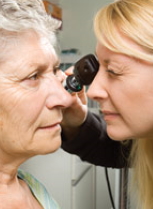 The optic nerve is a critical structure located at the back of the eye that acts as a conduit between what our eyes see and what the brain understands as sight. A healthy optic nerve comprises nerve filaments or axons that radiate from retinal ganglion cells, or the specialized nerve cells that collect and transmit electrical signals that bombard our eyes as colors, light, shapes, sizes, patterns and other imagery that the brain translates as sight.
The vision defect commonly associated with glaucoma is tunnel vision, a very real phenomenon that occurs when about 40% of the nerve fibers exiting the eye at the optic nerve die. In this type of permanent vision loss, nerve filaments die off because each is associated with a mother cell known as the retinal ganglion cell, or RGC. These RGCs are susceptible to injury from free radicals that result from overstimulation of receptors, particularly the N-methyl-D-aspartate (NMDA) receptor types for glutamate. Even though glutamate is one of the brain’s most important stimulatory neural biochemicals, or neurotransmitters, glutamate must be regulated or cleared by healthy tissues to avoid secondary damage. As nerve filaments die off, the edge of special nervous tissue inside the eye called the neural rim thins out and the cup in which the optic nerve rests becomes larger. When this happens, a person may notice being less able to see at the edges of their field of vision, known as peripheral vision.26,27 As loss of peripheral vision continues, that person may be able to clearly see only what is in the center of his or her field of vision, which produces the glaucoma-associated condition known as tunnel vision.
 There is no cure for glaucoma. Sadly, the disease is preventable in most cases if changes associated with glaucoma are identified early, proper treatment is given and, of equal importance, the treatment is faithfully carried out by the person with the disease with appropriate follow-up by a qualified healthcare practitioner. Because glaucoma is a painless disease, it often goes undiagnosed until vision loss that cannot be restored by surgery or other therapies has already occurred. About half of people in the United States with glaucoma do not know they have the disease. Today, more than 2.2 million Americans have been diagnosed with glaucoma, a number that is expected to grow to 3 million by the end of this decade.29
Critical Importance of Healthy Flow
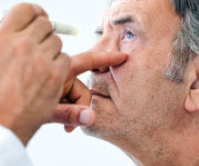 The pressure inside a channel is a function of rates of fluid inflow and outflow, as well as resistance factors. Resistance may build inside channel walls itself, as occurs with stiffening of blood vessel walls and high blood pressure, or within meshlike structures through which fluid enters or exits, as in the eye. Aqueous humor is the name for the clear liquid that circulates in the front part of the eye. At an area of eye called the drainage angle, this fluid passes through a mesh-like structure called the trabecular meshwork made of cells and support tissues, or matrix. If outflow is sluggish or blocked, or if fluid flow across the meshwork is impaired by increased resistance—due to fewer cells, greater matrix buildup, or both—the fluid backup causes pressure within the eye to build, leading to increased IOP, or intraocular pressure.
Among the many antioxidant and nutritional products under study for their potential in halting changes associated with glaucoma is resveratrol, a natural phytochemical found in grape skins, seeds, chocolate, peanuts, and berries. Tissue culture experiments used porcine meshwork cells in a low-oxygen environment to create oxidative stress and generate free radicals and reactive oxygen species (ROS). Chronic administration of resveratrol28 was associated with a significant lowering of inflammatory indicators, oxidative damage and age-related degenerative markers in trabecular meshwork cells. The experimental findings at Duke Eye Center led investigators to consider a possible role for resveratrol or other similar dietary agents to prevent changes associated with the development or progression of open-angle glaucoma, the most common type of the vision-robbing disease.
Summary
Glaucoma presents a risk to everyone, from newborns to the elderly. Even with standard treatments, pressures inside the eye may continue to increase or glaucoma can advance, which often ends in progressive and irreversible vision loss or blindness.
With greater understanding of the many factors associated with development of the disease, researchers have looked to nutritional antioxidant and other related actions on cell signaling and defense to support the integrity of delicate eye tissues and support the healthy flow of eye fluids, or aqueous humor.
A dual-action compound of standardized French maritime pine bark and bilberry extract has been shown in human studies to decrease pressure within the eye by itself and even more so when combined with standard prescription eye drops. Future studies may show this compound’s ability in the fight against glaucoma-associated vision loss and blindness.
Material used with permission of Life Extension. All rights reserved.
1. Quigley HA. New paradigms in the mechanisms and management of glaucoma. Eye (Lond). 2005 Dec;19(12):1241-8.
2. Available at: www.geteyesmart.org. Accessed March 13, 2011.
3. Available at: www.glaucoma.org/learn/what_is_glaucom.php. Accessed March 22, 2011.
4. Steigerwalt RD, Belcaro G, Morazzoni P, Bombardelli E, Burki C, Schonlau F. Mirtogenol potentiates latanoprost in lowering intraocular pressure and improves ocular blood flow in asymptomatic subjects. Clin Ophthalmol. 2010 May 14;4:471-6.
5. Available at: http://articlewild.com/How-Serious-Is-Open-Angle-Glaucoma-108995.html. Accessed March 7, 2011
6. Alm A, Grierson I, Shields MB. Side effects associated with prostaglandin analog therapy. Surv Ophthalmol. 2008 Nov;53 Suppl1:S93-105.
7. Steigerwalt RD, Gianni B, Paolo M, Bombardelli E, Burki C, Schonlau F. Effects of Mirtogenol on ocular blood flow and intraocular hypertension in asymptomatic subjects. Mol Vis. 2008 Jul 10;14:1288-92.
8. McKinnon SJ, Goldberg LD, Peeples P, Walt JG, Bramley TJ. Current management of glaucoma and the need for complete therapy. Am J Manag Care. 2008 Feb;14(1 Suppl):S20-7.
9. Baltmr A, Duggan J, Nizari S, Salt TE, Cordeiro MF. Neuroprotection in glaucoma – Is there a future role? Exp Eye Res. 2010 Nov;91(5):554-66.
10. Varma R, Peeples P, Walt JG, Bramley TJ. Disease progression and the need for neuroprotection in glaucoma management. Am J Manag Care. 2008 Feb;14(1 Suppl):S15-9.
11. Available at: http://www.uspreventiveservicestaskforce.org/uspstf05/glaucoma/glaucrs.htm. Accessed March 22, 2011.
12. Available at: http://www.glaucoma.org/learn/glaucoma_facts.php. Accessed March 22, 2011.
13. Neacsu AM. Receptors involved in the mechanism of action of topical prostaglandines. Oftalmologia. 2009;53(2):3-7.
14. Harris A, Garzozi HJ, McCranor L, Rechtman E, Yung CW, Siesky B. The effect of latanoprost on ocular blood flow. Int Ophthalmol. 2009 Feb;29(1):19-26.
15. Rohdewald P. A review of the French maritime pine bark extract (Pycnogenol), a herbal medication with a diverse clinical pharmacology. Int J Clin Pharmacol Ther. 2002 Apr;40(4):158-68.
16. Peng Q, Wei Z, Lau BH. Pycnogenol inhibits tumor necrosis factor-alpha-induced nuclear factor kappa B activation and adhesion molecule expression in human vascular endothelial cells. Cell Mol Life Sci. 2000 May;57(5):834-41.
17. Nishioka K, Hidaka T, Nakamura S, et al. Pycnogenol, French maritime pine bark extract, augments endothelium-dependent vasodilation in humans. Hypertens Res. 2007 Sep;30(9):775-80.
18. Resch H, Garhofer G, Fuchsjäger-Mayrl G, Hommer A, Schmetterer L. Endothelial dysfunction in glaucoma. Acta Ophthalmol. 2009 Feb;87(1):4-12.
19. Cesarone MR, Belcaro G, Rohdewald P, et al. Prevention of edema in long flights with Pycnogenol. Clin Appl Thromb Hemost. 2005 Jul;11(3):289-94.
20. Belcaro G, Cesarone MR, Rohdewald P, et al. Prevention of venous thrombosis and thrombophlebitis in long-haul flights with pycnogenol. Clin Appl Thromb Hemost. 2004 Oct;10(4):373-7.
21. Izzotti A, Sacca SC, Longobardi M, Cartiglia C. Mitochondrial damage in the trabecular meshwork of patients with glaucoma. Arch Ophthalmol. 2010 Jun;128(6):724-30.
22. Zafra-Stone S, Yasmin T, Bagchi M, Chatterjee A, Vinson JA, Bagchi D. Berry anthocyanins as novel antioxidants in human health and disease prevention. Mol Nutr Food Res. 2007 Jun;51(6):675-83.
23. Milbury PE, Graf B, Curran-Celentano JM, Blumberg JB. Bilberry (Vaccinium myrtillus) anthocyanins modulate heme oxygenase-1 and glutathione S-transferase-pi expression in ARPE-19 cells. Invest Ophthalmol Vis Sci. 2007 May;48(5):2343-9.
24. Mauray A, Felgines C, Morand C, Mazur A, Scalbert A, Milenkovic D. Bilberry anthocyanin-rich extract alters expression of genes related to atherosclerosis development in aorta of apo E-deficient mice. Nutr Metab Cardiovasc Dis. 2010 Jul 31.
25. Yao N, Lan F, He RR, Kurihara H. Protective effects of bilberry (Vaccinium myrtillus L.) extract against endotoxin-induced uveitis in mice. J Agric Food Chem. 2010 Apr 28;58(8):4731-6.
26. Marquis RE, Whitson JT. Management of glaucoma: focus on pharmacological therapy. Drugs Aging. 2005;22(1):1-21.
27. Bagnis A, Papadia M, Scotto R, Traverso CE. Current and emerging medical therapies in the treatment of glaucoma. Expert Opin Emerg Drugs. 2011 Mar 15.
28. Luna C, Li G, Liton PB, Qiu J, Epstein DL, Challa P, Gonzalez P. Resveratrol prevents the expression of glaucoma markers induced by chronic oxidative stress in trabecular meshwork cells. Food Chem Toxicol. 2009 Jan;47(1):198-204.
29. Available at: http://report.nih.gov/nihfactsheets/ViewFactSheet.aspx?csid=92. Accessed March 22, 2011.
Related product
-
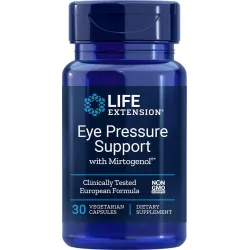
Eye Pressure Support with Mirtogenol®
Price: 33,73 €Support eye pressure already within normal range Support eye pressure...
Related posts
-
 Reversing Dry Eye Syndrome
An estimated 20 million Americans or more suffer from dry eye syndrome. This condition occurs when the eyes don’t...
Reversing Dry Eye Syndrome
An estimated 20 million Americans or more suffer from dry eye syndrome. This condition occurs when the eyes don’t... -
Protect Eyes from Computer Blue Light
A new vision-robbing culprit has emerged that is more prevalent than sunlight exposure. Our round-the-clock use of...
-
Carnosine, Cataracts, And Visual Clarity
Cataracts cause about half of all cases of blindness worldwide. By age 80, more than half of all Americans will have...