
 English
 Polski
 Deutsch
 Français
 ελληνικά
 Español
 Italiano
Cranberries: a delicious fruit provides a multitude of health benefits
Cranberries show multiple health benefits, from fighting cancer to promoting heart health.
Today, farmers grow cranberries in many northern states including Massachusetts and Oregon, as well as in Canada and in northern Europe. People seek out cranberry products (and all berry products) for their widely known health and performance benefits.1
Little Berries, Vast Benefits
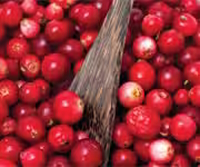 Cranberries have proven their mettle in fighting urinary tract infections (UTIs).2 They are currently under investigation for a wide array of other potential benefits as well, including fighting peptic ulcers,3 and inhibiting the dental plaque that can lead to tooth decay.4
As a rich source of antioxidants, cranberries are being intensively studied for their anti-aging potential and as a means to improve cardiovascular health and the body’s ability to fend off cancers.5-7 Researchers who studied a small group of healthy Danish women (nine in total) observed a marked increase in the subjects’ plasma antioxidant activity about one to two hours after they drank 500 mL (about 16 ounces) of cranberry juice.8
Proven to Prevent Urinary Tract Infections
 Urinary tract infections represent a huge health problem affecting millions of people yearly. They underlie about 8.3 million doctor visits each year. Women are more vulnerable to them and one woman in five develops a UTI during her lifetime. Urinary tract infections in men are not as common as in women, but can be very serious.9
In January 2008, the highly respected Cochrane Database of Systematic Reviews published a summary of the most authoritative studies done to date on the value of cranberries for preventing UTIs. It included 10 studies, which together involved more than 1,000 research subjects.2
In seven of the studies the effects of cranberry/cranberry-lingonberry juice were compared with the effects of placebo, other juice, or water. In four studies, the researchers compared the effects of cranberry tablets with placebo tablets. One study evaluated both juice and tablets.2
This review found that cranberry products significantly decreased the number of UTIs that patients experienced during a year-long period, as compared with the control substances. Cranberry products were more effective at reducing UTIs among women who were prone to recurrent infections, compared with elderly men and women and with other groups prone to such bladder infections.2
Understanding of how these pungent berries confer protection against UTIs has evolved recently. Normally, urine is sterile. It harbors no bacteria, viruses, and/or fungi although it does contain fluids, salts, and wastes. An infection occurs when tiny organisms, usually bacteria from the digestive tract such as Escherichia coli, cling to the opening of the urethra, the vessel through which urine leaves the bladder, and begin to multiply. If bacteria travel up the urethra to the bladder and multiply further, a bladder infection results.9
At first, scientists thought that fruit acids in cranberries inhibited the growth of bacteria in the urine. More recently researchers have focused on the ability of cranberry components to prevent the adhesion of bacteria to sites within the urinary tract.10 Chemical engineers are examining the mechanisms by which cranberry chemicals disrupt the ability of bacteria to bind onto specific receptors on cells lining the urinary tract.11 Researchers foresee that a clearer understanding of the way in which bacteria attach themselves to human tissues will lead to better therapies based on natural products including cranberries.11
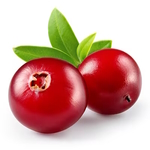 Popular for millennia among Arctic and Nordic people, the glowing red cranberry has also long featured in the North American diet. Cranberries belong to the Vaccinium family of fruits, whose other well-known American member is the blueberry.
Native Americans called the tart red fruit sassamanash and introduced it to starving English settlers who named it “craneberry” because the flowers resembled the head of a bird, the crane. For centuries, Americans mainly thought of cranberries as a guest at their holiday tables, accompanying the turkey. But in recent decades, cranberry consumption has risen as the fruit has become more widely available and its health benefits have gained wider appreciation.
Averting Peptic Ulcers
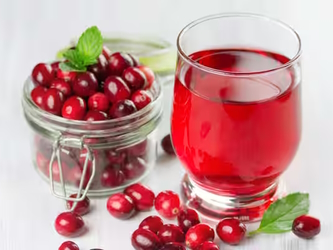 The ability of cranberry constituents to prevent bacteria from adhering to human cells may also hold promise in managing peptic ulcers, a dangerous health complaint that increases the risk of gastric cancer. The majority of peptic ulcers are caused by infection of the stomach or upper small intestine with the bacterium Helicobacter pylori (H. pylori).12
Laboratory studies have found that a constituent of cranberry juice inhibits the adhesion of H. pylori to human gastric epithelial cells.13 Human studies show that cranberry has practical applications in helping to eradicate ulcer-causing H. pylori infection.3,14 One such study examined the effect of cranberry juice in a population of individuals infected with H. pylori who were at high risk for gastric cancer. After 35 days, 14% of individuals who consumed cranberry juice tested negative for H. pylori, compared with only 5% of those who consumed a placebo beverage.3 Additional research suggests that cranberry may enhance the efficacy of conventional pharmaceutical therapy used to eradicate H. pylori infection.14 Cranberry-based therapies could thus hold an important place in programs designed to eradicate peptic ulcers.
Promise in Fighting Cancer
Numerous studies are ongoing to analyze the anticancer potential of cranberry products. In one animal study, rats were exposed to a chemical that induced the growth of bladder cancers for eight weeks. Starting one week after the last dose of administered carcinogen, the rats received doses of either 1.0 mL or 0.5 mL of cranberry juice concentrate daily until the end of the study. The scientists observed a dose-dependent preventive effect. Those rats that had received 1.0 mL of cranberry concentrate per day showed significantly fewer bladder tumors than those that received half as much concentrate.15
Other studies utilizing tumor models in the laboratory suggest that cranberry extracts and compounds may help inhibit the growth and proliferation of lung, breast, prostate, and colon cancer. Cranberry may help fight cancer via numerous mechanisms, including inducing programmed cell death (apoptosis), inhibiting the activity of an enzyme involved in tumor spread, and inhibiting enzymes associated with inflammation and cancer.6
Promoting Heart Health
 As a rich source of flavonoids, cranberries are also arousing interest for their potential to reduce the formation of heart-threatening plaque deposits. Research indicates diets that include ample flavonoid-rich foods and beverages may decrease the risk of atherosclerosis. Cranberries contain three kinds of flavonoids: anthocyanins, flavonols, and proanthocyanidins.16 These flavonoids are powerful antioxidants that may protect cardiovascular health via numerous mechanisms, including modulating blood lipid levels, benefitting blood pressure, and interfering with the formation of lipid deposits in blood vessel walls.
In addition to beneficial antioxidant flavonoids, cranberries are a good source of vitamin C and dietary fiber. One hundred grams (about three ounces) of raw cranberries provide:18
|
Oral Health Benefits
 Cranberries may offer important benefits for healthy teeth and gums. The berries contain a special chemical that may inhibit and even reverse the formation of the dental plaque deposits that often lead to tooth decay.4 Cranberry constituents may also help reduce inflammation in the gingival or gum tissues, which could offer protection against periodontitis (gum disease that may lead to tooth loss).17 These promising findings suggest that cranberry may soon find a place in dental health care regimens.
Brighten Your Menus With Cranberries
 Prior to the 1930s, most cranberries in the US were bought fresh. Today, cranberries come in many different forms—fresh fruit, juices, sauce, and dried berries. Cranberry capsules are also available as a dietary supplement. Juices, sauce, and capsules are always available while fresh fruit is generally sold between September and December. Since cranberries are naturally tart, many commercially sold cranberry juices and sauces contain added sugar. Even without added sugar, cranberry juices naturally contain a lot of sugar calories.
Cranberry supplements may offer many of the berries’ health benefits while avoiding unwanted calories and sugar.
Material used with permission of Life Extension. All rights reserved.
- J Agric Food Chem. 2008 Feb 13;56(3):627-9.
- Cochrane Database Syst Rev. 2008 Jan 23;(1).
- Helicobacter. 2005 Apr;10(2):139-45.
- J Am Dental Assoc. 1998;129:1719-23.
- J Nutr Biochem. 2007 Sep;18(9):567-79.
- Mol Nutr Food Res. 2008 Jun;52(Suppl 1):S18-27.
- Nutr Rev. 2007 Nov;65(11):490-502.
- Eur J Clin Nutr. 2000 May;54(5):405-8.
- http://kidney.niddk.nih.gov/kudiseases/pubs/utiadult/index.htm.
- Mol Nutr Food Res. 2007 Jun;51(6):732-7.
- Colloids Surf B Biointerfaces. 2008 Aug 1;65(1):35-42.
- http://digestive.niddk.nih.gov/ddiseases/pubs/hpylori.
- Crit Rev Food Sci Nutr. 2002;42(3 Suppl):279-84.
- Mol Nutr Food Res. 2007 Jun;51(6):746-51.
- Oncol Rep. 2008 Jun;19(6):1565-70.
- Crit Rev Food Sci Nutr. 2002;42(3 Suppl):301-16.
- Eur J Oral Sci. 2007 Feb;115(1):64-70.
- http://www.nutritiondata.com/facts/fruits-and-fruit-juices/1875/2.
Related product
-

Optimized Cran-Max®
Price: 17,41 €Supports female urinary tract health Helps support female urinary tract...
Related posts
-
 Pumpkin Seed Relieves Overactive Bladder Urinary Incontinence
Nearly half of women aged over 70 suffer from chronic urinary incontinence. A groundbreaking discovery using natural...
Pumpkin Seed Relieves Overactive Bladder Urinary Incontinence
Nearly half of women aged over 70 suffer from chronic urinary incontinence. A groundbreaking discovery using natural... -
Maintain Youthful Urinary Flow
Prostate problems are widespread as men age. Benign prostate enlargement and associated urinary difficulties...