
 English
 Polski
 Deutsch
 Français
 ελληνικά
 Español
 Italiano
Protect Your Respiratory System
 N-acetyl-L-cysteine is an amino acid derivative that breaks down excess mucus in air passages.
Used by physicians for decades, N-acetyl-L-cysteine has a wide variety of benefits, especially helping to protect the lungs and airways of the respiratory tract.
Known by many as NAC, N-acetyl-L-cysteine has been shown to reduce the number of harmful pathogens, including bacteria and viruses.1-6
Clinical studies have shown that NAC can help treat or prevent worsening of chronic bronchitis and acute respiratory distress syndrome, an often fatal complication in patients with pneumonia or other severe lung infections.7-12
In patients with chronic obstructive pulmonary disease (COPD), N-acetyl-L-cysteine has been associated with lower rates of exacerbations (periods of worsening of symptoms) and fewer days spent in the hospital.4,13-18
Most individuals gain benefits from using 600 mg to 1,800 mg/day in divided dosages.
What Is N-Acetyl-L-Cysteine?
N-acetyl-L-cysteine (NAC) is a precursor of L-cysteine, the amino acid cells need to produce one of the most powerful antioxidants in the body, glutathione.19,20
Found in every cell in the body, glutathione fights the oxidative stress that is closely associated with many age-related chronic diseases.21
But scientists have found that N-acetyl-L-cysteine does much more than this. It also protects the respiratory system from a number of different pathogens and diseases.
Controlling Excess Mucus
 Healthy lungs have a built-in cleaning and protection system.
A small amount of mucus is secreted to coat the walls of the airways. This mucus traps inhaled particles, many of which can be irritants, infectious, or worse. Then, tiny projections called cilia on the surface of cells lining the airways sweep away the mucus and trapped particles, keeping airways clear and protecting the lungs from potential pathogens.
Many conditions, from allergies to infection to lung disease, can cause this system to become dysfunctional, leading to the secretion of large amounts of mucus.22
When excess mucus accumulates, it becomes sticky and hard to remove, leading to difficulty breathing. This complicates many lung conditions, including bronchitis, emphysema, asthma, cystic fibrosis, and lung infections.22
Doctors have been using inhaled N-acetyl-L-cysteine to reduce mucus since the 1960s.23 It breaks down mucus secretions, making them less dense and sticky.
N-acetyl-L-cysteine also reduces the thickness of the mucus.3 It does this by reacting with bonds within the mucus proteins and thinning the mucus.4,24
This helps clear the airways and makes it easier for the cilia to sweep away mucus and trapped particles.3
Reducing Oxidative Stress
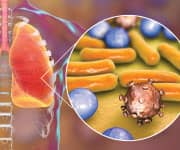 N-acetyl-L-cysteine is a highly effective precursor to the antioxidant glutathione, which reduces oxidative stress and free-radical tissue damage.3,4,24
Taken orally, NAC is rapidly absorbed and distributed throughout the body, where it provides the building blocks for cells to produce their own glutathione.
N-acetyl-L-cysteine is also a direct antioxidant itself. Even before conversion into glutathione, it scavenges free radicals that could otherwise cause damage.4
Oxidative stress is a common contributor to many disorders of the respiratory system, from infection to chronic obstructive pulmonary disease (COPD), disorders of the lungs that cause difficulty breathing.4
By bolstering antioxidant reserves, and thus reducing oxidative stress, N-acetyl-L-cysteine offers powerful protection to the lungs.
For example, in COPD such as emphysema, oxidative stress in the lungs contributes to inflammation, abnormal constriction of the airways, fluid in the lungs, excess mucus secretion, and other tissue damage.4 N-acetyl-L-cysteine reduces oxidative stress and the damage it does while also reducing mucus volume and thickness.
 N-acetyl-L-cysteine is a precursor to glutathione.
- It reduces and thins excess mucus production in the airways, which can be a major contributor to lung problems in infection and other conditions.
- N-acetyl-L-cysteine also reduces harmful inflammation and could help prevent colonization by viruses and bacteria in the lungs.
- Through all these mechanisms, N-acetyl-L-cysteine supports healthy respiratory tract function and may prevent or treat bronchitis, chronic obstructive pulmonary disease, acute respiratory distress syndrome, and respiratory tract infections.
- Typical daily doses of N-acetyl-L-cysteine range from 600 mg to 1,800 mg in divided doses.
Stopping Infectious Pathogens
 N-acetyl-L-cysteine has been shown to reduce the number of harmful pathogens, including bacteria and viruses.
In the case of harmful bacteria, N-acetyl-L-cysteine makes it hard for them to gain a foothold and cause infection.
In vitro experiments show that N-acetyl-L-cysteine prevents bacteria from adhering to cells lining the airways.5,6
One of the ways it accomplishes this is by disrupting biofilms, slimy coverings that many disease-causing bacteria form around themselves. These films prevent immune cells from recognizing and gaining access to the bacteria. They also make it difficult for antibiotics, antibodies, and other helpful compounds to get to the bacteria.
N-acetyl-L-cysteine blocks the formation of biofilms and destroys existing ones, impeding the ability of bacteria to survive in the airways.2,3
The protection from pathogens also extends to viruses.
One cell study evaluated respiratory syncytial virus .Normally, this virus invades the cells lining the airways, growing rapidly and causing damage to the structure of the airways.
But treatment with N-acetyl-L-cysteine blocks the reproduction of the virus while restoring the normal structure and function of the cells lining the airways.1
Reducing Harmful Inflammation
By preventing free-radical damage, reducing pathogen colonization, and other mechanisms, N-acetyl-L-cysteine decreases harmful inflammation, which contributes to the symptoms of most respiratory disorders.
Preclinical studies show that N-acetyl-L-cysteine reduces the production of pro-inflammatory compounds and decreases the production of compounds that initiate fibrosis in the lung tissue, scarring that makes it difficult for the lungs to work properly.25-27
Respiratory Tract Disorders
 N-acetyl-L-cysteine has shown success in treating a number of different respiratory conditions.
Chronic bronchitis is longstanding inflammation in the airways of the lungs caused by irritation and tissue damage. It’s common in smokers but can also be caused by secondhand smoke, air pollution, and other inhaled irritants.
Several human studies have shown that oral intake of N-acetyl-L-cysteine reduces exacerbations (worsening or flare-ups) of chronic bronchitis and significantly improves symptoms.11,12
Chronic obstructive pulmonary disease (COPD) refers to disorders of the lungs that restrict airflow in the lungs, making it hard to breathe. It includes chronic bronchitis, emphysema, and severe asthma.28,29
Oxidative stress, inflammation, and excessive secretion of airway-clogging mucus play major roles in these conditions. Knowing that N-acetyl-L-cysteine helps prevent or treat all three of these problems, scientists have tested it to treat COPD.
In COPD patients, N-acetyl-L-cysteine use has been associated with clinical improvements. These include lower rates and decreased severity of exacerbations, and fewer days spent in the hospital for COPD exacerbations.4,13-18
Acute respiratory distress syndrome (ARDS) is a form of severe lung inflammation that causes fluid to leak into the lungs, preventing oxygen from getting into the body.
It occurs in critical illness, particularly in patients suffering from pneumonia or other serious lung infections. It often requires mechanical ventilation and typically results in a high mortality rate.
Animal studies show that N-acetyl-L-cysteine protects the lungs from injury and leads to significant improvements.30,31 In clinical studies, patients with acute respiratory distress syndrome who were given N-acetyl-L-cysteine had shorter intensive-care-unit stays, and clinical improvements.7-10
Summary
 N-acetyl-L-cysteine (NAC) is a precursor to the antioxidant glutathione. It helps prevent harmful oxidative damage and reduces inflammation.
In the lungs and airways of the respiratory tract, it reduces and thins excess mucus secretion and could help prevent colonization by harmful bacteria and viruses.
Through these mechanisms and more, N-acetyl-L-cysteine supports healthy respiratory function and provides protection against lung diseases, including acute respiratory distress syndrome, infections, and chronic obstructive pulmonary diseases like bronchitis and emphysema.
Most individuals gain benefits from using 600 mg to 1,800 mg/day of N-acetyl-L-cysteine in divided dosages.
Material used with permission of Life Extension. All rights reserved.
- Mata M, Sarrion I, Armengot M, et al. Respiratory syncytial virus inhibits ciliagenesis in differentiated normal human bronchial epithelial cells: effectiveness of N-acetylcysteine. PLoS One. 2012;7(10):e48037.
- Blasi F, Page C, Rossolini GM, et al. The effect of N-acetylcysteine on biofilms: Implications for the treatment of respiratory tract infections. Respir Med. 2016 Aug;117:190-7.
- Kalyuzhin OV. Effect of N-acetylcysteine on mucosal immunity of respiratory tract. Ter Arkh. 2018 Apr 19;90(3):89-95.
- Santus P, Corsico A, Solidoro P, et al. Oxidative stress and respiratory system: pharmacological and clinical reappraisal of N-acetylcysteine. COPD. 2014 Dec;11(6):705-17.
- Zheng CH, Ahmed K, Rikitomi N, et al. The effects of S-carboxymethylcysteine and N-acetylcysteine on the adherence of Moraxella catarrhalis to human pharyngeal epithelial cells. Microbiol Immunol. 1999;43(2):107-13.
- Riise GC, Qvarfordt I, Larsson S, et al. Inhibitory effect of N-acetylcysteine on adherence of Streptococcus pneumoniae and Haemophilus influenzae to human oropharyngeal epithelial cells in vitro. Respiration. 2000;67(5):552-8.
- Bernard GR. N-acetylcysteine in experimental and clinical acute lung injury. Am J Med. 1991 Sep 30;91(3C):54S-9S.
- Bernard GR, Wheeler AP, Arons MM, et al. A trial of antioxidants N-acetylcysteine and procysteine in ARDS. The Antioxidant in ARDS Study Group. Chest. 1997 Jul;112(1):164-72.
- Zhang Y, Ding S, Li C, et al. Effects of N-acetylcysteine treatment in acute respiratory distress syndrome: A meta-analysis. E xp Ther Med. 2017 Oct;14(4):2863-8.
- Lu X, Ma Y, He J, et al. N-acetylcysteine for adults with acute respiratory distress syndrome: a meta-analysis of randomized controlled trials. Hong Kong J Emerg Me. 2019;26(5):288-98.
- Cazzola M, Calzetta L, Page C, et al. Influence of N-acetylcysteine on chronic bronchitis or COPD exacerbations: a meta-analysis. Eur Respir Rev. 2015 Sep;24(137):451-61.
- Wei J, Pang CS, Han J, et al. Effect of Orally Administered N-Acetylcysteine on Chronic Bronchitis: A Meta-analysis. Adv Ther. 2019 Dec;36(12):3356-67.
- Pela R, Calcagni AM, Subiaco S, et al. N-acetylcysteine reduces the exacerbation rate in patients with moderate to severe COPD. Respiration. 1999 Nov-Dec;66(6):495-500.
- Poole PJ, Black PN. Preventing exacerbations of chronic bronchitis and COPD: therapeutic potential of mucolytic agents. Am J Respir Med. 2003;2(5):367-70.
- Sadowska AM, Verbraecken J, Darquennes K, et al. Role of N-acetylcysteine in the management of COPD. Int J Chron Obstruct Pulmon Dis. 2006;1(4):425-34.
- Stey C, Steurer J, Bachmann S, et al. The effect of oral N-acetylcysteine in chronic bronchitis: a quantitative systematic review. Eur Respir J. 2000 Aug;16(2):253-62.
- Sutherland ER, Crapo JD, Bowler RP. N-acetylcysteine and exacerbations of chronic obstructive pulmonary disease. COPD. 2006 Dec;3(4):195-202.
- Tse HN, Raiteri L, Wong KY, et al. High-dose N-acetylcysteine in stable COPD: the 1-year, double-blind, randomized, placebo-controlled HIACE study. Chest. 2013 Jul;144(1):106-18.
- Salamon S, Kramar B, Marolt TP, et al. Medical and Dietary Uses of N-Acetylcysteine. Antioxidants (Basel). 2019 Apr 28;8(5).
- Sansone RA, Sansone LA. Getting a Knack for NAC: N-Acetyl-Cysteine. Innov Clin Neurosci. 2011 Jan;8(1):10-4.
- Available at: https://www.sciencedirect.com/topics/neuroscience/glutathione . Accessed October 2, 2020.
- Available at: https://www.webmd.com/lung/mucus-in-chest-overview#1. Accessed October 2, 2020.
- Walsh TS, Lee A. N-acetylcysteine administration in the critically ill. Intensive Care Med. 1999 May;25(5):432-4.
- Aldini G, Altomare A, Baron G, et al. N-Acetylcysteine as an antioxidant and disulphide breaking agent: the reasons why. Free Radic Res. 2018 Jul;52(7):751-62.
- Cu A, Ye Q, Sarria R, et al. N-acetylcysteine inhibits TNF-alpha, sTNFR, and TGF-beta1 release by alveolar macrophages in idiopathic pulmonary fibrosis in vitro. Sarcoidosis Vasc Diffuse Lung Dis. 2009 Jul;26(2):147-54.
- Gosset P, Wallaert B, Tonnel AB, et al. Thiol regulation of the production of TNF-alpha, IL-6 and IL-8 by human alveolar macrophages. Eur Respir J. 1999 Jul;14(1):98-105.
- Pinar Karapinar S, Ulum YZ, Ozcelik B, et al. The effect of N-acetylcysteine and calcium hydroxide on TNF-alpha and TGF-beta1 in lipopolysaccharide-activated macrophages. Arch Oral Biol. 2016 Aug;68:48-54.
- Available at: https://medlineplus.gov/copd.html . Accessed October 6, 2020. 1. Available at: https://acaai.org/asthma/types-asthma/asthma-copd-overlap Accessed October 6, 2020.
- Kao SJ, Wang D, Lin HI, et al. N-acetylcysteine abrogates acute lung injury induced by endotoxin. Clin Exp Pharmacol Physiol. 2006 Jan-Feb;33(1-2):33-40.
- Su CF, Kao SJ, Chen HI. Acute respiratory distress syndrome and lung injury: Pathogenetic mechanism and therapeutic implication. World J Crit Care Med. 2012 Apr 4;1(2):50-60.
Related product
-
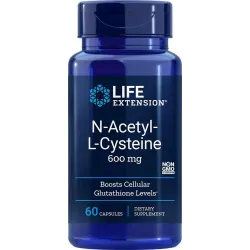
N-Acetyl-L-Cysteine (NAC)
Price: 15,31 €Powerful antioxidant for liver & immune health Promotes healthy cellular...
Related posts
-
 Quercetin: Broad-Spectrum Protection
Quercetin is naturally abundant in plant foods and as a result is highly bioavailable.Nonetheless, most people do not...
Quercetin: Broad-Spectrum Protection
Quercetin is naturally abundant in plant foods and as a result is highly bioavailable.Nonetheless, most people do not... -
New, dangerous coronavirus (SARS-CoV-2, COVID-19) Nutritional recommendations when facing coronavirus pandemic.
While medical science is diligently working on the development of an effective treatment, it may be prudent to learn...
-
Lactoferrin Helps Protect Against Viruses
Lactoferrin, a protein found in mother’s milk, shows antiviral activity in preclinical trials. It impedes viral...
-
How Reishi Combats Aging
Reishi medicinal mushroom is best known for its ability to boost immune surveillance, which is critical for the...
-
How Ionic Zinc Can Stop Colds Fast
A study showed that lozenges containing zinc acetate are best at curbing a cold and shortening its duration. Zinc...